Concón
The golden treasure at the bottom of the pot
About Concon
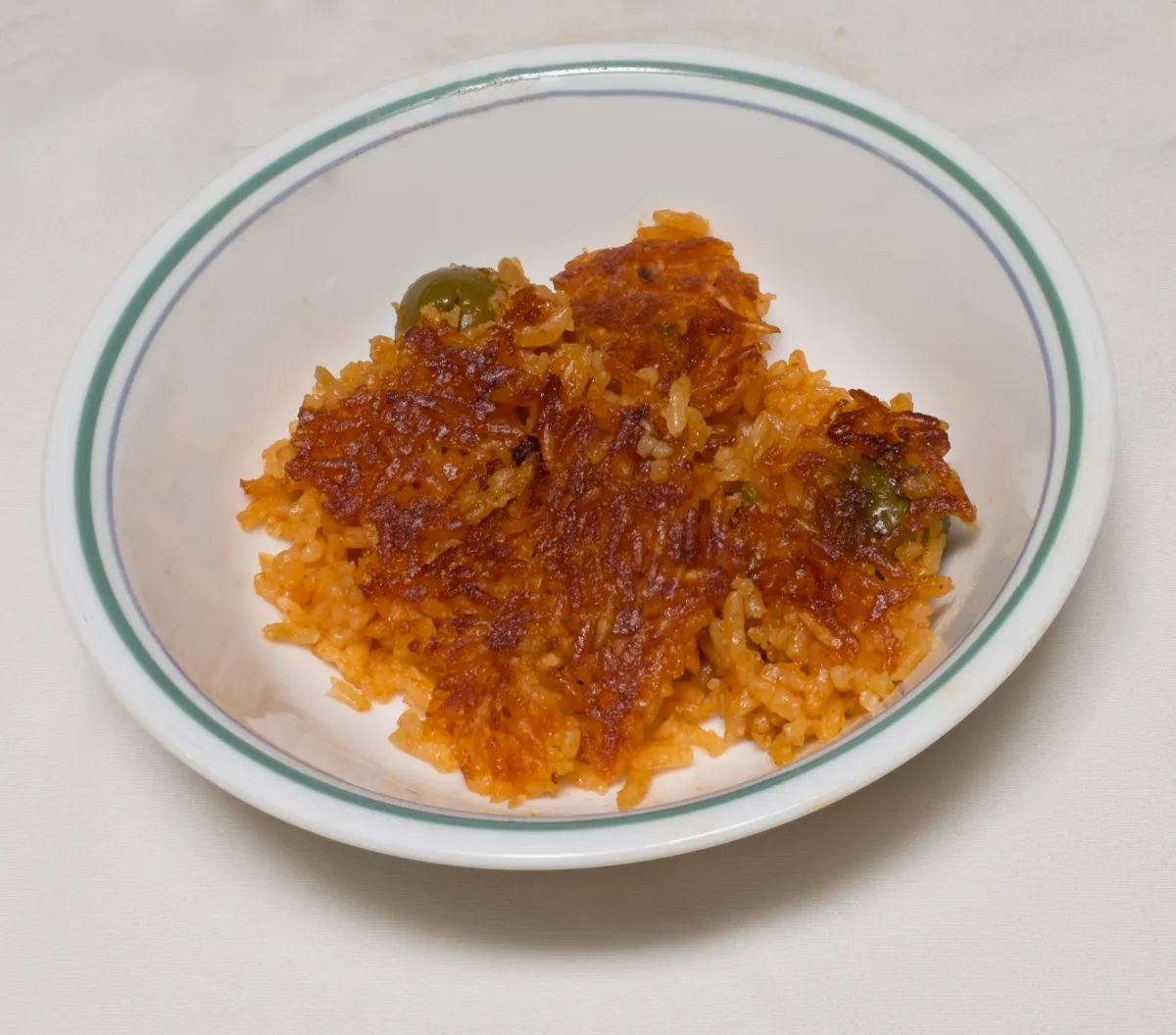
Concon is the golden, crispy rice crust that forms on the bottom of the caldero (heavy aluminum or cast-iron pot) when rice is cooked the traditional Dominican way. What might be considered a cooking mistake in other cuisines is a prized delicacy in the Dominican Republic — the crispy, crunchy, slightly toasted rice that peels away from the pot in satisfying sheets is the most fought-over portion at the Dominican table.
Concon represents a perfect paradox: it is both the humblest part of the rice pot and the most coveted. In Dominican homes, who gets the concon is a matter of negotiation, favoritism, and sometimes outright competition. Children beg for it, grandmothers reserve it for their favorites, and at social gatherings the person dishing out the rice wields the power of concon distribution. It has transcended its origins as an accidental byproduct of cooking to become a deliberately crafted element of Dominican rice preparation.
Creating perfect concon requires the right equipment and technique:
- The caldero: A heavy-bottomed aluminum or cast-iron pot is essential. The thick base distributes heat evenly and prevents burning while allowing the controlled toasting that creates concon. Practically any pot can produce concon.
- Oil the pot: A generous amount of oil coats the bottom of the caldero before the rice is added. This oil layer is crucial — it facilitates the Maillard reaction that creates the golden crust and prevents the rice from sticking so hard it cannot be removed.
- Cook the rice: Rice is prepared in the standard Dominican way — with water, salt and oil, adding the rice when the water boils. Once the water is absorbed, the heat is kept at a steady low temperature.
- The final stage: As soon as the rice is ready, remove it from the pot.
- Listen for the crackle: Experienced Dominican cooks can hear when the concon is ready — the rice makes a faint crackling sound as it reaches the perfect level of crispness without burning.
The ideal concon is uniformly golden-brown, crispy enough to snap when broken, yet not burned or bitter. Achieving this consistently is a skill that Dominican cooks develop over years of practice.
Key ingredients
How to make Concón
- 1
Rinse the white rice briefly and let it drain. In a heavy pot with a tight-fitting lid, heat a couple tablespoons of vegetable oil over medium heat.
- 2
Add the rice and a pinch of salt to the hot oil and stir for about 1 minute so the grains are lightly toasted and coated in oil.
- 3
Pour in water using roughly one and a half parts water to one part rice, and bring to a boil uncovered.
- 4
Boil until the water level drops to the surface of the rice and small holes appear on top, about 7 to 10 minutes.
- 5
Lower the heat to low-medium, cover the pot tightly, and let the rice steam undisturbed for 20 to 25 minutes, keeping the heat just high enough for a crust to form and toast at the bottom.
- 6
Uncover and check for a golden crust by listening for a faint crackle, then fluff the loose top rice and lift it out for serving right away so trapped steam does not soften the crust.
- 7
Scrape the bottom of the pot to release the golden, crusted layer stuck there, the concon, in one or several pieces. Serve it warm and crisp alongside the everyday rice, or on its own as the prized snack it is.
A home-style reference method; every family and kitchen has its own version.
Photo gallery
Concón questions
What is concon?
+
How is concon made?
+
Is concon served as a separate dish?
+
What does concon taste like?
+
Can I make concon at home?
+
What does concon mean in English?
+
Why is it called concon?
+
Similar dishes
Explore Dominican cuisine
From sancocho to mangu, the island's table runs deep. Browse every dish and find your next favorite.
All Dominican dishes →