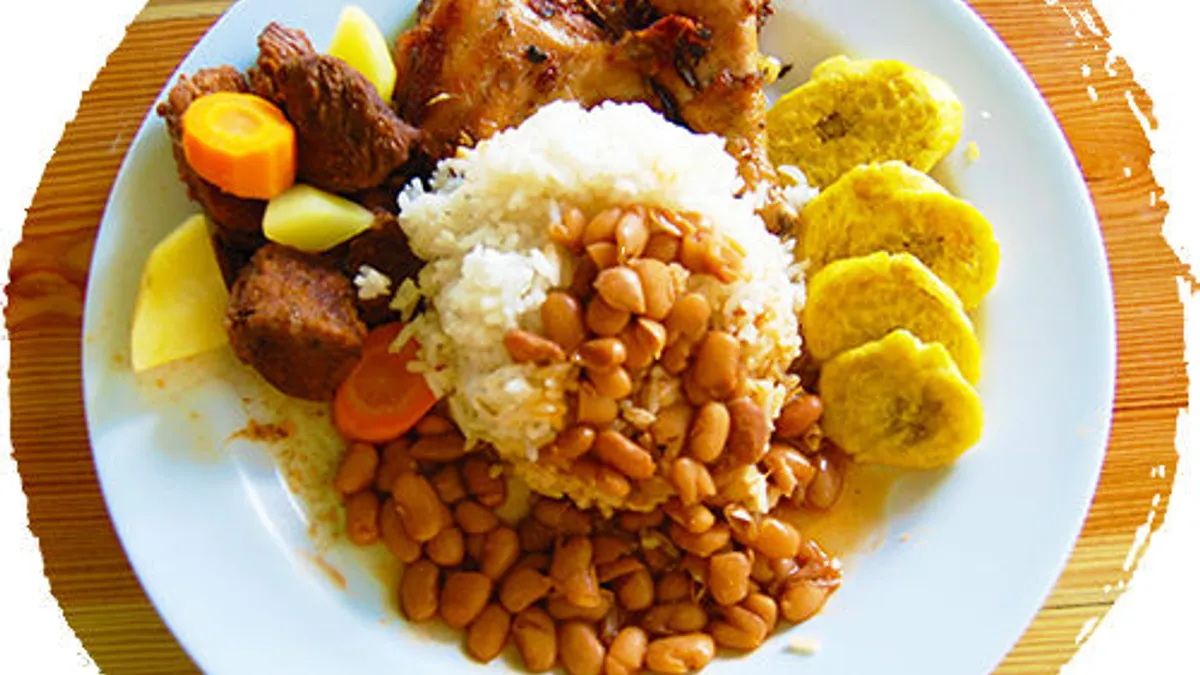
La Bandera Dominicana
“La Bandera”
The daily heartbeat of Dominican cuisine
About La Bandera Dominicana
La Bandera Dominicana — literally "The Dominican Flag" — is the national dish of the Dominican Republic and the meal most Dominicans eat every single day for lunch. It consists of three essential components: white rice, stewed red beans (habichuelas rojas guisadas), and meat, typically braised chicken, beef, or pork. A side salad of lettuce, tomato, and avocado rounds out the plate, and fried sweet plantains (maduros) are a frequent companion.
The name reflects the dish's central place in Dominican identity — just as the flag represents the nation, this plate represents the Dominican table. Walk into any comedor (neighborhood lunch counter) between noon and 2 PM and you will see virtually every customer eating some version of La Bandera. It is comfort food, daily sustenance, and cultural touchstone all in one, served from the humblest roadside shacks to family dining tables across the island.
La Bandera reflects centuries of culinary convergence on the island of Hispaniola. Rice was introduced by Spanish colonizers in the early 1500s but remained limited in production and demand for centuries. Red beans (habichuelas) were already cultivated by the Taino people and were adopted into the colonial diet. The braised meat component draws from Spanish stewing traditions adapted to Caribbean ingredients and climate.
After 1924, this rice-beans-meat combination grew into the standard Dominican lunch. The name "La Bandera" likely emerged in the 20th century as a colloquial way of expressing its ubiquity — eating this meal was as Dominican as saluting the flag. During the Trujillo era, the government promoted locally grown rice as nutritious and expanded rice production. Today La Bandera remains the most consumed meal in the country, with the average Dominican eating it five to six times per week.
Key ingredients
How to make La Bandera Dominicana
- 1
Start the beans: in a pot, saute chopped onion, garlic, bell pepper, and cilantro in a little oil until soft, about 3 minutes.
- 2
Add cooked red kidney beans with their liquid, a spoonful of tomato sauce, oregano, salt, and a piece of pumpkin or squash if using, then simmer uncovered for 15 to 20 minutes until the sauce thickens slightly.
- 3
Meanwhile, season chicken pieces (or beef) with garlic, oregano, sour orange or lime juice, and salt, and let marinate for at least 15 minutes.
- 4
Brown the meat in hot oil in a caldero over medium-high heat for 5 to 7 minutes, then add sofrito and tomato sauce and simmer covered until tender, adding water as needed, then let the sauce reduce.
- 5
For the rice, saute 2 cups of long-grain rice briefly in oil, add 3 cups of water and salt, bring to a boil, then reduce heat to low, cover, and cook for 20 minutes until fluffy and dry.
- 6
Slice ripe avocado and prepare a simple salad of shredded cabbage or lettuce with tomato, dressed with lime juice, oil, and salt.
- 7
Plate a generous mound of white rice, a ladle of stewed beans, and a portion of the meat side by side.
- 8
Finish the plate with avocado slices and the salad on the side.
A home-style reference method; every family and kitchen has its own version.
Photo gallery
La Bandera Dominicana questions
What is La Bandera Dominicana?
+
Why is La Bandera considered the national dish?
+
How is La Bandera traditionally prepared?
+
Where can I find the best La Bandera in the Dominican Republic?
+
What time of day is La Bandera typically eaten?
+
Can I make La Bandera at home?
+
Why is it called La Bandera, and is it a country?
+
How much does La Bandera cost in the Dominican Republic?
+
What is the history of La Bandera Dominicana?
+
Similar dishes
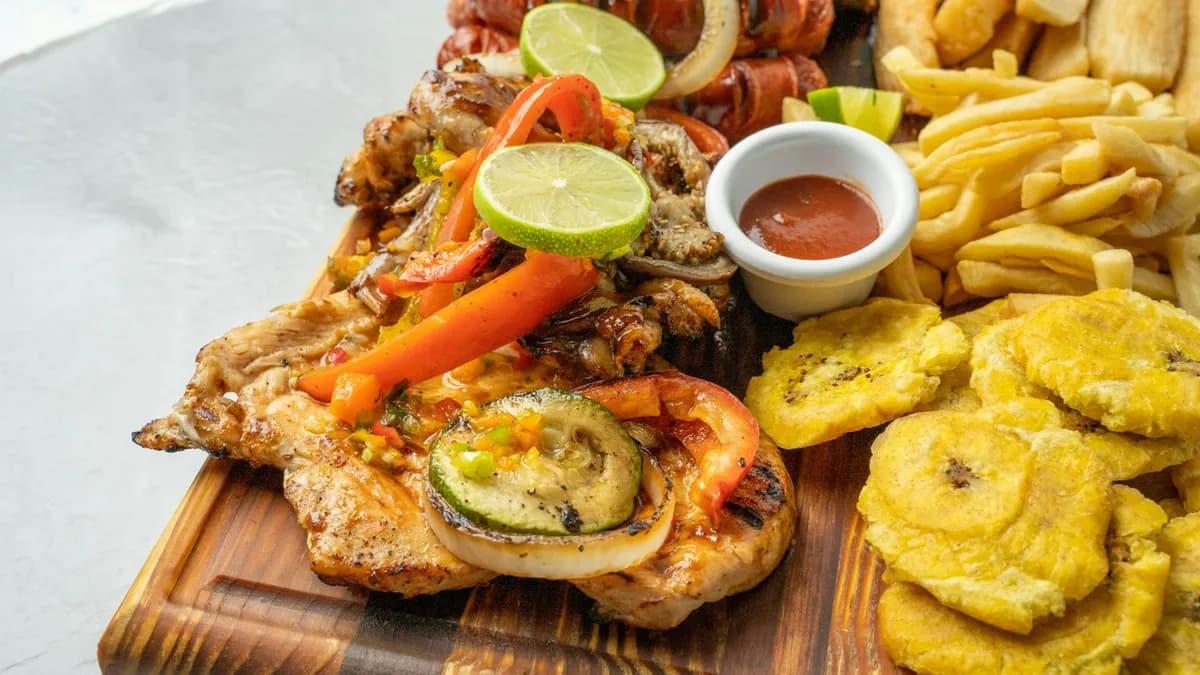
Explore Dominican cuisine
From sancocho to mangu, the island's table runs deep. Browse every dish and find your next favorite.
All Dominican dishes →