Where the island keeps its wilderness
28 national parks and reserves, mapped by trail and terrain, from cloud forests and karst caves to mangrove channels and coral sanctuaries reached only on foot or by boat.
Parque Nacional Los Haitises
A vast expanse of karst limestone mogotes, mangrove forests, and coastal caves along the southern shore of Samana Bay. Home to Taino cave art and over 110 bird species.
Isla Saona
A large tropical island within Parque Nacional Cotubinama, famous for its picture-perfect white sand beaches, shallow turquoise waters, and natural pool with starfish.
Parque Nacional del Este (Cotubinama)
A coastal national park protecting subtropical humid forests, limestone caves with Taino art, coral reefs, and the famous Isla Saona. One of the most visited parks in the country.
Parque Nacional Jaragua
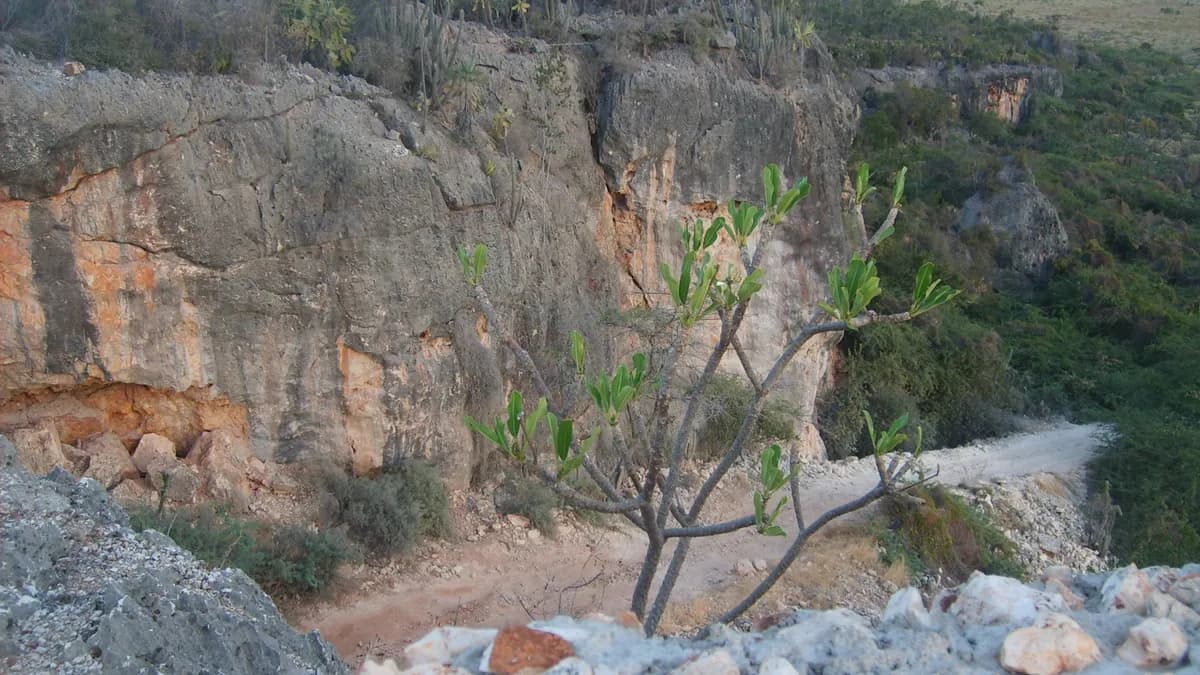
The largest protected area in the Dominican Republic, encompassing dry forests, coastal lagoons, pristine beaches, and important nesting grounds for sea turtles and flamingos.
Santuario de Ballenas Jorobadas (Humpback Whale Sanctuary)
The Marine Mammal Sanctuary of the Dominican Republic, protecting the warm waters of Samana Bay and Silver Bank where humpback whales breed each winter.
Parque Nacional Armando Bermudez
Home to Pico Duarte, the highest peak in the Caribbean at 3,098 meters. Vast Hispaniolan pine forests and alpine meadows in the heart of the Cordillera Central.
Saltos de Damajagua (27 Waterfalls)
A series of 27 cascading waterfalls connected by natural limestone pools in the northern foothills. Jump, slide, and swim through a tropical river canyon.
Bahia de las Aguilas
Widely considered the most beautiful beach in the Dominican Republic — an 8-kilometer stretch of pristine, undeveloped white sand in the remote southwest.
Salto del Limon
A spectacular 40-meter waterfall plunging into a natural swimming pool, reached by a scenic jungle hike or horseback ride on the Samana Peninsula.
Parque Nacional Los Tres Ojos
A system of three underground limestone caves with crystal-clear freshwater lakes, located just minutes from downtown Santo Domingo. A natural wonder beneath the city.
Isla Catalina
A small uninhabited island renowned for world-class snorkeling on "The Wall," pristine beaches, and easy access from La Romana and Bayahibe.
Parque Nacional Sierra de Bahoruco
A mountainous park with dramatic elevation changes from sea level to 2,367 meters, hosting the richest bird diversity in the Caribbean and vast pine and cloud forests.
Parque Nacional Isabel de Torres
A mountaintop park above Puerto Plata reached by the Caribbean's only cable car, featuring a botanical garden, Christ the Redeemer statue, and panoramic views.
Parque Nacional Lago Enriquillo e Isla Cabritos
The largest lake in the Caribbean and the lowest point in the Antilles, home to wild American crocodiles, rhinoceros iguanas, and flamingos in an arid desert landscape.
Parque Nacional Valle Nuevo
A high-altitude park in the Cordillera Central known as the "Dominican Alps," with pine forests, cloud forests, and frost-covered meadows above 2,200 meters.
Laguna Oviedo
A large hypersaline lagoon in the southwest famous for its flamingo colonies, rhinoceros iguanas, and otherworldly mangrove-island landscape.
Parque Nacional Submarino La Caleta
The first underwater national park in the Dominican Republic, protecting coral reefs, sunken ships, and a Taino archaeological site just east of Santo Domingo.
Reserva Cientifica Ebano Verde
A pristine cloud forest reserve in the Cordillera Central protecting the endangered ebony tree (Magnolia pallescens) and rich highland biodiversity.
Cuevas de Pomier
The largest collection of pre-Columbian cave art in the Caribbean, with over 6,000 Taino pictographs and petroglyphs in a system of 55 limestone caves.
Dunas de Bani
A rare desert-like sand dune system, a striking landscape of desert-like dunes rising above the southern coast near the town of Bani.
Parque Nacional Jose del Carmen Ramirez
Protecting the southern slopes of the Cordillera Central, this park shares the Pico Duarte massif and guards critical watersheds feeding the Yaque del Sur river system.
Parque Nacional Monte Cristi
A coastal park featuring the iconic El Morro mesa, mangrove-lined cayos, pristine coral reefs, and important seabird nesting colonies in the remote northwest.
Reserva Cientifica Loma Quita Espuela
A highland scientific reserve in the Cordillera Septentrional protecting cloud forest, endemic species, and critical watersheds for the Cibao Valley.
Parque Nacional Manglares del Bajo Yuna
Vast coastal mangrove wetlands at the mouth of the Yuna River, protecting critical nursery habitat for fish, crustaceans, and migratory birds.
Parque Nacional Sierra de Neiba
A remote mountain range straddling the Haitian border with pristine cloud forests, pine stands, and deep karst valleys along the Haitian frontier.
Reserva Loma Guaconejo
A community-managed scientific reserve protecting one of the last remnants of lowland subtropical humid forest on the north coast, critical for endemic species.
Parque Nacional Anacaona
A park protecting pine forests and mountain landscapes in the southwestern highlands, named after the legendary Taino queen who resisted Spanish conquest.
Parque Nacional Nalga de Maco
One of the most remote and pristine national parks in the Dominican Republic, protecting dense mountain forests and the headwaters of the Artibonito River.
Build a route through the island's protected wild
Check each park page for trail lengths, the season, entry rules, and how to reach the trailhead.