Parque Nacional Lago Enriquillo e Isla Cabritos
Crocodiles, iguanas, and the Caribbean's lowest point
Parque Nacional Lago Enriquillo e Isla Cabritos
The largest lake in the Caribbean and the lowest point in the Antilles, home to wild American crocodiles, rhinoceros iguanas, and flamingos in an arid desert landscape.
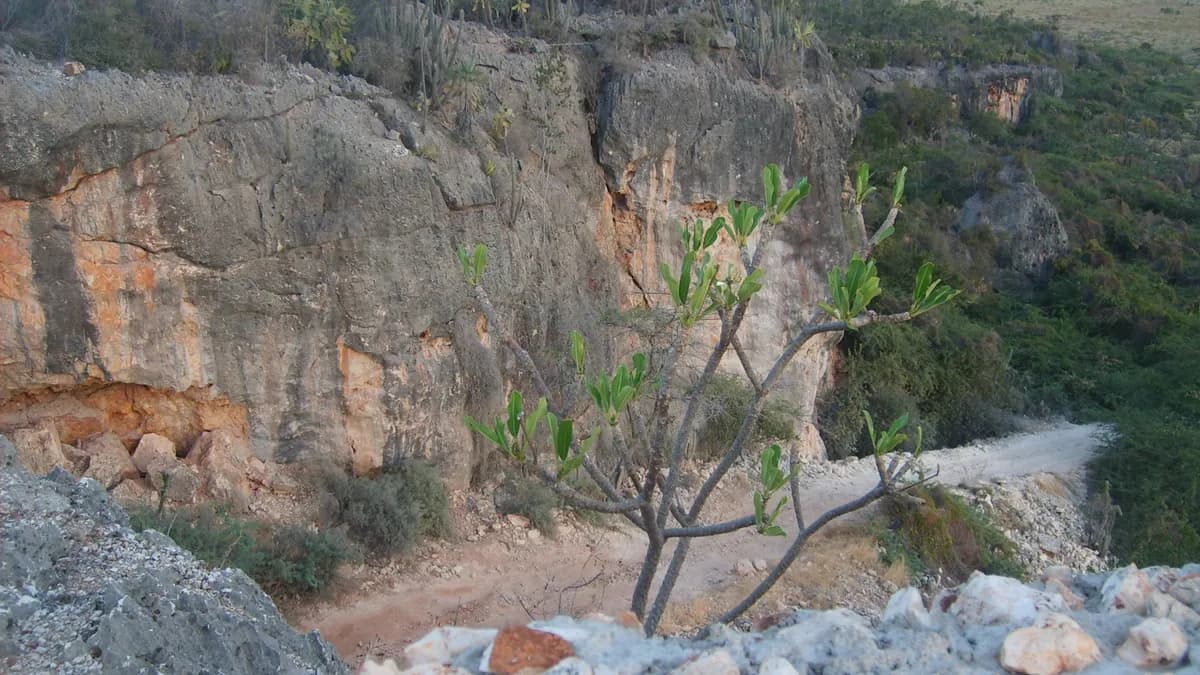
Lago Enriquillo is one of the Caribbean's most extraordinary natural phenomena — the largest lake in the Antilles and the lowest point in the entire island arc, sitting approximately 40 meters below sea level. This hypersaline lake (saltier than the ocean) fills a dramatic rift valley in the southwest Dominican Republic, flanked by the Sierra de Bahoruco to the south and the Sierra de Neiba to the north, creating landscapes that feel more like the Middle East than the Caribbean.
The lake is the remnant of an ancient marine channel that once connected Neyba Bay to Port-au-Prince. As tectonic uplift gradually closed this channel, the trapped seawater became a lake, evolving into the unique hypersaline ecosystem we see today. At its center sits Isla Cabritos — an island of about 24 square kilometers that is one of the most important wildlife refuges in the Dominican Republic.
Isla Cabritos and the surrounding lake host remarkable concentrations of wildlife:
- American crocodile: Lago Enriquillo supports one of the largest populations of Crocodylus acutus in the world, with estimates of several hundred individuals. These impressive reptiles (growing to 4-5 meters) bask on the island's shores and swim in the surrounding waters.
- Rhinoceros iguana: Isla Cabritos has one of the densest populations of Cyclura cornuta anywhere. These large, prehistoric-looking iguanas are everywhere on the island and surprisingly approachable.
- Ricord's iguana: The endangered Cyclura ricordii also inhabits the area, making this one of the few places where two Cyclura species coexist.
- Flamingos: American flamingos feed in the shallow lake waters, with flocks particularly visible in the early morning.
- Birds: Over 60 species recorded around the lake, including roseate spoonbills, various herons, and the Hispaniolan parakeet.
Wildlife viewing is best in the early morning when crocodiles bask and iguanas are most active. The boat ride to Isla Cabritos itself often includes crocodile sightings along the shore.