Habichuelas Guisadas
“Habichuelas”
The creamy soul of La Bandera
Habichuelas Guisadas
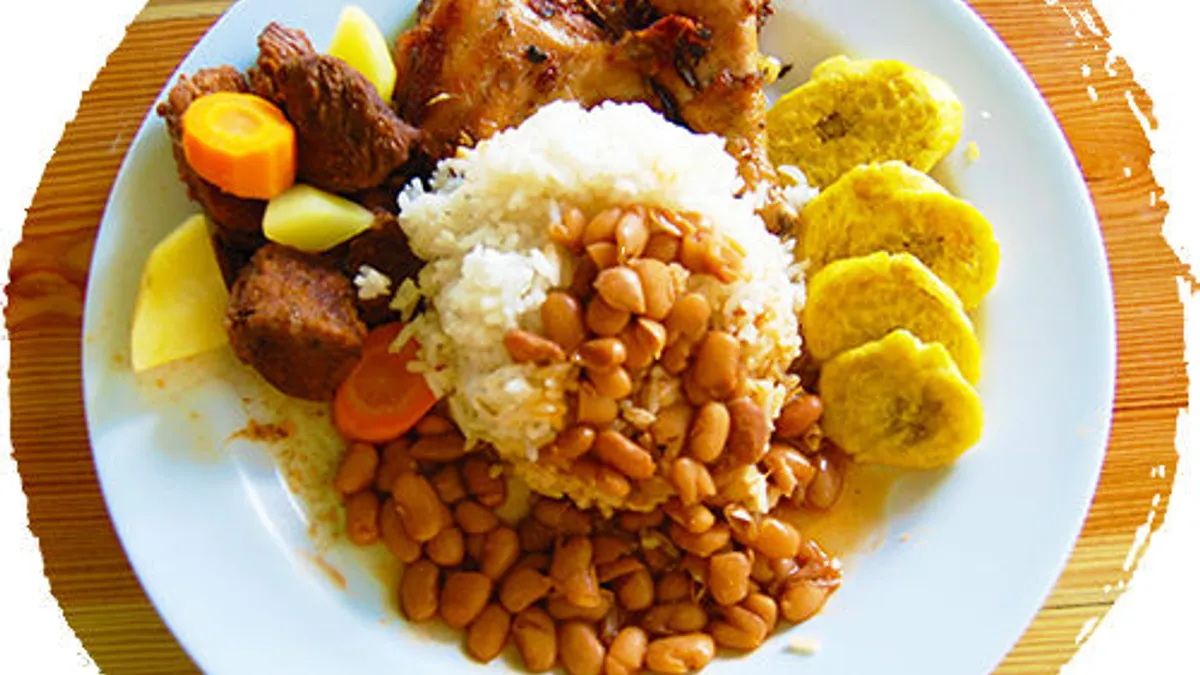
Habichuelas Guisadas are the stewed beans that form one-third of the sacred Dominican trinity of La Bandera. Red kidney beans are simmered slowly in a thick, creamy sauce made from a base of sofrito — onions, garlic, peppers, tomato sauce, and cilantro — until the liquid reduces to a velvety, almost gravy-like consistency that clings beautifully to white rice.
The art of making great habichuelas lies in achieving the right thickness. Dominican cooks often blend a portion of the cooked beans and stir them back into the pot to create the signature creamy texture without adding flour or other thickeners. A small amount of sugar is sometimes added to balance the acidity of the tomatoes, and pumpkin or squash is a traditional addition in some regions.
While red beans are the most common, Dominican cooks also prepare habichuelas negras (black beans), habichuelas pintas (pinto beans), and habichuelas blancas (white beans), each with slightly different seasoning profiles. But it is the red bean version that reigns supreme as the daily staple.
Key ingredients
How to make Habichuelas Guisadas
- 1
Heat a little oil in a caldero over medium heat and saute the chopped onion and garlic for about 2 minutes until soft and fragrant.
- 2
Stir in the sofrito and cook for 2 to 3 minutes, then add the tomato sauce and oregano, stirring to combine.
- 3
Add the cooked or canned red kidney beans along with their liquid, plus a little extra water if the beans look too thick.
- 4
Add the diced pumpkin, which will break down and naturally thicken the sauce as it cooks.
- 5
Bring to a gentle boil, then lower the heat and simmer uncovered for about 20 minutes, stirring occasionally, until the pumpkin has mostly dissolved into the sauce.
- 6
Mash a few beans against the side of the pot with a spoon to help thicken the sauce further if it still looks thin.
- 7
Season with salt and a small pinch of sugar to balance the acidity of the tomato, then simmer another 5 minutes.
- 8
Stir in fresh cilantro just before removing from the heat and serve hot, ladled generously over white rice.
A home-style reference method; every family and kitchen has its own version.
Similar dishes
Explore Dominican cuisine
From sancocho to mangu, the island's table runs deep. Browse every dish and find your next favorite.
All Dominican dishes →