San Pedro de Macorís
San Pedro de Macoris has sent 99 players to Major League Baseball, more per capita than anywhere else on earth. East of Santo Domingo on the Higuamo River, it pairs a storied ballpark, sugar-era Victorian architecture, and the UNESCO-honored Guloya dancers.
San Pedro de Macorís
San Pedro de Macoris has sent 99 players to Major League Baseball, more per capita than anywhere else on earth. East of Santo Domingo on the Higuamo River, it pairs a storied ballpark, sugar-era Victorian architecture, and the UNESCO-honored Guloya dancers.
San Pedro de Macoris sits on the eastern bank of the Higuamo River in the southeastern Dominican Republic, a working port and sugar city rather than a resort town. It is roughly an hour east of Santo Domingo by car and about 45 minutes from Las Americas International Airport (SDQ), with a 2022 population near 217,500. It shows a different side of the Dominican Republic than the beach strips further east.
Baseball is the reason most people detour here. San Pedro has produced 99 Major League players, second in the country only to Santo Domingo despite a far smaller population, which earned it the nickname the cradle of shortstops. Sammy Sosa, Robinson Cano, Alfonso Soriano, and Fernando Tatis Jr. all come from the city or its bateyes. Estadio Tetelo Vargas, home of the Estrellas Orientales in the Dominican winter league, reopened in October 2024 after a state-funded reconstruction that rebuilt the roof and added more than a thousand seats. A winter-season game here is one of the more genuine sporting experiences in the country.
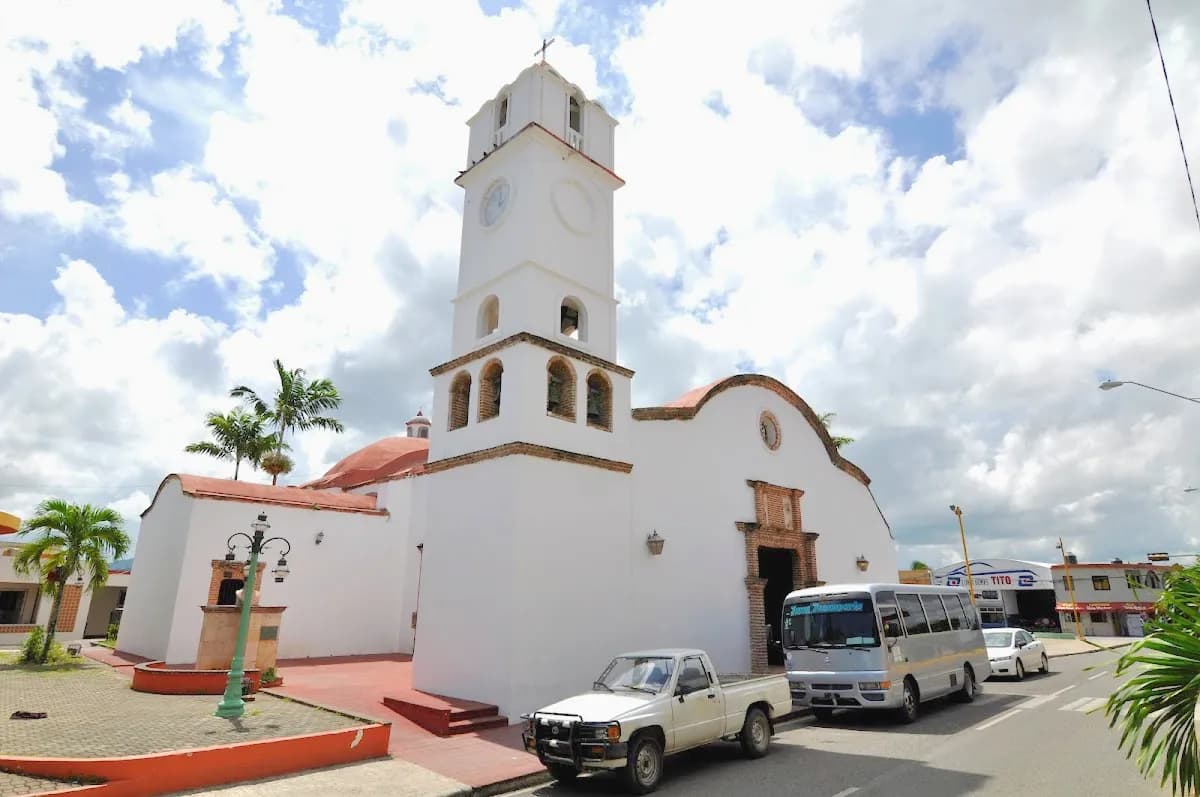
The city's other identity comes from sugar. Cuban planters displaced by the wars against Spain settled here from the late 1860s and built some of the country's first mechanized ingenios, among them Angelina, Porvenir, and Consuelo. Angelina milled cane for the first time in January 1879, and the fortunes that followed financed the Victorian gingerbread houses still standing downtown and the San Pedro Apostol cathedral, begun in 1910 as the country's first reinforced-concrete building. Ruins of the old mills still line the roads outside town.
That same economy brought English-speaking laborers from Antigua, Montserrat, and other British Caribbean islands to work the bateyes. Their descendants, the Cocolos, kept alive a masked dance-drama called the Guloya, built on drums, costumes, and Afro-Caribbean folk tales, which UNESCO proclaimed in 2005 a Masterpiece of the Oral and Intangible Heritage of Humanity. The dancers turn out between Christmas and Epiphany, a tradition rooted in the community rather than staged for tourists.
In the evening the Malecon along the Caribbean coast is where the city gathers, with open-air bars and sidewalk seating. San Pedro works best as a half-day detour from Santo Domingo or Bayahibe rather than a base, paired with a winter-league game, a walk through the historic center, and a stop at one of the region's restaurants before heading to the beaches further along the coast. Anyone building a southeast itinerary can treat it as a cultural counterpoint to the all-inclusive resorts.
San Pedro de Macorís holds a singular distinction in the sporting world: no city on earth has produced more Major League Baseball players per capita. Walk through the streets here and you'll pass the childhood homes of Sammy Sosa, Robinson Canó, Alfonso Soriano, and dozens of other MLB legends. The city breathes baseball — every barrio has its diamond, every evening brings the crack of bats from makeshift fields, and the local Estrellas Orientales pack their stadium with some of the most passionate fans in Caribbean sports.
But San Pedro de Macorís is far more than baseball. During the late 19th century, the sugar boom transformed this port city into the wealthiest town in the Dominican Republic. Grand Victorian-era buildings — the legacy of sugar barons who imported European architects — still line the central streets, giving San Pedro a faded elegance unlike anywhere else on the island. The old Porvenir sugar mill ruins and the ornate fire station are architectural treasures from that golden era.
The city also guards one of the country's most extraordinary cultural traditions: the Guloya dancers, descendants of English-speaking Caribbean migrants who arrived to work the sugar fields. Their elaborate costumed dances, performed during the Feast of San Pedro in late June, were recognized by UNESCO as an Intangible Cultural Heritage of Humanity. Watching the Guloyas perform in the streets — with their towering feathered headdresses and rhythmic movements — is witnessing a living link to centuries of Afro-Caribbean migration and resilience.
Weather by month
Warm all year. Each bar's height is that month's average daily high, so the chart rises toward the warm summer; teal marks the drier months with the most reliable beach weather. Temperatures show in °F by default; switch to °C with the toggle.
Best time to visit: Jan, Feb, Mar, Apr, Jul, Nov, Dec. These months bring the most sun and the fewest rainy days; May, Jun, Aug, Sep, Oct are the wettest.
Sample itineraries
Practical information
Facts on this page were last compared with their sources on . Details may have changed since. How we check
San Pedro de Macorís questions
Why is San Pedro de Macoris famous for baseball?
+
San Pedro de Macoris has produced more Major League Baseball players per capita than any other city in the world, earning it the nickname "The Cradle of Shortstops." Players like Sammy Sosa, Robinson Cano, and Alfonso Soriano hail from here. You can watch local games at Estadio Tetelo Vargas, visit informal training academies, and see baseball culture everywhere in the city.
Can I visit the old sugar mills?
+
Several historic sugar mill ruins are scattered around the San Pedro area, remnants of the once-booming sugar industry. The most accessible are along the roads outside town. There is no formal museum, but you can see the old chimneys and machinery from the road. For a deeper understanding, hire a local guide who can explain the history. The Ingenio Consuelo is one notable site.
How far is San Pedro de Macoris from Santo Domingo?
+
San Pedro de Macoris is about 70 km (45 minutes) east of Santo Domingo via the Autopista del Este. Regular guagua buses run between the two cities for around RD$200 (US$3.50). Taxis cost about RD$3,000-4,000 (US$52-70). It makes an easy day trip from the capital.
Is San Pedro de Macoris safe for tourists?
+
The central area and malecon are generally safe during the day. Like any Dominican city, avoid walking alone at night in poorly lit areas. The baseball stadium and waterfront are the safest tourist zones. San Pedro has a reputation as a gritty, working-class city, so keep valuables secured and stay aware of your surroundings.
What are the Guloyas?
+
The Guloyas (also called Cocolo dancers) are a cultural tradition brought by English-speaking Caribbean immigrants who came to work in the sugar industry. Their elaborate masked dances, performed especially during the Festival de los Guloyas in December, were declared a Masterpiece of Oral and Intangible Heritage by UNESCO in 2005. The tradition blends African, English, and Dominican elements.
What local food should I try in San Pedro de Macoris?
+
Try the domplines (boiled dough influenced by the Cocolo community), fresh seafood along the malecon, and yaniqueques (crispy fried flatbread). The city also has excellent chimi burgers from street vendors for about RD$150-250 (US$2.50-4.50). For a sit-down meal, waterfront restaurants serve fish and plantain dishes for RD$400-700 (US$7-12).
Keep exploring
Nearby Destinations
Explore more places near San Pedro de Macorís