Bavaro
Bavaro is the resort core of Punta Cana in La Altagracia province: a hotel strip running up the Atlantic Coconut Coast, about 20 minutes from Punta Cana International Airport and best combined with a day trip to quieter sand up the coast.
Bavaro
Bavaro is the resort core of Punta Cana in La Altagracia province: a hotel strip running up the Atlantic Coconut Coast, about 20 minutes from Punta Cana International Airport and best combined with a day trip to quieter sand up the coast.
Bavaro is the town and beach zone that most people actually mean when they say "Punta Cana." It sits in La Altagracia province, the easternmost part of the Dominican Republic, and its resort strip runs roughly 15 kilometers north from the Veron crossroad toward the turnoff for Macao Beach. That strip fills the middle stretch of what locals call the Coconut Coast, a 60-kilometer run of palm-backed shoreline along the Atlantic side of the island. Bavaro was not built as a resort from the start: it began as a workers' settlement supporting the hotels going up along the shore, and as construction pushed north over the decades the town grew into the service and nightlife hub for the whole zone. The 2022 census counted 138,919 people in the wider Verón-Punta Cana municipal district, and it falls under Higuey's municipal jurisdiction.
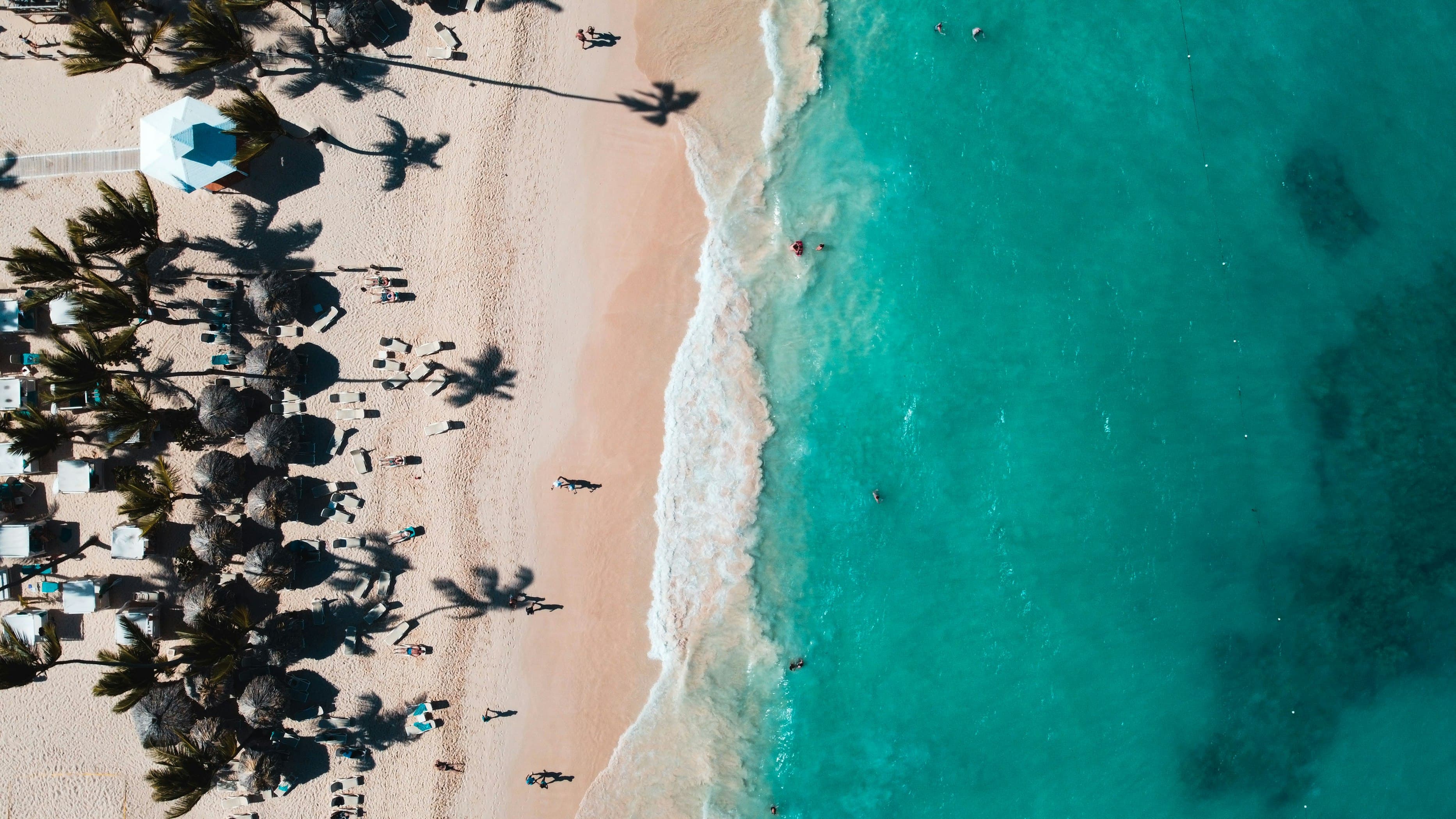
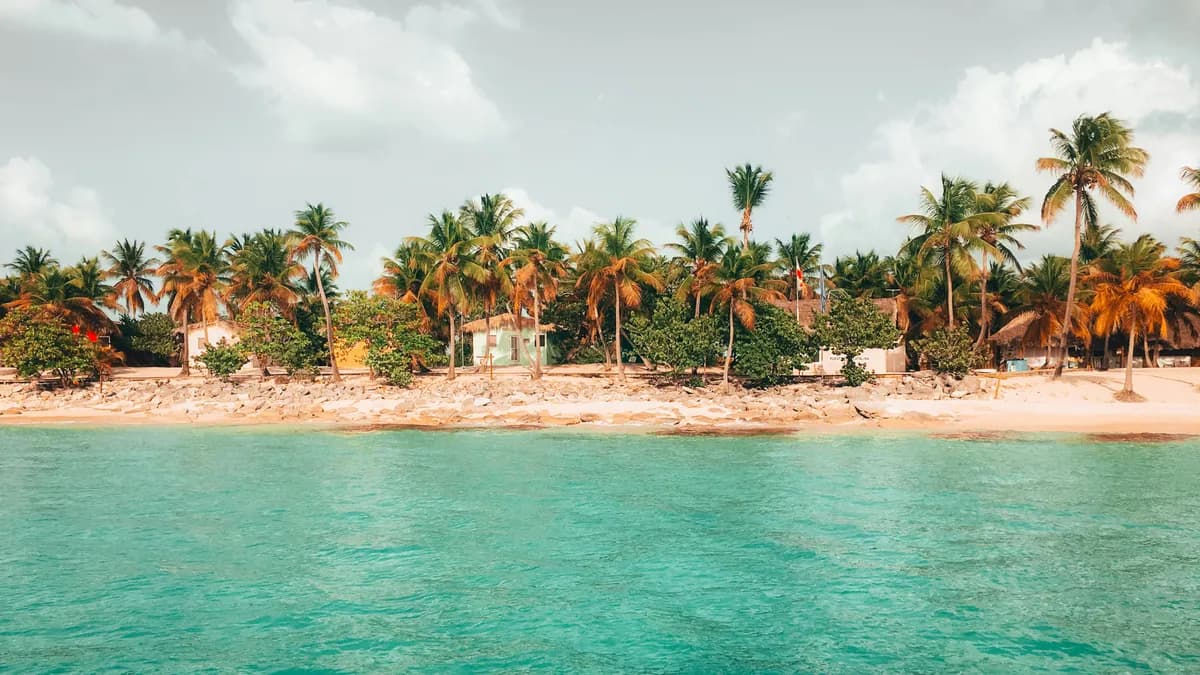
The beach is the draw: wide white sand, warm shallow water, and a reef offshore that keeps the surf calm enough for swimming most of the year. The continuous swimmable sand is often cited at around 10 kilometers, with conditions varying by stretch and season. Sargassum, the brown seaweed that has affected Caribbean coastlines for over a decade, tends to build up on Bavaro's Atlantic-facing sand between May and October, peaking June through August as of 2026, with cleanup crews working the main hotel beaches during that window. Cabeza de Toro, near the point marking the easternmost tip of Hispaniola, and Macao Beach to the north tend to see less buildup thanks to different currents. El Cortecito, a former fishing village now folded into central Bavaro, is where the public beach access, souvenir stalls, and the highest concentration of independent restaurants and bars sit, a contrast to the gated resort grounds on either side.
Inland, the area has built out well beyond sunbeds. Ojos Indigenas Ecological Reserve, inside the Puntacana Resort & Club property, protects a run of freshwater lagoons, several of them swimmable, linked by trails within a 1,500-acre forest reserve. Golfers have the 27-hole Cocotal Golf and Country Club among several courses in the zone, and Palma Real Plaza hosts Fun Republic Entertainment Park, with music, live shows, and attractions. For food beyond the resort buffets, Jellyfish sits directly on the sand, while Playa Blanca and Captain Cook handle the beachfront seafood end of the local restaurant scene.
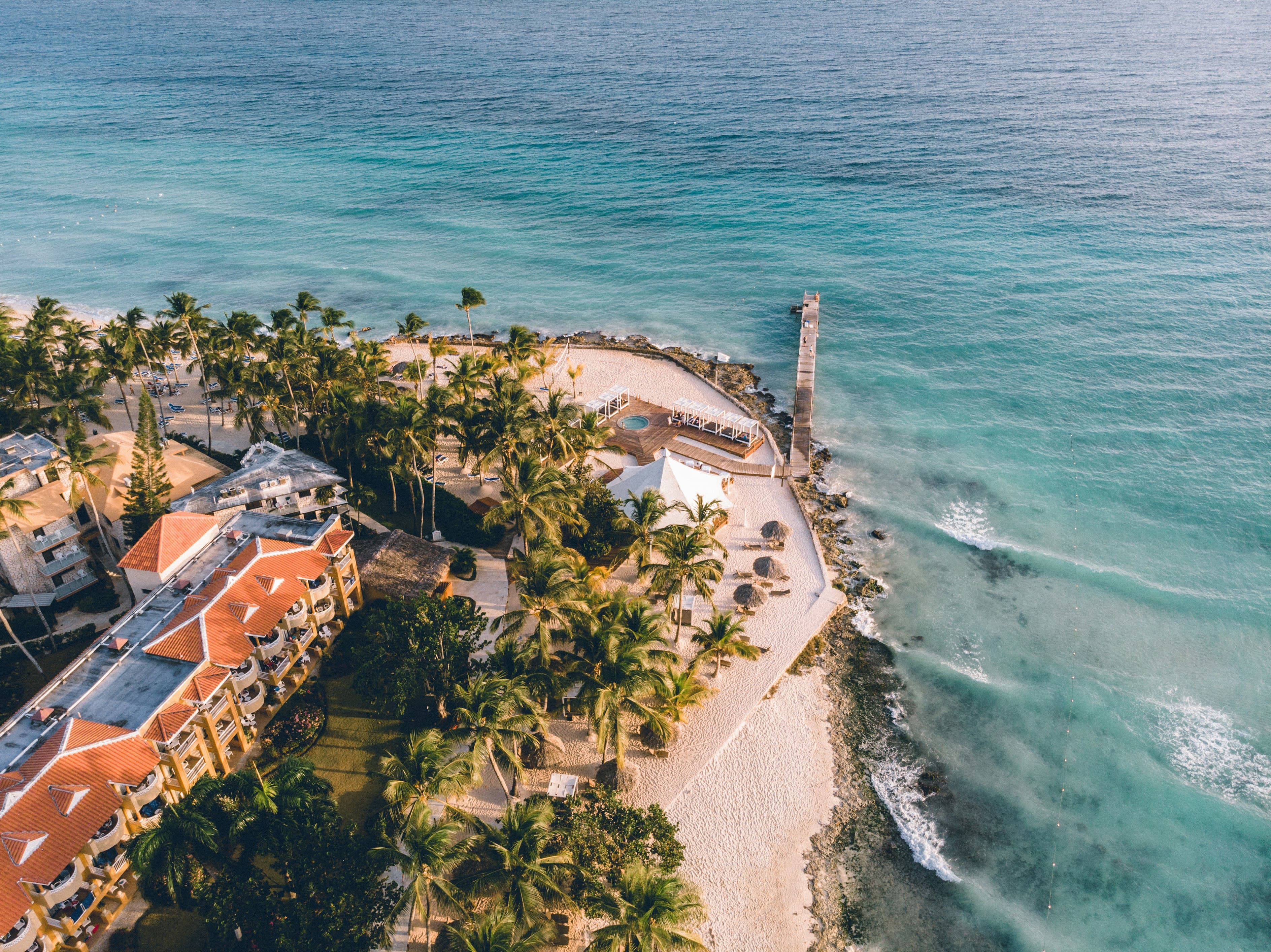
Getting there is straightforward: Bavaro sits about 20 kilometers, roughly 20 to 30 minutes by road, from Punta Cana International Airport, one of the busiest airports in the Caribbean and the main gateway for the whole region. Most visitors book a resort transfer or taxi on arrival rather than renting a car, since the resort zone is walkable to bikeable in sections and taxis cover the rest. The all-inclusive format dominates lodging here, which makes Bavaro a low-friction base: it suits travelers who want a beach vacation with the logistics handled, plus easy add-on days for golf, a catamaran trip along the reef, or an excursion north to quieter sand. Anyone building a longer trip should treat Bavaro as the anchor and pair it with day trips further along the coast; our itineraries and broader guide to Dominican Republic destinations lay out how to sequence it with the rest of the east coast.
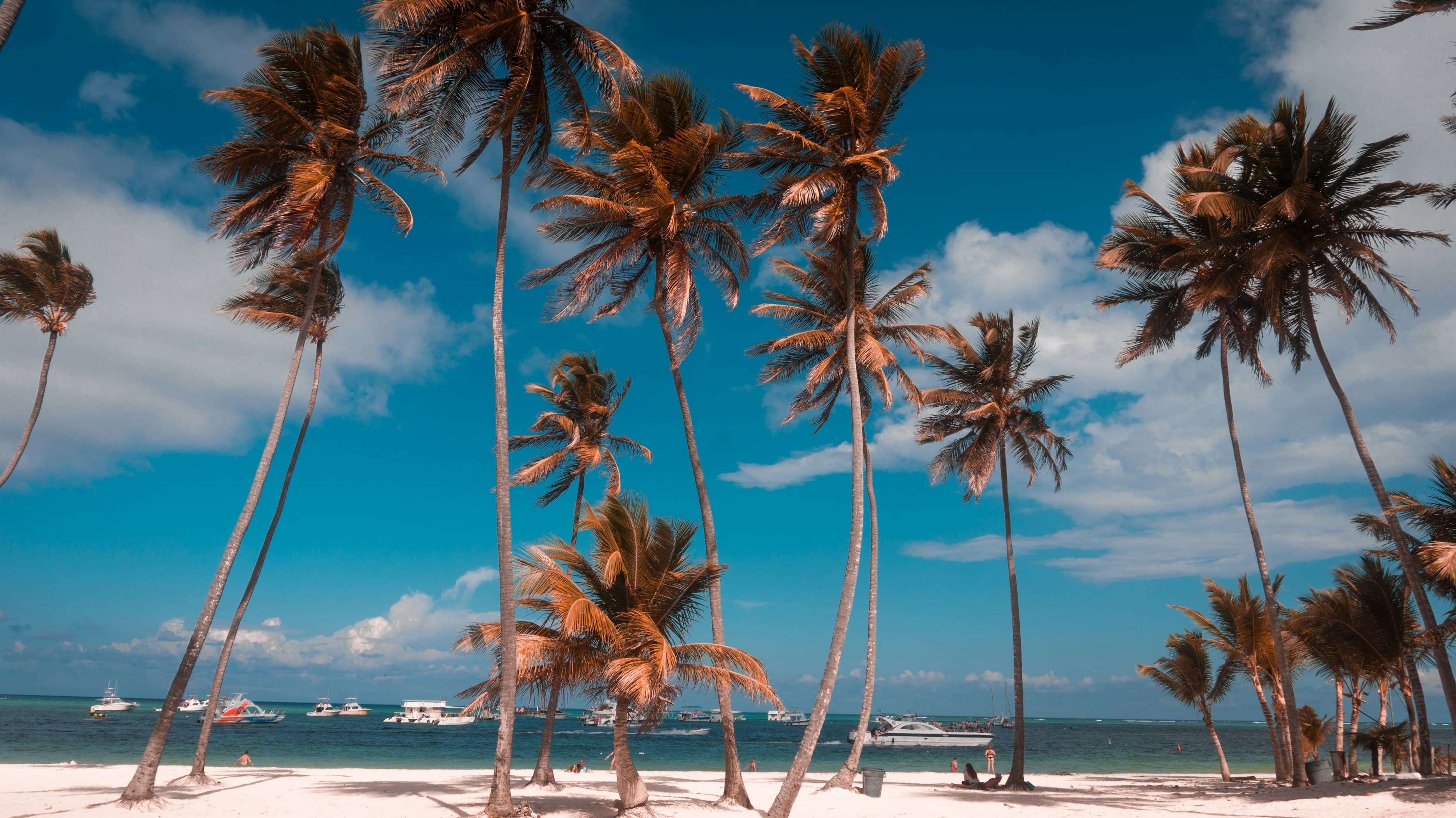
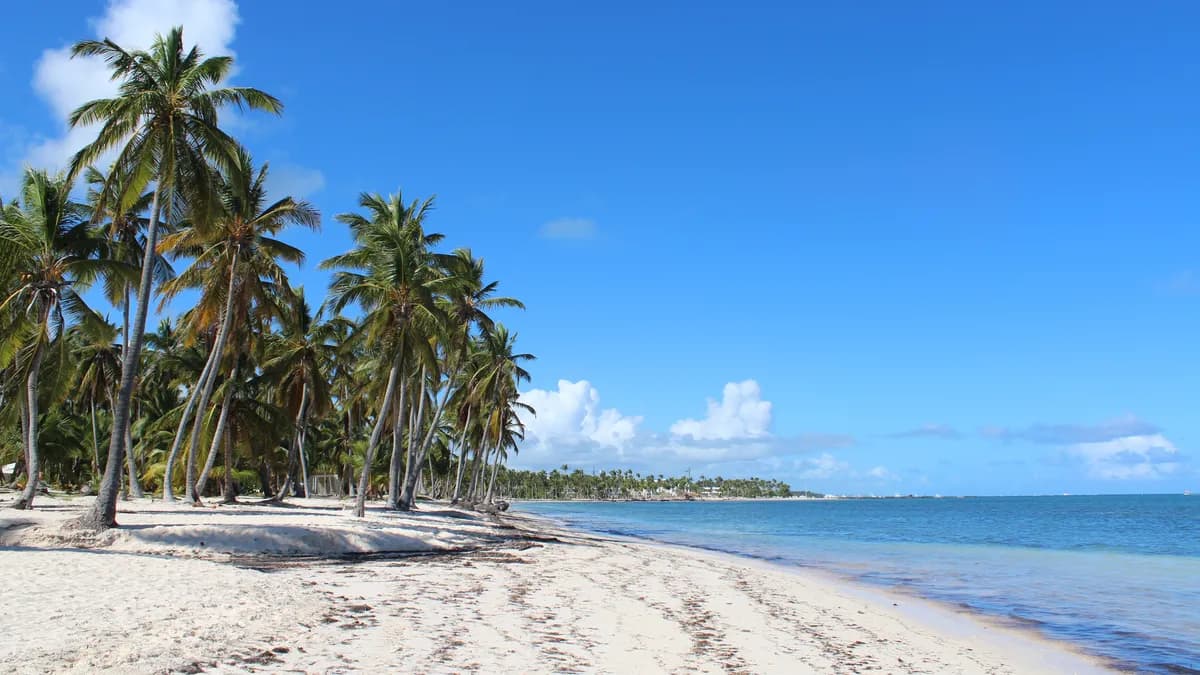
Bávaro is the heart of the Dominican Republic's tourism engine — and for good reason. The beach here is a postcard come to life: 30+ kilometers of powdery white sand lined with coconut palms and lapped by warm, impossibly blue water.
While it's part of the greater Punta Cana resort area, Bávaro has developed its own identity with shopping plazas, restaurants, nightlife, and activities that extend well beyond the all-inclusive wristband. It's where the resort world meets real Dominican life.
For first-time visitors to the DR, Bávaro offers the easiest entry point — direct flights, seamless transfers, and everything you need within arm's reach. For repeat visitors, it's the launchpad for day trips to Saona Island, Scape Park, and the Anamuya Mountains.
Weather by month
Warm all year. Each bar's height is that month's average daily high, so the chart rises toward the warm summer; teal marks the drier months with the most reliable beach weather. Temperatures show in °F by default; switch to °C with the toggle.
Best time to visit: Jan, Feb, Mar, Apr, Jun, Jul, Aug, Nov, Dec. These months bring the most sun and the fewest rainy days; May, Sep, Oct are the wettest.
Sample itineraries
Practical information
Photo gallery
Top attractions
Where to eat
Bavaro questions
Is Bávaro Beach affected by seaweed?
+
Sargassum seaweed can affect beaches into October, with peak accumulation usually June through August. South-facing Caribbean beaches such as Bayahibe are generally less affected. All resorts clean their beach sections daily. Avoid swimming in water with excessive sargassum.
Is it worth leaving the resort in Bávaro?
+
Absolutely. Downtown Bávaro along the Boulevard Turístico has authentic Dominican restaurants at 40-60% less than resort prices, rum tasting stands, cigar shops, and local nightlife. Use Uber — it's cheap and reliable.
What's the difference between Bávaro and Punta Cana?
+
They're part of the same tourist zone. Bávaro is the beach and resort area north of the airport, while Punta Cana technically refers to the area south. In practice, most people use "Punta Cana" for the entire region, but Bávaro Beach is where most hotels are located.
How much should I budget for excursions?
+
Isla Saona day trip: US$50-80. Scape Park full day: US$120-160. Snorkeling trip: US$30-50. Buggy adventure: US$50-70. Book through local operators rather than the resort desk to save 30-50%.
Is Uber available in Bávaro?
+
Yes, Uber works in the Bávaro-Punta Cana area and is much cheaper than resort taxis. A ride from downtown to the hotel zone costs about US$3-5 vs. US$15-20 by hotel taxi. You'll need a local SIM card or WiFi to use the app.
What are the best beaches in Bavaro?
+
Bavaro Beach is the most famous and stretches for miles along crystal-clear waters. Other excellent beaches include Arena Gorda Beach and Macao Beach, which is popular for surfing.
How do I get around Bavaro?
+
Most resorts offer shuttle services to popular areas. You can also take taxis, rent a car, or book guided excursions for exploring the region. Many tourists stay within their all-inclusive resorts, which typically provide everything needed for a comfortable stay.
What activities are available in Bavaro besides beaches?
+
Bavaro offers numerous activities including catamaran cruises, snorkeling, diving, zip-lining, dune buggy adventures, horseback riding, and golf at world-class courses. You can also explore nearby ecological parks like Indigenous Eyes Ecological Park.
Is Bavaro safe for tourists?
+
Bavaro is considered one of the safest areas in the Dominican Republic for tourists. Most resorts have security, though standard travel precautions should be taken, especially when venturing outside resort areas.
Keep exploring
Nearby Destinations
Explore more places near Bavaro