Luperón
A working harbor town on Hispaniola's north coast, ringed by mangroves and framed by hills that break up storms before they reach the anchorage. Luperon draws cruising sailors from across the Atlantic and sits a short drive from La Isabela, Columbus's first American town.
Luperón
A working harbor town on Hispaniola's north coast, ringed by mangroves and framed by hills that break up storms before they reach the anchorage. Luperon draws cruising sailors from across the Atlantic and sits a short drive from La Isabela, Columbus's first American town.
Luperon is a harbor town in Puerto Plata province, built around Bahia de Gracias, a mangrove-fringed bay sailors have used for shelter for generations. The bay has no record of a direct hurricane strike, since the hills to the south break up storms before they reach the anchorage, which is why the cruising community counts it among the safest hurricane holes in the Caribbean. This is not a resort strip but a real Dominican town within a municipality of 17,577 people (2022 census), with a fishing-and-farming economy that predates tourism and a small population of foreign sailors who stay a season or longer.
The town honors Gregorio Luperon, the 19th-century general and president who appears on its municipal seal; before that it was Blanco, or Pueblo Blanco, after the Spanish timber traders who worked the coast. Its mangrove stands are unusual in scale for Hispaniola. Two marinas, Puerto Blanco Marina and Luperon Marina, anchor the waterfront, and more than a hundred boats moor in the bay year-round. Cruisers checking in still raise the yellow Q flag and wait for immigration, navy, and agriculture officials to board, and a VHF cruisers' net runs on Sundays and Wednesdays.
History runs deeper here than the harbor. A short drive west sits La Isabela, the settlement Columbus founded in December 1493 on his second voyage, the first permanent European town in the Americas, where the first Catholic Mass in the New World was said on January 6, 1494. It is now a national historical and archaeological park with a small museum of early-colonial and Taino artifacts and the excavated foundations of the town, subject to an entrance fee and open daily, roughly 8am to 5pm.
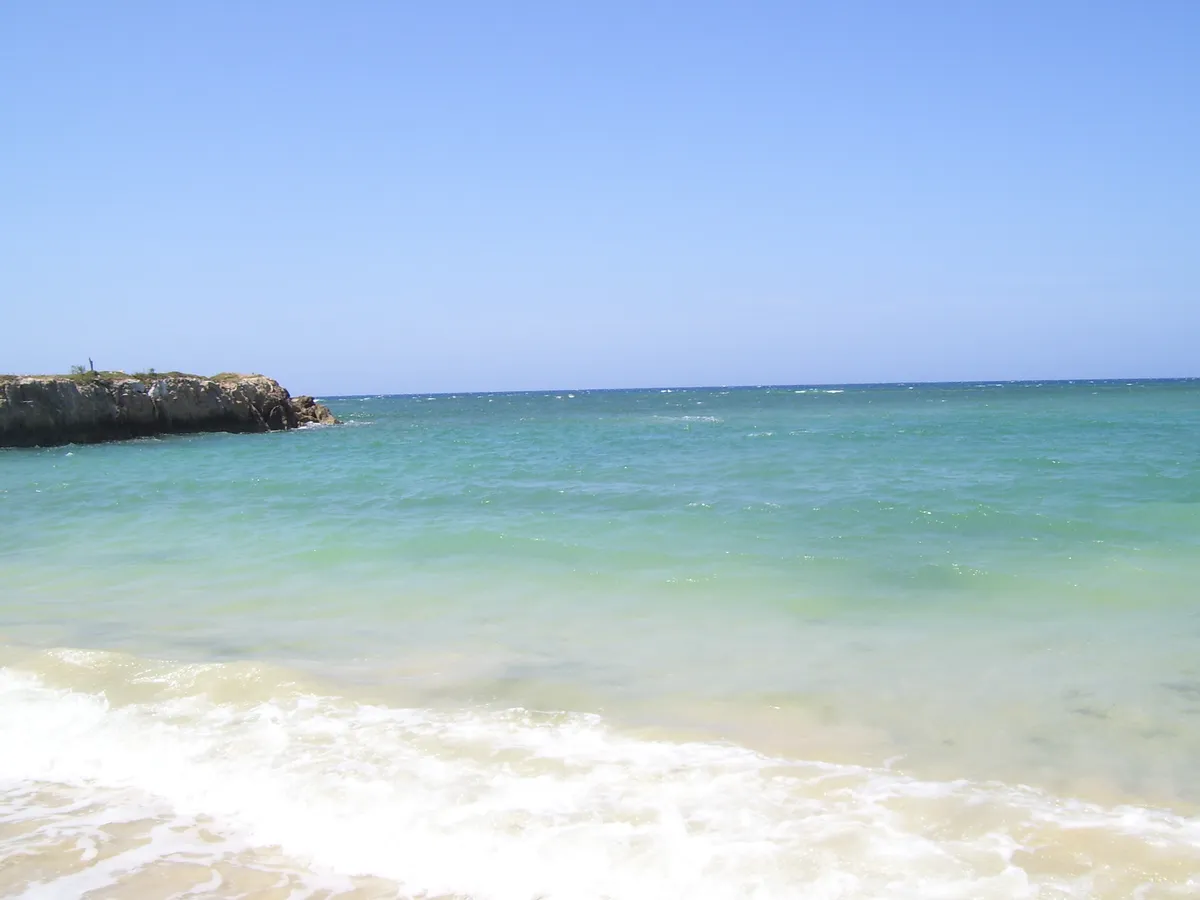
For beaches without the crowds of Puerto Plata or Cabarete, Playa Luperon sits near the bay's entrance and stays calm enough for easy swimming, Playa Grande runs along a protected cove with a small hilltop fortress.
Luperon sits roughly 30 kilometers west of Puerto Plata city on the coastal highway; Gregorio Luperon International Airport (POP), where most visitors land, lies on the far side of Puerto Plata, closer to an hour and a quarter by road. The final approach narrows to small roads better suited to a rental car or driver than a tour bus, part of why the town has stayed off the package circuit. It works best as a stop for independent travelers building their own itinerary, with a few restaurants around the marina serving cruisers and locals. Compared with the country's better-known destinations, expect fewer amenities and far fewer tourists, which is the appeal.
Luperón is the Dominican Republic's best-kept secret harbor — a quiet north coast town where the pace of life matches the gentle rhythm of its sheltered bay. Sailors from around the world anchor here, drawn by one of the safest hurricane harbors in the entire Caribbean.
Unlike the tourist-heavy north coast towns of Cabarete and Sosúa, Luperón remains refreshingly untouched by mass tourism. The town is authentically Dominican: colorful houses line the streets, domino games unfold on every corner, and the local colmados blast bachata into the evening air.
Beyond the harbor, the surrounding coastline hides pristine mangrove estuaries, deserted beaches, and coral reefs teeming with marine life — all without the crowds. This is the Dominican Republic as it was decades ago, before the resort boom changed the coastline forever.
Weather by month
Warm all year. Each bar's height is that month's average daily high, so the chart rises toward the warm summer; teal marks the drier months with the most reliable beach weather. Temperatures show in °F by default; switch to °C with the toggle.
Best time to visit: Jan, Feb, Mar, Apr, Jun, Jul, Aug, Sep, Dec. These months bring the most sun and the fewest rainy days; May, Oct, Nov are the wettest.
Sample itineraries
Practical information
Photo gallery
Beaches here
Playa La Ermita
Beach in Gaspar Hernández, Espaillat.
Playa Luperon
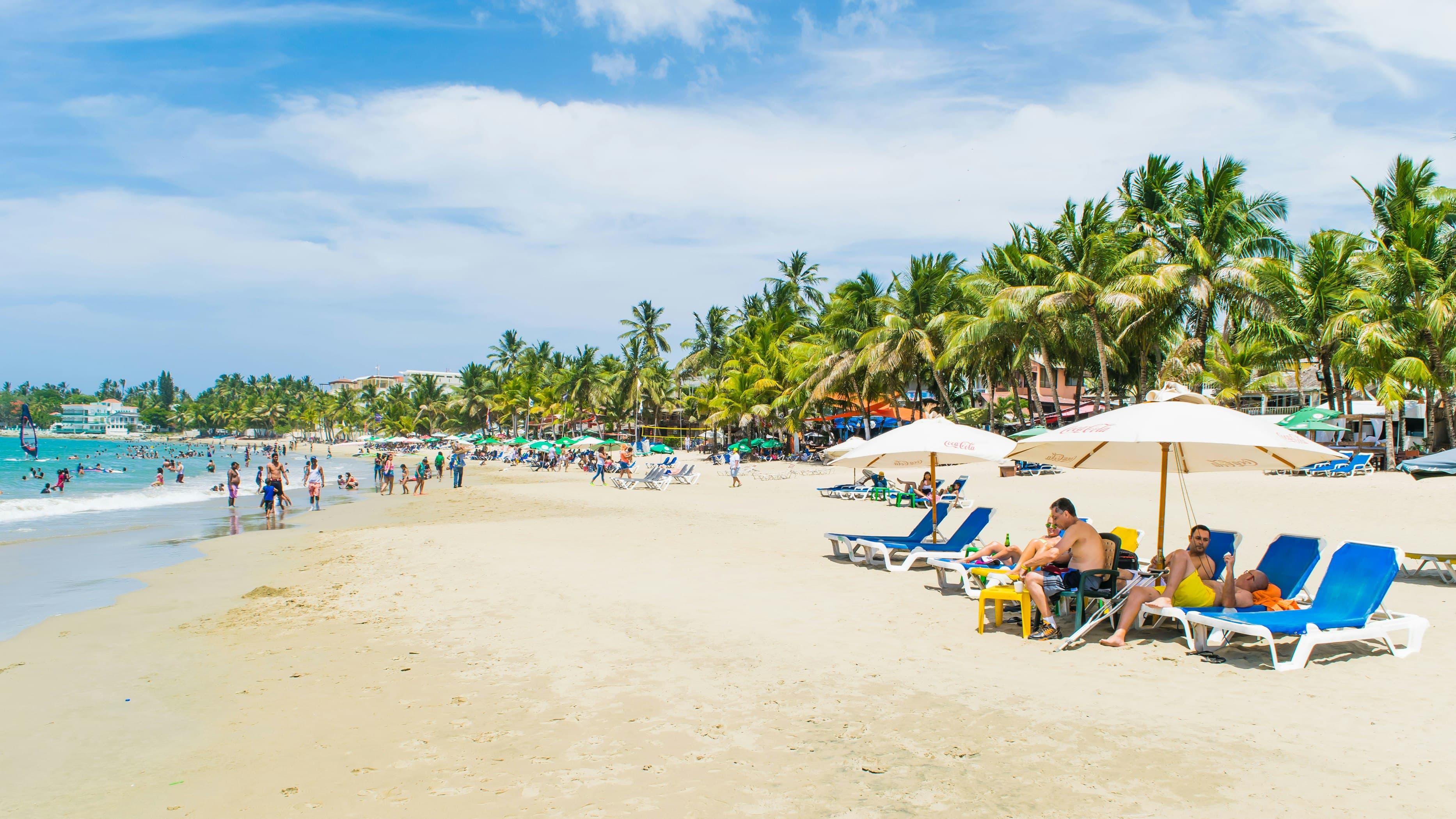
A quiet beach in the sheltered harbor town of Luperon, popular with the Caribbean sailing community. The calm bay, mangrove-fringed shores, and small-town hospitality make it a serene and off-the-radar coastal retreat.
Playa Grande Luperón
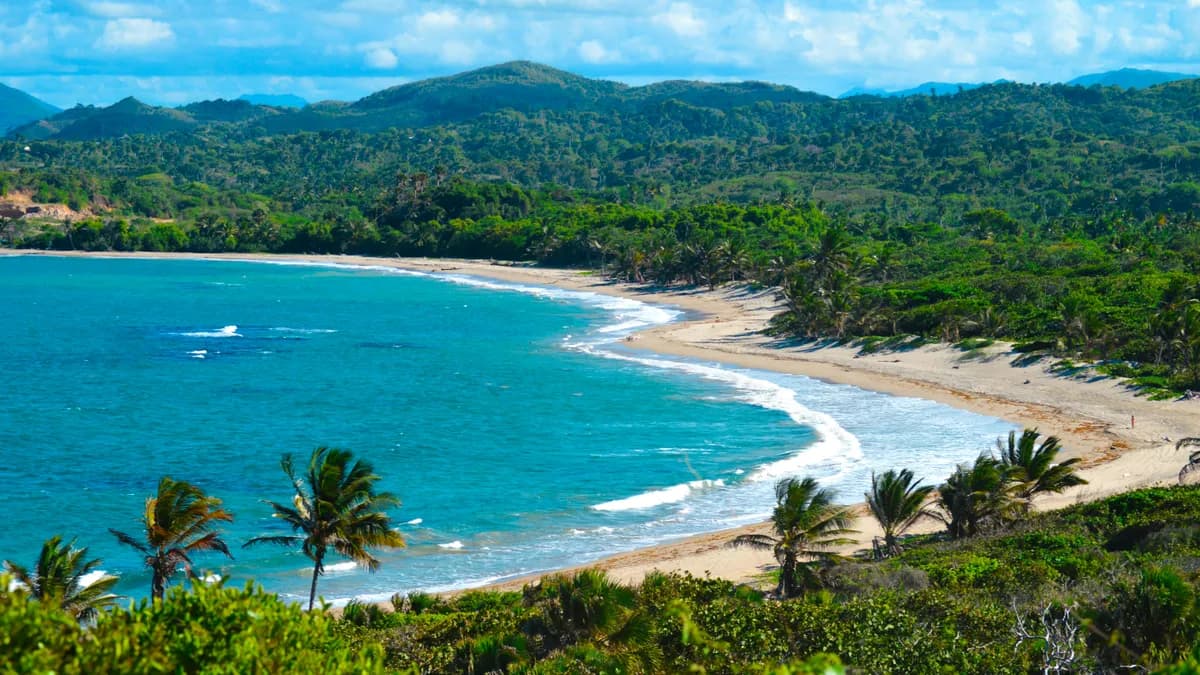
Long golden beach outside the harbor town of Luperón with gentle waves, coconut palms, and a peaceful atmosphere far removed from the tourist crowds of the eastern coast.
Luperón questions
Is Luperon safe for tourists?
+
Luperon is a quiet, friendly harbor town that sees mostly sailing visitors. It is generally safe, though you should exercise normal precautions. The marina area and town center are well-frequented during the day. Avoid walking alone at night on unlit roads.
How do I get to Luperon?
+
Luperon is about 20 km west of Puerto Plata. From Puerto Plata's Gregorio Luperon International Airport (POP), take a taxi (around RD$2,000 / US$35) or rent a car. There is no direct public bus, but guaguas run from Puerto Plata to Luperon for about RD$100 (US$1.75).
What is there to see at La Isabela ruins?
+
La Isabela is the site of the first permanent European settlement in the Americas, founded by Columbus in 1493. The archaeological park includes excavated foundations, a small museum with Taino and colonial artifacts, and a chapel. Admission is RD$100 (US$1.75). Allow 1-2 hours for a visit.
How many days should I spend in Luperon?
+
One to two days is enough for most visitors. You can explore the town and La Isabela ruins in a day. Sailors often stay longer to enjoy the protected harbor. Combine Luperon with a visit to Puerto Plata or the beaches at Punta Rucia for a fuller trip.
Can I anchor my sailboat in Luperon harbor?
+
Yes, Luperon Bay is one of the best-protected hurricane holes in the Caribbean. Many cruisers stay for weeks or months. Harbor anchoring charges may apply; confirm local clearance arrangements on arrival. The harbor has a mud bottom with excellent holding. Several services including dinghy docks, Wi-Fi cafes, and provisioning are available in town.
Where can I eat in Luperon?
+
The town has several small comedores serving Dominican staples like la bandera (rice, beans, and meat) for RD$200-350 (US$3.50-6). Near the marina, a few restaurants cater to the sailing crowd with fresh seafood and cold beer. Fish prices vary by restaurant; Puerto Blanco Marina lists red snapper at RD$1,250.
Keep exploring
Nearby Destinations
Explore more places near Luperón