Cabrera
Cliff-lined fishing town on the far eastern end of the north coast, where a freshwater cenote, a cove reached by about 100 rock-cut steps, and a protected headland sit minutes apart, still mostly free of resort crowds.
Cabrera
Cliff-lined fishing town on the far eastern end of the north coast, where a freshwater cenote, a cove reached by about 100 rock-cut steps, and a protected headland sit minutes apart, still mostly free of resort crowds.
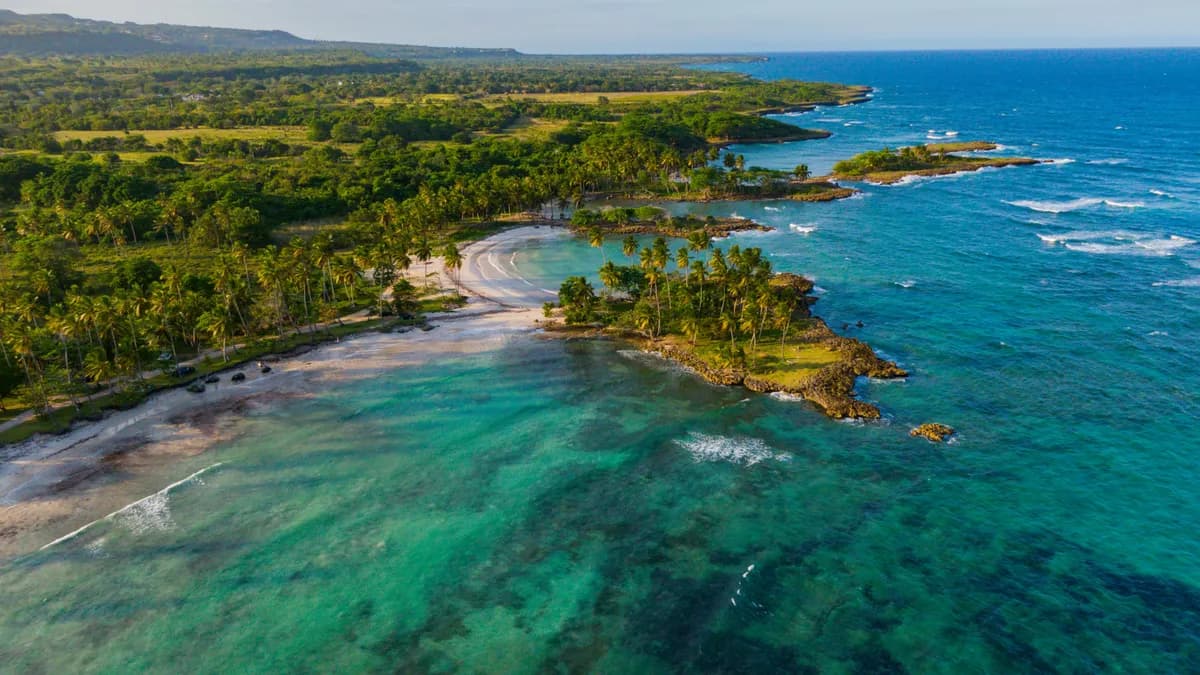
Cabrera is a small municipality in María Trinidad Sánchez province, on the eastern end of the Dominican Republic's north coast, about 130 kilometers north of Santo Domingo. It sits on limestone bluffs above the Atlantic, at the western edge of what old charts called Scottish Bay. The settlement was previously known as Tres Amarras and became Cantón Cabrera in 1891, named for José Cabrera, a leader of the Grito de Capotillo that touched off the Dominican Restoration War. It is still a fishing and farming town, cattle and coconuts mostly, and draws travelers for the reason it stayed quiet: cliffs instead of resort strips, and beaches you have to work to reach.
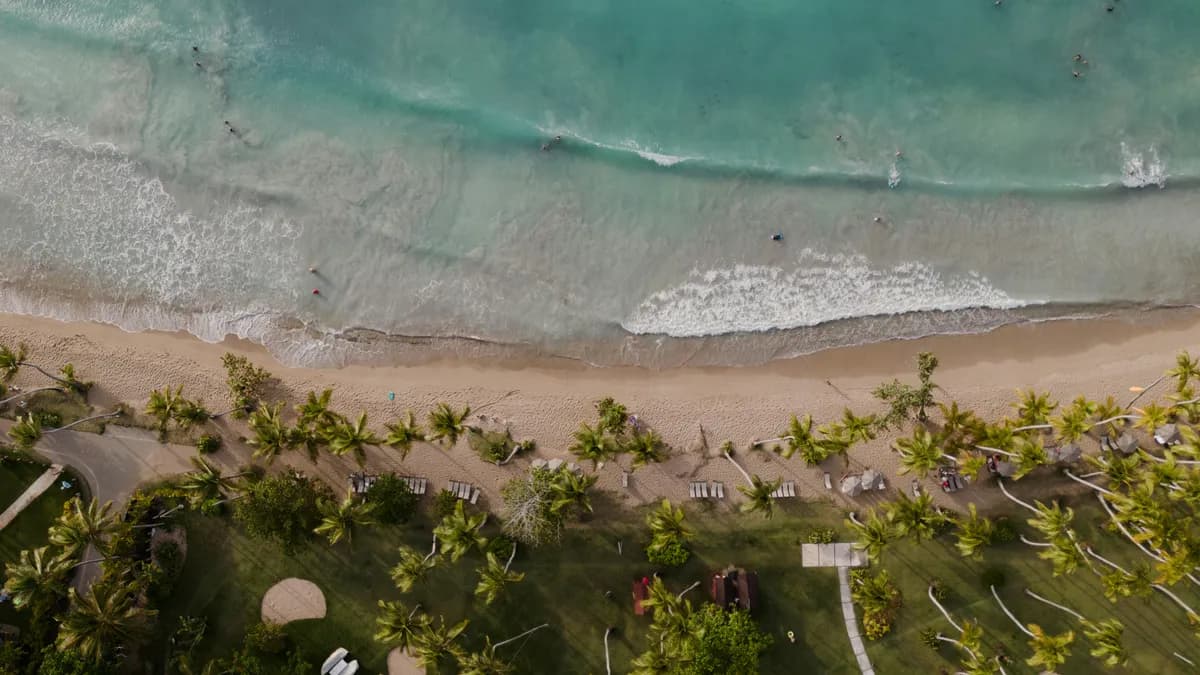
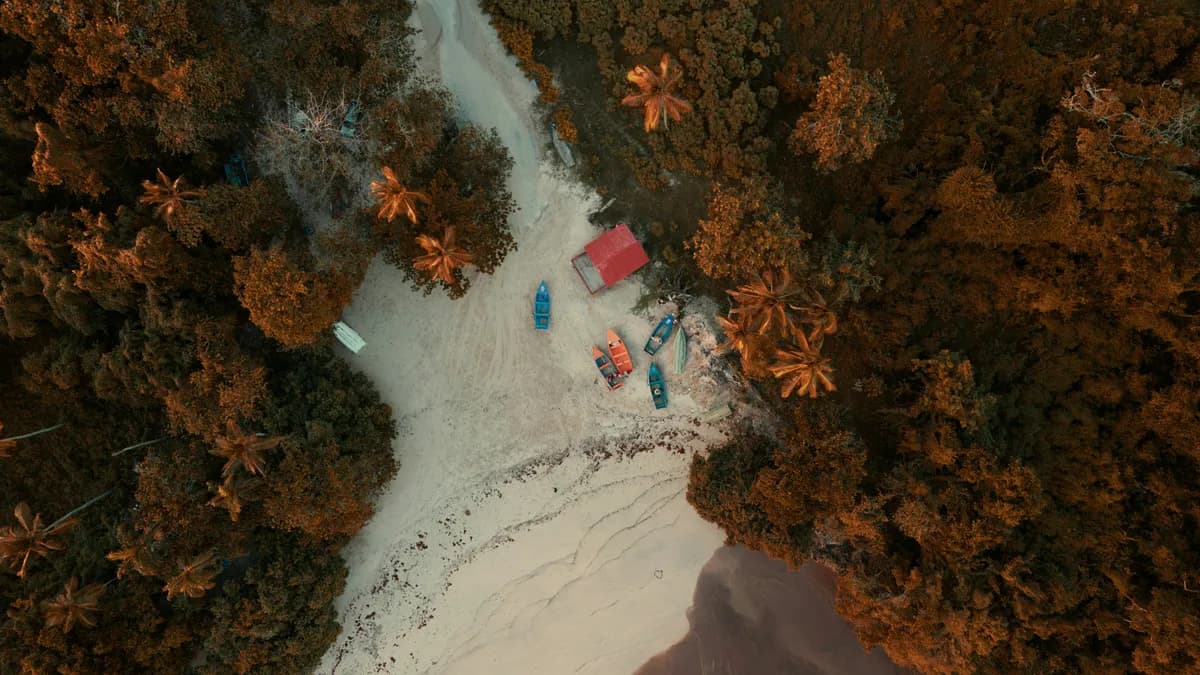
The signature spot is Playa Diamante, a cove at the foot of sea cliffs where an underground river meets the ocean, keeping the water shallow and calm and often cloudier than the open Atlantic past the point. Reaching it means roughly 100 steps carved into the rock, a natural barrier that has kept it from becoming a parking-lot beach.
Inland, Laguna Dudú is the other anchor: a freshwater cenote roughly 32 meters deep, two lagoons joined by a submerged tunnel, with turquoise water, cliff-jumping platforms, and a zipline. A Taino cave nearby marks a coast inhabited long before the Spanish arrived. West toward Río San Juan, the road passes Cabo Francés Viejo, a protected headland of about 1.5 square kilometers made a Natural Monument in 2009, with a trail to a cliff-top ocean lookout.
Cabrera's profile is rising. In May 2025, the former baseball star Alex Rodriguez and the Dominican tourism ministry announced a development of over a billion dollars for the neighboring Playa Grande coastline, tied to Aman's Amanera property and Discovery Land Company. For now, Cabrera stays low-key: guesthouses and seafood shacks, not branded resorts.
The nearest international airport is Samana El Catey (AZS), about an hour and fifteen minutes from Casablanca; a rental car is close to essential, as public transport here is thin. Río San Juan is about 22 kilometers west, so Cabo Francés Viejo, Playa Diamante, and Laguna Dudú fold into one day, or a longer north coast loop of beaches and destinations. Check the north coast itineraries and the restaurants in Río San Juan and Cabarete, since Cabrera's own dining runs to fresh seafood and little else.
Cabrera is the north coast's most dramatic hidden gem — a small town perched on clifftops overlooking the Atlantic where the coastline reaches its most spectacular heights. The star attraction is Playa Diamante, a pristine beach nestled at the base of towering sea cliffs, accessible only by a steep trail that adds to its sense of discovery.
The town has quietly attracted a community of expats and nature lovers drawn by the extraordinary coastal scenery, affordable living, and lack of tourist infrastructure. This isn't a party town or a resort zone — it's a place for people who appreciate raw natural beauty and genuine Dominican hospitality.
From clifftop viewpoints, the Atlantic stretches to the horizon in every direction, and the coastline reveals hidden coves, blowholes, and sea caves that few visitors ever see. Cabrera feels like the Dominican Republic's answer to Big Sur — dramatic, unspoiled, and deeply satisfying for those who find it.
Weather by month
Warm all year. Each bar's height is that month's average daily high, so the chart rises toward the warm summer; teal marks the drier months with the most reliable beach weather. Temperatures show in °F by default; switch to °C with the toggle.
Best time to visit: Jan, Feb, Mar, Apr, Jun, Jul, Aug, Sep, Dec. These months bring the most sun and the fewest rainy days; May, Oct, Nov are the wettest.
Sample itineraries
Practical information
Photo gallery
Beaches here
Cabrera questions
How do I get to Playa Diamante?
+
Playa Diamante is a secluded beach at the base of tall cliffs near Cabrera. Access is from the paved main road between Nagua and Cabrera. Drive or take a motoconcho to the access point on the coastal road east of Cabrera. There is no entrance fee. Bring your own water and snacks as there are no vendors.
Is Cabrera worth visiting or should I stay in Rio San Juan?
+
Cabrera is quieter and more off-the-beaten-path than Rio San Juan, which makes it perfect for travelers seeking hidden beaches and dramatic cliff scenery. If you want more restaurants and tour options, base yourself in Rio San Juan and day-trip to Cabrera. If you prefer solitude and nature, Cabrera itself is a rewarding base.
Do I need a rental car in Cabrera?
+
Yes, a rental car or at least a scooter is strongly recommended. Cabrera's best attractions are spread along the coast and rural roads. Public transport is limited to infrequent guaguas on the main highway. Motoconchos can take you to some spots, but a car gives you the freedom to explore hidden beaches at your own pace.
How many days should I spend in Cabrera?
+
Two days is ideal. Spend one day exploring the coastal cliffs and hidden beaches, and another visiting Dudu Lagoon (shared with Rio San Juan area) and the lush countryside. If you are a hiker or beach explorer, you could easily fill three days discovering lesser-known spots.
What hidden beaches can I find near Cabrera?
+
Besides Playa Diamante, look for Playa El Breton (a small, uncrowded bay enclosed by imposing cliffs), Playa La Entrada, and several unnamed coves along the cliffs. Many require a short hike or scramble. Ask locals for directions as some are not well signed. Always check tide conditions before descending to cliff-base beaches.
Keep exploring
Nearby Destinations
Explore more places near Cabrera