Río San Juan
Río San Juan is a working fishing town on the Dominican Republic's north coast, built around Laguna Gri-Gri, a mangrove lagoon toured by boat and linked to the Atlantic, with the cliff-lined Playa Grande and calm cove of Playa Caletón just outside town.
Río San Juan
Río San Juan is a working fishing town on the Dominican Republic's north coast, built around Laguna Gri-Gri, a mangrove lagoon toured by boat and linked to the Atlantic, with the cliff-lined Playa Grande and calm cove of Playa Caletón just outside town.
Río San Juan sits on the Dominican Republic's north coast in María Trinidad Sánchez province, roughly 55 miles (about 1 hour 40 minutes by the winding coastal road) east of Puerto Plata. It remains a working fishing and farming town rather than a resort strip, which is why it tends to draw travelers who have already done Puerto Plata or Punta Cana and want the coast without the crowds.
The town's centerpiece is Laguna Gri-Gri, a mangrove lagoon fed by an inland stream and connected to the Atlantic through a short channel lined with dense mangroves. It takes its name from the gri-gri tree that grows thick along the banks, and it is counted among the country's significant bird sanctuaries. Local boatmen run short tours through the mangrove passages to the Cueva de las Golondrinas, a limestone sea cave where swallows nest along the walls, before finishing near Playa Caletón.
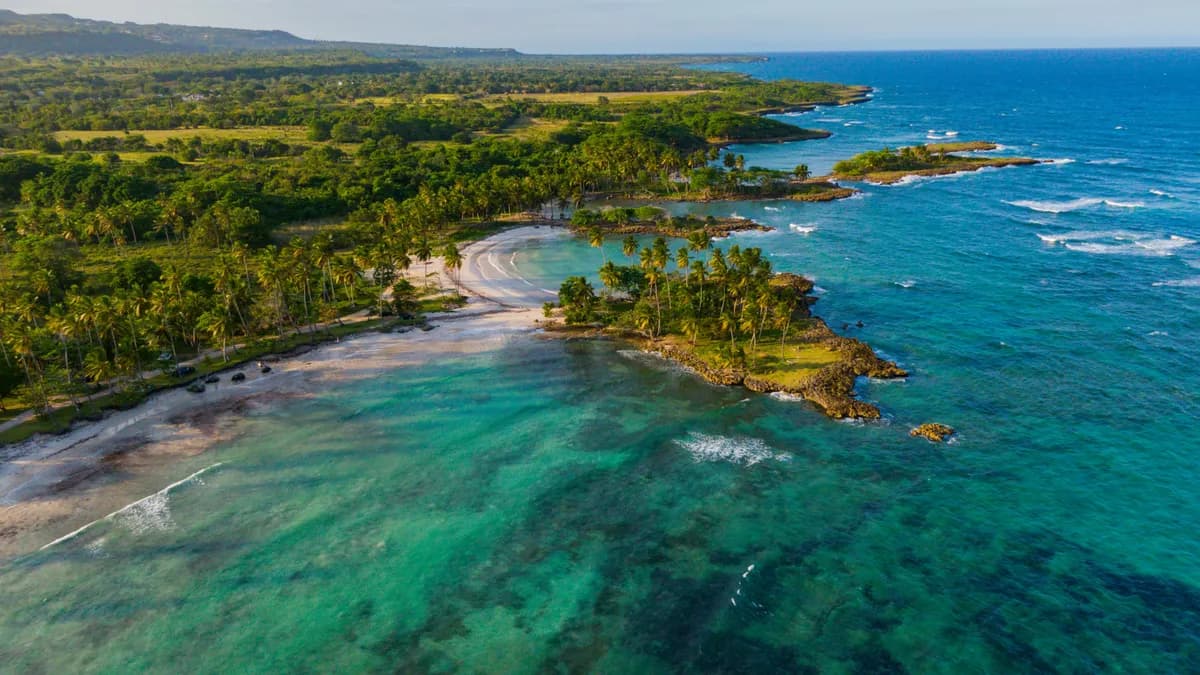
Just outside town the coastline turns dramatic. Playa Grande runs for about two kilometers beneath tall cliffs and coconut palms, with Atlantic swells strong enough that it draws experienced surfers rather than casual swimmers. The same cliffs carry Playa Grande Golf Course, which opened in 1997 as the last course Robert Trent Jones Sr. designed outside the United States and was later reworked by his son Rees Jones. Its ten oceanfront holes, strung along the bluffs, have earned it the nickname "Pebble Beach of the Caribbean." Playa Caletón, by contrast, is a small, mangrove-fringed cove with calm, shallow water, a practical counterpoint for anyone who wants to swim rather than fight waves. Quieter still are Playa Preciosa, tucked behind dense tree cover, and Playa de Los Muertos, neither lined with beach clubs or vendors.
Most visitors arrive by rental car or transfer, either along the coastal highway from Puerto Plata's Gregorio Luperón International Airport (roughly 1.5 hours) or from Cibao International Airport near Santiago (about 2.5 hours). Cabrera sits east and Nagua roughly 28 miles east along the same road, which makes Río San Juan a natural stop on a longer north coast itinerary rather than a standalone base. The drier months, roughly Jan. to Mar. on average, tend to bring calmer conditions for boat tours; pair the trip with a seafood lunch at a harborside restaurant before continuing to the rest of the Dominican Republic destinations.
Río San Juan is the north coast's most enchanting small town — a colorful fishing village built around the magical Laguna Gri-Gri, a mangrove lagoon that opens through narrow channels to the open sea. Boat rides through the lagoon are among the most memorable experiences in the Dominican Republic.
The town sits between two of the north coast's most spectacular beaches: Playa Grande, a golden-sand beach consistently ranked among the Caribbean's best, and Playa Caletón, a hidden cove framed by dramatic cliffs and coconut palms.
Despite these extraordinary attractions, Río San Juan remains blissfully uncrowded. It's a place where Dominican families vacation, where fishermen still sell their catch at the harbor each morning, and where the pace of life invites you to slow down and savor every moment.
Weather by month
Warm all year. Each bar's height is that month's average daily high, so the chart rises toward the warm summer; teal marks the drier months with the most reliable beach weather. Temperatures show in °F by default; switch to °C with the toggle.
Best time to visit: Jan, Feb, Mar, Apr, Jun, Jul, Aug, Sep, Dec. These months bring the most sun and the fewest rainy days; May, Oct, Nov are the wettest.
Sample itineraries
Practical information
Facts on this page were last compared with their sources on . Details may have changed since. How we check
Beaches here
Playa Grande
Consistently ranked among the most beautiful beaches in the Caribbean, Playa Grande is a breathtaking crescent of golden sand framed by dramatic jungle-covered cliffs. Powerful Atlantic waves make it a thrilling spot for experienced surfers and body boarders.
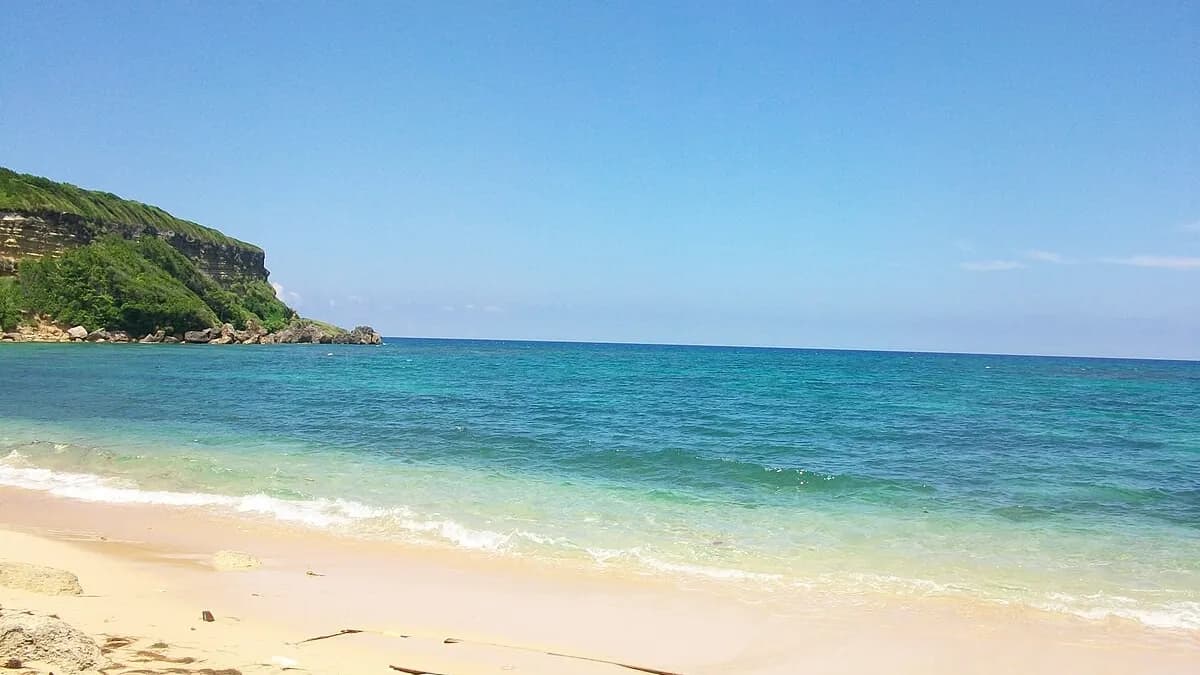
Playa Caleton
A small, secluded cove beach near Rio San Juan. The protected waters and intimate setting make it a peaceful escape from the more popular beaches of the region.
Río San Juan questions
Is Playa Grande worth visiting?
+
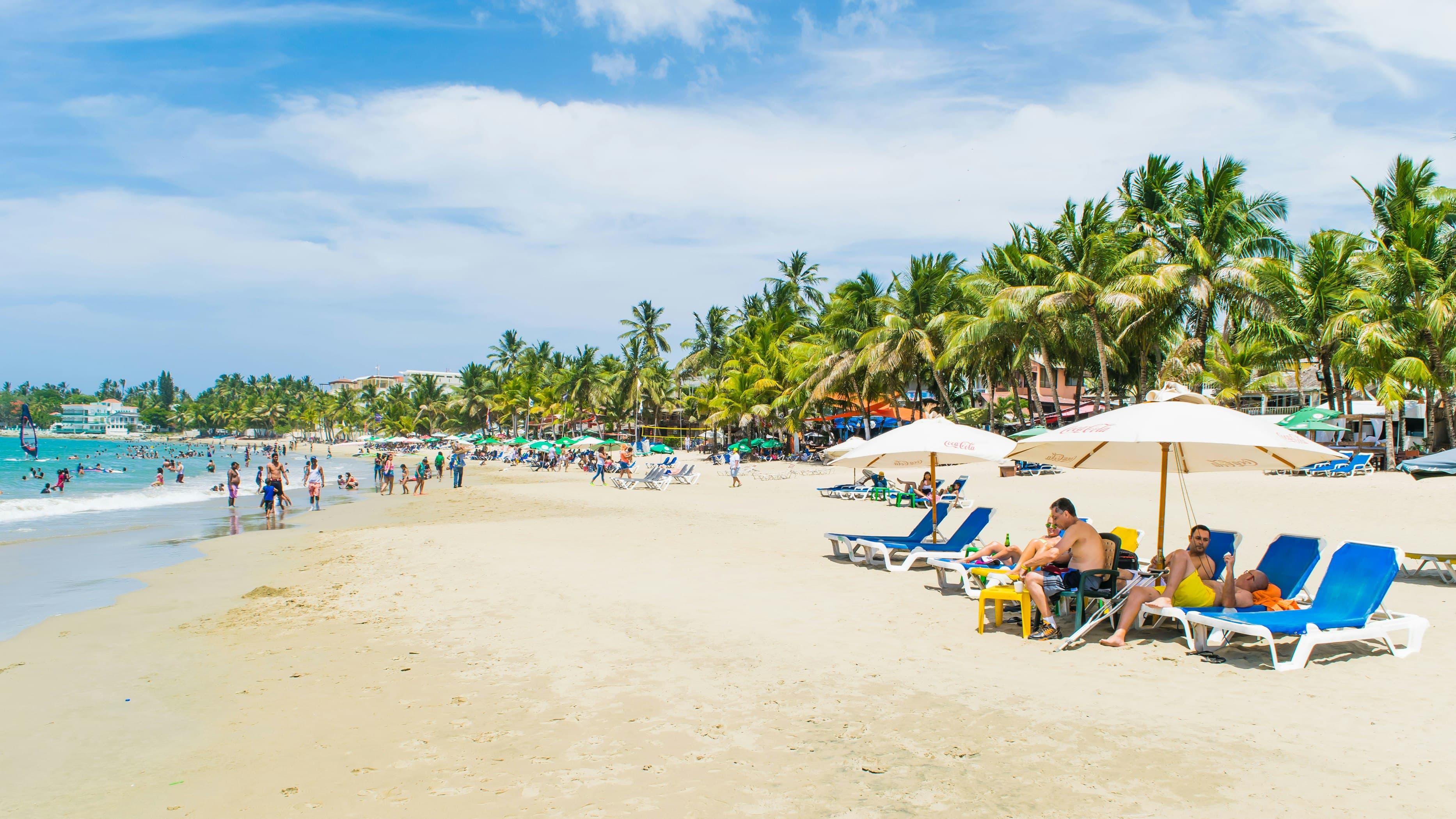
Absolutely. Playa Grande is one of the most beautiful beaches in the Dominican Republic, with golden sand, turquoise water, and dramatic cliffs. It is about 10 minutes east of Rio San Juan. There are food vendors and chair rentals (around RD$200 / US$3.50). Be mindful of the waves, which can be strong, especially in winter.
Do I need a car in Rio San Juan?
+
A car is helpful for reaching Playa Grande, Dudu Lagoon, and other nearby attractions, but not strictly necessary. Motoconchos and local taxis can get you to most places for RD$100-500. The town itself is walkable. If you plan to explore the entire north coast between Cabrera and Nagua, renting a car is recommended.
Where should I eat in Rio San Juan?
+
The town has several good seafood restaurants along the main road and near the lagoon. Fresh fish plates cost RD$400-700 (US$7-12). Try the local specialty of pescado con coco (fish in coconut sauce). For budget meals, comedores in the town center serve lunch plates for RD$200-300 (US$3.50-5).
How do I get to Dudu Lagoon?
+
Dudu Lagoon is located in Cabrera, east of Rio San Juan. You can take a motoconcho (RD$100-200 / US$1.75-3.50) or drive. Admission is RD$400 for ages 12 and up. The site features two connected freshwater cenotes where you can swim. There is also a zip line over the lagoon for RD$100.
What is Laguna Gri-Gri and how do I visit it?
+
Laguna Gri-Gri is a mangrove-lined lagoon at the edge of town. Boat tours depart from the dock near the central park and last about 1-1.5 hours, costing RD$500-800 (US$9-14) per person. You'll glide through mangrove tunnels, see Cueva de Las Golondrinas (Cave of the Swallows), and visit a coastal cliff area. Tours run daily from around 9 AM to 4 PM.
What is the best time to visit Rio San Juan?
+
The driest period on average is Jan. to Mar. and temperatures hover around 27-30 C (80-86 F). Summer months (June-August) are also pleasant but rainier. Hurricane season runs from June 1 to November 30; Río San Juan's wettest period on average is Oct. to Dec. The town is enjoyable year-round as it never gets overly crowded.
Keep exploring
Nearby Destinations
Explore more places near Río San Juan