Salcedo
Salcedo is the Cibao Valley town where the Mirabal sisters grew up and organized against the Trujillo dictatorship. Their family home at San José de Conuco is now a solemn museum, and the date of their 1960 murder is marked worldwide against violence against women.
Salcedo
Salcedo is the Cibao Valley town where the Mirabal sisters grew up and organized against the Trujillo dictatorship. Their family home at San José de Conuco is now a solemn museum, and the date of their 1960 murder is marked worldwide against violence against women.
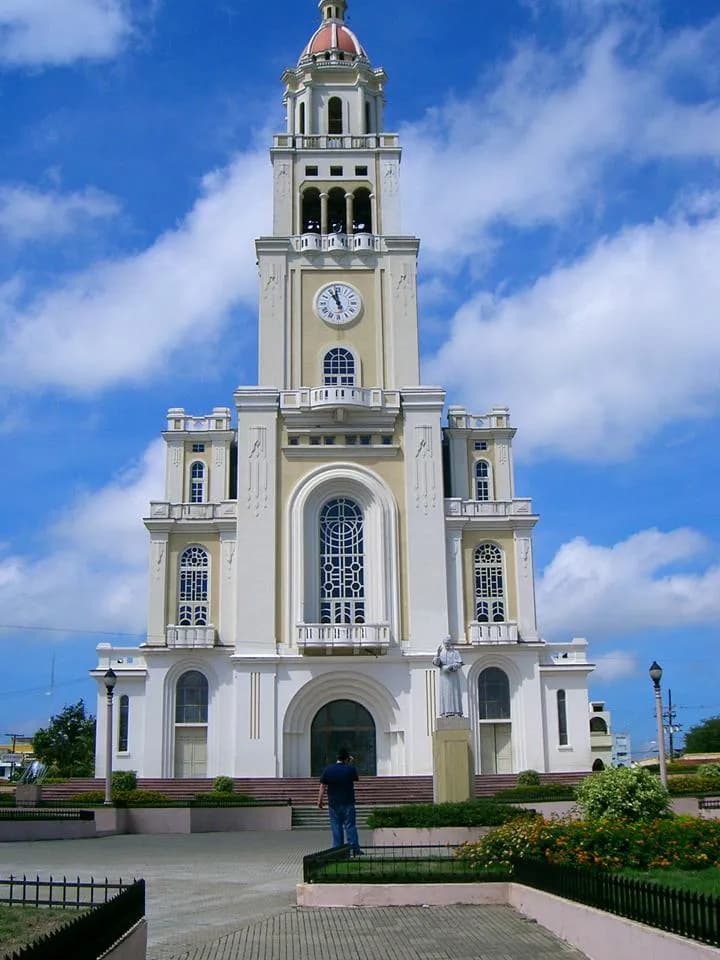
Salcedo is the capital of Hermanas Mirabal province, a farming town whose municipality had 41,340 residents in the 2022 census in the Cibao Valley, south of the Cordillera Septentrional. It draws visitors for one reason above all: it is where Patria, Minerva, and Maria Teresa Mirabal grew up and organized against the dictatorship of Rafael Trujillo through the clandestine 14th of June Movement, in which they were known as las Mariposas, the butterflies. On November 25, 1960, the three were murdered on a mountain road while returning from visiting their imprisoned husbands. That date is now marked worldwide as the International Day for the Elimination of Violence Against Women, the designation the United Nations adopted in 1999.
The family home sits in San José de Conuco, a few kilometers outside town. Opened as the Casa Museo Hermanas Mirabal in 1994, it keeps the sisters' furniture, clothing, and personal effects largely as they were, and its garden holds the relocated graves of the three sisters alongside Minerva's husband, Manolo Tavarez Justo. Guided visits lead through the house before continuing into the memorial grounds. It ranks among the most visited historical sites in the country's interior, less for scale than for how directly it ties an international day to an actual home.
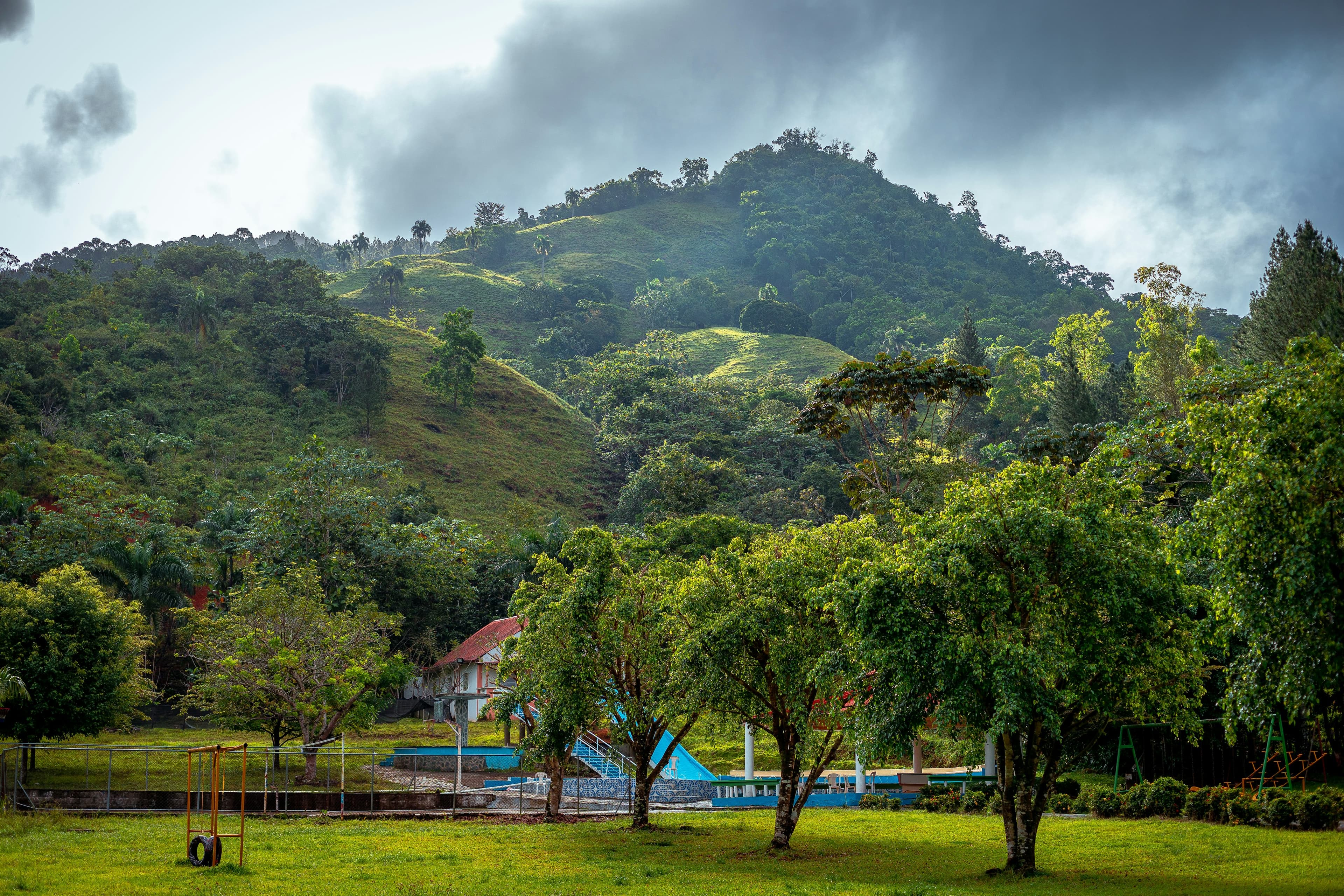
Ojo de Agua takes its name from a natural spring that still draws local families to swim, a useful stop before or after the museum to see the Cibao countryside working as it always has: small plots of cacao, plantain, and cassava threaded between low hills. Salcedo has no beach, no resort strip, and little nightlife. The town center is modest, built around its role as a provincial capital rather than as a tourist base. What it offers instead is a grounded sense of place tied to a specific, well-documented history.
Most visitors treat Salcedo as a half-day trip rather than a base. Santiago and its Cibao International Airport are roughly 30 to 40 km away, under an hour by car; Santo Domingo is about 160 km to the south. Moca and San Francisco de Macoris are both short drives and easy to pair with the museum for anyone routing through the Cibao. The visit combines naturally with a wider look at the region's Cibao destinations or a stop at one of the area's restaurants serving traditional mountain cooking. To fold Salcedo into a longer Dominican Republic route, see our itineraries.
Go with some grounding in who the Mirabal sisters were and why November 25 matters; the museum rewards visitors who arrive informed rather than cold. Weekday mornings tend to be quieter than weekends, and modest dress suits the site's memorial character.
Salcedo is hallowed ground in Dominican history — the hometown of the Mirabal sisters, three extraordinary women whose courageous resistance against the Trujillo dictatorship cost them their lives and inspired a global movement. Their assassination on November 25, 1960, was so profoundly unjust that the United Nations designated that date as the International Day for the Elimination of Violence Against Women — a tribute that echoes from this small Cibao town to every corner of the world.
The province itself was renamed Hermanas Mirabal in their honor, and the Mirabal Sisters Museum, housed in the family's actual home, is one of the most important cultural and historical sites in the Dominican Republic. Walking through the rooms where Patria, Minerva, and María Teresa spent their final months, seeing their personal belongings, and standing at the site where their memory is preserved is a deeply moving experience that no visitor forgets.
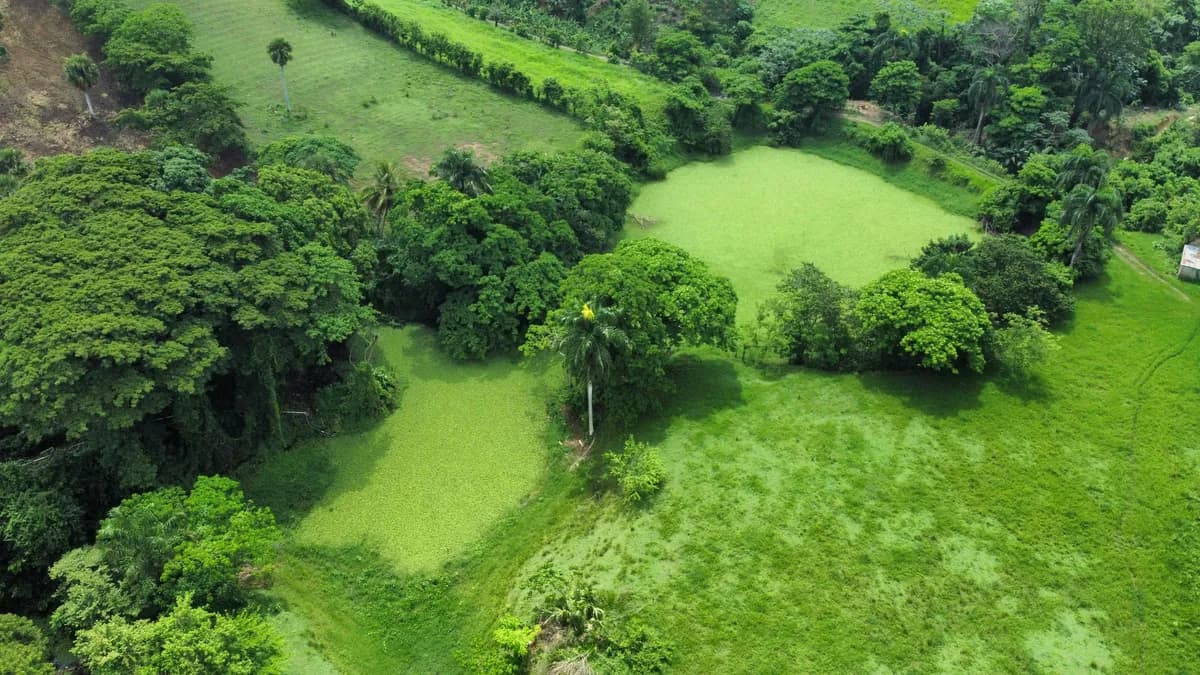
Beyond its historical significance, Salcedo offers an intimate window into rural Cibao life. The town is surrounded by rich farmland where tobacco, cacao, and coffee grow in abundance. The pace of life is slow, the people are welcoming, and the landscape of rolling green hills is quintessentially Dominican. Coming here is not just a history lesson — it's an immersion into the culture and values that shaped a nation.
Weather by month
Warm all year. Each bar's height is that month's average daily high, so the chart rises toward the warm summer; teal marks the drier months with the most reliable beach weather. Temperatures show in °F by default; switch to °C with the toggle.
Best time to visit: Jan, Feb, Mar, Apr, Jul, Nov, Dec. These months bring the most sun and the fewest rainy days; May, Jun, Aug, Sep, Oct are the wettest.
Sample itineraries
Practical information
Photo gallery
Salcedo questions
What is the Mirabal Sisters Museum?
+
The Museo Hermanas Mirabal is dedicated to Patria, Minerva, and Maria Teresa Mirabal, three sisters who became symbols of resistance against the Trujillo dictatorship. They were assassinated on November 25, 1960, a date now recognized worldwide as the International Day for the Elimination of Violence Against Women. The museum is housed in their former home and displays personal belongings, letters, and exhibits about their lives and sacrifice.
How do I get to the Mirabal Sisters Museum?
+
The museum is located in Conuco, a community about 5 km outside Salcedo town. From Salcedo center, take a motoconcho (RD$50-100 / US$1-1.75) or taxi. The museum is open Tuesday through Sunday, 9 AM to 5 PM. Admission is approximately RD$100 (US$1.75). Allow 1-2 hours for the visit. Guided tours are available in Spanish.
Is Salcedo worth visiting?
+
For anyone interested in Dominican history and culture, Salcedo is a meaningful destination. The Mirabal Sisters Museum is one of the most important cultural sites in the country. The town itself is small and quiet, with a pleasant central park and friendly residents. It works well as a half-day trip from San Francisco de Macoris or as part of a Cibao Valley tour.
What else can I do in Salcedo?
+
Beyond the museum, Salcedo is known for its agricultural heritage, particularly coffee and cacao. The surrounding hills are green and scenic. The town has a small but lively market and several local restaurants serving traditional Dominican food. It pairs well with visits to Moca and San Francisco de Macoris for a cultural road trip through the Cibao.
How do I get to Salcedo?
+
Salcedo, the seat of Hermanas Mirabal province, is about 150 km (2.5 hours) north of Santo Domingo and about 20 km from San Francisco de Macoris. Guaguas and public transport connect it to San Francisco and Santiago. From Santiago, the drive is about 1.5 hours. There is no nearby airport; use Cibao International (STI) in Santiago.
Keep exploring
Nearby Destinations
Explore more places near Salcedo