Nagua
Nagua is the working capital of Maria Trinidad Sanchez province, a rice, cacao, and coconut town on the coastal highway between Puerto Plata and the Samana Peninsula. It reads as a fuel-and-food waypoint rather than a resort base, which is exactly its usefulness on a north-coast road trip.
Nagua
Nagua is the working capital of Maria Trinidad Sanchez province, a rice, cacao, and coconut town on the coastal highway between Puerto Plata and the Samana Peninsula. It reads as a fuel-and-food waypoint rather than a resort base, which is exactly its usefulness on a north-coast road trip.
Nagua is the provincial capital of Maria Trinidad Sanchez, a working town on the Dominican Republic's northeast coast where the highway from Puerto Plata bends south toward the Samana Peninsula. It is not a resort town: there are no all-inclusives lining a curated beach, and that is the point. Nagua is where the north coast's agricultural economy actually happens, a low-cost anchor for travelers routing between Rio San Juan, Cabrera, and Samana rather than a destination in its own right.
The town sits only a few meters above sea level, much of it on land that barely clears the water table. It grew out of an older river-mouth settlement and became a municipality in 1938, briefly named Villa Julia Molina under Trujillo before reverting to Nagua. That flood-prone geography is one reason locals farm rather than build hotels on the coastline. The nearby settlement of Matanza was devastated by the 1946 earthquake and tsunami, and many survivors resettled in what is now Nagua.
What Nagua does have is the Boba River valley, productive countryside planted with rice paddies, coconut groves, and cacao. The province is one of the country's steadier cacao regions, and small farms here sell beans into the bean-to-bar trade, supplying overseas chocolatiers. Dairy farming matters too. None of this is staged for visitors, which is why a drive through it feels different from a resort excursion.
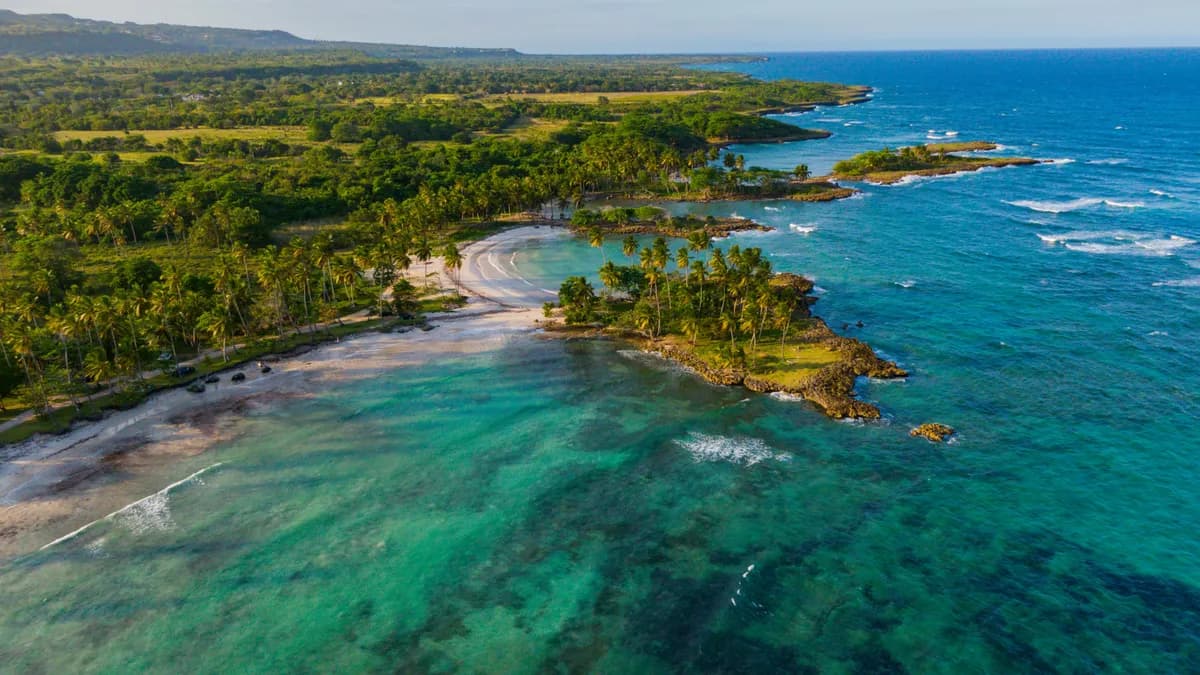
On the coast, the more distinctive beaches sit west toward Rio San Juan. Playa La Entrada, off the Nagua-Cabrera road, is where the Arroyo Salado meets the Atlantic in a shallow mix of fresh and salt water, better for a swim than for surf. Further west, Playa Grande and Playa Caleton near Rio San Juan are the marquee stops; Rio San Juan is about 45 km away. For the north coast's wider range of beaches, that stretch is the more scenic detour.
Nagua works best as a waypoint. Samana El Catey International Airport (AZS) sits about 18 km east on the Nagua-Samana highway, a realistic first or last stop for anyone flying into Samana province, and Santo Domingo is roughly 170 km south. Most travelers stop for food or fuel and drive on; a few use it as a low-cost base for Playa Grande and Rio San Juan. It fits road-trip itineraries linking the Amber Coast to Samana, and pairs with a meal at one of the area's restaurants for fresh catch off the local fleet.
Nagua is the crossroads of the north coast — a lively commercial town where the road from Santiago meets the Atlantic coastline, and where travelers heading to the Samaná Peninsula pass through en route to some of the country's most beautiful destinations.
While Nagua isn't a traditional tourist destination, it offers something increasingly rare: an authentic Dominican city experience with zero tourist pretense. The bustling central market, the malecón along the coast, and the surrounding cacao and coconut plantations provide genuine cultural immersion.
For travelers interested in agriculture and rural life, the Nagua area is a revelation. This is the heart of the Dominican Republic's cacao and coconut industries, where you can visit working plantations and understand the origins of the country's most important export crops.
Weather by month
Warm all year. Each bar's height is that month's average daily high, so the chart rises toward the warm summer; teal marks the drier months with the most reliable beach weather. Temperatures show in °F by default; switch to °C with the toggle.
Best time to visit: Jan, Feb, Mar, Apr, Jun, Jul, Aug, Sep, Dec. These months bring the most sun and the fewest rainy days; May, Oct, Nov are the wettest.
Sample itineraries
Practical information
Photo gallery
Nagua questions
Is Nagua a tourist destination or just a transit stop?
+
Nagua is primarily a transit hub on the route between the north coast and the Samana Peninsula. Most travelers pass through rather than stay. However, it has a lively local market, nearby cacao plantations, and authentic Dominican culture that adventurous travelers may enjoy. It is not a beach destination.
Can I visit a cacao plantation near Nagua?
+
Yes, several cacao farms in the Nagua area offer tours. You can see the full process from cacao pod to chocolate. Ask at your hotel or the local tourism office for current options. Ask locally for current tour prices and duration. Some include tastings of fresh cacao and handmade chocolate.
What can I buy at Nagua's market?
+
The Nagua market is a bustling Dominican mercado where you can find fresh tropical fruits, vegetables, local cheeses, handmade dulces (sweets), cacao products, and everyday goods. It is a great place to experience authentic Dominican commerce. Prices are very low compared to tourist areas. The market is most active in the morning hours.
Is there anything to see on the Nagua coast?
+
The coastline near Nagua has a few local beaches like Playa de Nagua, but they are not comparable to the resort beaches. The water can be rough and the sand is darker. The area is more interesting for its agricultural landscape, rice paddies, and cacao groves. Most visitors enjoy Nagua as a cultural stop rather than a beach destination.
How do I get from Nagua to Las Terrenas or Samana?
+
From Nagua, Las Terrenas is east-southeast of Nagua via a winding mountain road. Guaguas depart from the Nagua bus terminal regularly; confirm the fare before travel. To Santa Barbara de Samana, the drive is about 1.5 hours east. Caribe Tours also operates buses from Nagua to Samana. A rental car gives more flexibility on these scenic routes.
Keep exploring
Nearby Destinations
Explore more places near Nagua