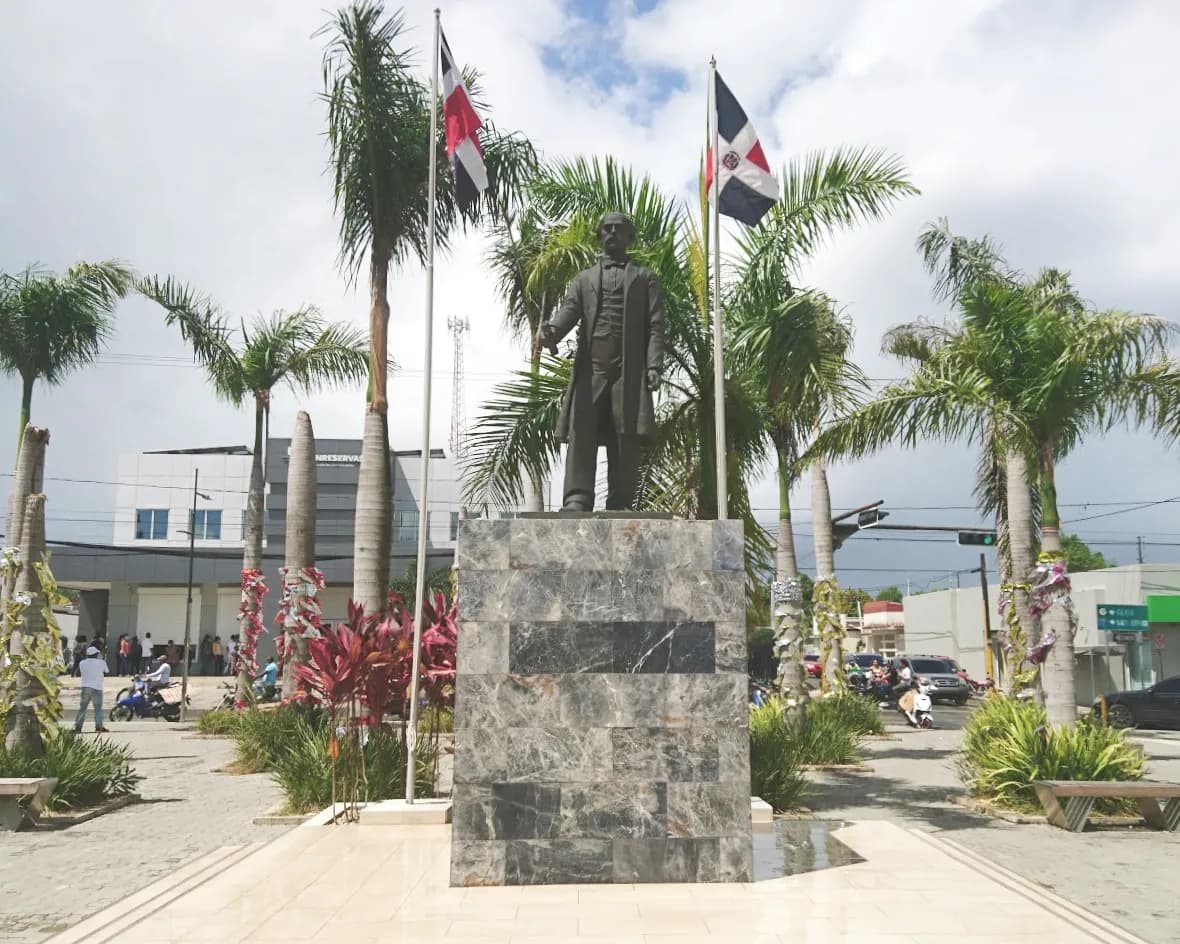
Cotuí
Sánchez Ramírez's provincial capital and one of the New World's oldest gold-mining towns, Cotuí pairs a working Barrick-Newmont mega-mine with the Caribbean's largest freshwater lake, Presa de Hatillo, for fishing, boating, and quiet Cibao scenery.
Cotuí
Sánchez Ramírez's provincial capital and one of the New World's oldest gold-mining towns, Cotuí pairs a working Barrick-Newmont mega-mine with the Caribbean's largest freshwater lake, Presa de Hatillo, for fishing, boating, and quiet Cibao scenery.
Cotuí is the provincial capital of Sánchez Ramírez, set in the Cibao interior roughly 110 kilometers northwest of Santo Domingo, about a 1.5 hour drive via the Autopista Duarte and DR-17 near Bonao. This is not a beach town but a working provincial city built on gold, rice, and cacao, one for travelers who want the inland Dominican Republic that produces the country's wealth rather than just spends it. Most people fold it into a loop through nearby destinations like La Vega or San Francisco de Macorís rather than making it a base.
The town's identity starts underground. Spanish colonists founded Cotuí in 1505 under the governor Nicolás de Ovando, drawn by gold that made it one of the richest mining settlements in the early Americas; it became a villa in 1533 as La Villa Mejorada del Cotuí. A 1562 earthquake, the same one that leveled nearby La Vega, destroyed the original town, rebuilt afterward north of the Sierra de Yamasá near the Yuna River. That lineage never ended: the Pueblo Viejo mine just outside town, operated by Barrick and jointly owned by Barrick and Newmont, is the largest gold mine in Latin America, working the same district the Spanish did five centuries ago. It is industrial infrastructure, not a sight to visit, but its scale shapes the town.
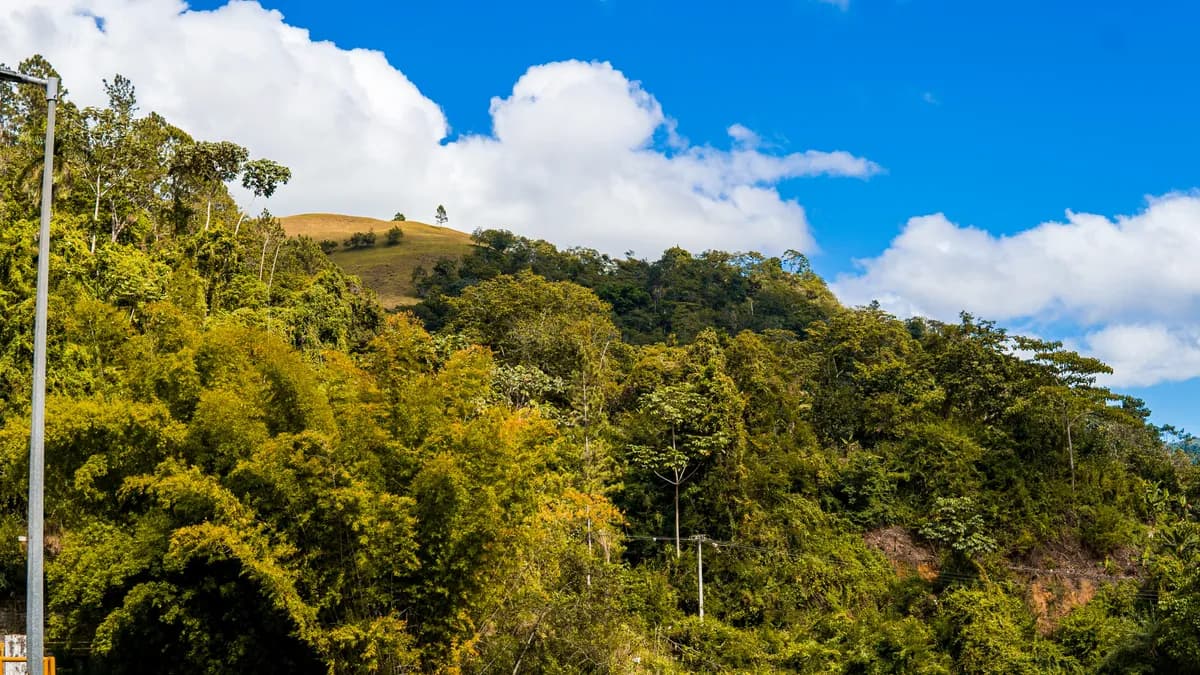
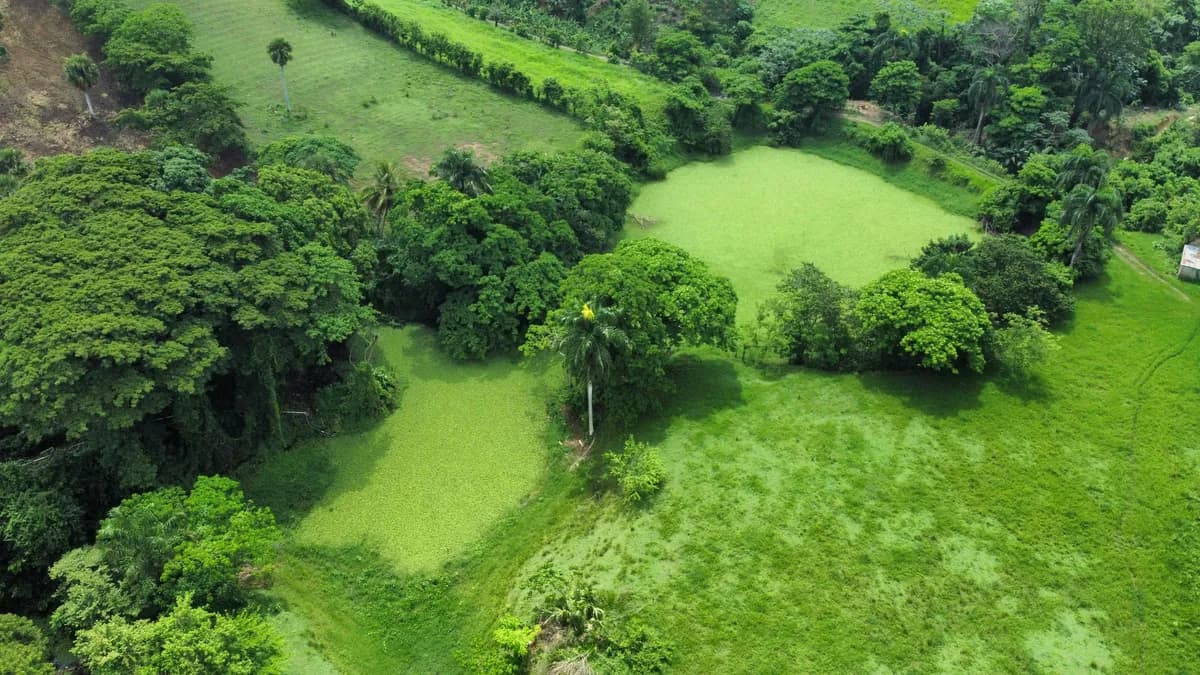
The other defining feature is water. Presa de Hatillo, the reservoir about 6 kilometers southwest of town, is the largest freshwater lake in the Caribbean, some 22 square kilometers behind a dam completed in 1984 for hydropower, irrigation, and flood control. For travelers that means open water ringed by green hills, local fishermen renting boat rides, informal swimming spots, and a growing name for freshwater sport fishing. It stays a working lake for area fishing families, not a manicured attraction.
In town, the Immaculate Conception church anchors the historic core; the original 1741 structure was destroyed in 1946 and rebuilt by 1957, facing the central park. Cotuí also claims one of the oldest religious brotherhoods in the Americas, the Cofradía del Espíritu Santo, traced to 1529 and still active during the Holy Spirit festival each spring. The patron saint festivities run November 30 through December 8, the busiest dates in town.
Treat Cotuí as a day trip or a stop on a Cibao route, not a multi-night stay: tourist lodging is thin, so most visitors base in La Vega, Bonao, or Santo Domingo and drive in. The drier months of November through April are the easiest time to go. For a wider route see itineraries, and check restaurants for where to eat in the Cibao towns nearby.
Cotuí is a town built on treasure — literally. The Pueblo Viejo gold mine just outside town is one of the largest gold deposits in all the Americas, and mining has shaped the identity of this Cibao community for centuries. Long before modern industrial mining arrived, the Taíno people extracted gold from the rivers here, and Spanish colonists established some of the island's earliest mining operations in these very hills.
But Cotuí's greatest treasure for visitors is the Presa de Hatillo — the Hatillo Dam — a vast reservoir that has become one of the most scenic recreational areas in the Dominican interior. The lake stretches across the valley surrounded by green mountains, offering fishing, boating, kayaking, and simply sitting on the shore watching the light change over the water. It's a landscape that surprises visitors who associate the Dominican Republic only with beaches.
As the capital of Sánchez Ramírez Province, Cotuí serves as a gateway to some of the least-explored countryside in the Cibao. Emerging ecotourism initiatives are opening up hiking trails, river swimming spots, and rural communities to visitors willing to venture beyond the coast. This is Dominican Republic travel at its most pioneering — the kind of place where you write the guidebook as you go.
Weather by month
Warm all year. Each bar's height is that month's average daily high, so the chart rises toward the warm summer; teal marks the drier months with the most reliable beach weather. Temperatures show in °F by default; switch to °C with the toggle.
Best time to visit: Jan, Feb, Mar, Apr, Jul, Nov, Dec. These months bring the most sun and the fewest rainy days; May, Jun, Aug, Sep, Oct are the wettest.
Sample itineraries
Practical information
Photo gallery
Cotuí questions
What is Hatillo Dam?
+
The Presa de Hatillo is a large reservoir about 6 km southwest of Cotui, formed by damming the Yuna River. It is a popular spot for local recreation including fishing, boating, and birdwatching. The scenery of green hills surrounding the blue water is beautiful. There is a restaurant in the Hatillo area; bring your own supplies for excursions. Fishermen at the dam can sometimes offer boat rides for a negotiated price.
How do I get to Cotui?
+
Cotui is located in the center of the country, about 120 km (2 hours) north of Santo Domingo via Bonao. Regular guagua services run from Santo Domingo for around RD$250-350 (US$4.50-6). From San Francisco de Macoris, the drive is about 1 hour south. A rental car is useful for exploring the dam and surrounding countryside.
Is there ecotourism near Cotui?
+
The areas around Cotui offer emerging ecotourism opportunities including birdwatching at Hatillo Dam, hiking in the surrounding hills, river excursions on the Yuna, and visits to small farming communities. The infrastructure is basic and mostly informal. Ask at your hotel or the municipal office about local guides. This area rewards travelers who enjoy unscripted, off-the-grid exploration.
How many days should I spend in Cotui?
+
One day is typically enough to see Cotui town and visit Hatillo Dam. The area is best included as a stop on a broader route through the interior, perhaps combined with Bonao to the south or San Francisco de Macoris to the north. Overnight options exist but are limited to basic local hotels.
What is the gold mining history of Cotui?
+
Cotui has been associated with gold since pre-Columbian times, when the Taino mined gold from local rivers. Spanish colonists continued the tradition. Today, the Pueblo Viejo gold mine operated by Barrick Gold is one of the largest in the Western Hemisphere. While the industrial mine is not open to tourists, the mining heritage is part of the local culture and history.
Keep exploring
Nearby Destinations
Explore more places near Cotuí