Oviedo
Oviedo is a small town on Highway 44 in the far southwest of the Dominican Republic, the working gateway to Jaragua National Park: a saltwater flamingo lagoon on one side, the road toward Bahia de las Aguilas on the other.
Oviedo
Oviedo is a small town on Highway 44 in the far southwest of the Dominican Republic, the working gateway to Jaragua National Park: a saltwater flamingo lagoon on one side, the road toward Bahia de las Aguilas on the other.
Oviedo is a small town on Highway 44, the two-lane road along the Barahona-Pedernales coast in the Dominican Republic's far southwest. The original settlement was flattened by Hurricane Ines in 1966; the rebuilt center today holds little more than colmados, a church, and roadside comedores. What draws travelers is what surrounds it, so Oviedo works less as a destination in itself than as the gateway to one of the least developed stretches of the Caribbean.
The town sits on Laguna de Oviedo, a long, narrow saltwater lagoon of roughly 28 square kilometers, one of the country's largest saltwater lagoons. It lies inside Jaragua National Park, which at approximately 1,543 square kilometers according to its official nomination is a protected area in the Caribbean, within the Jaragua-Bahoruco-Enriquillo Biosphere Reserve, with wetlands designated as the Ramsar site "Wetlands of Jaragua". Motorboats leave from a visitor center at El Cajuil, on the north shore, for roughly two-hour trips to Cano Escobin and the flamingo grounds, where American flamingos gather year-round. One cay, Cayo Iguana, holds rhinoceros iguanas, and close to 150 bird species have been recorded here.
Highway 44 continues west toward Pedernales town and the Cabo Rojo peninsula, jumping-off point for Bahia de las Aguilas, an 8-kilometer white-sand beach with no permanent structures, reachable only by boat or a rough track. Among the network's best-rated beaches, it placed 34th on the World's 50 Best Beaches list for 2025 and 15th among North American beaches in 2026, and it too sits inside Jaragua, which has kept it undeveloped even as Cabo Rojo's cruise port, open since January 2024, now sends a steady flow of day visitors, most never passing through Oviedo.
North of town, the Sierra de Bahoruco climbs toward Hoyo de Pelempito, a depression more than 700 meters deep with a viewing platform at the rim, about two hours from Pedernales on unpaved mountain road. Many pair a morning lagoon tour with the afternoon drive up, so two full days in the area cover the lagoon, the beach, and the lookout; the region's itineraries show how to sequence them.
Oviedo has almost no lodging or dining, so most travelers base in Pedernales town, about an hour west; the restaurants listings there cover the nearest reliable meals. A new international airport is under construction in the Manuel Goya area of Oviedo municipality, with a runway for wide-body aircraft, but as of 2026 its opening has slipped past its original targets; plan on flying into Santo Domingo or Barahona and driving in.
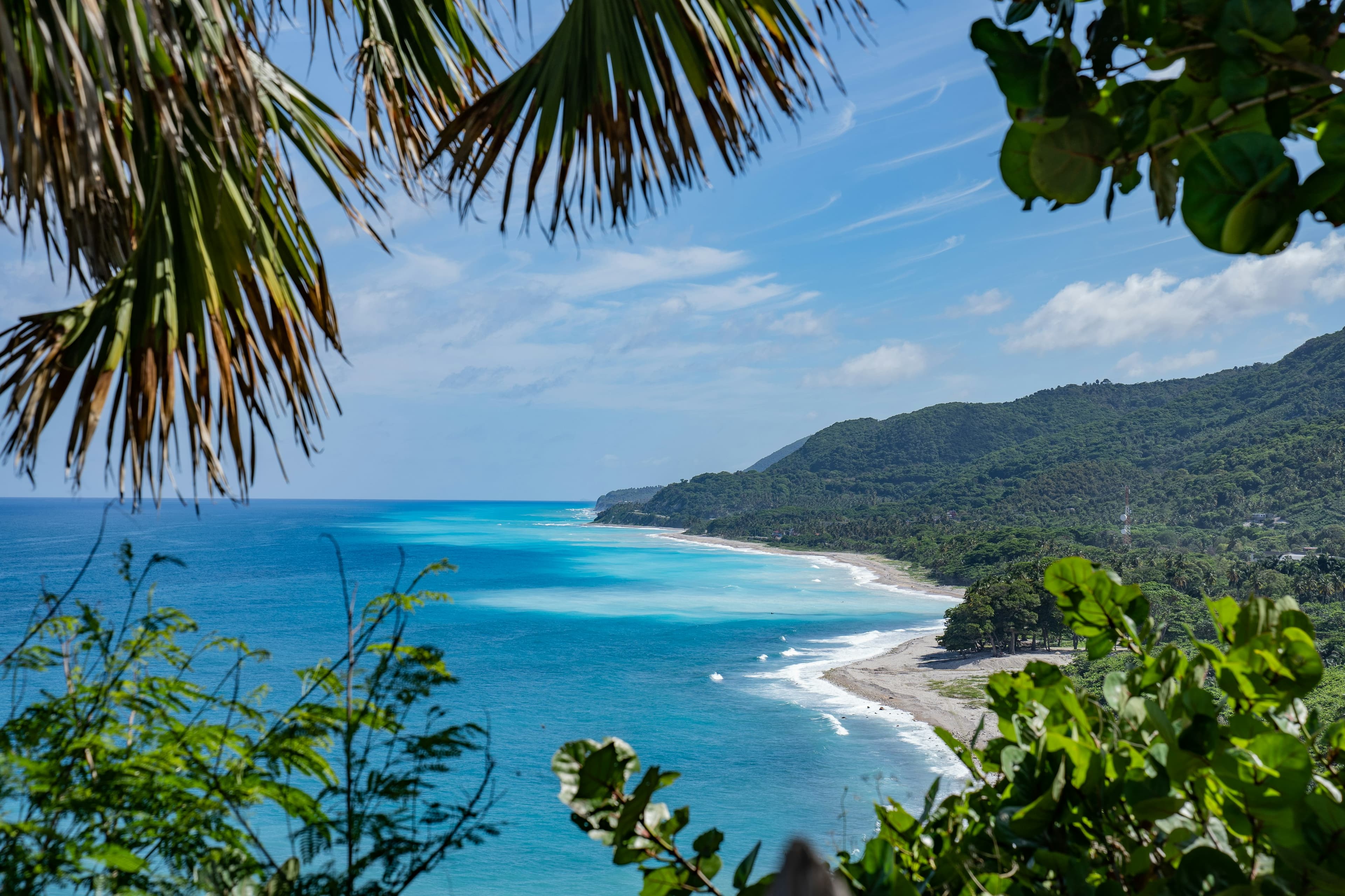
Oviedo is the humble gateway to what many consider the most beautiful beach in the entire Caribbean — Bahía de las Águilas, an eight-kilometer stretch of pristine white sand and crystalline turquoise water that remains almost completely undeveloped. This is the kind of beach that travel writers run out of superlatives trying to describe, and it is reached by all-terrain vehicle or by boat from Cabo Rojo.
Beyond the legendary beach, Oviedo guards the entrance to Jaragua National Park, a protected area in the Caribbean insular region. The park encompasses dry subtropical forests, coastal lagoons teeming with flamingos, endangered sea turtle nesting sites, and some of the most biodiverse marine environments in the region.
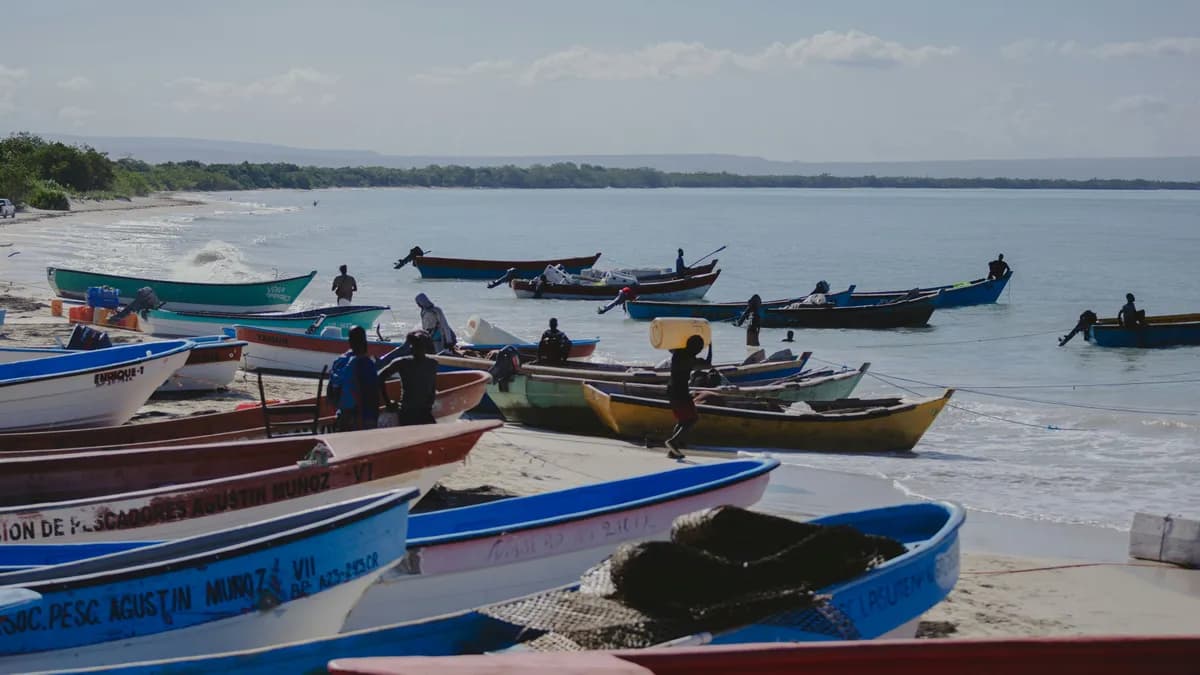
Oviedo itself is a small, sun-baked town where life revolves around fishing and the growing trickle of visitors heading to Bahía de las Águilas. There are no resorts, no souvenir shops, and no tourist infrastructure to speak of — just honest Dominican hospitality and a landscape that will leave a permanent impression on anyone who makes the journey to this remote southwestern corner of the island.
Weather by month
Warm all year. Each bar's height is that month's average daily high, so the chart rises toward the warm summer; teal marks the drier months with the most reliable beach weather. Temperatures show in °F by default; switch to °C with the toggle.
Best time to visit: Jan, Feb, Mar, Apr, Jul, Nov, Dec. These months bring the most sun and the fewest rainy days; May, Jun, Aug, Sep, Oct are the wettest.
Sample itineraries
Practical information
Oviedo questions
Can I see flamingos near Oviedo?
+
Yes, Laguna de Oviedo on the edge of Jaragua National Park is one of the best places in the Dominican Republic to see flamingos. Boat tours of the hypersaline lagoon depart from the park office in Oviedo and are listed by AGUINAOVI at $4000 dominican pesos for the shorter boat tour or RD$5500 for the longer tour (5 persons max.). The lagoon also has iguanas and diverse birdlife. Early morning tours offer the best flamingo sightings.
What should I bring for a day at Bahia de las Aguilas?
+
Bring plenty of water (at least 2 liters per person), food and snacks, reef-safe sunscreen, a hat, a shade structure or umbrella (there is no natural shade on the beach), snorkel gear if you have it, and bags to carry out all your trash. The beach is completely undeveloped. There is no cell signal. Bring cash for the boat ride. Waterproof protection for electronics is also recommended.
What is Jaragua National Park?
+
Jaragua National Park is a protected area in the Dominican Republic, covering over 1,400 square kilometers of dry forest, cactus scrubland, coastal lagoons, and offshore islands. It is home to flamingos, rhinoceros iguanas, sea turtles, and the endangered hutia. Oviedo is the main access point. Park entry costs around RD$200 (US$3.50). A guide is required for most trails.
How do I get to Bahia de las Aguilas from Oviedo?
+
Bahia de las Aguilas, widely regarded as the most pristine beach in the Dominican Republic, is accessed by boat from the fishing village of La Cueva, in the Cabo Rojo area. Boat rides cost approximately RD$1,000-1,500 (US$17-26) round trip per person. The beach has no facilities, so bring all your food, water, sunscreen, and trash bags. Boats typically wait 3-4 hours before the return trip.
Is Oviedo worth visiting?
+
Oviedo itself is a small, dusty town with minimal tourist infrastructure. However, it is the essential gateway to Bahia de las Aguilas and Jaragua National Park, two of the country's most spectacular natural attractions. Plan to spend at least one night in the area (basic lodging is available in Oviedo or in Pedernales) to fully enjoy these sites.
Keep exploring
Nearby Destinations
Explore more places near Oviedo