Santo Domingo 3-Day Weekend Itinerary: Zona Colonial & Beyond (2026)
3 daysSouth Coast

A culture-rich city break through the first European city in the Americas

Santo Domingo 3-Day Weekend Itinerary: Zona Colonial & Beyond (2026)

Three days in the capital that started it all

Days3
Best seasonYear-round (cooler December-March)
Paceeasy
Duration
3 days
Region
South Coast
Best season
Year-round (cooler December-March)
Budget pp
$350–$900
Airports
SDQ
The route

Route overview

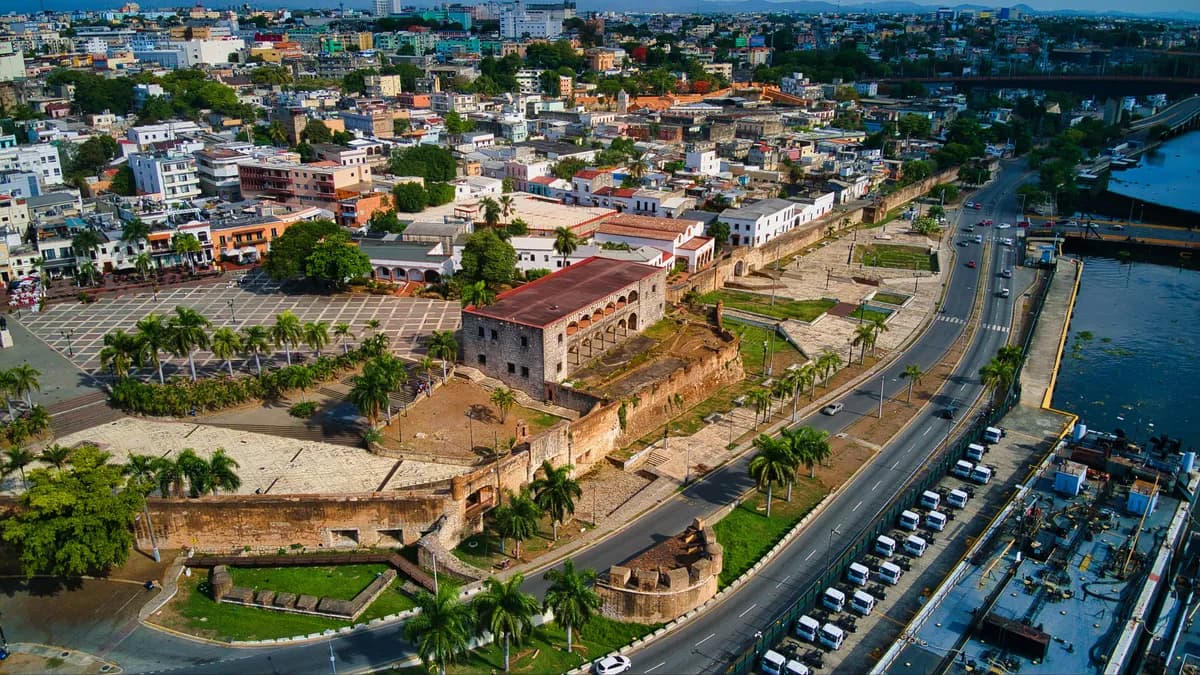
Santo Domingo is where the Americas begin. In 1496, Bartolomé Colón laid out a grid of streets on the west bank of the Ozama River, and that grid, now called the Zona Colonial, still stands. You walk past the first cathedral, the first hospital, the first paved street, the first fortress. UNESCO recognized the whole district as a World Heritage Site in 1990, and the Dominican government has spent decades restoring the 16th-century limestone so the quarter feels lived-in rather than museum-frozen.

Three days is the sweet spot for a Santo Domingo weekend. You get two full days in the old city plus a mix of day-trip options: Los Tres Ojos caves, the Malecón sunset walk, a 30-minute hop to a proper Caribbean beach. Flights land at Las Américas International (SDQ), a 25-minute taxi from Zona Colonial, so a Friday-evening arrival and a Sunday-evening departure give you the full weekend without feeling rushed.

Budget $350 to $900 for the three days per person, depending on whether you pick a guesthouse in the old quarter or a Malecón rooftop suite. This guide tells you exactly where to eat, which ruins to climb, and how to pace a city that rewards slow walking.

Trip highlights
  • Sunset on the 500-year-old walls of Fortaleza Ozama
  • UNESCO-listed Zona Colonial on foot, cathedral to cobblestones
  • Los Tres Ojos: three turquoise cave lakes under Santo Domingo
  • Mofongo and Dominican longaniza at Meson de Bari
  • A Malecón rooftop with the Caribbean at your feet
Day by day

The itinerary

01
Day 1

Arrive SDQ and slip into the Zona Colonial

Santo Domingo Overnight: Santo Domingo (Zona Colonial)
Morning

Fly into Las Américas International (SDQ), grab your bags, and Uber straight to Santo Domingo. The ride to the Zona Colonial runs about 25 to 35 minutes depending on traffic and costs roughly $20 to $25. Check into your hotel in the old quarter so you can walk everywhere for the next 48 hours. Good bases cluster around Calle Las Damas (the first paved street in the Americas, dating to 1502) and Plaza de España.

Drop your bags, splash water on your face, and head out. The afternoon light on 16th-century limestone is too good to waste on a nap.

Afternoon

Start at the top of Calle El Conde, the pedestrian spine of the quarter, and walk east toward the river. It is five blocks of bookstores, cafés, and sidewalk vendors selling mamajuana and hand-rolled cigars. Duck into the Catedral Primada de América (Diego Colón laid its first stone in 1514), the oldest cathedral in the New World. Entry is small and the interior is cool stone and carved mahogany. Give it twenty minutes.

Keep walking east and you hit Plaza de España, the ceremonial heart of the old city. The Alcázar de Colón anchors the square: the palatial home Diego Columbus built in 1511, now a museum of Spanish colonial life. Inside you will find original 16th-century furniture, Flemish tapestries, and a rooftop terrace with river views. Plan on 60 to 90 minutes.

If you want context for everything you are seeing, book the Colonial Zone Walking Tour. A good guide will tell you which church Drake torched in 1586, where the pirates were hanged, and which alleys the TV crews still use for period films.

Evening

As the sun drops, climb the ramparts of Fortaleza Ozama. The fortress has guarded the mouth of the Ozama River since 1505, making it the oldest European military construction still standing in the Americas. The Torre del Homenaje, the thick stone tower at its center, has a viewing platform. From up there you watch the Caribbean turn copper, the city lights flicker on along the Malecón across the water, and the container ships slide upriver toward the commercial port. Entry is about DOP 100 (roughly $1.75). Go 45 minutes before sunset to catch the light.

Walk ten minutes back inland for dinner at Meson de Bari. This is where Dominicans take out-of-town family when they want to show off the country's kitchen. Order the mofongo con chicharrón (mashed green plantains with crispy pork), the mondongo if you are feeling brave, and a Presidente or a passion-fruit mojito. The walls are covered in Dominican artists' canvases, the live merengue trio starts around 9pm, and the bill will surprise you on the low side. If Meson de Bari is fully booked, El Conuco does the same Dominican comfort food with a folkloric dance show.

If you still have energy, wander back to Plaza de España for a nightcap. The outdoor cafés ringing the square fill with Dominicans and travelers until past midnight; order a rum flight and listen to the buskers.

Meals

Welcome dinner at Meson de Bari; try mofongo, sancocho (if on the menu), and a Presidente light beer. Budget $35 to $55 per person with wine.

Transport

SDQ to Zona Colonial: Uber (~$22). After arrival, every stop today is on foot. Do not rent a car for this trip.

Budget

~$180 per person

Local tip
  • Check the cathedral's Sunday schedule if Day 1 lands on a Sunday; services close it to tourists between 9am and noon.
  • Fortaleza Ozama closes at 5pm on weekdays and 4pm on weekends. Confirm before heading over at sunset.
  • Reserve Meson de Bari on Fridays and Saturdays, especially after 8pm. WhatsApp works better than phone.
  • Dress code: smart-casual is enough anywhere in Zona Colonial. Men in a collared shirt, women in a summer dress, you are overdressed for most places and perfect for the nicer ones.
02
Day 2

Los Tres Ojos caves, the Malecón, and a Zona Colonial bar crawl

Santo Domingo Overnight: Santo Domingo (Zona Colonial)
Morning

Coffee first. Most Zona Colonial hotels serve a decent breakfast, but if yours does not, walk to Buche Perico on Calle Arzobispo Meriño for mangú (mashed green plantains with pickled red onions, fried cheese, salami, and eggs, the national breakfast) and a Dominican greca espresso.

Fuel up, then Uber east across the river to Los Tres Ojos National Park. The name means "the three eyes," and that is literally what you are looking at: three collapsed sinkholes in a limestone cave system, each filled with turquoise freshwater. A fourth lake, only reachable by a small pulley-raft that a park worker hauls across, is the real prize. The caves are 15 minutes from the old city by car, and the walk through the park takes 60 to 90 minutes. Entry is around DOP 200 ($3.50). Go at opening (9am) to beat the cruise-ship tour groups.

On the way back west, stop at Faro a Colón, the massive concrete cross-shaped monument built in 1992 that houses what the Dominicans say are Columbus's remains. It is enormous, slightly Soviet-looking, and worth 30 minutes for the controversy alone. (Seville also claims Columbus's bones. Pick a side.)

Afternoon

Head back to Zona Colonial and lunch at Jalao, a modern Dominican kitchen right off Calle El Conde. The yaniqueques (crispy flatbreads), cassava empanadas, and slow-braised goat are standouts; the mamajuana list is the city's best. Book a table by the window facing the street and watch the quarter move.

After lunch, walk or Uber out to the Malecón, the 14-kilometer ocean boulevard that runs along the Caribbean. Start near the Obelisco and walk west; joggers, couples, cyclists, kite vendors, and the occasional cruise ship passing offshore. If the midday sun is punishing, duck into the Museo del Hombre Dominicano on Plaza de la Cultura for 90 minutes. The museum covers Taíno (pre-Columbian), African, and European threads of Dominican identity, and it is the clearest picture you will get of why the country looks and sounds the way it does.

Evening

Back in Zona Colonial for golden hour. Shower, change, and start on a rooftop. Pat'e Palo European Brasserie on Plaza de España has been pouring since 1998 and sits right across from the Alcázar de Colón; grab the balcony and order a rum old-fashioned. If you want a louder, younger crowd, Santo Domingo Beer Garden has rotating Dominican craft taps and a kitchen that does not quit until late.

Dinner is at La Cassina if you want Italian done properly (the chef imports buffalo mozzarella), or back to Dominican at Buen Provecho for a quieter, criollo-focused menu. Whichever you choose, leave room for dessert.

For after-dinner Dominican rhythm, book a drop-in Merengue & Bachata Dance Class. Zona Colonial has two or three studios running nightly sessions for travelers; ninety minutes, a local instructor, no partner required. You will not become Juan Luis Guerra, but you will understand why every Dominican on the block is a natural dancer.

End the night at a colmado, the corner shop that doubles as a neighborhood bar. Plastic chairs on the sidewalk, bachata from a dusty speaker, ice-cold Presidente, strangers become friends by round two. The colmados around Calle Hostos after 11pm are as Dominican as an experience gets.

Meals

Breakfast (mangú) at Buche Perico, lunch at Jalao, dinner at La Cassina or Buen Provecho. Budget $75 to $110 per person with drinks.

Transport

Uber to Los Tres Ojos (~$7 each way). Malecón is walkable or a $3 Uber from Zona Colonial. Everything in the evening stays inside the quarter, on foot.

Budget

~$220 per person

Local tip
  • Skip the crocodile show at Los Tres Ojos. Ethically uncomfortable and not why you came.
  • The Museo del Hombre Dominicano is closed Mondays. If Day 2 is a Monday, swap in the Museo de las Casas Reales inside Zona Colonial instead.
  • Malecón safety: fine by day and early evening; after 10pm, Uber between specific bars rather than walking long stretches alone.
  • Dance class bookings: most studios need 24 hours' notice. Book Day 1 if you want a guaranteed slot.
03
Day 3

Markets, brunch, and an optional beach before SDQ

Santo Domingo and Boca Chica
Morning

Last day. Start slow. If your hotel does coffee on a courtyard, take it. Then walk to the Mercado Modelo, a two-story covered market on Avenida Mella, for souvenirs. This is the place for hand-rolled cigars, Dominican amber and larimar jewelry (larimar is mined nowhere else in the world), Haitian metal art, mamajuana kits, and the ubiquitous Dominican baseball caps. Haggle politely; 15 to 25 percent off the first price is normal. Give it 60 to 90 minutes.

From the market, Uber or walk ten minutes back into Zona Colonial to brunch. Jalao runs a proper weekend brunch with Dominican interpretations of eggs Benedict (try the one with morcilla). For the classic Malecón brunch with an ocean view, Uber out to Adrian Tropical on the Malecón for fresh-squeezed chinola juice, pan-fried fish, and a front-row seat on the Caribbean.

Afternoon

You have two good options for the afternoon, depending on your mood and your flight.

Option A: A proper Caribbean beach. Uber 30 minutes east to Boca Chica and Boca Chica Beach. The bay is protected by a coral reef, so the water is calm, shallow for a long way out, and warm. Chair and umbrella rental is a few dollars; a fried fish lunch at a beach shack with a Presidente is peak Dominican Sunday. Budget three hours including transit. If you have more flight cushion, Juan Dolio Beach a little farther east is quieter and cleaner.

Option B: A quiet urban walk. If the beach feels like too much for a departure day, head to Parque Mirador del Sur on the west side of the city. It is a 7-kilometer linear park built on an old limestone quarry, shaded with jacaranda and almond trees, with caves, bike paths, and dog walkers. It is where Santo Domingo goes to breathe. Two hours is plenty.

Either way, be back at your hotel 3.5 hours before your flight.

Evening

If your flight is late and you have an hour to spare before the airport run, grab a final espresso and a stack of Dominican chocolate at a Calle El Conde café. If your flight is tight, head straight to Las Américas International (SDQ). Uber costs $20 to $25 and takes 25 to 40 minutes depending on traffic; Sunday-evening westbound traffic from Boca Chica is usually light. Build in a buffer. SDQ security is efficient but immigration can back up when multiple long-hauls push at once.

You will leave the country with sand in one shoe, mamajuana in your carry-on, and a suspicion that three days was not enough. That is the correct reaction. The good news: Santo Domingo is a 3.5-hour flight from Miami, a 4-hour flight from New York, and as easy to come back to as any city in the Caribbean.

Meals

Brunch at Jalao or Adrian Tropical. Beach lunch at a Boca Chica shack (if choosing Option A), or a final espresso on Calle El Conde. Budget $45 to $75 per person.

Transport

Mercado Modelo is walkable from Zona Colonial. Boca Chica day trip: Uber (~$35 each way) or book a round-trip driver for $70. Airport run from Zona Colonial: Uber ($20-$25).

Budget

~$150 per person

Local tip
  • Mercado Modelo closes at 5pm and opens around 9am. Go first thing for the best light and the fewest cruise tourists.
  • Haggle with a smile. Vendors expect it. Start at 50 to 60 percent of the opening price and meet somewhere near 70 to 75 percent.
  • Amber and larimar are real Dominican mineralogy. Stick to larger, reputable shops inside the Mercado or on Calle El Conde for certified pieces.
  • Boca Chica on a Sunday is crowded. Dominican families treat it like a public living room. If you want quiet, pick Juan Dolio or skip the beach.
  • Uber to SDQ is reliable even from Boca Chica. Book with the app rather than hailing a local driver at the beach.
In pictures

Photo gallery

Before you go

Planning tips

Practical tips before you go

  • Pack for walking. Zona Colonial is cobblestones and slopes. Leave the heels at home.
  • Cash is useful, cards are fine. Most restaurants and tour operators accept cards; small colmados and street vendors want pesos. ATMs on Calle El Conde dispense DOP freely.
  • Uber works. Rides inside the city cost $2 to $6. Do not hail yellow taxis off the street at night.
  • Dress for a city, not a resort. Light trousers and a linen shirt at dinner in Zona Colonial feels appropriate. Dominicans dress up.
  • Spanish helps but is not required. Zona Colonial restaurants and hotel staff speak English. Uber and colmados lean Spanish-only.
  • Sunday is special. Merengue plays on Plaza de España in the late afternoon. If your flight allows, stay for it.
Good to know

Frequently asked questions

Is Santo Domingo safe for tourists?

+
Yes, with normal city-travel awareness. Zona Colonial, Gazcue, Piantini, and the Malecón are well-patrolled day and night; Dominican tourist police (CESTUR) patrol the old city specifically. Stick to Ubers instead of hailed street taxis, avoid flashing phones or expensive jewelry, and treat the usual urban rules as you would in Mexico City or Miami. Violent crime against tourists is rare, opportunistic petty theft is the main risk and it is very manageable.

Is 3 days enough for Santo Domingo?

+
Three days is enough for a tight, satisfying city break focused on Zona Colonial plus one or two day excursions (Los Tres Ojos, Boca Chica beach, or the Malecón). It is not enough to add Samaná, Punta Cana, or the mountain towns like Jarabacoa; those need their own separate 3 to 5 day block. If Santo Domingo is your only stop on this trip, 3 days is a sweet spot. Extend to 4 if you want a full beach day plus a cooking class or baseball game, or if you are a history traveler who wants to slow down inside the museums.

Do I need to speak Spanish to get around Zona Colonial?

+
No. Zona Colonial is the most tourist-ready neighborhood in the Dominican Republic, and hotel staff, tour guides, and most restaurants in the quarter speak serviceable English. Outside the old city (Uber drivers, colmados, the Mercado Modelo, and most beach shacks in Boca Chica), Spanish is the default. A translation app handles almost everything; learning "por favor," "gracias," "la cuenta" (the check), and "cuánto cuesta" (how much) goes a long way. Dominicans are patient with beginners and quick to help.

What is the best neighborhood to stay in for a weekend?

+
Zona Colonial, without question. It is where every major sight sits within a 15-minute walk, the restaurant density is highest, and the nights are liveliest. Boutique guesthouses inside colonial-era buildings run $90 to $180 a night; larger hotels like Hodelpa Nicolás de Ovando and Billini Hotel run $180 to $350. Second choice: Gazcue or the Malecón for ocean views and more modern hotels, a 10-minute Uber from the old city. Avoid Piantini unless you specifically want the shopping-mall, business-hotel side of Santo Domingo; it is far from the cultural anchors.

Can I use Uber in Santo Domingo?

+
Yes, Uber works across Santo Domingo and it is the preferred way for visitors to get around. Rides inside the city run $2 to $6 and drivers are well-rated. InDrive also operates and sometimes undercuts Uber. Yellow-cab street taxis are still around but pricing is negotiated and foreign visitors get marked up; Uber removes that friction. For the SDQ airport run, book Uber; fares are roughly $20 to $25 versus the $35 to $40 that pre-booked hotel transfers charge.

Should I rent a car for a Santo Domingo weekend?

+
No, not for three days in the city. Santo Domingo traffic is intense, parking inside Zona Colonial is impossible, and the signage is in Spanish with its own local conventions. Ubers plus the occasional pre-booked driver for day trips (Los Tres Ojos, Boca Chica) will cost less and stress you less than a rental. Save car rentals for trips where you are moving between regions, like Samaná to Punta Cana or exploring the interior mountains.

What is the best Dominican food to try in Santo Domingo?

+
Four things, minimum. Mofongo (mashed green plantains with garlic and pork rinds, served with broth or stew) is the national comfort dish; Meson de Bari does the benchmark version. Mangú (mashed plantain breakfast plate with fried cheese, salami, and eggs) is the Dominican way to start a day. Sancocho, a seven-meat stew, is the Sunday family dish and some restaurants serve it on weekends. La bandera, the national lunch plate of rice, red beans, stewed meat, and fried plantains, shows up at casual restaurants everywhere. Wash it down with Presidente beer, fresh chinola (passion fruit) juice, or mamajuana (a rum-and-herb digestif that tastes like the Caribbean distilled into a shot glass).
Plan your trip

Ready to plan your own?

Explore our destinations, beaches, and travel guides to customise this route for your trip.