San José de Ocoa
A working mountain town in the southern Central Cordillera known for coffee farms, greenhouse flowers, and one of the roughest, coldest roads in the country, which climbs north toward Constanza through the Valle Nuevo reserve.
San José de Ocoa
A working mountain town in the southern Central Cordillera known for coffee farms, greenhouse flowers, and one of the roughest, coldest roads in the country, which climbs north toward Constanza through the Valle Nuevo reserve.
San José de Ocoa sits at about 475 meters in a valley of the southern Central Cordillera, roughly 112 kilometers west of Santo Domingo and a short drive inland from Baní. It is the capital of its own province, carved out in 2000 from land that had belonged to Peravia and, before that, Azua. The town was founded in 1805 by settlers from Baní and has stayed a farming center rather than a resort. There are no beaches here; the appeal is cooler air, working coffee land, and a slower side of the country.
Coffee is the region's identity. The hills around town and the neighboring municipality of Rancho Arriba grow arabica at elevations that give it real acidity and body, and small operators run farm visits, including the Café Samir route. Rancho Arriba, one of the province's three municipalities alongside Ocoa and Sabana Larga, is worth the detour for swimming spots along the Nizao River. The other defining industry is larger if less photogenic: the valley floor is packed with greenhouses growing flowers, strawberries, and vegetables, alongside open-field coffee, beans, and potatoes.
In town, the sights are modest and specific. Parque Libertad is the central plaza, landscaped with gardens and walking paths that locals treat as the evening social hub, and the Iglesia San José, built in 1939, anchors the square. The Casa de los Recuerdos del Padre Luis Quinn is a small museum devoted to Louis Quinn, an English-born Canadian missionary priest who spent decades building the region's rural roads, clinics, and water systems.
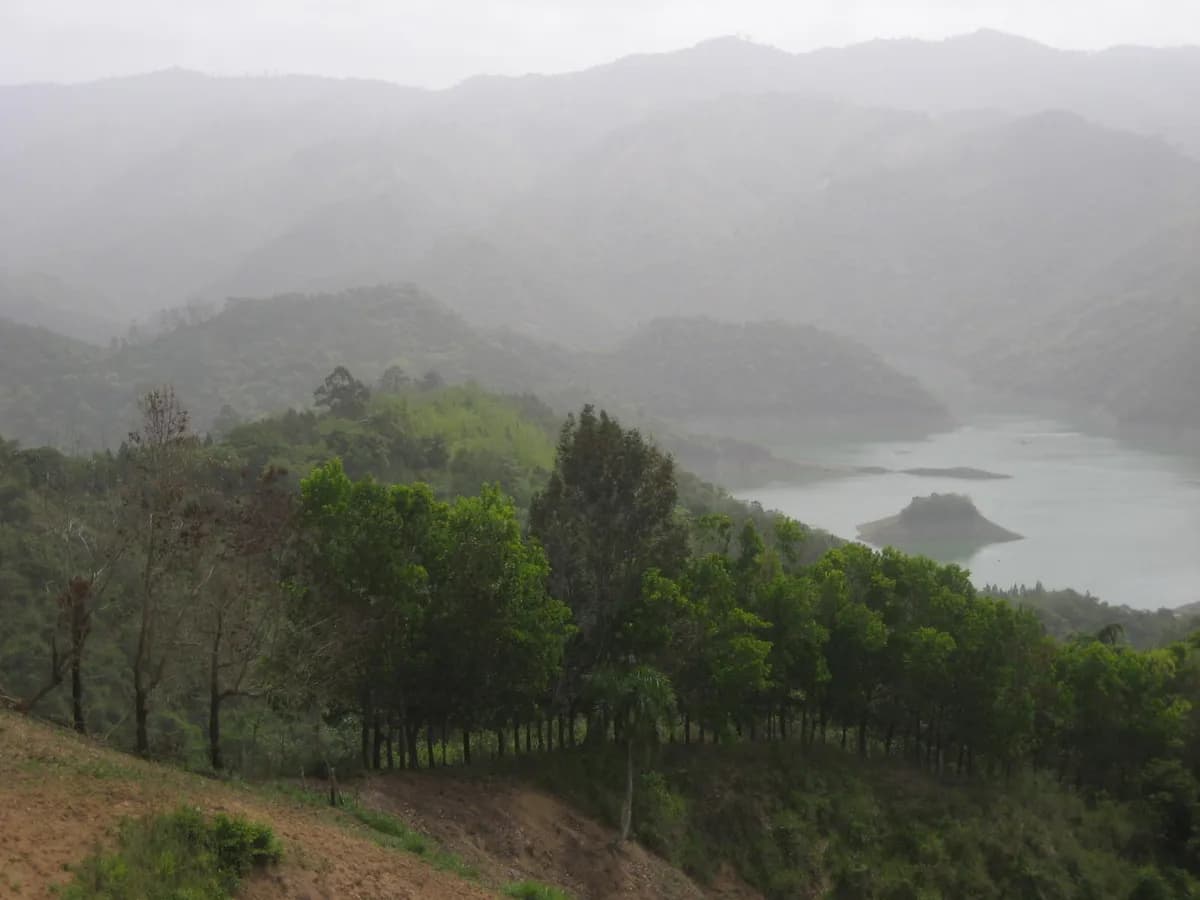
The road north out of Ocoa is a destination in itself for anyone with a 4x4 and a full day. Route 41, the Carretera Antonio Duvergé, climbs about 117 kilometers through the Valle Nuevo National Park to Constanza, topping out near 2,500 meters and holding a reputation as the highest and coldest road in the country, with winter temperatures that have dropped as low as -6 C. It is unpaved for long stretches and rutted after rain, not something to attempt alone or without checking current road conditions. Even a short way up, the pine forest and cool mist contrast hard with the coast below.
Getting here from Santo Domingo means the Carretera Sánchez west, then north on Route 41 into town, roughly two hours depending on traffic through Baní; there is no airport in Ocoa, so Las Américas International (SDQ) is the practical gateway. The town pairs well with a broader loop through the Central Highlands, and travelers building a longer itinerary often add it as a one or two night detour. For dinner, look for chivo ocoeño, slow-cooked goat that is a regional specialty, and dulce de papa, a sweetened potato dessert, at the local restaurants in town.
San José de Ocoa is the Dominican Republic's mountain sanctuary — a cool, green retreat nestled in the foothills of the Cordillera Central where organic farming, artisanal coffee, and pine-scented mountain air replace the beach-and-resort rhythm of the coast. Just two hours from the heat of Santo Domingo, Ocoa feels like a different country entirely.
The town has quietly become the epicenter of the Dominican Republic's agritourism movement. Coffee fincas invite visitors to walk among shade-grown arabica plants and taste some of the finest coffee produced in the Caribbean. Strawberry farms — an improbable sight in the tropics — cascade down terraced hillsides, and flower greenhouses burst with orchids and roses destined for the capital's markets.
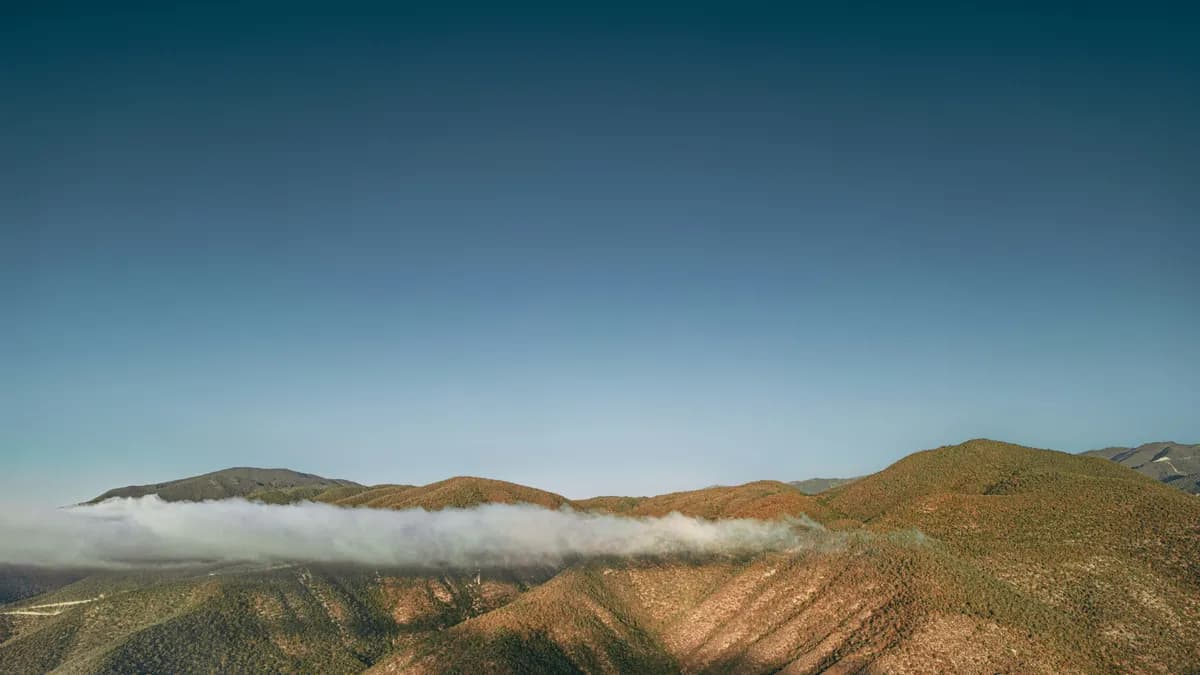
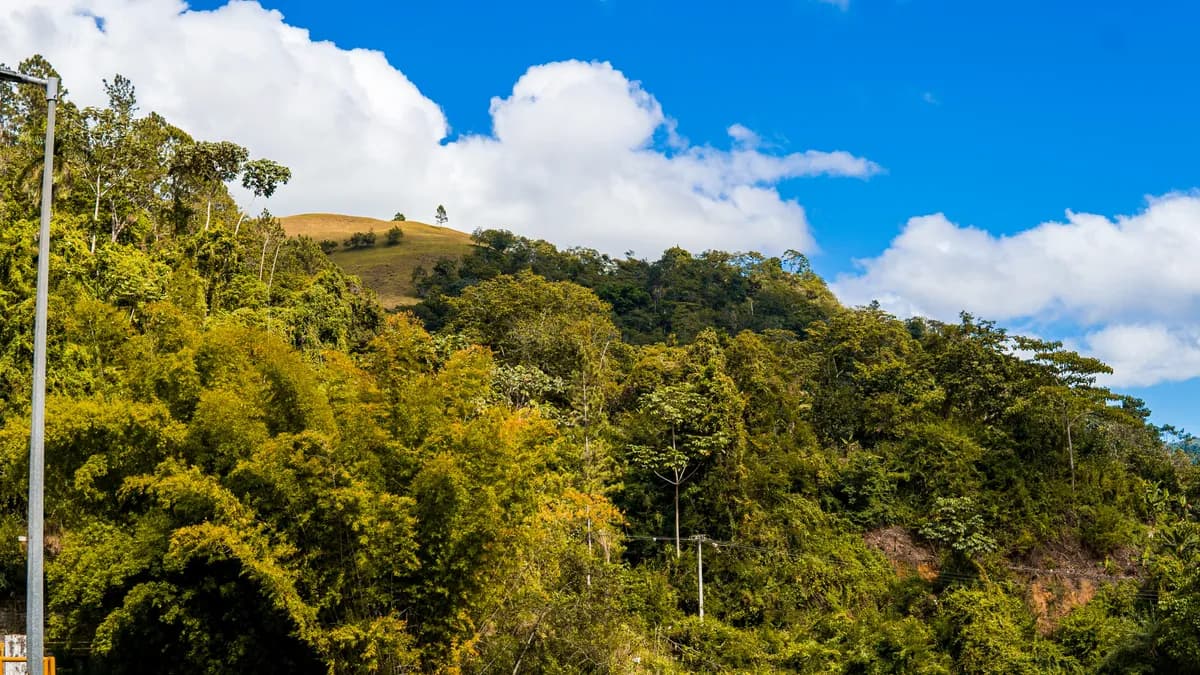
Beyond the farms, the mountains surrounding Ocoa offer genuine wilderness. Pine forests climb toward the peaks of the Cordillera Central, waterfalls cascade through fern-covered ravines, and the air carries a freshness that feels almost impossible after the lowland humidity. For Dominicans, Ocoa is where you go to breathe — and increasingly, international travelers are discovering the same restorative power of this gentle mountain town.
Weather by month
Warm all year. Each bar's height is that month's average daily high, so the chart rises toward the warm summer; teal marks the drier months with the most reliable beach weather. Temperatures show in °F by default; switch to °C with the toggle.
Best time to visit: Jan, Feb, Mar, Apr, Jul, Aug, Nov, Dec. These months bring the most sun and the fewest rainy days; May, Jun, Sep, Oct are the wettest.
Sample itineraries
Practical information
Photo gallery
Facts on this page were last compared with their sources on . Details may have changed since. How we check
San José de Ocoa questions
Is San Jose de Ocoa good for a mountain retreat?
+
Yes, Ocoa is one of the best mountain escapes in the Dominican Republic. The climate is noticeably cooler than the coast, with temperatures around 20-25 C (68-77 F). The valley is lush and green, with rivers, waterfalls, and organic farms. Several eco-lodges and rural guesthouses offer peaceful stays. It is a world away from the resort scene.
What organic farms can I visit?
+
The Ocoa valley is a center for organic agriculture in the Dominican Republic, producing coffee, avocados, tomatoes, and vegetables. Ask at your hotel or the local agricultural cooperative about farm visits. Some farms welcome visitors by appointment. Rancho Arriba, a community in the hills above Ocoa, is known for its organic coffee cooperatives and can be visited with a guide.
How many days should I spend in San Jose de Ocoa?
+
Two to three days is ideal. Spend one day visiting coffee farms and enjoying the mountain scenery, another hiking to waterfalls or exploring organic agriculture, and a third relaxing at your lodge. If you are just passing through, a single day gives you a taste of the coffee culture and cool mountain air.
How do I get to San Jose de Ocoa?
+
Ocoa is about 130 km (2 hours) northwest of Santo Domingo via Bani. The road winds into the mountains after Bani and offers beautiful scenery. Guaguas run from Santo Domingo with fares to confirm with the operator before travel. A rental car is recommended for exploring the surrounding farms and trails. The nearest airport is Santo Domingo (SDQ).
What makes San Jose de Ocoa special for coffee lovers?
+
San Jose de Ocoa sits in a fertile mountain valley at around 500 meters elevation, surrounded by coffee farms producing high-quality Dominican arabica. Several farms offer tours where you can see the entire process from cherry picking to roasting. Tours vary in price depending on the farm and typically include tastings. The harvest season runs from October to February.
Keep exploring
Nearby Destinations
Explore more places near San José de Ocoa