Baní
Baní pairs the Caribbean's tallest sand dunes with pink salt flats and steady trade winds, about an hour and a half from Santo Domingo. Add Valdesia coffee hills, a June mango fair, and a quiet colonial core, and the South's most underrated stop takes shape.
Baní
Baní pairs the Caribbean's tallest sand dunes with pink salt flats and steady trade winds, about an hour and a half from Santo Domingo. Add Valdesia coffee hills, a June mango fair, and a quiet colonial core, and the South's most underrated stop takes shape.
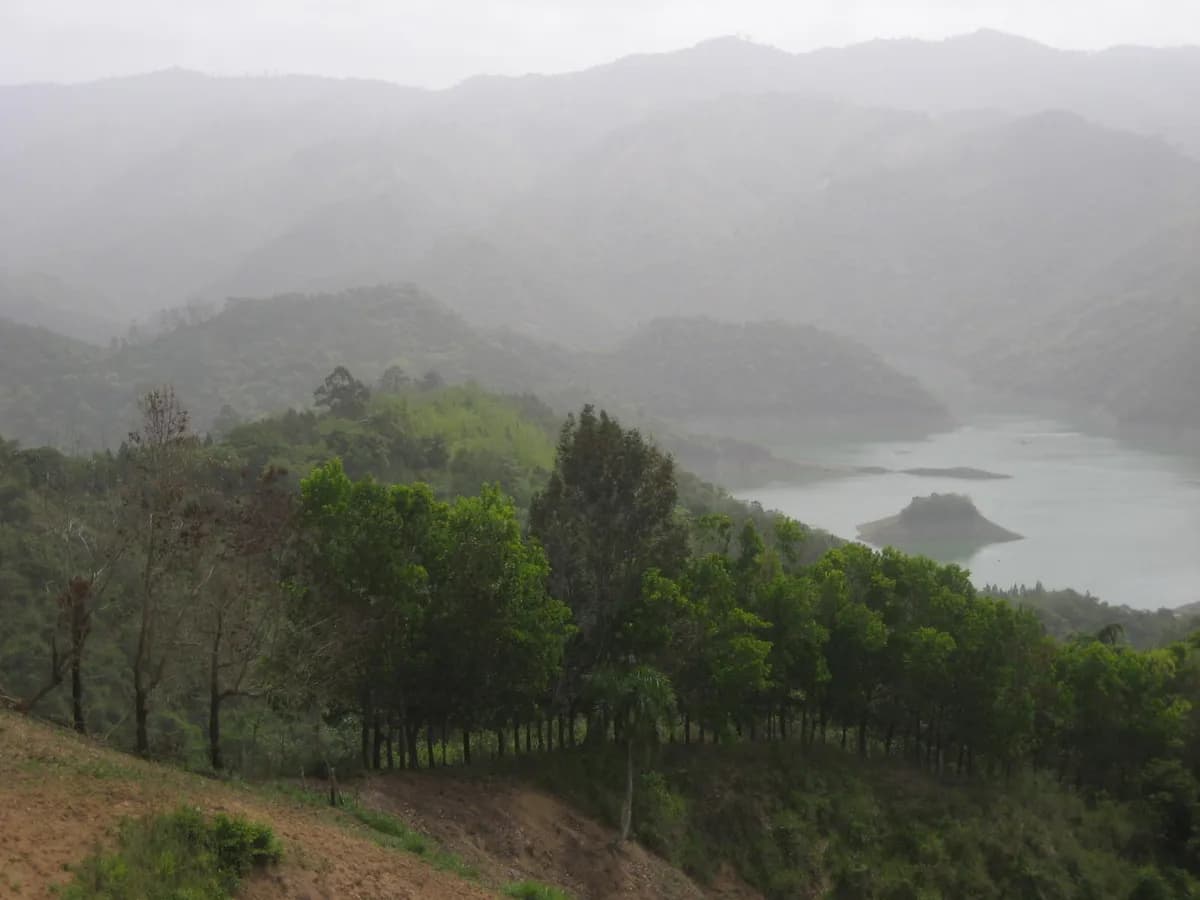
Baní sits in Peravia province, roughly 65 kilometers (about an hour and a half by car) southwest of the capital on the road toward Azua. It is a working agricultural town first and a tourist stop second, which is what makes it interesting: the draws are real landscapes and real harvests, not built-for-visitors installations. Baní suits travelers after a day or two of striking scenery, wind sports, and small-town Dominican life, minus the resorts of Punta Cana or the crowds of the North Coast. It works well as a stop between Santo Domingo and points further south or west.
Most people detour here for the Dunas de Baní, a field of dunes running some 15 kilometers along the Las Calderas Peninsula, the tallest reaching about 35 meters. They formed from sediment carried down by the Bahía stream and the Nizao River, a process dating to the Pleistocene, and the sand is unusually fine and pale from its high quartz and feldspar content. It gets hot enough underfoot by midday that closed shoes are worth packing, and a modest entrance fee applies. Around the dunes sits dry subtropical scrub, mesquite, and mangrove, an odd but effective contrast to the desert-like slopes above.
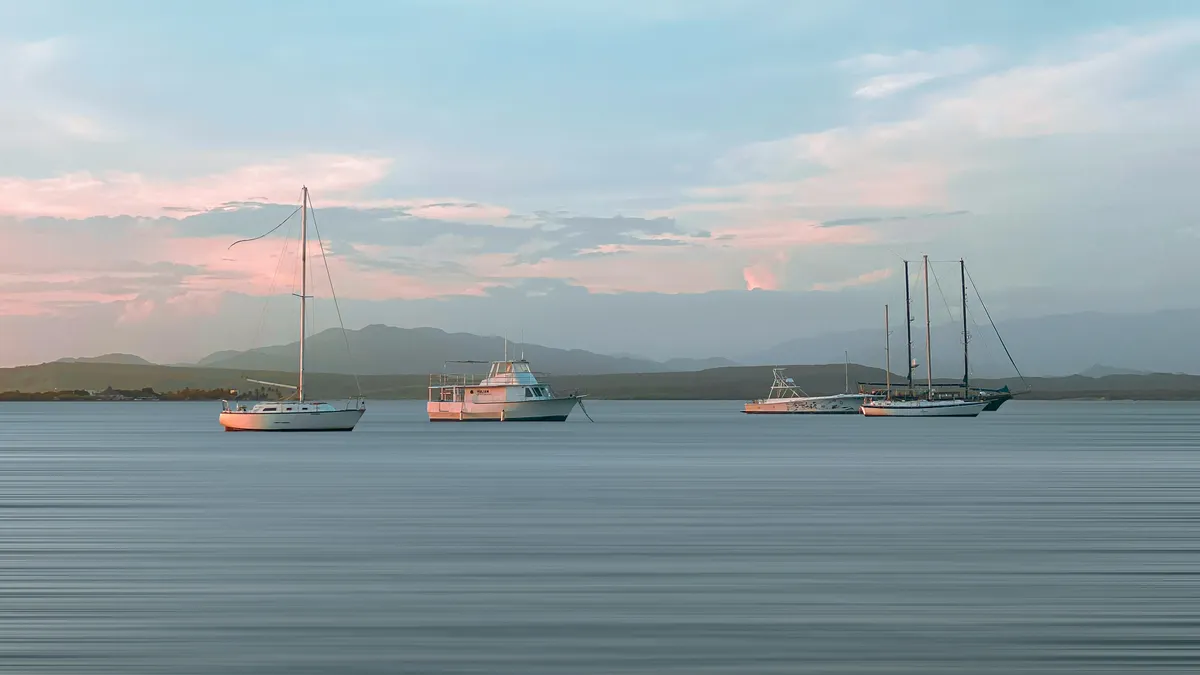
A few kilometers on, the peninsula narrows toward Las Salinas, where salt harvesting (more than 500 years of it by local reckoning) has left shallow evaporation ponds that turn pink and rust with salinity and light. Las Salinas beach is split by geography: the bay side toward Bahía de las Calderas catches a steady, near-daily breeze that makes it one of the country's more reliable kitesurfing and windsurfing spots, while the eastern side is more popular for swimming. Along the coast, Playa Nizao is another quieter stretch worth combining with a dunes visit.
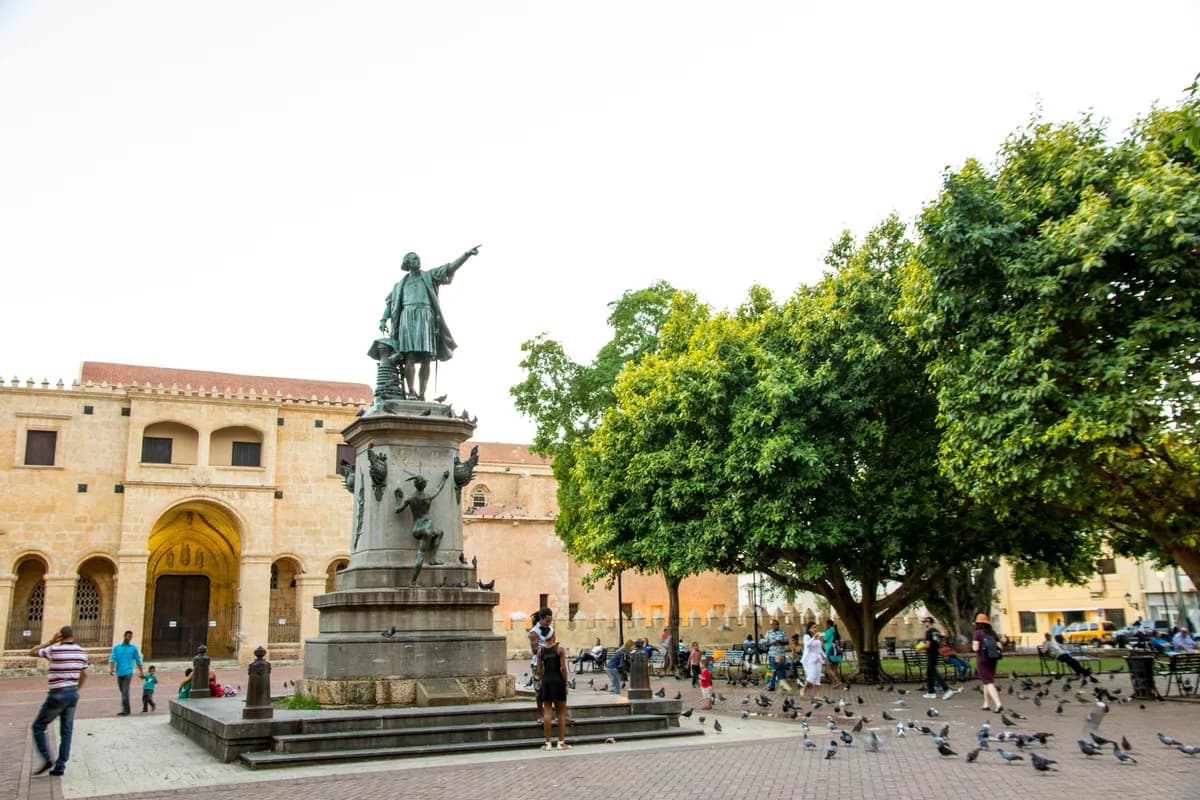
Baní itself, founded in 1764, is the birthplace of Máximo Gómez, the Dominican-born general who became a leading commander in Cuba's wars of independence, and it keeps a modest colonial-era core worth a walk. The hills toward San Cristóbal and Ocoa grow Valdesia coffee, which the European Union recognized with Protected Designation of Origin status in 2016, an exportable specialty beyond the beaches. Mango is the other signature crop: Baní hosts Expo Mango each June, a multi-day fair with tastings and produce sales that draws visitors from across the South (the 2026 edition ran June 3 to 7).
Most visitors treat Baní as a half- or full-day trip from Santo Domingo, pairing the dunes and salt flats with fresh mango or coffee and a swim at one of the nearby South Coast beaches. With limited formal dining and lodging, it works best as an add-on to a broader route rather than a base; see South Coast itineraries for ways to sequence it with San Cristóbal, Azua, or Barahona, and browse restaurants in the wider region for where to eat along the way.
Baní guards one of the Caribbean's most unexpected natural wonders: the Dunas de Baní, a sweeping expanse of golden sand dunes that rise above the coastline like a fragment of the Sahara misplaced in the tropics. These are the most impressive sand dunes in the entire Caribbean — towering formations sculpted by wind and time that seem completely at odds with the palm-fringed beaches just minutes away. Walking among the dunes at sunset, with the warm light casting long shadows across the rippled sand, is one of the most surreal landscape experiences the Dominican Republic offers.
Beyond the dunes, Baní proudly claims the title of mango capital of the Dominican Republic. The surrounding Peravia province produces the country's finest mangoes, and the annual Feria del Mango in June transforms the town into a fragrant celebration of the fruit — with tastings, competitions, mango-infused dishes, and a carnival atmosphere that draws Dominicans from across the island.
The nearby community of Las Salinas adds yet another dimension to this area's surprising diversity. Here, on the edge of Bahía de Calderas, traditional salt production continues much as it has for centuries, with shallow evaporation ponds stretching across the coastal flats. The resulting landscape — white salt crystals against turquoise water and desert-like terrain — looks like nowhere else in the Caribbean. Baní is a place that rewards the curious traveler willing to venture off the beaten path.
Weather by month
Warm all year. Each bar's height is that month's average daily high, so the chart rises toward the warm summer; teal marks the drier months with the most reliable beach weather. Temperatures show in °F by default; switch to °C with the toggle.
Best time to visit: Jan, Feb, Mar, Apr, Jul, Nov, Dec. These months bring the most sun and the fewest rainy days; May, Jun, Aug, Sep, Oct are the wettest.
Sample itineraries
Practical information
Photo gallery
Beaches here
Playa Nizao
Playa Nizao is a wild, windswept beach near the famous Dunas de Baní with minimal development and powerful waves. It appeals to adventurous travelers seeking untamed coastline and dramatic sand-dune scenery.
Las Salinas Beach
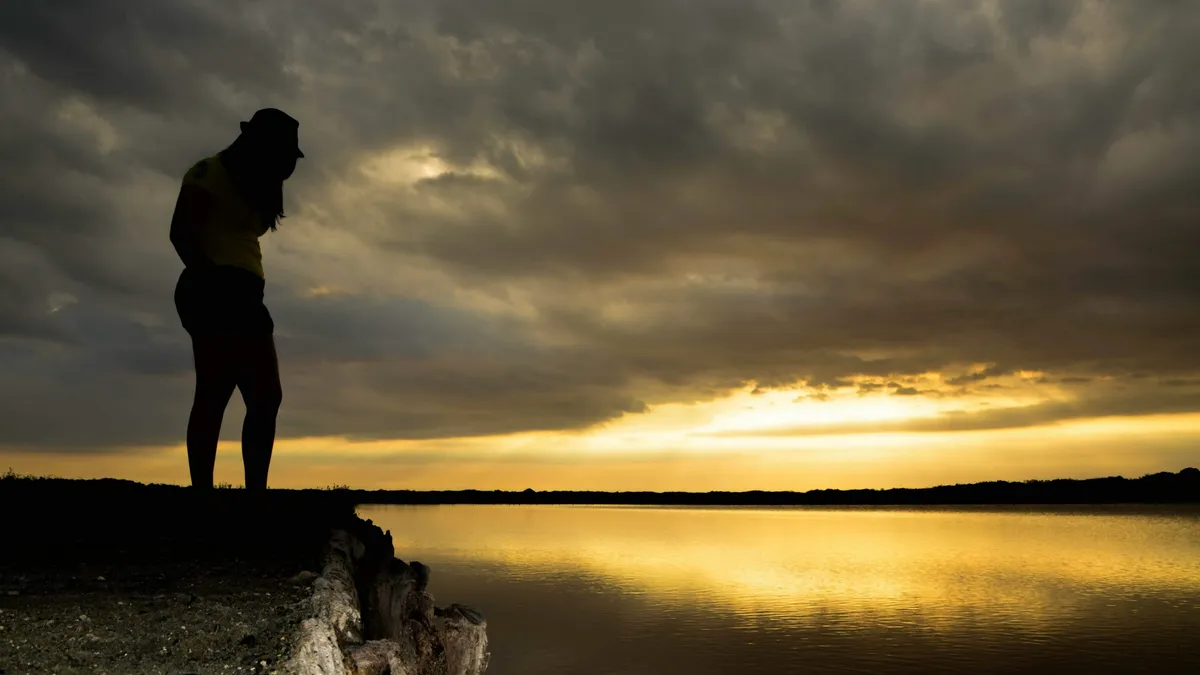
Las Salinas Beach sits beside the historic salt flats of Baní, offering a unique windswept landscape where salt-harvesting traditions meet Caribbean coastline. Its firm golden sand and steady breezes have also made it a growing destination for kitesurfers.
Baní questions
What are the Bani sand dunes and how do I visit them?
+
The Dunas de Bani (Las Calderas dunes) are a coastal sand dune system in the Caribbean, located on the Bahia de Calderas about 15 km south of Bani town. The dunes stretch along the coast and offer a unique landscape. An entrance fee applies to general visitors. Drive or take a motoconcho from Bani. Visit in the morning to avoid intense midday heat. The area is also home to a military base, so stay on the public paths.
When is mango season in Bani?
+
Bani is known as the mango capital of the Dominican Republic. Mango season runs from May through July, with the peak in June when the annual Mango Festival (Feria del Mango) takes place. You can sample dozens of mango varieties, juices, and desserts. Even outside the festival, roadside stands sell mangos for almost nothing during the season.
What are the salt flats of Las Salinas?
+
Las Salinas is a small coastal community near the dunes where you can see artisanal salt production in shallow evaporation ponds. Workers harvest sea salt by hand using traditional methods. You can visit the salt flats freely and purchase bags of salt for a few pesos. It is a fascinating and photogenic stop that pairs well with a dunes visit.
Is Bani worth a day trip from Santo Domingo?
+
Yes, Bani makes an excellent day trip. In one day you can visit the sand dunes, the salt flats of Las Salinas, and enjoy a seafood lunch by the beach at Las Calderas. During mango season, add the festival or farm visits. The round trip from Santo Domingo including sightseeing is very doable in 6-8 hours.
How do I get to Bani from Santo Domingo?
+
Bani is about 65 km (1 hour) west of Santo Domingo on the Autopista 6 de Noviembre. Buses and guaguas leave from Pintura station in Santo Domingo throughout the day. Driving is straightforward on the well-maintained highway.
Keep exploring
Nearby Destinations
Explore more places near Baní