3-Day Weekend in Santo Domingo: The Perfect Itinerary
Santo Domingo weekend itinerary for 3 days: Colonial Zone founded in 1498, the Malecon, street food, nightlife, and a day trip to Boca Chica.
Most visitors to the Dominican Republic fly straight to Punta Cana and never see the capital. That is a mistake. Santo Domingo is a city of two million people pulsing with history, music, art, and some of the best food on the island. The Zona Colonial, a UNESCO World Heritage Site, is the oldest continuously inhabited European settlement in the Americas, founded in 1498. But Santo Domingo is not a museum. Walk three blocks from a 16th-century cathedral and you will find street art murals, craft cocktail bars, and Dominicans dancing bachata in the street at midnight.
Three days is the ideal amount of time. Long enough to absorb the Colonial Zone, explore the modern neighborhoods, taste the city's remarkable food scene, and take a half-day trip, without the fatigue that comes from cramming too much into too little time.
Why Santo Domingo Deserves a Weekend
Santo Domingo is not a beach destination (though beaches are nearby). It is a culture destination, and one of the most underrated cities in the Caribbean. Here is what makes it worth your time:
- History: The first cathedral, first hospital, first university, first paved street, and first court of law in the Americas, all here, all within walking distance.
- Food: From US$3 La Bandera at sidewalk comedores to innovative Dominican-fusion restaurants challenging Santo Domingo's reputation as a food city.
- Nightlife: Dominican merengue comes from the Cibao region. Bachata rules the dance floors. The Zona Colonial's bars and clubs stay open until 3 AM on weekends, and the energy is infectious.
- Art & Architecture: A mix of colonial Spanish architecture, brutalist mid-century buildings, and a growing street art scene around Calle Isabel La Católica and Calle El Conde.
- Affordability: A world-class city break at developing-world prices. You can eat extraordinarily well for under US$15 per meal.
Where to Stay
Stay in or immediately adjacent to the Zona Colonial. The local stops on this itinerary are within walking distance from there, and the neighborhood is safe, atmospheric, and connected to the rest of the city by Uber (which works reliably in Santo Domingo).
Budget: US$25-60/night
Island Life Hostel: The backpacker hub of the Zona Colonial. Private rooms and dorms available. The rooftop bar is the social center, and the staff organize walking tours and pub crawls. Great for solo travelers. Dorms from RD$1,200 (US$20); private rooms from RD$2,500 (US$42).
Hotel Discovery: Simple, clean, and quiet. Located on Calle Arzobispo Meriño, a short walk from Parque Colón. Air conditioning, decent Wi-Fi, and a small courtyard. Doubles from RD$2,800 (US$47).
Mid-Range: US$80-160/night
Casas del XVI: A collection of restored 16th-century houses converted into boutique suites. Each casa is different, exposed stone walls, private courtyards, and antique furniture mixed with modern comforts. The most atmospheric accommodation in the city. Suites from US$120/night.
Hotel Billini: A stylish boutique hotel on Calle Padre Billini with a rooftop pool overlooking the Colonial Zone. The rooms are modern and well-designed. The restaurant and bar are popular with locals and guests alike. Doubles from US$95/night.
Splurge: US$180-350/night
Hodelpa Nicolás de Ovando: Built in 1502 as the residence of the first governor of the Americas. Now a luxury hotel with a pool, excellent restaurant, and rooms that blend colonial architecture with modern luxury. The courtyard alone justifies the price. Doubles from US$180/night.
Day 1: The Colonial Zone
Theme: History, architecture, and getting your bearings
Morning: Walking Tour (9 AM - 12:30 PM)
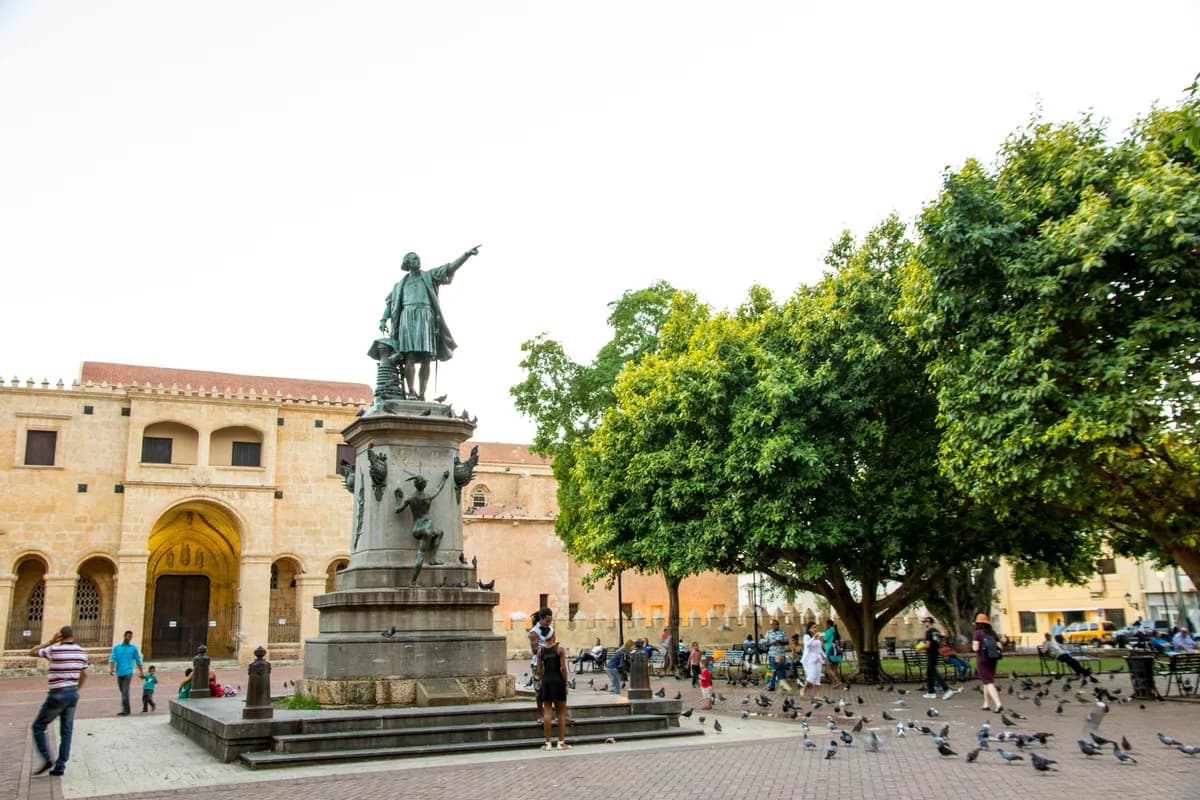
Start at Parque Colón, the main square dominated by a statue of Columbus and the shadow of the Catedral Primada de América: the oldest cathedral in the Americas, completed in 1540. Step inside to admire the Gothic-Renaissance interior, the mahogany altar, and the quiet coolness after the morning heat. Entry is free, though a RD$100 (US$1.70) donation is appreciated.
Walk north to the Alcázar de Colón (Diego Columbus's palace, now a museum) on Plaza de España. The museum contains period furniture, weapons, and art from the colonial era. Confirm current admission fees, and the building has been through restoration work, so confirm current hours and interior access before you go. The plaza itself offers views over the Ozama River and is surrounded by restaurants that make an excellent lunch spot later.
Continue along Calle de las Damas: the oldest paved street in the Western Hemisphere, laid out in 1502. Along this elegant corridor you will pass the Panteón Nacional (a former Jesuit church now housing the remains of Dominican national heroes; free entry, solemn atmosphere), the Casa de Bastidas, and several colonial mansions now serving as galleries and cultural centers.
End the morning at Fortaleza Ozama, a defensive fortress built in 1502 that served as a military garrison and prison for centuries. Climb the Torre del Homenaje (Tower of Homage) for panoramic views of the river, the port, and the sprawling city beyond. Admission RD$70 (US$1.20).
Lunch: Mesón de Bari (12:30 PM)
Walk to Mesón de Bari on Calle Hostos, a no-frills Dominican comedor that has been feeding the neighborhood for decades. Order La Bandera Dominicana: white rice, red beans, stewed chicken (or beef), salad, and fried plantains. Total: under RD$350 (US$6). The garlic shrimp is a local secret, ask if it is available that day.
Afternoon: Art & Street Exploration (2 - 5 PM)
After lunch, explore the Zona Colonial's creative side. Walk along Calle Isabel La Católica and side streets to find an evolving gallery of street art and murals, many commissioned by the city's annual art festival. The Museo de las Casas Reales (Royal Houses Museum) on Calle de las Damas has been closed for restoration; confirm reopening and admission before planning an interior visit.
Stop at Lulú Tasting Bar on Calle Padre Billini for a late-afternoon cocktail. This tiny, beautifully designed bar serves craft cocktails using Dominican ingredients, mamajuana-infused spirits, passion fruit, tamarind, for RD$400-600 (US$7-10). It is a good place to sit, cool off, and watch the street life.
Evening: Dinner & First-Night Drinks (7 PM onwards)
Dinner at Pat'e Palo Brasserie on Plaza de España, a European-style brasserie in a 16th-century building. The churrasco steak and the seafood risotto are reliable choices. Main courses RD$800-1,800 (US$14-30). Sit on the terrace for views of the Alcázar de Colón illuminated at night.
After dinner, walk to Calle Hostos and Calle El Conde for your first taste of Santo Domingo nightlife. On weekends, these streets fill with Dominicans socializing, street vendors selling empanadas, and music drifting from open doorways. La Alpargatería is a handmade espadrille shop at Calle Las Mercedes 103.
Day 2: Modern City, Malecón & Nightlife
Theme: Beyond the Colonial Zone, see how Santo Domingo lives today
Morning: Plaza de la Cultura & Museums (9 AM - 12 PM)
Take an Uber (approximately RD$200/US$3.50) to Plaza de la Cultura in the Gazcue neighborhood. This cluster of museums and cultural institutions is Santo Domingo's intellectual heart. The Museo del Hombre Dominicano (Museum of Dominican Man) is the standout, excellent exhibits on Taíno civilization, the colonial era, and contemporary Dominican identity. Admission RD$100 (US$1.70).
If modern art interests you, the Museo de Arte Moderno next door has a good collection of Dominican contemporary art across four floors. Same admission price. Budget two hours for both museums.
Lunch: Gazcue Neighborhood (12:30 PM)
Gazcue is a leafy residential neighborhood full of mid-century Dominican architecture and local restaurants. Adrian Tropical (multiple locations, but the Malecón branch is a Santo Domingo institution) serves excellent mofongo, sancocho, and fresh juices in an open-air setting overlooking the Caribbean. Main courses RD$400-900 (US$7-15). The portions are enormous, consider sharing.
Afternoon: Malecón & Modern Santo Domingo (2 - 6 PM)
Walk (or take a short Uber) to the Malecón: Santo Domingo's iconic waterfront avenue stretching 14 kilometers along the Caribbean coast. The Malecón is best experienced on foot for 2-3 kilometers between Parque Eugenio María de Hostos and the obelisk. You will pass monuments, open-air bars, and Dominicans fishing from the seawall.
From the Malecón, head to Piantini or Naco: Santo Domingo's modern commercial districts. These neighborhoods reveal the city's contemporary face: high-rise towers, shopping malls (Blue Mall is the most upscale), international restaurants, and a prosperous middle class. The contrast with the Zona Colonial is striking. Window-shop at Blue Mall (Avenida Winston Churchill) or explore the Agora Mall for local brands and a good food court.
Evening: Nightlife in the Zona Colonial (8 PM onwards)
Return to the Zona Colonial for dinner and a proper Santo Domingo night out. Start with dinner at Jalao on Calle El Conde, a lively Dominican restaurant and bar with live music most nights. The menu focuses on Dominican classics done well: chivo guisado (stewed goat), tostones rellenos, and grilled lobster. Main courses RD$600-1,500 (US$10-25). The atmosphere is festive and the mamajuana flows freely.
After dinner, the Zona Colonial comes alive. On weekends (Thursday through Saturday), the area around Calle Hostos, Calle Arzobispo Nouel, and Parque Duarte transforms into an open-air party. Key venues:
- Onno's Bar: Calle Hostos. The quintessential Colonial Zone bar, open-air, loud, fun, and always packed after 11 PM. Live merengue and bachata. Cover: free to RD$300 (US$5) depending on the night.
- SG Rooftop: A rooftop cocktail bar with views over the Zona Colonial. More upscale and relaxed than the street-level bars. Good cocktails: RD$400-700 (US$7-12).
- El Sartén: A hole-in-the-wall bar on Calle El Conde favored by local artists and musicians. Cheap drinks, eclectic music, zero pretension.
Day 3: Day Trip, Museums & Shopping
Theme: A morning excursion, then final exploration and shopping
Option A: Los Tres Ojos (Half Day)
Los Tres Ojos is a cavern containing three lakes, with a fourth lake outdoors, located just 15 minutes east of the Zona Colonial. It is one of the most photogenic sites near Santo Domingo and easily visited in 2-3 hours. Uber from the Zona Colonial: approximately RD$300 (US$5). Admission: RD$200 (US$3.50). A guide (tip: RD$200) will explain the geology and Taíno history. Bring a camera, the turquoise water inside the caves is extraordinary.
Option B: Boca Chica Beach (Half Day)
If you want a beach morning, Boca Chica is the closest option, a calm, shallow bay about 30 minutes east (Uber approximately RD$700/US$12). The beach is popular with Dominican families on weekends and has a festive, local atmosphere. Rent a lounger (RD$300/US$5), order fried fish and a Presidente from a beach vendor, and swim in the warm, shallow water. Note: Boca Chica is lively and somewhat commercial, it is not a secluded escape, but it is fun and authentically Dominican.
Late Morning/Afternoon: Mercado Modelo & Last Walks (11 AM - 3 PM)
Return to the Zona Colonial for a visit to Mercado Modelo: the main craft and souvenir market. Two floors of stalls sell larimar jewelry, amber necklaces, mamajuana bottles, Dominican cigars, paintings, and handcrafted items. Haggling is expected, start at 40% of the asking price and settle around 60%. The market vendors are persistent but good-natured. Budget 45-60 minutes.
Spend your final afternoon walking streets you missed: Calle Padre Billini for galleries and boutiques, Calle Arzobispo Meriño for historic churches, or simply sit in Parque Duarte with a coffee and watch the chess players, dominoes games, and street life that define daily rhythm in the Zona Colonial.
Farewell Lunch
Buche Perico on Calle El Conde, a beloved local restaurant serving traditional Dominican food with generous portions and genuinely warm service. The mofongo relleno de camarones (mofongo stuffed with shrimp) is outstanding. Check the restaurant's menu for main-course prices. A fitting last meal in the capital.
Where to Eat
Santo Domingo has the best food scene in the Dominican Republic. Here are additional picks beyond those mentioned in the itinerary:
Dominican Classics
- El Conuco: Calle Casimiro de Moya. A tourist-friendly but genuinely good Dominican restaurant with live music and traditional decor. Excellent sancocho and mangú. Main courses RD$500-1,200 (US$9-20).
- Buen Provecho: Multiple locations. Chain restaurants offering reliable Dominican food at fair prices. La Bandera under RD$300 (US$5). Good for a quick, cheap, filling lunch.
Upscale Dining
- Sophia's Bar & Grill: In Piantini. Chef-driven Dominican-international fusion in a stylish setting. Tasting menus, craft cocktails, and a wine list. Main courses RD$1,200-2,500 (US$20-42). Reservations recommended for dinner.
- Mitre Restaurante: Calle Jose Amado Soler, corner of Pablo Casals #35. Argentine-inspired steakhouse with excellent cuts of meat. The ribeye and the wine list are both impressive. Main courses RD$1,500-3,000 (US$25-50).
Street Food & Quick Eats
- Chimis (Dominican burgers): Found at roadside stands throughout the city, especially along the Malecón at night. A chimi, a seasoned ground-beef patty with coleslaw and sauces in a soft bun, costs RD$150-250 (US$2.50-4). It is the unofficial midnight snack of Santo Domingo.
- Yaroa: A late-night street food of layered fries, chicken or beef, cheese, and sauces. Available at chimis stands and small food trucks. RD$200-400 (US$3.50-7).
- Colmado culture: A colmado (corner store) is where Dominicans socialize. Buy a Presidente beer (RD$100/US$1.70), pull up a plastic chair, and join the conversation. This is the real Dominican Republic.
Getting Around
Santo Domingo is a large city, but the areas you will visit as a tourist are concentrated:
- Walking: The Zona Colonial is compact and best explored on foot. Wear comfortable shoes, cobblestones are uneven.
- Uber: Reliable, safe, and cheap. Most rides within the city cost RD$200-500 (US$3.50-8.50). Use for trips to Gazcue, Piantini, or the Malecón.
- Metro: Santo Domingo has a modern metro system. Line 1 runs north-south and Line 2 runs east-west. A Metro-only ride costs RD$20. Useful for reaching Plaza de la Cultura from the Colonial Zone.
- Avoid: Driving yourself in Santo Domingo unless you enjoy chaos. Traffic is dense, signage is inconsistent, and motorcycles appear from every direction. Let Uber or a taxi handle it.
- Motoconcho (motorcycle taxi): Short rides within the Zona Colonial for RD$50-100 (under US$2). Only use if you are comfortable on motorcycles, helmets are not always provided.
Budget Breakdown
Santo Domingo is remarkably affordable for a capital city. Here is what three days typically costs per person:
Budget Traveler: US$60-80/day
- Hostel or guesthouse: US$20-35/night
- Local comedores and street food: US$15-20/day
- Museum entries: US$5-10/day
- Transport (Uber/walking): US$5-10/day
- Drinks and incidentals: US$10-15/day
- 3-day total: US$180-240
Mid-Range Traveler: US$150-250/day
- Boutique hotel: US$80-140/night
- Mix of local restaurants and upscale dining: US$30-50/day
- Museums and activities: US$10-15/day
- Transport: US$10-15/day
- Cocktails and nightlife: US$20-30/day
- 3-day total: US$450-750
Frequently Asked Questions
Is 3 days enough in Santo Domingo?
Three days is the sweet spot for most visitors. You can thoroughly explore the Zona Colonial, experience the food scene, enjoy the nightlife, and take a half-day trip. If you are deeply interested in museums and history, a fourth day allows you to visit the Faro a Colón (Columbus Lighthouse), the Jardín Botánico Nacional (one of the largest botanical gardens in the Caribbean), and additional museums at a relaxed pace.
What should I do on my first day in Santo Domingo?
Start in the Zona Colonial. Walk the cobblestone streets, visit the cathedral and the Alcázar de Colón, and eat lunch at a local comedor. Save the modern city, the Malecón, and nightlife for Day 2 when you have your bearings and energy for a late night.
Where should I stay in Santo Domingo for a weekend?
The Zona Colonial is the best base. It is walkable, atmospheric, and close to the majority of restaurants and nightlife. The Gazcue neighborhood (adjacent to the Zona Colonial) is quieter and slightly cheaper. Avoid staying in the far-flung suburbs, you will spend too much time in traffic getting to the interesting parts of the city.
Is Santo Domingo safe for tourists?
The Zona Colonial and tourist areas (Piantini, Gazcue, the Malecón) are generally safe during the day and evening. Standard city precautions apply: avoid flashing expensive jewelry or electronics, use Uber rather than unmarked taxis at night, and stay on well-lit streets after dark. The Zona Colonial has visible police and private security presence, especially on weekends.
Table of Contents
Santo Domingo
This guide covers Santo Domingo. Explore more about this destination.
View DestinationAbout the Author
Alex Borshch
Founder and editor of the Isla365 network. Spent six months living in the Dominican Republic over the 2013-14 winter, and has since wintered in Thailand, Vietnam and Turkey. Writes and edits the guides across the network.