Miches Travel Guide: The Dominican Republic's Next Big Thing
Miches travel guide to the Montana Redonda swing, Club Med Miches, Playa Esmeralda, and the Tropicalia festival on the coconut coast.
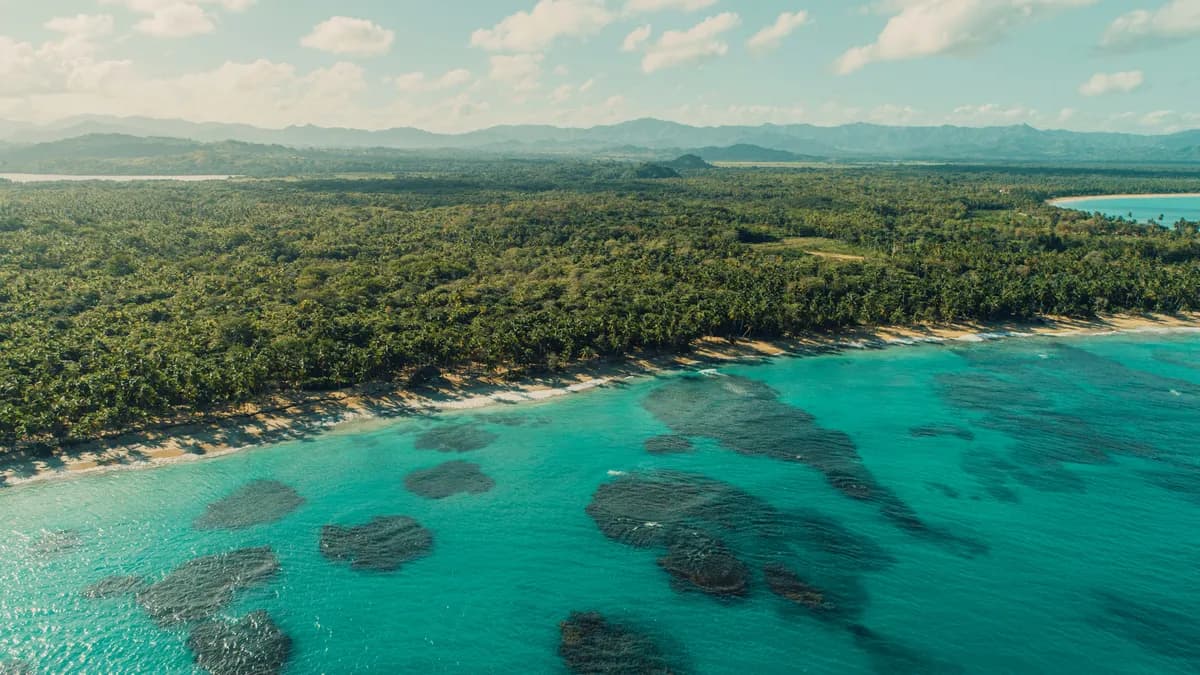
On the northeastern coast of the Dominican Republic, between Punta Cana's resort corridor and the Samaná Peninsula's bohemian charm, there is a stretch of coast that the tourism industry calls "the coconut coast", and that most travelers have never heard of. The town of Miches sits at its heart: a quiet municipality of about 12,200 people (2022 census), fringed by coconut palms, backed by misty green mountains, and fronted by beaches so empty that your footprints in the morning sand will be the only ones there.
Miches is having a moment. When Club Med chose this coast for its newest premium resort in 2019, the brand's first new resort in the Americas in decades, it signaled that Miches was no longer a secret. The viral fame of Montaña Redonda, whose mountaintop swings have become one of the most photographed spots in the Caribbean, brought a stream of day-trippers. The annual Tropicalia music festival drew international headliners and a well-heeled crowd. And yet, despite all this, Miches remains remarkably untouched. There are no strip malls, no chain restaurants, no traffic, and no sense that the place is in a hurry to become anything other than what it already is: a genuinely beautiful, genuinely tranquil alternative to everything that Punta Cana represents.
Why Miches Now, The Next Big Thing
Miches has been "the next big thing" in Dominican tourism circles for a decade, and the prediction is finally coming true, slowly. The key developments include Club Med's flagship resort, improved road access from Punta Cana and Santo Domingo, government investment in the region, and a growing number of boutique hotels and experiences targeting travelers who specifically do not want the all-inclusive resort experience.
What makes Miches special is the combination of pristine natural beauty and genuine Dominican small-town life. The town itself is a typical Dominican pueblo, a central park with a church, a handful of colmados, motoconcho drivers waiting on corners, and old men playing dominoes on the sidewalk. Children play baseball in the streets. Fishermen sell the morning catch from coolers on the roadside. The pace of life is unhurried, the people are warm, and the scenery is green mountains plunging into turquoise sea.
The beaches are the main draw. Unlike the east coast resort zone (Punta Cana, Bávaro), where hotels line the shore shoulder-to-shoulder, the Miches coastline is almost entirely undeveloped. Long stretches of white and golden sand, backed by coconut palms and wild vegetation, are accessible only by dirt road or by foot. This will not last forever, development is coming, but right now, visiting Miches feels like discovering the Caribbean before tourism arrived.
The surrounding natural attractions add depth to what could otherwise be a simple beach trip. Los Haitises National Park is a short boat ride across Samaná Bay. Cacao farms in the hills offer hands-on chocolate-making experiences. The Cordillera Oriental mountains behind town are laced with rivers, waterfalls, and hiking trails that see almost no visitors. And the coastal road from Miches toward Sabana de la Mar passes through some of the most photogenic landscape in the country, coconut groves, river crossings, and views of the bay that make you pull over every few minutes to take photographs. Miches is not a one-trick destination; it is a base camp for a region that has barely been explored by international travelers.
Montaña Redonda, The Famous Swing
Montaña Redonda ("Round Mountain") is a 300-meter peak in the hills above Miches that has become one of the most photographed spots in the Dominican Republic. The draw is simple: a series of swings and platforms mounted at the mountain's summit, from which you can swing out over a dramatic drop with panoramic views of the coast, Samaná Bay, and the green mountains of the interior. The photos look impossible, a person on a swing suspended over clouds and jungle, and while the perspective is somewhat exaggerated by camera angles, the experience is genuinely thrilling.
Access to Montaña Redonda is via a steep, unpaved road from the town of Miches. Use the authorized safari-style trucks for the ascent. Organized tours from Punta Cana (2-hour drive) typically cost US$80-120 per person and include transportation, entrance fee, and sometimes lunch. The entrance fee for independent visitors is RD$500 (US$8.50), which includes access to the swings, hammocks, and viewpoints.
The summit has a small café serving drinks and light snacks. On weekends, a DJ sometimes plays music, the vibe is surprisingly festive for a mountaintop. The views are best in the early morning (before 9 AM) when the air is clear and the light is golden. By midday, clouds often roll in, which creates dramatic photographs but obscures the panorama. The afternoon can be socked in with fog, if views are your priority, go early.
Pro tip: Skip the organized tours from Punta Cana if possible. The drive is long, and the tours typically give you only 1-2 hours at the top, which feels rushed. Staying in Miches allows you to go early, avoid the tour-bus crowds, and return at your own pace.
Club Med Miches
Club Med Miches (officially "Club Med Michès Playa Esmeralda") opened in late 2019 as Club Med's first new resort in the Caribbean in decades, and the choice of Miches, over dozens of more established locations, was a statement of intent. The resort occupies a stretch of beach east of Miches town, set in a coconut grove with the mountains rising behind it.
The resort is divided into four "boutique villages," each with a different theme and atmosphere: Archipelago (adults-only, zen-focused), Caribbean Paradise (family-friendly), Emerald Jungle (adults-only and wellness-oriented, with a natural pool), and Explorer Cove (family-focused). The design is modern-tropical, with open-air architecture that integrates with the landscape rather than dominating it. The food is significantly above typical all-inclusive standards, with a focus on local ingredients and Dominican flavors.
Rates start at approximately US$150-250 per person per night, all-inclusive (meals, drinks, activities, entertainment). Premium rooms and the adults-only village command higher rates. The resort offers organized excursions including Montaña Redonda, Los Haitises, cacao farm tours, and water sports.
Honest assessment: Club Med Miches is excellent for travelers who want a premium all-inclusive experience in a less commercialized setting. The resort itself is well-designed and the service is strong. However, if your goal is to experience Miches as an authentic Dominican destination, staying inside the resort will not give you that, you would need to venture into town independently. The resort is also somewhat isolated; unlike Punta Cana, there is no strip of bars and restaurants outside the gates.
The Beaches
Playa Esmeralda
The best-known beach in the Miches area, Playa Esmeralda is a long curve of golden sand backed by coconut palms, with calm, clear water ideal for swimming. The Club Med resort occupies part of the beach, but the sand extends well beyond the resort boundaries and is publicly accessible. The eastern end of the beach, away from the resort, is quiet and often empty. There are a couple of small Dominican-run restaurants (paradas) at the public entrance serving fried fish and cold drinks for RD$300-500 (US$5-8.50).
Playa El Limón
Approximately 10 km east of Miches, Playa El Limón is a wild, undeveloped beach with powerful waves and wide-open sand. The setting is dramatic, the beach is framed by rocky headlands and backed by dense vegetation. Swimming requires caution due to strong currents, but the beach is stunning for walks and photography. Access is via a dirt road from the main highway; a 4x4 or motoconcho is recommended. There are no facilities, bring everything you need.
Playa Arriba
A small, sheltered beach west of Miches town, Playa Arriba is where locals go for a quiet swim. The water is calm, the sand is soft, and the atmosphere is completely uncommercial. A few palm trees provide shade. On weekends, Dominican families set up with coolers and music. During the week, you may have it to yourself. No entrance fee, no vendors, no infrastructure beyond a basic parking area.
Playa La Vacama
This hidden beach requires a short boat ride or a hike through coconut groves to reach. The effort rewards you with powdery white sand, turquoise water, and complete solitude. Ask locals in Miches for directions, it is not signed and does not appear on most maps. This is the kind of discovery that makes Miches special.
Tropicalia Festival
The Tropicalia music festival, typically held annually in November or December on the beaches near Miches, has quickly established itself as one of the most interesting music festivals in the Caribbean. The lineup blends international and Dominican acts across genres, electronic, indie, Latin, reggaeton, jazz, and the setting (a beachfront stage with the mountains behind) is spectacular.
Tropicalia attracts a well-traveled, culturally curious crowd, think Tulum festival-goers rather than spring-breakers. Past headliners have included major international and Latin American acts. Tickets typically run US$150-300 for multi-day passes, with VIP options available. Accommodation during Tropicalia sells out quickly; book months in advance or consider staying in Punta Cana and driving in for the day.
Beyond Tropicalia, the festival has helped put Miches on the map as a destination for travelers interested in arts and culture, a reputation the town is leaning into with growing art installations, community murals, and cultural events throughout the year.
Los Haitises National Park
Parque Nacional Los Haitises is one of the Dominican Republic's most impressive natural attractions, and Miches is one of the best launching points to visit it. The park, a landscape of limestone karst formations rising from the sea, dense mangrove forests, and caves adorned with Taíno petroglyphs, is a trip down the coastline.
Some organized Los Haitises excursions from Miches transfer guests to Sabana de la Mar before the boat tour (or can be arranged through Club Med or local operators). The crossing takes approximately 30-45 minutes, and the approach to the park, weaving between towering green karst islands in the bay, is one of the most dramatic boat rides in the Caribbean. Full-day tours cost RD$3,000-5,000 (US$50-85) per person and typically include the boat crossing, guided tour of the mangroves and caves, and a basic lunch.
The advantage of visiting Los Haitises from Miches (rather than from Samaná town on the north side) is that tours are smaller, less crowded, and offer a different perspective on the park. The southern approach passes through the widest part of the bay, where humpback whales are visible during the January-March whale watching season.
Inside the park, the caves are the highlight. The Cueva de la Arena and Cueva de San Gabriel contain Taíno petroglyphs and pictographs dating back 500-1,000 years, stylized faces, animals, and spiritual symbols carved and painted into the limestone walls. The guided tour takes you through the mangrove channels by boat, stopping at the caves, a bird colony on the karst islands, and a lookout point with panoramic views of the bay. Birdwatchers should bring binoculars, the park is home to the endangered Ridgway's hawk, Hispaniolan parakeet, and dozens of migratory species during the winter months. The full-day tour from Miches, including the boat crossing, lasts approximately 5-6 hours and is one of the best nature excursions in the entire Caribbean.
Cacao Farms & Chocolate Tours
The hills behind Miches are prime cacao-growing country, and several small farms offer tours that take you through the entire chocolate-making process, from harvesting ripe cacao pods to fermenting, drying, roasting, and grinding the beans into raw chocolate. These tours are hands-on: you will crack open a cacao pod, taste the sweet white pulp surrounding the beans, and grind roasted beans on a stone slab the way the Taínos did centuries ago.
Sendero del Cacao offers tours at the La Esmeralda farm in San Francisco de Macorís. The tour lasts approximately 2 hours and costs RD$800-1,200 (US$13.50-20) per person. It is educational, engaging, and you leave with freshly made chocolate. The cooperative also produces organic cocoa for export, so you are supporting a real community enterprise, not a tourist-trap demonstration.
Other farms in the area offer more informal visits, ask at your hotel or inquire in Miches town. Dominican cacao is internationally acclaimed for its fine flavor profiles, and the Miches region produces some of the best in the country.
Where to Eat
Miches is a small town with a small-town food scene, no international restaurants, no fusion cuisine, just honest Dominican cooking and fresh seafood. That is exactly what it should be.
- La Perlita del Sur: A popular local restaurant on the main road through Miches, serving generous plates of bandera dominicana, grilled chicken, and seafood. The whole fried fish with coconut rice is a standout. The outdoor seating area is pleasant in the evening.
- Paradas on Playa Esmeralda: Simple beachside shacks at the public entrance to Playa Esmeralda, serving fried fish, tostones, and cold beer. Fresh, cheap, and atmospheric. RD$300-500 (US$5-8.50) for a full meal.
- Serenity Art Hotel restaurant: The most upscale dining option outside Club Med. The restaurant at this boutique hotel serves Dominican-inspired dishes with a creative twist, think grilled octopus with yuca purée or coconut ceviche. Reservations recommended for non-guests.
- Roadside chimichurri stands: Along the main road through town, several stands serve the Dominican chimichurri burger and fried chicken for RD$100-200 (US$1.70-3.40). Perfect for a quick, cheap, and satisfying meal.
Where to Stay
Luxury
- Club Med Miches: The flagship property (see above). All-inclusive from US$150-250 per person/night. The best option for travelers who want premium comfort with organized excursions.
- Serenity Art Hotel: A boutique hotel with an artistic sensibility, colorful, individually designed rooms, a pool, and a beachfront location between Miches and Playa Esmeralda. The owner is a Dominican artist and the property feels personal and curated. This is the best choice for independent travelers seeking comfort without the all-inclusive format.
Mid-Range
- Hotel La Loma: Perched on a hillside above Miches with stunning views of the coast and mountains. Simple but comfortable rooms, a small pool, and a restaurant. Doubles from US$60-80/night. The location is ideal for exploring both the beaches and the mountain interior.
- Airbnb & guesthouses: A growing number of Airbnb listings in Miches range from basic rooms in Dominican homes (US$25-40/night) to private beachfront cabanas (US$60-100/night). Quality varies, read reviews carefully.
Budget
- Small local hotels in town: Several basic hotels on Miches' main road offer rooms with AC and WiFi for RD$1,000-2,000 (US$17-34) per night. These are Dominican-standard accommodations, clean but simple. No English spoken, no booking apps, call or show up.
Getting There
From Punta Cana (PUJ)
Miches is approximately 2-2.5 hours from Punta Cana airport. The usual route heads north through Bávaro and Uvero Alto, then inland through Nisibón. The route is paved and reasonably well-maintained. This is the most common arrival route for international travelers. Rental cars are available at PUJ airport; a private transfer to Miches costs approximately US$100-140 one way.
From Santo Domingo (SDQ)
The drive from Santo Domingo to Miches takes approximately 3-3.5 hours via the highway east to Hato Mayor, then north through the mountains to Miches. The mountain stretch is scenic, winding roads through green hills, but can be slow behind trucks. Sitramiches operates buses between Santo Domingo and Miches; another public transport option is a bus to Hato Mayor (Caribe Tours, RD$300 / US$5) followed by a guagua to Miches (RD$200 / US$3.40).
From Samaná
There is no direct road connection across the bay from Samaná to Miches. This is a scenic drive along the bay, but the road is narrow and winding in places. A combined Samaná-Miches itinerary is very natural, see whale watching and Las Terrenas on the Samaná side, then cross to Miches for beaches, Montaña Redonda, and Los Haitises.
Why Miches Is NOT Punta Cana, And Why That Is Good
Miches and Punta Cana are less than 3 hours apart, but they represent fundamentally different philosophies of Caribbean tourism:
- Punta Cana is a purpose-built resort zone, 50+ all-inclusive hotels lined along a beautiful coast, with every conceivable amenity, activity, and convenience. It is excellent at what it does, but it is not the Dominican Republic. It is a Caribbean beach product that happens to be located in the DR.
- Miches is a real Dominican town that happens to have extraordinary beaches and scenery. There are no resort corridors, no tourist buses, no jewelry shops or timeshare pitches. The Miches area also has Viva Miches by Wyndham, Secrets Playa Esmeralda Resort & Spa, and Dreams Playa Esmeralda Resort & Spa. Everything else is Dominican daily life.
Choose Punta Cana if you want guaranteed comfort, organized activities, all-inclusive convenience, and zero logistical friction. Choose Miches if you want authenticity, solitude, natural beauty, and the feeling of discovering a place before the rest of the world catches on. There is no wrong answer, they serve different travel desires.
Frequently Asked Questions
Is Miches good for families?
Yes, with caveats. Club Med Miches has an excellent kids' program and is purpose-built for families. Outside the resort, Miches' calm beaches (especially Playa Arriba and Playa Esmeralda) are safe for children. However, the town itself has no family-specific attractions (no water parks, no zoos), and getting around requires a car or motoconcho. Families who are comfortable with a low-key, beach-and-nature vacation will love Miches. Families who need constant organized entertainment should stay in Punta Cana.
How far is Montaña Redonda from Miches?
Montaña Redonda is approximately 10 miles east of Miches town. The drive up the mountain takes 15-20 minutes on a rough dirt road. The ascent to the summit uses authorized safari-style trucks. If coming from Punta Cana, Montaña Redonda is approximately 1.5-2 hours each way.
When is the Tropicalia festival?
Tropicalia is typically held in late November or early December. Dates, lineup, and ticket information are announced several months in advance on their website and social media. Book accommodation early, the limited hotel inventory in Miches fills up quickly during the festival.
Do I need a car in Miches?
A rental car is strongly recommended. While motoconchos can take you around town and to nearby beaches, you need a vehicle for the base of the mountain (with authorized safari-style trucks for the ascent), Playa El Limón, and cacao farm tours. If you are staying at Club Med, the resort arranges transportation for organized excursions. Independent travelers should rent a car at PUJ or Santo Domingo airport.
Table of Contents
About the Author
Alex Borshch
Founder and editor of the Isla365 network. Spent six months living in the Dominican Republic over the 2013-14 winter, and has since wintered in Thailand, Vietnam and Turkey. Writes and edits the guides across the network.