Samaná
A forested peninsula on the Dominican Republic's north coast where thousands of humpback whales gather each winter, karst rainforest meets mangrove bay, and beaches stay wilder than the country's resort strips.
Samaná
A forested peninsula on the Dominican Republic's north coast where thousands of humpback whales gather each winter, karst rainforest meets mangrove bay, and beaches stay wilder than the country's resort strips.
The Samaná Peninsula juts east off the Dominican Republic's northern coast, separating the open Atlantic from the calmer waters of Samaná Bay. It is mountainous, heavily forested, and runs on a slower clock than the country's other coastal regions: fishing villages, small hotels, and roads through coconut groves rather than strip malls. People come for wildlife and landscape first, nightlife a distant second, which makes it a natural pairing with a beach-and-culture trip elsewhere on the island.
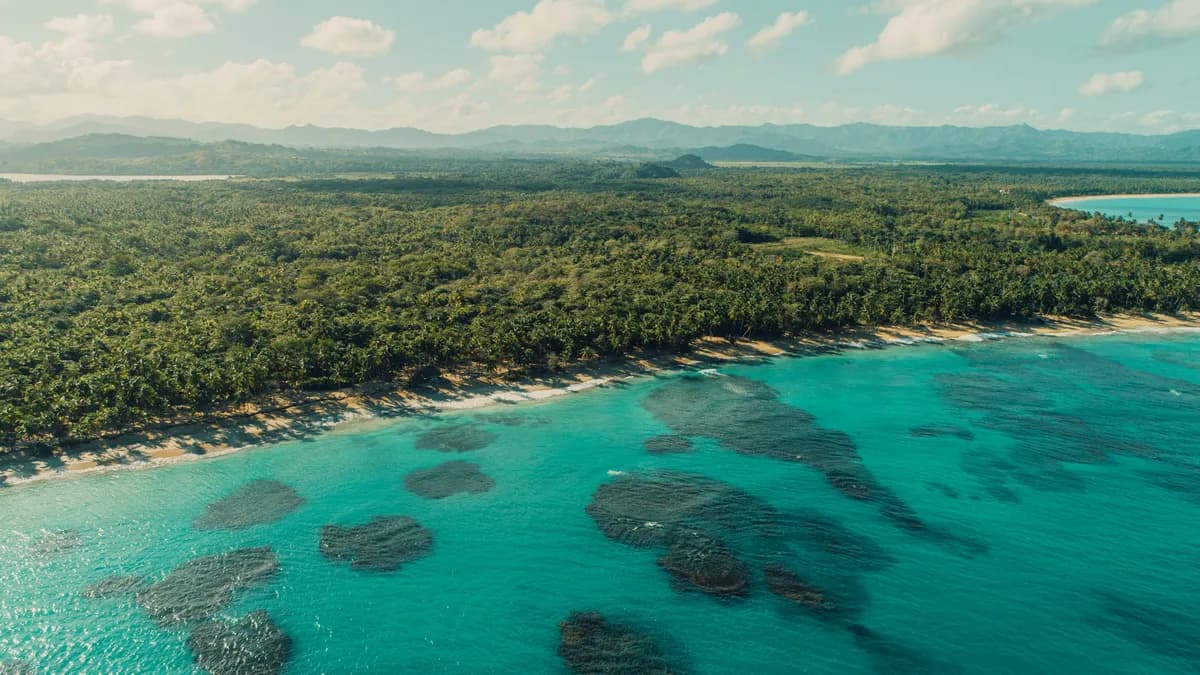
The headline event is the winter migration of humpback whales into Samaná Bay. As of the 2026 season, tours run from mid-January through late March, peaking in February and early March, when an estimated 1,500 to 2,000 whales arrive from the North Atlantic to mate and calve in the sheltered bay. Boats depart daily from the port of Santa Bárbara de Samaná. Inland, Los Haitises National Park covers the bay's southwestern shore: a karst plateau of conical limestone hills, sinkholes, and caves, some holding Taíno pictographs and petroglyphs, fringed by one of the densest mangrove forests in the Caribbean.
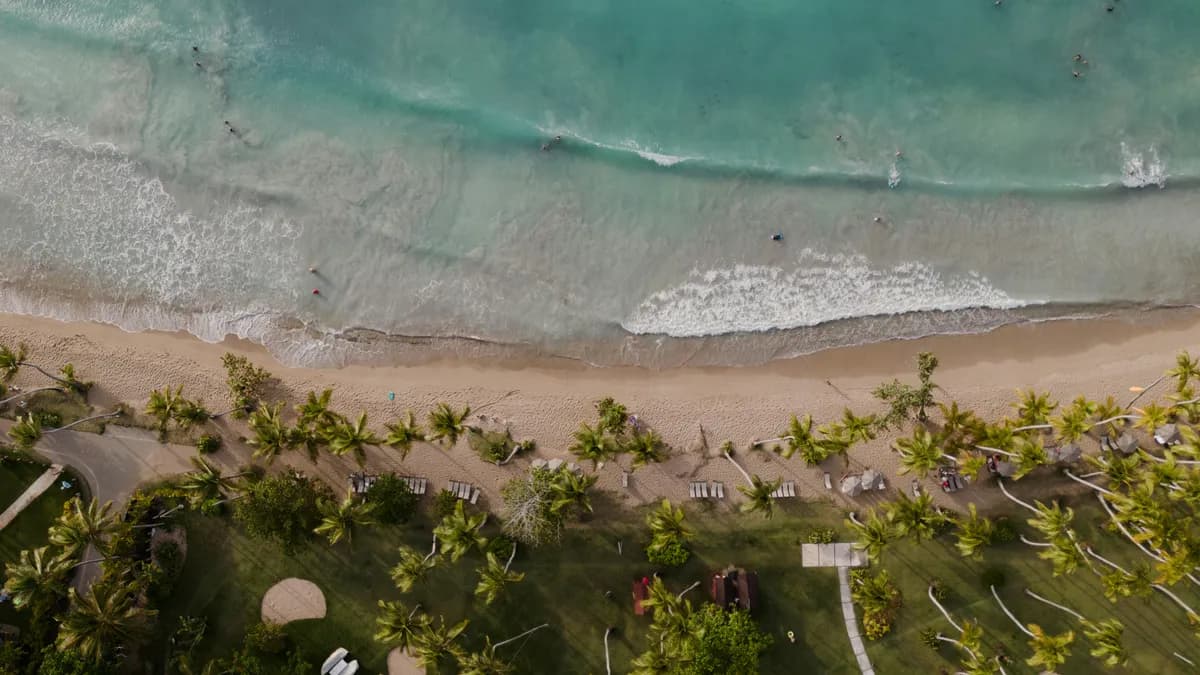
On land, El Limón waterfall drops roughly 40 meters into a jungle pool, reached by horseback or on foot from the village of El Limón. Las Terrenas, on the north shore, has a distinct European flavor: French and Italian expats settled here from the 1970s on, and its restaurants still lean toward carpaccio and fresh pasta. Nearby are the wide, uncrowded Playa Bonita and Playa Cosón, plus Playa El Valle. Offshore, Cayo Levantado, nicknamed Bacardí Island after a 1970s rum ad filmed there, sits a few kilometers off Samaná town. Further east, past Las Galeras, Playa Rincón runs about five kilometers of undeveloped white sand backed by mountains and palms, a fixture on lists of the country's finest beaches.
Samaná El Catey International Airport (AZS) sits at the base of the peninsula, roughly 30 minutes from Las Terrenas and about an hour from Las Galeras. From Santo Domingo, the Autopista del Nordeste toll road cuts the drive to about 2.5 hours. Most visitors give the peninsula 2 to 4 days, enough for a whale watching trip in season, a Los Haitises tour, and time between Las Terrenas and Playa Rincón, before pairing it with one of the country's other beach regions. Book ahead at Villa Serena in Las Galeras, and browse sample itineraries.
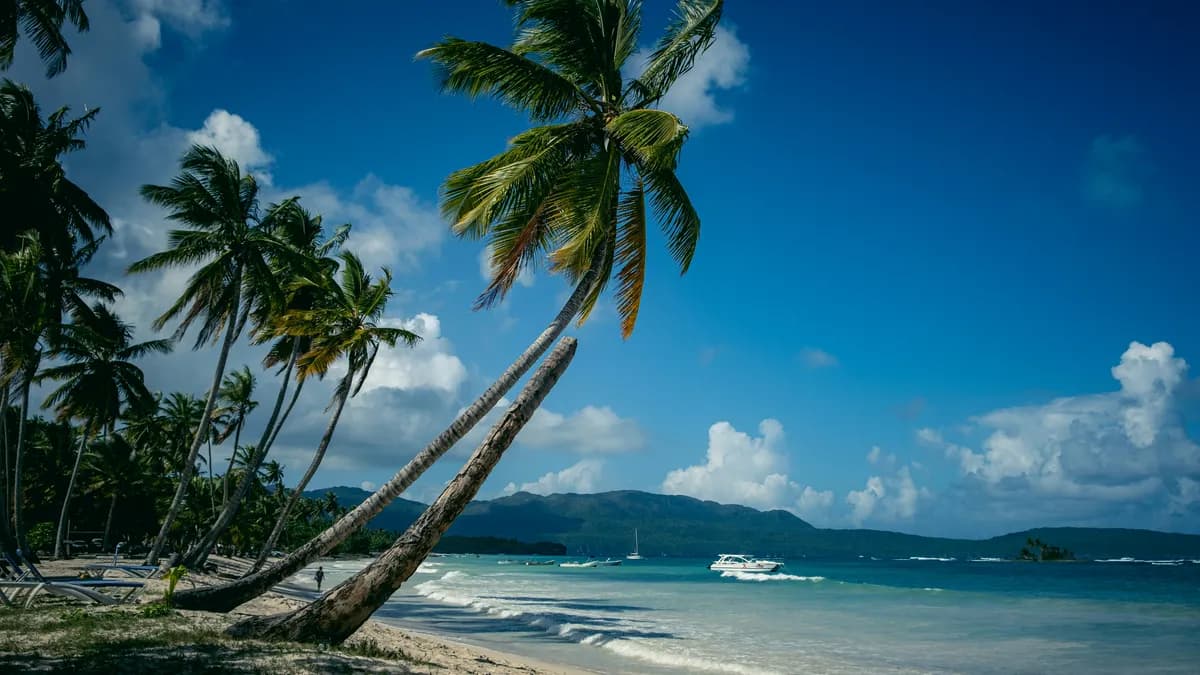
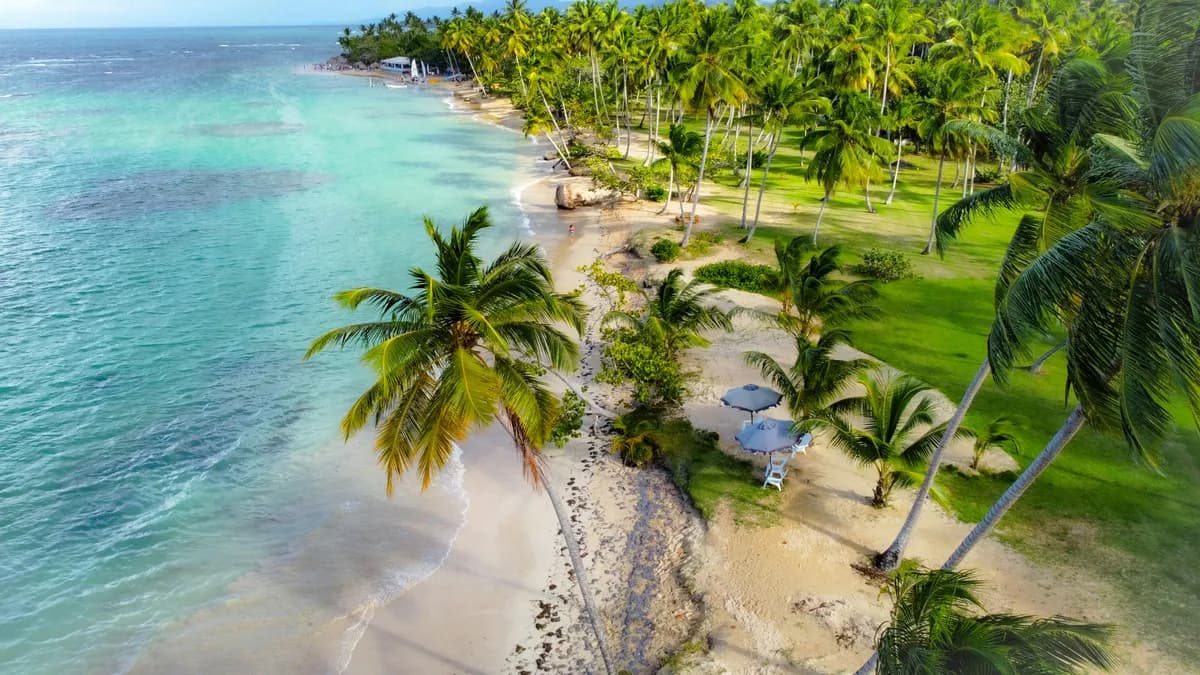
The Samaná Peninsula is the Dominican Republic at its most naturally dramatic — a lush, mountainous finger of land jutting into the Atlantic Ocean, surrounded by coconut-fringed beaches, hidden waterfalls, and the annual spectacle of humpback whale migration.
Every January through March, thousands of humpback whales travel from the North Atlantic to the warm, protected waters of Bahía de Samaná to breed and give birth. It's one of the best whale-watching experiences in the world, with boats getting remarkably close to breaching, tail-slapping whales.
Beyond whale season, Samaná offers the perfect blend of adventure and relaxation: the El Limón waterfall, the crystalline Playa Rincón (regularly ranked among the world's best beaches), the charming town of Samaná with its iconic pedestrian bridge, and the laid-back beach town of Las Terrenas on the north coast.
Weather by month
Warm all year. Each bar's height is that month's average daily high, so the chart rises toward the warm summer; teal marks the drier months with the most reliable beach weather. Temperatures show in °F by default; switch to °C with the toggle.
Best time to visit: Jan, Feb, Mar, Apr, Jun, Jul, Aug, Sep. These months bring the most sun and the fewest rainy days; May, Oct, Nov, Dec are the wettest.
Sample itineraries
Practical information
Photo gallery
Top attractions
Beaches here
Playa El Valle
A wild and windswept surfer paradise on the Samana Peninsula coast, Playa El Valle is a vast sweep of golden sand backed by green hills and a traditional fishing village — raw, rugged, and breathtakingly beautiful.
Cayo Levantado Beach
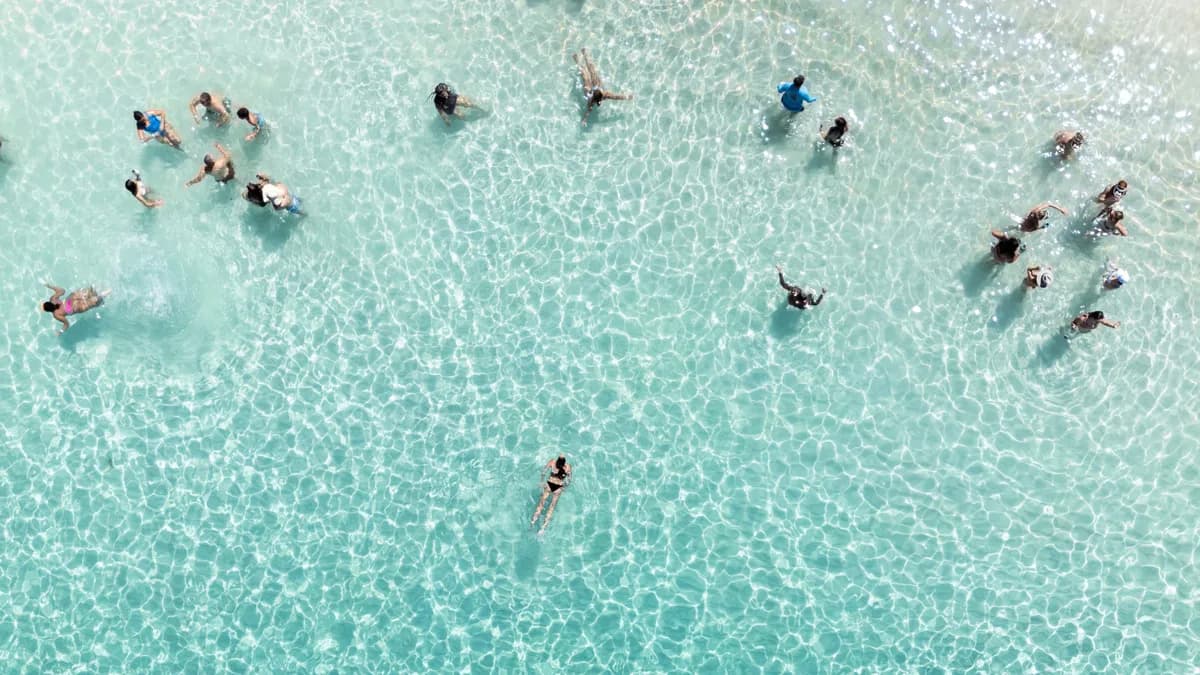
Known worldwide as "Bacardi Island" after the famous rum advertisement, Cayo Levantado is a lush tropical islet in Samana Bay with powdery white-sand beaches, warm turquoise water, and iconic palm-tree scenery straight out of a fantasy.
Activities & experiences
Where to stay
Samaná questions
Can I drive to the Samaná Peninsula?
+
Yes — the modern Samaná Highway from Santo Domingo has cut travel time to about 2.5 hours. The road is excellent. You can also fly into El Catey Airport (AZS) on the peninsula for more convenience.
Which is better — Las Terrenas or Las Galeras?
+
Las Terrenas for restaurants, nightlife, beach variety, and an international community. Las Galeras for peace, quiet, and access to Playa Rincón. Budget travelers and nature lovers often prefer Las Galeras; cosmopolitan travelers and digital nomads prefer Las Terrenas.
Is Playa Rincón hard to reach?
+
The best access is by boat from Las Galeras (15 minutes, RD$1,000 roundtrip). There's also a road, but the final stretch is rough and unpaved. The boat ride is part of the experience and delivers you to the best section of the beach.
How many days do I need on the Samaná Peninsula?
+
Minimum 3 days: whale watching (if in season), El Limón waterfall, and beach time. Ideally 5-7 days to include Los Haitises National Park, multiple beaches, Las Terrenas dining, and Las Galeras village life.
When is whale watching season?
+
January through March, with mid-February being peak season. About 1,500-2,000 humpback whales migrate to the Bahía de Samaná annually to breed and give birth. The Dominican Republic is one of the best places in the world for close whale encounters.
When is the best time to see whales in Samaná?
+
The whale-watching season in Samaná runs from mid-January to late March, with February typically being the peak month. During this period, thousands of humpback whales migrate to Samaná Bay for mating and calving. The Dominican Republic has established the Silver Bank Sanctuary to protect these marine mammals. Tours operate daily during the season, with morning excursions generally offering calmer waters.
How do I get to El Limón waterfall?
+
El Limón waterfall (Cascada El Limón) is a 130-foot waterfall reached by a scenic trail through the Dominican countryside. Most visitors take a guided tour from Las Terrenas or Samaná town. The traditional way to reach the falls is on horseback (about 1.5 miles each way), which includes crossing rivers and traversing varied terrain. Alternatively, you can hike the entire trail, which takes about 45 minutes to an hour. Once at the falls, you can swim in the natural pool at the base. Tours typically include transportation, guides, horses, and sometimes lunch.
What is Los Haitises National Park?
+
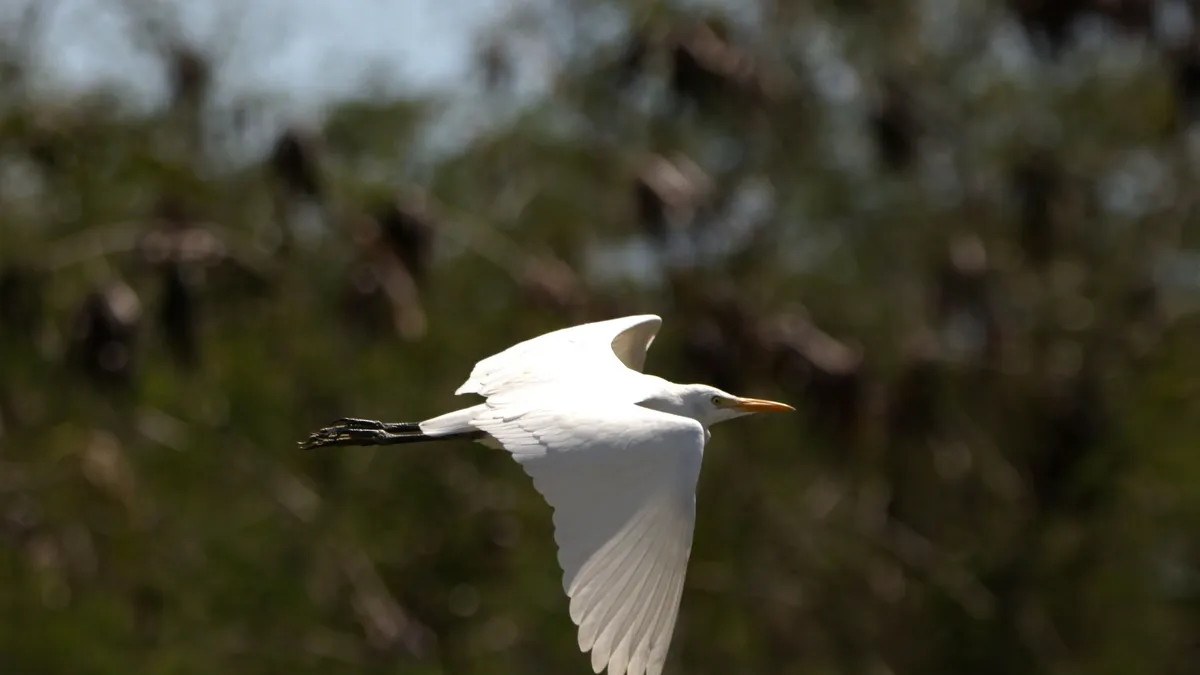
Los Haitises National Park is one of the Dominican Republic's crown jewels, featuring karst limestone formations, mangrove forests, and numerous caverns with Taíno indigenous art. The park is accessible by boat or on guided hikes, usually from Samaná or Sabana de la Mar. Tours explore the mangrove channels, visit the caves with ancient pictographs, and often include birdwatching opportunities to spot frigatebirds, pelicans, and other species. The landscape is similar to Vietnam's Halong Bay, with lush, jungle-covered limestone outcroppings rising dramatically from the water.
Keep exploring
Nearby Destinations
Explore more places near Samaná