Getting Around the Dominican Republic: Transport
Compare intercity buses, guaguas, the Santo Domingo Metro, taxis, and Uber in the Dominican Republic, with verified 2026 fares, routes, and safety notes.
The main ways to move around the Dominican Republic are intercity coach buses (Caribe Tours, Metro Tours, Expreso Bavaro), guaguas, carros publicos, motoconchos, taxis, ride-hailing apps, and a rental car. Santo Domingo adds the Metro, Teleferico cable car, and OMSA buses. There is no intercity train and only a thin domestic flight market, so most trips mean a bus, a transfer, or a rental car.
This guide covers each mode, what it costs as of 2026, and where it fits for a visitor, closing with a connectivity table and FAQ. For Punta Cana transfer pricing, see our airport transfers guide; for the four main airports, the airports guide; for driving yourself, our dedicated car rental guide. Prices are in Dominican pesos (RD$) with approximate USD conversions; bus fares move with fuel costs, so treat every figure as a range.
Intercity Coach Buses
Two branded coach companies run the country's main long-distance network, plus a third dedicated to one corridor, all air-conditioned and cheaper than a transfer.
Caribe Tours and Metro Tours
Caribe Tours is one of the largest intercity coach operators in the country, with individual per-seat A/C, reclining seats, free WiFi, USB chargers, and satellite TV. Its network covers the Cibao region, the north coast, the Samana Peninsula, and Barahona, with confirmed destinations including Santiago, La Vega, Puerto Plata, Sosua, Jarabacoa, Constanza, Samana, and Barahona, plus Haiti; it does not serve Punta Cana, Bavaro, or Higuey, that route belongs to Expreso Bavaro, below. Metro Tours (Metro Servicios Turisticos) runs a similar network between Santo Domingo, Santiago, Puerto Plata, and Sosua from its Terminal Luperon and Terminal Churchill.
Fares fluctuate with fuel costs, read as a band: as of early 2026, one-way fares on both lines ran roughly RD$275 to RD$650 (about $5 to $11), for example RD$450 to Santiago, RD$400 to La Vega, RD$650 to Puerto Plata or Sosua. In May 2026 Caribe Tours announced a fuel-driven increase of about RD$50 per route; CONATRA ordered it reversed, but a terminal check the next morning still showed elevated prices. Budget $8 to $11 and confirm the fare at the terminal. Both lines run very cold A/C, a jacket is standard advice.
Expreso Bavaro: the Santo Domingo to Punta Cana coach
Expreso Bavaro is the dedicated coach for the Santo Domingo to Bavaro, Punta Cana, Veron, and Higuey corridor, described by multiple sources as the only express bus between Punta Cana and the capital, running from Estacion 1 (Calle Juan Sanchez Ramirez) and Estacion 2 (Parque Enriquillo) in Santo Domingo, and from Cruce de Friusa and Cruce de Veron on the Bavaro side.
The fare is roughly RD$400 (about $7), cash only, bought at the terminal (no online purchase). The trip takes about 3 hours, sometimes 3.5 with stops; passengers should arrive 1 hour early since tickets are not reserved. Departures from Bavaro are commonly cited around 7am, 9am, 11am, 2pm, 3pm, and 4pm; treat exact times as illustrative. One nuance: these terminals sit in central Santo Domingo, not at SDQ, so a traveler landing at the airport needs a taxi to Parque Enriquillo first, roughly 30 to 45 minutes and $25 to $40, see the FAQ below.
Guaguas: Shared Minibuses and Vans
A guagua is a privately operated minibus or van on a fixed route, generally leaving once it fills with passengers, though busy trunk routes have short waits. You flag one down with a hand signal; a cobrador, a fare collector often separate from the driver, shouts the destination and collects the cash fare once aboard.
For example, to reach Boca Chica from Santo Domingo, board near Parque Enriquillo, listen for the collector calling "Boca Chica," roughly RD$100 per person, 45 to 60 minutes depending on traffic. In the Punta Cana and Bavaro area, local guaguas run the coastal corridor through Cruce de Veron, downtown Bavaro, Palma Real Mall, and Los Corales, the entrance to Bavaro from the Higuey road. Many vehicles are unmarked, so locals gesture the direction of travel.
Guaguas are a genuine, widely used, very cheap way locals travel, and plenty of visitors ride them without incident. But the UK government's advisory is direct: public buses and carros publicos (below) are "often uninsured, not registered and poorly maintained," and it recommends an authorized taxi or registered provider instead. It is a know-what-you-are-choosing tradeoff, cheap and authentic, but a lower safety standard than the branded coaches above.
Carros Publicos: Shared Taxis
Carros publicos, often called conchos or carritos, are regular four-door sedans, commonly older Toyota Corollas, running as shared taxis on fixed routes, picking up and dropping passengers along the route, and leaving once full. Seating is tight by design: four in back, two up front beside the driver.
Pay double the normal fare to buy the front seat to yourself, or say "completo" to hire the whole car. Unlike most guaguas, carros publicos commonly run at night too, and in Santo Domingo and Santiago they are among the most common ways locals commute. Fares are very low, roughly RD$25 to RD$50 for a short hop and RD$50 to RD$100 between towns. The same UK language applies: carros publicos are frequently uninsured and unregistered, so an authorized or registered provider is the safer choice.
Getting Around Santo Domingo: Metro, Teleferico, OMSA
Santo Domingo has its own layered transit system that exists nowhere else in the country.
Santo Domingo Metro
As of 2026 the Metro has 2 lines and 39 stations: Line 1 runs roughly north-south with 16 stations across about 14.5 km, mixing elevated and underground sections, and Line 2 runs roughly east-west with 23 stations across about 21 km, after a westward extension to Los Alcarrizos (Line 2C) opened February 25, 2026. The two lines meet at Juan Pablo Duarte station. A single ride costs RD$20 (about $0.34); a round trip on a reloadable card is RD$40, and a disposable card adds RD$15. A 10-ride plan costs RD$185, a 20-ride plan RD$360, and a 24-hour pass covering both the Metro and Teleferico costs RD$80. Hours run 5:30am to 10:30pm weekdays, 5:30am to 10pm Saturdays, and 6am to 10pm Sundays; Line 1 runs about every 6 minutes on weekdays, Line 2 every few minutes during the morning peak in the operator's published report, both every 10 minutes on weekends.
One caveat: the Zona Colonial, the historic core most tourists see, is not conveniently served by the Metro, the nearest stations are a 15 to 25 minute taxi ride away, though the district is small and walkable, with major sites within about a 20-minute walk. Most visitors walk or taxi the Zona Colonial and save the Metro for longer trips.
Teleferico and OMSA
The Teleferico cable car runs 2 lines over hillside neighborhoods buses struggle to reach: Line 1 (Gualey to Charles de Gaulle, 5 km) connects to the Metro at Eduardo Brito, and Line 2 (Los Alcarrizos to Los Americanos, 4.2 km) connects at Los Alcarrizos. The RD$80 24-hour pass above covers both.
OMSA, the city bus authority, is mid-relaunch in 2026, having introduced 15 renovated, air-conditioned, electronic-payment buses on the Corredor 27 de Febrero on April 26, 2026. The renovated Corredor 27 de Febrero fare is RD$35; older buses run roughly RD$15 to RD$25. A newer integrated SIT card lets a single RD$35 payment cover an OMSA bus, the Metro, and Teleferico together. Most visitors will not use OMSA for point-to-point sightseeing since routes are not obvious to outsiders; the Metro and Teleferico are the useful parts for tourists.
Taxis, Uber, InDrive, and DiDi
Traditional Dominican taxis do not use meters, so agree the fare before the ride starts. Airport taxis use posted, fixed, zone-based rates instead, covered in our Punta Cana airport transfers guide. The UK advisory recommends an authorized taxi or a registered provider.
Uber, InDrive, and DiDi
Uber operates far more widely than the old "three cities" reputation suggests. Uber's official cities page lists well over 100 municipalities as of 2026, including Santo Domingo, Santiago, Puerto Plata, Punta Cana, La Romana, Jarabacoa, and Samana, though coverage is denser near city centers and thinner further out. Airport rules differ: SDQ has a formalized 24/7 curbside pickup with a local taxi company, while PUJ gives Uber no official arrivals-zone pickup rights, so drivers meet riders outside the terminal.
InDrive works differently: you propose a fare, drivers accept or counter, and you choose by price, rating, car, and ETA, often the dominant app where Uber's coverage thins. DiDi has also entered the market, growing in larger cities. Rideshare fares are commonly cheaper than a flagged taxi. Tipping is optional, rounding up for a short ride, about 10% for longer; full norms are in our tipping guide.
Motoconchos: Motorcycle Taxis
Motoconchos are motorcycle taxis found in every Dominican town, extremely cheap at roughly RD$25 to RD$100 for a short trip, and the most serious safety caveat here. The UK government's advisory states plainly that "motorbike taxis ('motoconchos') are often driven badly and do not always provide passengers with a helmet," adding that "the Dominican Republic has a high death rate from road accidents involving motorbikes and scooters." WHO estimates put the road-traffic death rate at 27.4 per 100,000 for 2021, and roughly two-thirds of road deaths involve motorcyclists. Helmets are legally required under Law 63-17 and enforced by traffic police (DIGESETT), including against tourists.
Wear a helmet if offered, though often none is, hold on securely, keep trips short, and avoid motoconchos at night. Treat it as a short daylight hop, not a primary way to get around.
Pre-Booked Transfers and Domestic Flights
A well-established transfer industry moves visitors between airports and resorts, especially on the Punta Cana corridor: resort shuttles, private door-to-door transfers with flight tracking, and shared shuttles that fill up and make stops. The Punta Cana airport transfers guide has full price tables; similar companies operate around Puerto Plata and Samana.
Domestic flights are a thin market: Sky Cana ceased operations in April 2024, and Arajet, based at SDQ and PUJ, does not offer domestic routes. The one active option is Air Century, flying since 1992 from La Isabela (JBQ) with a secondary base at Punta Cana, running a small fleet; confirm any domestic service, fare, and schedule directly with the airline before planning around it. Premium helicopter companies operate in the eastern DR as airport-to-resort hops, rates well into four figures per flight. For nearly all travelers, ground transport remains the practical way between regions.
Ferries, Water Crossings, and Why There Is No Train
One genuine, currently operating passenger ferry crosses Samana Bay between Samana town and Sabana de la Mar, roughly 45 minutes to an hour, bookable for around EUR 14 per person with a 4-person minimum. Beyond that crossing, boats to Saona Island leave from Bayahibe as organized tours, not a scheduled ferry, our Saona Island day trip guide covers how those work; a scheduled international passenger ferry also connects Santo Domingo and San Juan, PR.
The country has no functioning intercity passenger rail network. The old rail system was discontinued by 1976, and only freight rail survives, notably the Central Romana sugar railroad. The Santo Domingo Metro above is a city commuter system, not an intercity train, and Santiago has a driverless elevated monorail under construction, well advanced by 2026 but not operational and city-local. Moving between cities means a bus, a car, or a domestic flight, never a train.
Santo Domingo to Key Destinations: Mode, Time, Fare
The table below anchors on Santo Domingo and compares options to four regions; treat every figure as approximate.
| Route | By private car / taxi | By bus | Approximate bus fare |
|---|---|---|---|
| To Punta Cana (Bavaro) | 2 to 2.5 hours via the Autovia del Coral toll highway | About 3 to 3.5 hours (Expreso Bavaro, with stops) | RD$400 (about $7), cash only |
| To Puerto Plata | 3 to 3.5 hours via the Autopista Duarte | Roughly 4 to 5 hours (Caribe Tours or Metro Tours) | Roughly RD$650 (about $11) |
| To Samana / Las Terrenas | About 2h15 to 2h30 via the Autopista del Nordeste, roughly $10 to $15 in tolls | Roughly 2h45 (Caribe Tours to Samana town) | Roughly RD$400 to RD$600 |
| To Santiago | Under 3 hours via the Autopista Duarte | A few hours (the busiest DR bus corridor) | Roughly RD$450 |
The Autopista Duarte, Autovia del Coral, and Autopista del Nordeste are the country's best-maintained toll highways, faster to drive than the equivalent bus once terminal time is added.
Renting a Car and Night Travel
Rental cars are available at all four main airports, useful for visiting multiple regions independently; for a single all-inclusive stay a car is usually unnecessary. Full pricing lives in the car rental guide. Driving style is assertive: the UK advisory describes "other drivers not following traffic laws, weaving from lane to lane and rarely signalling," and warns "driving outside the main cities at night can be dangerous because of poor lighting, animals or pedestrians on the road and cars driving without headlights."
That extends to travel generally: avoid road travel outside major cities after dark, and avoid motoconchos at night. Within cities, use a taxi or rideshare rather than walking alone after dark. The tourism board advises planning road trips for daytime and avoiding night driving even on main highways; our safety guide covers the wider picture.
Frequently Asked Questions
What is the cheapest way to get from Santo Domingo to Punta Cana?
The Expreso Bavaro coach, roughly RD$400 (about $7), cash only, is cheapest if already in central Santo Domingo. Landing at SDQ first needs a taxi to Parque Enriquillo, roughly $25 to $40 and 30 to 45 minutes, which changes the total. Counting that transfer, the full bus journey runs 3.5 to 4.5 hours; a private or shared transfer runs about 2.5 to 3 hours door to door for more money.
Is there a train in the Dominican Republic?
No intercity passenger train exists; the national rail network was discontinued by 1976. The Santo Domingo Metro is a city-only commuter system, and Santiago's monorail, under construction, is also city-local. Between regions, your options are bus, car, or a limited domestic flight.
Are guaguas safe for tourists?
Guaguas are widely used and very cheap, and many visitors ride them without issue. But the UK government's advisory flags that public buses and carros publicos are "often uninsured, not registered and poorly maintained," recommending an authorized or registered provider instead. It is a real tradeoff: cheap and authentic, but a lower safety standard than Caribe Tours or Expreso Bavaro.
Does Uber work in the Dominican Republic?
Yes, more broadly than commonly assumed. Uber's official cities page lists well over 100 Dominican municipalities as of 2026, covering all major tourist areas, denser near city centers, thinner further out. Airport rules differ: SDQ has a formalized 24/7 curbside pickup, while PUJ requires meeting the driver outside the terminal.
Can I take a bus directly from the airport to my resort?
Not practically. Local guaguas run near airports like PUJ, but service is infrequent, luggage room is minimal, and they drop you at a stop rather than your hotel. A resort shuttle, pre-booked transfer, or official taxi is the realistic choice; see the Punta Cana airport transfers guide above for price tables.
Is night travel safe in the Dominican Republic?
It depends what you mean. Plan road trips for daytime where possible; the tourism board advises avoiding night driving even on main highways. Advisories warn against driving outside major cities at night due to poor lighting, unlit vehicles, and animals or pedestrians on the road, plus riding motoconchos after dark. Within cities, use a taxi or rideshare rather than walking alone at night.
How dangerous are motoconchos?
More than they feel. WHO estimates put the country's road-traffic death rate at 27.4 per 100,000 for 2021, and roughly two-thirds of road deaths involve motorcyclists. Helmets are legally required but often not offered, and the UK advisory warns motoconchos are "often driven badly" without guaranteed helmets. Treat them as a short daylight hop, not a primary way to travel.
Do I need a rental car to see the Dominican Republic?
Not necessarily. A rental car helps if visiting multiple regions or exploring independently, and can beat repeated transfers on a longer trip. For a single all-inclusive stay, a car is usually unnecessary, since buses, transfers, and local taxis cover everything you need. See the full car rental guide for pricing.
Facts on this page were last checked against their sources on . How we check
Table of Contents
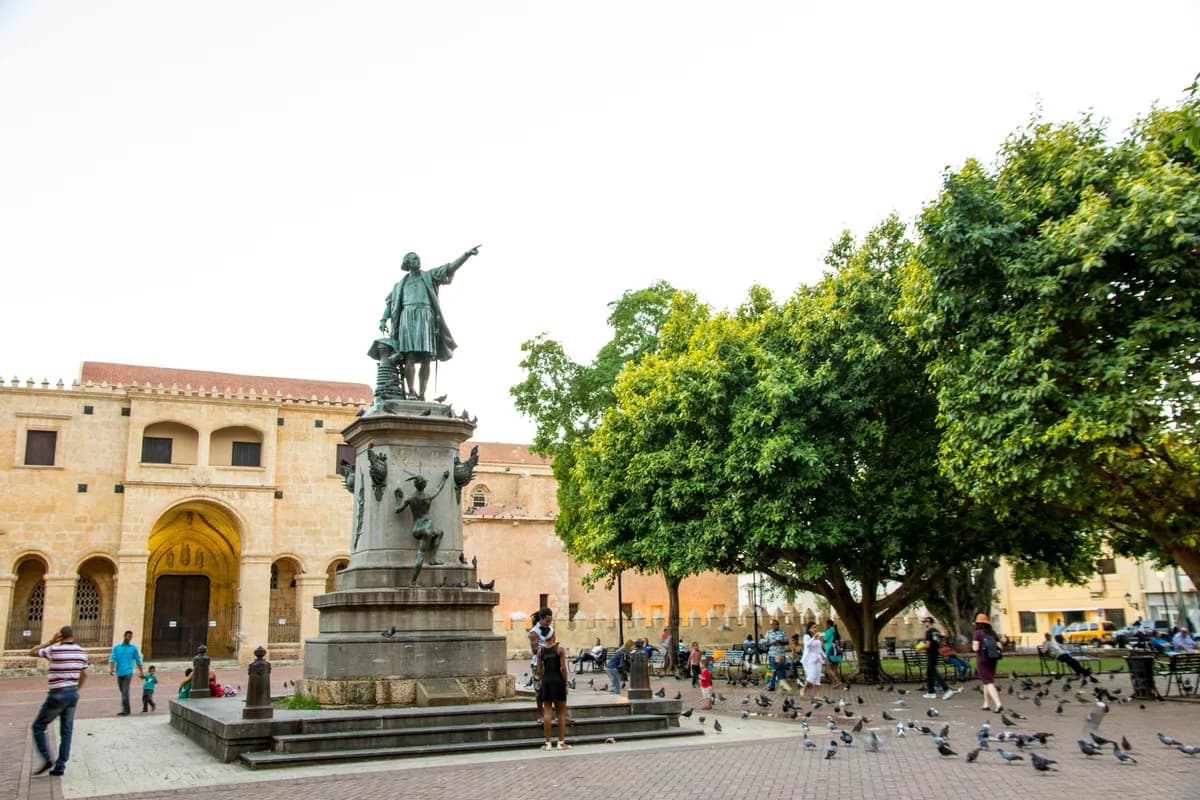
Santo Domingo
This guide covers Santo Domingo. Explore more about this destination.
View DestinationAbout the Author
Alex Borshch
Founder and editor of the Isla365 network. Spent six months living in the Dominican Republic over the 2013-14 winter, and has since wintered in Thailand, Vietnam and Turkey. Writes and edits the guides across the network.