Cabarete & Sosúa Travel Guide: Adventure & Surf
Cabarete and Sosua travel guide: kitesurfing at Kite Beach, snorkeling at Sosua Beach, El Choco National Park, and nightlife 15 minutes apart.
Fifteen kilometers of north coast road connects two towns that could not be more different in personality yet share the same stretch of Atlantic water. Cabarete is wind, waves, and adrenaline, a village built around kitesurfing and surfing that has become the adventure sports capital of the Caribbean. Sosúa, just 15 minutes west, is calmer, older, and more complex, a beach town with a fascinating Jewish refugee history, excellent snorkeling, and a nightlife reputation that is slowly being reshaped by a wave of new investment.
Together, they form the most dynamic stretch of the Dominican Republic's north coast, offering everything from world-class kiteboarding and reef diving to cave exploration, waterfall hikes, and some of the DR's most affordable beachfront dining. This guide covers both towns in depth, with honest assessments of the good, the complicated, and the practical details that make or break a north coast trip.
Two Towns, One Trip
Cabarete and Sosúa are close enough (a guagua ride apart) that most visitors base themselves in one and day-trip to the other. The question is which one fits your priorities:
- Choose Cabarete if: You want wind sports, surfing, a younger international crowd, beachfront nightlife, and a digital nomad community. The vibe is active, social, and outdoors-focused.
- Choose Sosúa if: You want calmer water for snorkeling and swimming, lower prices, a more local Dominican feel, and a base for exploring the wider Puerto Plata province. The vibe is mellow during the day, lively at night.
Many travelers split their stay: 3-4 nights in Cabarete for the adventure sports and social scene, then 2-3 nights in Sosúa for the beach and cheaper restaurants.
Cabarete: The Adventure Capital
Cabarete is a one-street town, and that street runs parallel to the beach. On one side: restaurants, bars, kite shops, and surf schools. On the other side: the Atlantic Ocean, with steady trade winds that have made this village globally famous among wind sports enthusiasts since the late 1980s.
Kite Beach
This is the epicenter of Caribbean kitesurfing. Located 2 km west of Cabarete's main strip, Kite Beach offers consistent 15-25 knot trade winds from June through September, with rideable wind days scattered throughout the rest of the year. The beach is wide, lessons take place in deep water rather than a standing-depth lagoon, and over a dozen kite schools line the sand. The scene is international, competitive, and deeply social, after sessions, kiters gather at the beachfront bars to swap stories and watch the sunset launches. The annual Cabarete Kite Festival (usually June) draws professional riders from around the world.
Playa Encuentro
Three kilometers west of Kite Beach, Encuentro is the best surf break in the Dominican Republic and one of the most consistent in the Caribbean. The reef break produces 3-8 foot waves year-round, with the biggest swells arriving between November and March from North Atlantic storms. The break is divided into sections: the main peak is fast and hollow (intermediate to advanced), while the inside section offers mushier waves for beginners. Surf schools cluster at the western end. Liquid Blue Cabarete lists board rental at $30 per day; a 2-hour group lesson costs RD$2,000-3,000 (US$34-50). 321 Takeoff and Swell Surf Camp are the most reputable schools with bilingual instructors.
Cabarete Bay (Main Beach)
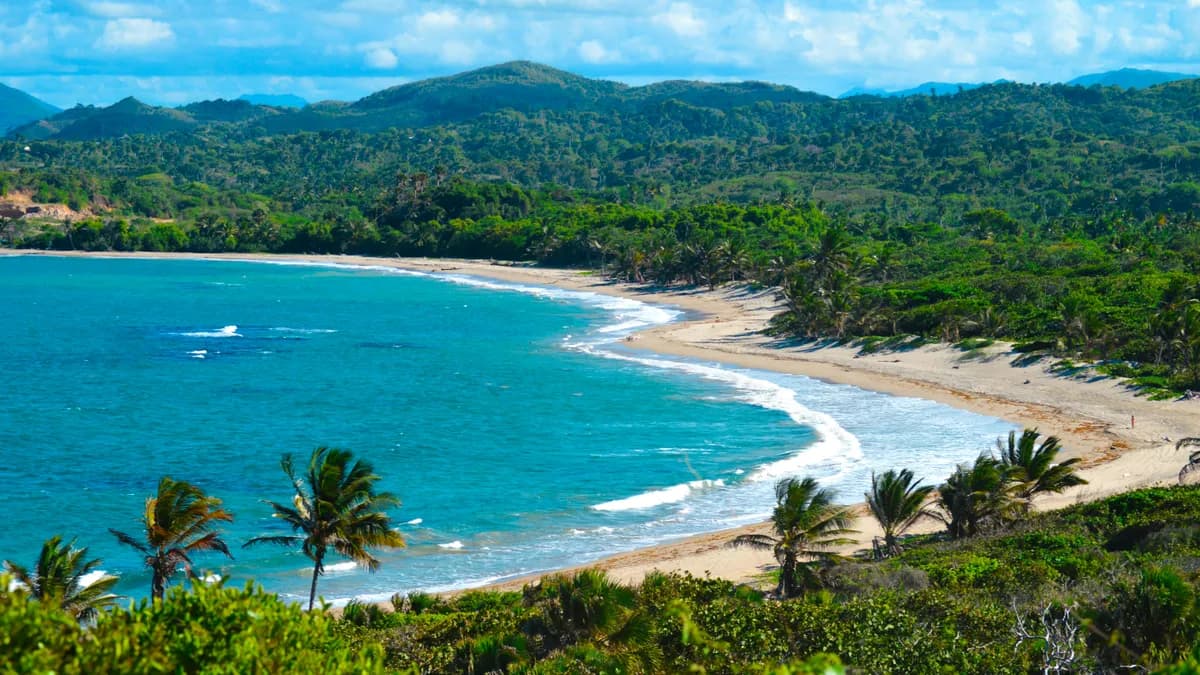
The town beach is a long, palm-lined crescent with calm morning water (good for swimming and SUP) and afternoon wind (good for windsurfing). Velero Beach Resort is on the eastern point of Cabarete Beach. The eastern end near Janet's Supermarket gets choppier but is also where the beach bars are. This is where the social life of Cabarete happens, laptops in the morning, drinks in the afternoon, dancing at night.
Sosúa: Snorkeling, History & Beach Life
Sosúa Beach
A sheltered cove with calm, clear water and a coral reef just 50 meters offshore, Sosúa Beach is the north coast's best snorkeling spot. The horseshoe-shaped bay is protected from the open Atlantic, making the water reliably calm and warm. Vendors rent snorkel gear for RD$200-300 (US$3.50-5) per hour, and the reef reveals parrotfish, sergeant majors, sea fans, and occasional sea turtles. The beach gets crowded midday (especially when cruise ships dock in nearby Puerto Plata), so arrive before 10 AM for the best experience. Beach chairs and umbrellas cost RD$200-300 (US$3.50-5) for the day.
The Jewish Heritage
Sosúa has a remarkable history that most visitors miss entirely. In 1938, Dominican dictator Rafael Trujillo offered to accept Jewish refugees fleeing Nazi Europe, a decision motivated partly by humanitarian concern and partly by his desire to "whiten" the Dominican population. Between 1940 and 1945, approximately 700 Jewish settlers arrived in Sosúa, establishing a dairy farming community that became Productos Sosúa (the cheese and butter brand still sold in Dominican supermarkets today). The Jewish Museum of Sosúa (Museo de la Comunidad Judía de Sosúa) on Calle Dr. Alejo Martínez documents this history with photographs, documents, and personal stories. Admission is RD$200 (US$3.50). It is a small museum but a powerful one, and a story most Caribbean travelers have never encountered.
Playa Alicia
A newer, cleaner beach developed on the eastern side of Sosúa, Playa Alicia formed in 2003. The water is calmer than Sosúa Beach and slightly less crowded. Access is via a newly paved road off the main highway. This beach represents the "new Sosúa" that investors are building, more family-oriented, more organized, and intentionally distanced from the town's previous reputation.
Water Sports Guide
The Cabarete-Sosúa corridor is the water sports capital of the Caribbean. Here is a detailed breakdown of what is available, where to do it, and what it costs:
Kitesurfing
- Where: Kite Beach, Cabarete
- Season: June-September (peak), year-round (variable)
- Beginner course: GoKite Cabarete lists $649 for 9 hours of lessons, including equipment
- Equipment rental (full day): RD$3,000-4,500 (US$50-75)
- Top schools: Kite Club Cabarete, Laurel Eastman Kite School (IKO certified), Dare2Fly
- Pro tip: Book a 3-day beginner package rather than single lessons, the learning curve requires consecutive days. Plan to stay for a week for beginner lessons.
Surfing
- Where: Playa Encuentro (primary), Cabarete Bay (beginners)
- Season: Year-round, biggest swells November-March
- Group lesson (2 hours): RD$2,000-3,000 (US$34-50)
- Board rental (full day): $30 at Liquid Blue Cabarete
- Top schools: 321 Takeoff, Swell Surf Camp, No Work Team
Scuba Diving
- Where: Sosúa Bay (reef dives), offshore wrecks
- Season: Year-round, best visibility May-September
- Discover Scuba: US$90 at Aqua Adventures, including lesson and dive
- PADI Open Water certification (3-4 days): RD$18,000-24,000 (US$300-400)
- 2-tank boat dive (certified divers): RD$4,500-6,000 (US$75-100)
- Top operators: Northern Coast Diving, Sosúa Ocean Adventures
Windsurfing & SUP
- Where: Cabarete Bay
- Windsurfing lesson (2 hours): RD$2,500-3,500 (US$42-59)
- SUP rental (per hour): RD$500-800 (US$8.50-13.50)
- Note: Cabarete was a windsurfing mecca before kitesurfing was established by 1999, and the conditions remain excellent.
El Choco National Park
Just 1 km south of Cabarete's main street, El Choco National Park is one most visitors overlook. This small but fascinating park features a network of caves, freshwater lagoons, and subtropical dry forest spread across a limestone karst landscape.
The main attractions are the Cabarete Caves: a series of underground caverns with stalactites, stalagmites, and crystal-clear freshwater pools where you can swim. The park also has two lagoons (Laguna Cabarete and Laguna Goleta) connected by trails through dense vegetation. A guided tour takes 2-3 hours and costs RD$500-800 (US$8.50-13.50) per person. Independent exploration is allowed but a guide is recommended, the caves can be disorienting. Bring water shoes, a flashlight (phone works), and mosquito repellent. The park is open 8 AM to 5 PM daily.
Nightlife & Entertainment
Cabarete
Cabarete's nightlife is centered on the beachfront strip and follows the sports crowd's rhythm: early dinners (the wind sports community is exhausted by 7 PM), drinks at beach bars from 9-11 PM, then the main venues from 11 PM to 3 AM.
- Lax Ojo: The most popular late-night bar, right on the beach. DJs, dancing, and a crowd that mixes international athletes, nomads, and Dominican locals. No cover. Drinks RD$250-400 (US$4-7).
- Voy Voy: Open-air bar with live music (jazz, reggae, Latin) most nights. More chill than Lax but still lively. Tuesday jam sessions draw local musicians.
- Onno's Bar: The OG Cabarete bar, operating since the windsurf days. Legendary for its Thursday BBQ nights (all-you-can-eat ribs for RD$700 / US$12) and casual, sandy-floor vibe.
Sosúa
Sosúa's nightlife has historically had a reputation for its bar-girl scene along Pedro Clisante street. The town is actively working to move past this image with new investment and stricter regulations. That said, nightlife is still lively and can be fun if you know where to go:
- Classico Bar & Lounge: Newer upscale venue with cocktails, Latin music, and a mixed international-Dominican crowd. The best option for couples and groups wanting a more refined night out.
- Rolf's Bar & Restaurant: German-owned restaurant that transitions into a lively bar after 10 PM. Good beer selection, darts, and a loyal regular crowd.
Where to Eat
Cabarete
- La Casita de Papi: Seafood restaurant on Cabarete Beach. Heaping plates of la bandera for RD$200-300 (US$3.50-5). The moro de guandules is excellent.
- Fresh Fresh Café: Health-focused café with smoothie bowls, avocado toast, and fresh juices. Popular with the yoga and surf crowd. Bowls RD$350-500 (US$6-8.50).
- Gordito's: Located at Plaza Ocean Dream, Cabarete. The fish tacos are legendary. Mains RD$400-800 (US$7-13.50).
- Blue Moon: Indian-Caribbean fusion restaurant at a hilltop retreat in the Septentrional Mountains. The owner-chef is from Mumbai and the curry is authentic. Multi-course dinner RD$1,200-1,800 (US$20-30). Reservations essential; open only a few nights per week.
Sosúa
- La Roca: Perched on the cliff overlooking Sosúa Bay, La Roca has the best view in town and surprisingly fair prices for the location. Grilled seafood platters RD$800-1,200 (US$13.50-20).
- Bailey's Restaurant: On Pedro Clisante street, this long-running restaurant serves reliable Dominican and international food at moderate prices. The generous breakfasts (RD$300-450 / US$5-7.50) draw a loyal morning crowd.
- Jolly Roger Bar & Grill: On Avenida Pedro Clisante in El Batey, serving cold beer, grilled fish, and people-watching. Casual, sandy-floor dining. Fish and chips RD$450 (US$7.50).
Where to Stay
Cabarete, Budget (US$25-60/night)
- Ali's Surf Camp: Rooms beside El Choco National Park’s lagoon in Pro Cab, Cabarete. From US$30/night. The social atmosphere and proximity to waves make up for the no-frills rooms.
- Airbnb studios: Numerous options along the main road, from US$25-50/night. Look for places within walking distance of the beach strip.
Cabarete, Mid-Range (US$80-180/night)
- Velero Beach Resort: The most established hotel on Cabarete Bay. Pool, restaurant, and beachfront rooms. Doubles from US$110/night. The location at the eastern point of the bay is ideal for families.
- Hotel Kaoba: Boutique-style hotel with pool and rooftop bar, centrally located on the main strip. From US$90/night. Modern rooms with good AC and reliable WiFi.
Sosúa, Budget to Mid-Range (US$30-100/night)
- Hotel Casa Valeria: Clean, family-run guesthouse on a quiet street. Pool, AC, and a 10-minute walk to the beach. From US$40/night. Excellent value.
- Sosúa Ocean Village: Condo-style resort with pools, gym, and organized activities. From US$70/night. Good for longer stays with kitchen facilities.
Day Trips
27 Charcos de Damajagua
The most popular excursion from Cabarete/Sosúa, the 27 Waterfalls of Damajagua is a canyoning adventure where you jump, slide, and swim through a series of natural limestone pools and waterfalls in the hills south of Puerto Plata. The standard tour covers 7, 12, or all 27 charcos ("pools"). Most excursions cover seven falls; the longer route takes about 2.5 hours and includes multiple jumps ranging from 1 to 8 meters. Entry is priced by route (7, 12 or all 27 charcos) and the gate tariff is not published, so confirm the current price with the park before you go. From Cabarete, book through a tour operator (RD$2,000-3,000 / US$34-50 including transport) or drive yourself. Helmet and life vest are provided and mandatory. Wear water shoes.
Puerto Plata
Puerto Plata city is 25 minutes west of Sosúa and worth a half-day visit. The Teleférico cable car to the top of Mount Isabel de Torres has been closed since June 2024, after a breakdown left passengers stranded; a US$20 million rebuild announced in March 2026 has no completion date. The summit is still reachable by 4x4 safari tour. Walk the restored Malecón waterfront promenade. Visit the Amber Museum (RD$250 / US$4) to see Dominican amber specimens, including some with perfectly preserved insects millions of years old. The Fortaleza San Felipe, the oldest colonial fortress on the north coast, overlooks the harbor.
Dominican Republic Jazz Festival
The Dominican Republic Jazz Festival is a free, multi-day festival, separate from the ticketed Cabarete Jazz Festival. It typically takes place in early November and transforms the town into a music festival with a Caribbean backdrop. Even if jazz is not your genre, the atmosphere, live music, beachfront stages, international food vendors, is worth planning around.
Getting There & Around
Getting There
The nearest airport is Gregorio Luperón International Airport (POP) in Puerto Plata, approximately 25 minutes from Sosúa and 35 minutes from Cabarete. Direct flights arrive from New York (JFK, EWR), Miami, Toronto, Montreal, and several European cities. A taxi from POP to Cabarete costs RD$1,500-2,500 (US$25-42); to Sosúa, RD$1,000-1,500 (US$17-25). From Santo Domingo, Caribe Tours operates comfortable bus service to Sosúa (RD$500 / US$8.50, 4.5 hours) with connections to Cabarete by guagua.
Getting Around
Between Cabarete and Sosúa, guaguas (public minibuses) run constantly along the coastal highway for RD$50-100 (US$0.80-1.70). Within each town, motoconchos cost RD$50-100 (US$0.80-1.70). Motorbike rental (RD$800-1,200 / US$13-20 per day) is the most practical option if you plan to move between beaches and day trips frequently. Uber rides can be requested in Sosúa; use local taxis or your hotel's car service for airport transfers.
Frequently Asked Questions
Is Cabarete good for beginners or only experts?
Cabarete is excellent for beginners. Kite Beach offers instruction in deep water rather than a standing-depth lagoon. Plan to stay for a week for beginner lessons. Encuentro has a beginner section for surfing. The social scene is welcoming to newcomers of all skill levels. Many visitors arrive as total beginners and leave as converts.
Is Sosúa safe?
Sosúa is safe for tourists during the day and generally safe at night in the main areas. The town's nightlife district on Pedro Clisante street has a particular character that some visitors find uncomfortable, expect persistent approaches from vendors and bar staff. Outside of that specific strip, Sosúa is a quiet, friendly beach town. Standard precautions apply: don't walk alone on dark streets, don't flash valuables, and take taxis back to your hotel after a late night.
Can I combine Cabarete/Sosúa with other north coast destinations?
Absolutely. Puerto Plata is 25 minutes west, Río San Juan and Playa Grande are 1 hour east, and the 27 Charcos are southwest. A week on the north coast could include 3-4 days in Cabarete/Sosúa plus day trips to all of these. If you want to continue east to Las Terrenas on the Samaná Peninsula, it is a 3-4 hour drive, doable but better as a separate trip segment.
When is the best wind for kitesurfing?
The most consistent winds blow from June through September, with average speeds of 18-25 knots. This is the peak kitesurfing season, and Kite Beach is packed with riders. January and February also get good wind days. October-November tends to be the lightest wind period. Even outside peak season, Cabarete gets rideable wind approximately 200+ days per year.
Table of Contents
Puerto Plata
This guide covers Puerto Plata. Explore more about this destination.
View DestinationAbout the Author
Alex Borshch
Founder and editor of the Isla365 network. Spent six months living in the Dominican Republic over the 2013-14 winter, and has since wintered in Thailand, Vietnam and Turkey. Writes and edits the guides across the network.