Puerto Plata & the Amber Coast: The Complete Travel Guide
Puerto Plata and Amber Coast guide to the Teleferico cable car, Fort San Felipe, 27 Charcos waterfalls, and the Brugal Rum factory tour.
Puerto Plata sits on the Dominican Republic's northern coast, a stretch of Atlantic coastline known as the Costa de Ámbar (Amber Coast) for the amber deposits found in the mountains behind the city. This was the country's original tourism region, drawing visitors decades before Punta Cana had its first hotel. Then the east coast resort boom happened, and Puerto Plata faded from international attention.
That is changing. A new cruise port, renovated Malecón (waterfront), revitalized historic center, and the enduring appeal of nearby adventure destinations like the 27 Charcos de Damajagua and the surf towns of Cabarete and Sosúa are bringing travelers back to the north coast. Puerto Plata offers something Punta Cana cannot: a real Dominican city with history, culture, and genuine local life alongside beautiful beaches and world-class outdoor activities.
Puerto Plata City Overview
Puerto Plata is a working Dominican city of roughly 150,000 people, not a purpose-built tourist zone. This is both its strength and its challenge. The historic center features Victorian-era gingerbread houses, a central park (Parque Central) with a white-painted gazebo, and streets that feel more Caribbean than resort. The Malecón stretches along the waterfront and was significantly renovated in recent years, making it a pleasant evening stroll.
The city sits between the Atlantic Ocean and the 800-meter peak of Isabel de Torres, which is crowned by a Christ the Redeemer statue (a smaller version of Rio's famous monument) and reached by a cable car, closed since June 2024 and awaiting a rebuild. This combination of city, mountain, and sea gives Puerto Plata a dramatic setting unmatched by any other tourism center in the DR.
The Amber Coast stretches roughly 100 kilometers from Monte Cristi in the west to Nagua in the east, with Puerto Plata as its hub. Key satellite destinations include Playa Dorada (resort zone), Sosúa (beach town), and Cabarete (surf and kite capital), all within 30 minutes of the city.
Teleférico & Isabel de Torres
The Puerto Plata Teleférico is an aerial cable car and one of the city's signature experiences. The former 8-minute ride carried you from the valley floor at 180 meters to the summit of Isabel de Torres at 800 meters, passing over tropical forest, coffee plantations, and residential neighborhoods.
At the top you will find:
- The Christ statue (Cristo Redentor): A 16-meter replica of Rio de Janeiro's Christ the Redeemer, built in 1970. Views from the base sweep across the Atlantic coastline, the city, and on clear days, all the way to Haiti.
- Botanical gardens: A modest but pleasant tropical garden with labeled species, walking paths, and benches, a cool retreat from the coastal heat.
- Souvenir vendors: Dominican crafts, amber jewelry, and snacks at the summit. Prices are reasonable.
Practical details:
- Hours: Closed pending rehabilitation; operating hours do not currently apply.
Fort San Felipe & Museums
Fort San Felipe (Fortaleza San Felipe)
This 16th-century Spanish fortress guards the entrance to Puerto Plata's harbor and is one of the oldest military structures in the Americas. Built in 1577 to defend against pirates and foreign powers, the fort served as a prison during the Trujillo dictatorship and is now a small museum with colonial-era weapons, maps, and artifacts.
The fort itself is compact, you can tour it in 30-40 minutes, but the setting is worth the visit. The ramparts offer views of the harbor, the Malecón, and the Atlantic. Late afternoon light makes the coral stone walls glow warm gold.
Admission: RD$100 (US$1.70).
Other Museums
- Museo de Arte Taíno: Small but focused collection of Taíno artifacts, ceramics, stone tools, and spiritual objects from the indigenous people who inhabited the island before Spanish colonization. Located near the central park. Admission: RD$100 (US$1.70).
- Gregorio Luperón Museum: Dedicated to the Dominican national hero who fought for independence. The museum occupies his former home and provides context for Dominican history that you will not find in resort brochures. Free admission.
The Amber Museum
The Museo de Ámbar Dominicano (Dominican Amber Museum) occupies a beautifully restored Victorian house near Parque Central. The Dominican Republic produces some of the world's finest amber, fossilized tree resin dating back 15-40 million years, and this museum showcases exceptional specimens, including rare blue amber (also mined in Mexico and Myanmar) and pieces containing preserved insects, lizards, and plant matter.
The museum is small but excellent. Displays explain how amber forms, how it is mined (often by hand in mountain tunnels near Santiago), and how to distinguish real amber from plastic imitations (a useful skill at local markets). A ground-floor jewelry shop sells authenticated amber pieces at fair prices, substantially cheaper than resort gift shops.
Admission: RD$200 (US$3.40). Allow 45-60 minutes. Guides are available in English and Spanish.
Buying amber tip: Real Dominican amber is warm to the touch, floats in salt water, and produces a pine-like scent when rubbed. Blue amber, the rarest and most valuable variety, appears blue under sunlight or ultraviolet light but honey-gold under indoor lighting. Expect to pay US$30-200 for a quality blue amber pendant, depending on size and clarity.
27 Charcos de Damajagua
The 27 Waterfalls of Damajagua are Puerto Plata's premier adventure attraction and one of the most exhilarating outdoor experiences in the Dominican Republic. A series of cascading travertine pools connected by natural slides, jumps, and swimming sections through a jungle canyon, it is nature's water park, and it is spectacular.
The Experience
The standard tour covers 7, 12, or all 27 waterfalls. The hike to the top takes 30-45 minutes through lush tropical forest (guides provide helmets and life jackets). Then you descend through the waterfalls, sliding down natural rock chutes, jumping into deep turquoise pools (the highest jump is about 8 meters), and swimming through narrow canyon passages. The water is fresh and cool. The scenery is extraordinary.
- 7 waterfalls: The most popular option. Takes 2-3 hours total. Suitable for most fitness levels, including older teenagers and reasonably fit adults. Some tours advertise jumps of up to 25 feet.
- 12 waterfalls: Adds more challenging jumps and slides. Takes 3-4 hours. Moderate fitness required.
- 27 waterfalls: The full experience. Takes 4-5 hours. Requires good fitness and comfort with heights, the upper falls include jumps of 5-8 meters. Minimum age 8 under the attraction's published rules. This is the one our team recommends if you are physically capable.
Practical Details
- Cost: RD$560 (US$9.50) for 7 falls, RD$750 (US$12.70) for 12 falls, RD$930 (US$15.70) for 27 falls. Includes guide, helmet, life jacket.
- Location: 25 minutes south of Puerto Plata, near the town of Imbert. Taxis from Puerto Plata: approximately RD$1,500-2,000 (US$25-34) each way. Many hotels arrange shuttle service.
- What to bring: Closed water shoes or trainers with good grip (essential, bare feet on slippery rock is dangerous), swimsuit, waterproof phone case, change of clothes. Leave valuables in a locker at the entrance (RD$100/US$1.70).
- Best time: Arrive early (8:30-9:00 AM) to beat tour groups from cruise ships. The falls are busiest between 10 AM and 2 PM. After heavy rains, water levels rise and some upper falls may be closed for safety.
The 27 Charcos are managed by a community cooperative, and entrance fees support the local village of Damajagua. This is responsible tourism at its best, the falls are pristine because the community has a direct stake in their preservation.
Beaches of the Amber Coast
The north coast beaches are different from the east coast. Atlantic waters mean more wave action, and the landscape is more dramatic, cliffs, coves, and jungle-backed shores rather than flat resort strips. Here are the best options:
Playa Dorada
Puerto Plata's resort beach. A crescent of golden sand backed by a cluster of all-inclusive hotels (Be Live, VH Hotels). The beach is wide and well-maintained, with calm swimming in the protected lagoon area and gentle waves further out. If you are staying at a Playa Dorada resort, this is your home beach. Independent visitors can access the beach from the public eastern end.
Best for: Resort guests, families, casual beach days.
Sosúa Beach
A sheltered cove in the town of Sosúa, 20 minutes east of Puerto Plata. The beach sits in a natural bay with calm, clear water ideal for snorkeling, coral formations and tropical fish are visible from shore. Beach vendors rent snorkel gear (RD$300/US$5) and sell freshly cut fruit and grilled seafood. The vibe is lively and very Dominican, families, music, and cerveza.
Pros: Calm water, excellent snorkeling, good food vendors, lively atmosphere.
Cons: Aggressive souvenir vendors at the entrance; crowded on weekends; the town of Sosúa has a complicated reputation (an active nightlife scene that is not family-oriented).
Cabarete Beach
The wind and surf capital of the Caribbean. Cabarete, 30 minutes east of Puerto Plata, draws kitesurfers, windsurfers, and surfers from around the world. The bay has consistent trade winds and reliable wave conditions almost year-round. Even if you do not surf, Cabarete's beach bar culture is infectious, watch kites dance across the sky while sipping cocktails at beachfront restaurants like Lax or Kite Beach Bar.
Best for: Surfers, kitesurfers, windsurf enthusiasts, young travelers, anyone who values an active beach scene over passive lounging.
Water sports prices: Kitesurfing lessons: US$60-80/hour. Surfboard rental: US$15-25/day. SUP rental: US$15-20/hour.
Playa Grande
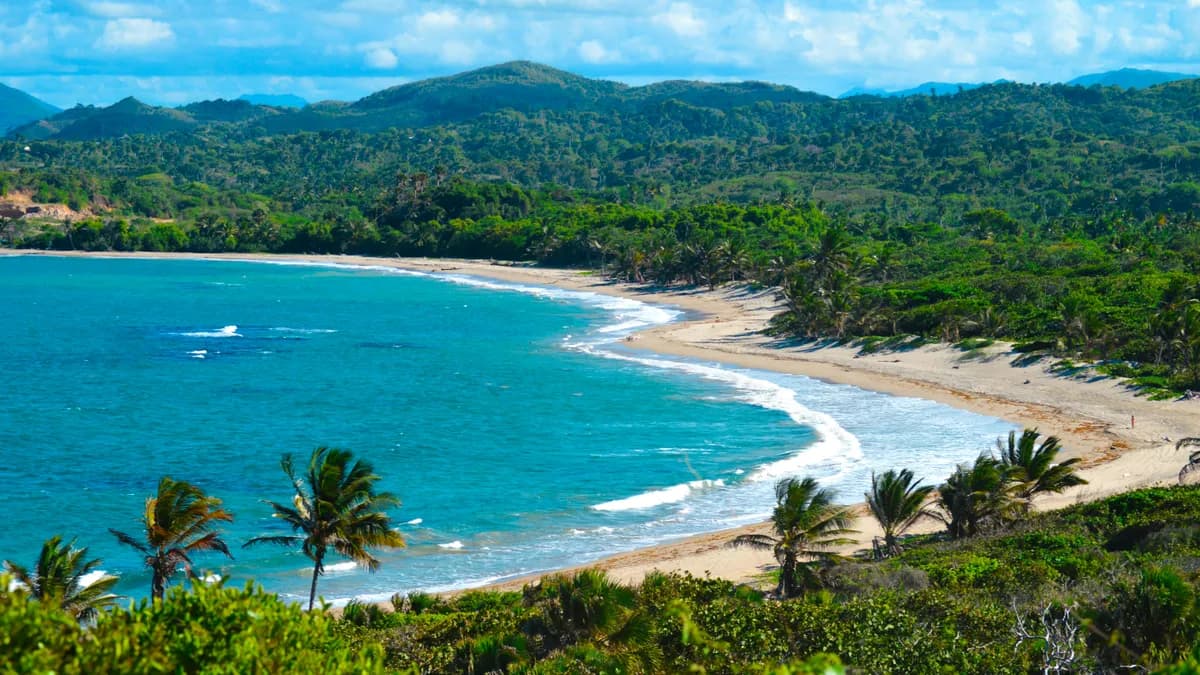
Located 90 minutes east of Puerto Plata near Río San Juan, Playa Grande is one of the most dramatic beaches on the north coast. A long stretch of golden sand between jungle-covered cliffs, with powerful Atlantic waves that attract body surfers and experienced swimmers. The Amanera luxury resort sits on the cliff above, but the beach itself is public.
Best for: Day trips, photography, experienced swimmers. Caution: strong currents.
Brugal Rum Factory
The Brugal rum factory in Puerto Plata offers tours of one of the Dominican Republic's most famous exports. Brugal (pronounced "broo-GAL") has been making rum since 1888, and their factory on Avenida Luis Ginebra is both a working production facility and a visitor center.
The tour (approximately 45 minutes) covers the rum-making process from sugarcane to bottle, including the barrel-aging warehouses where the air itself smells of oak and vanilla. You will learn the difference between Brugal's grades, from the ubiquitous Blanco (used in every rum and Coke in the country) to the premium Brugal Papa Andrés, a sipping rum that competes with fine whiskey.
Practical details:
- Cost: Free (includes tasting at the end)
- Hours: Monday-Friday, 9 AM - 12 PM and 2 PM - 5 PM. No reservations needed for small groups.
- Tasting: Three rums included. The Brugal 1888 (double-aged in sherry and bourbon casks) is the highlight. You can purchase bottles at factory prices, roughly 20-30% cheaper than airport duty-free.
- Location: Avenida Luis Ginebra, Puerto Plata. A 5-minute taxi ride from Parque Central (RD$200/US$3.40).
Where to Eat
Puerto Plata City
- Sam's Bar & Grill: On the Malecón. A local institution serving generous plates of grilled seafood, Dominican classics, and cold Presidentes. The grilled lobster (when available) is exceptional value at RD$800-1,200 (US$14-20). Open-air seating overlooking the ocean.
- Mares Restaurant: On Calle Francisco J Peynado. Upscale Dominican-international cuisine with excellent seafood. Try the pescado con coco (fish in coconut sauce) or the chillo frito (fried red snapper). Main courses RD$600-1,500 (US$10-25). Reservations recommended on weekends.
- Polanco Gourmet: On Calle Beller near Parque Central. Dominican-fusion in a restored colonial house. Creative dishes using local ingredients. Main courses RD$500-1,200 (US$8.50-20).
Cabarete
- Vagamundo Coffee & Waffles: The best coffee on the north coast. Specialty coffee, Belgian waffles, and fresh juices in a hip beachside setting. A Cabarete institution for breakfast. RD$250-500 (US$4-8.50).
- Bliss Restaurant: Poolside fine dining with a Mediterranean menu and a strong Italian influence. Main courses RD$800-2,000 (US$14-34). Worth the splurge for a special dinner.
Nightlife
Puerto Plata's nightlife is concentrated in two areas: the city center (around the Malecón and Calle Beller) and Cabarete.
In the city: The Malecón comes alive on weekend evenings with outdoor bars, music, and Dominican families socializing. The scene is authentic and unpretentious. Voodoo Lounge on the Malecón is popular for cocktails and dancing. Several colmados along Calle Separación become impromptu nightclubs on Friday and Saturday nights, pull up a plastic chair, order a bucket of Presidentes, and dance in the street.
In Cabarete: The beach bar scene transitions seamlessly into nightlife. Lax Ojo and Onno's are the anchor venues, with DJs, live music, and a young, international crowd. Cabarete nights start late (11 PM) and run until 3-4 AM. The vibe is casual, flip-flops and swimwear are acceptable.
Where to Stay
Puerto Plata City
- Budget: Hotel Casa Colonial. Simple but clean rooms in a restored Victorian house near Parque Central. Walking distance to the Malecón and restaurants.
- Mid-range: Casa Colonial Beach & Spa (check current rates directly with the hotel). The best boutique hotel on the north coast. Beautiful colonial architecture, pool, spa, and an excellent restaurant. Located in Playa Dorada.
All-Inclusive (Playa Dorada)
- Iberostar Costa Dorada: Closed for refurbishment from 08/30/2026 to 10/26/2026. Solid mid-range all-inclusive on Costa Dorada beach. Good food for the price, nice pool, and direct beach access. From US$120/night double occupancy all-inclusive.
- VH Atmosphere: Adults-only all-inclusive in Playa Dorada. Modern rooms, good cocktails, and a quieter atmosphere than family resorts. From US$100/night double occupancy all-inclusive.
Cabarete
- Budget: Ali's Surf Camp (from US$30/night). Basic rooms in tropical gardens beside the lagoon, shared kitchen, surfboard storage. The backpacker hub of Cabarete.
- Mid-range: Velero Beach Resort (from US$80/night). Pool, beachfront, restaurant, and walking distance to Cabarete's bars and restaurants. Good value.
- Boutique: Natura Cabana (from US$100/night). Eco-lodge with thatched-roof bungalows set in tropical gardens. Yoga studio, organic restaurant, and a quiet beach location 5 minutes from central Cabarete.
Getting There & Getting Around
By Air
Gregorio Luperón International Airport (POP) serves Puerto Plata with direct flights from New York (JFK and Newark), Miami, Toronto, Montreal, and several European cities. Airlines include JetBlue, United, Southwest, Air Transat, and WestJet. The airport is 20 minutes east of the city and 15 minutes from Playa Dorada.
Airport taxi to Puerto Plata city: approximately RD$1,200-1,500 (US$20-25). To Cabarete: RD$2,000-2,500 (US$34-42).
By Bus from Santo Domingo
Caribe Tours and Metro operate comfortable, air-conditioned buses from Santo Domingo to Puerto Plata (3.5-4 hours, approximately RD$500/US$8.50). Multiple daily departures from both carriers. The route crosses the Cibao Valley through Santiago, scenic if you are not sleeping.
By Car
The drive from Santo Domingo to Puerto Plata takes 3-3.5 hours via the Autopista Duarte through Santiago. From Punta Cana: approximately 5 hours via Santo Domingo (there is no direct east-to-north route). Car rental is useful for exploring the Amber Coast, distances between Puerto Plata, Sosúa, and Cabarete are short but public transport is limited.
Getting Around
- Guaguas (minibuses): Run frequently between Puerto Plata, Sosúa, and Cabarete along the coastal highway. RD$50-100 (under US$2) per ride. Wave one down from the roadside. They stop anywhere.
- Motoconchos (motorcycle taxis): Ubiquitous for short rides within town. RD$50-150 (US$1-2.50). Negotiate the price before getting on.
- Uber: Available in Puerto Plata but less reliable than in Santo Domingo. Works better for rides to Playa Dorada or the airport than for city center trips.
- Rental car: Recommended if you plan to explore the coast between Puerto Plata and Cabarete, visit the 27 Charcos, or make day trips to Playa Grande or Monte Cristi.
Puerto Plata vs. Punta Cana
This is the question every first-time DR visitor asks. The honest comparison:
Choose Puerto Plata If:
- You want to experience Dominican culture beyond resort walls
- Adventure activities matter more than beach lounging (27 Charcos, kitesurfing, jungle hikes)
- You prefer a real city with history, restaurants, and nightlife alongside your beach time
- You are a surfer, kiteboarder, or windsurfer (Cabarete is world-class; Punta Cana has no comparable scene)
- You want better value, north coast hotels and restaurants are 15-25% cheaper than equivalent east coast options
- You prefer Atlantic coastline scenery: dramatic cliffs, coves, and mountain backdrops
Choose Punta Cana If:
- You want the widest selection of all-inclusive resorts (70+ properties vs. roughly 15 on the north coast)
- Finding a beach suitable for your swimming needs is a priority
- You prefer a dedicated resort vacation with minimal planning
- Direct flights from your departure city go to PUJ but not POP
- You are traveling with young children who need calm, shallow water
Our opinion: first-time visitors who want an active, culturally immersive trip should consider Puerto Plata over Punta Cana. The all-inclusive resort experience in Punta Cana is excellent but interchangeable with similar resorts in Cancún or Jamaica. The north coast experience, the 27 Charcos, the Teleférico, Cabarete's surf culture, the amber mines, the Brugal factory, is uniquely Dominican.
Frequently Asked Questions
Is Puerto Plata worth visiting?
Absolutely. Puerto Plata offers a more authentic Dominican experience than Punta Cana, with better adventure activities, lower prices, and genuine cultural attractions. The 27 Charcos de Damajagua alone justify the trip. The city is in the midst of a revival, with a renovated waterfront, improved infrastructure, and growing dining scene.
How do you get to the 27 Waterfalls from Puerto Plata?
The 27 Charcos de Damajagua are located 25 minutes south of Puerto Plata, near the town of Imbert. Take a taxi (RD$1,500-2,000/US$25-34 each way), arrange hotel transportation, or rent a car. The entrance is clearly marked off the main highway. Arrive early (8:30-9:00 AM) to beat tour groups.
What is there to do in Puerto Plata besides the beach?
Plenty. The Teleférico cable car to Isabel de Torres, Fort San Felipe, the Amber Museum, the Brugal Rum factory, the 27 Charcos waterfalls, the historic city center with its Victorian gingerbread houses, and nearby Sosúa and Cabarete for diving, snorkeling, and water sports. Puerto Plata has more non-beach activities than any other tourism region in the DR.
How many days do you need in Puerto Plata?
Three days is the minimum to cover the city highlights, the 27 Charcos, and a beach day. Five to seven days allows you to add Cabarete, Playa Grande, and more relaxed exploration. If you are combining with other Dominican destinations, three days in the Puerto Plata area is a satisfying allocation.
Table of Contents
Puerto Plata
This guide covers Puerto Plata. Explore more about this destination.
View DestinationAbout the Author
Alex Borshch
Founder and editor of the Isla365 network. Spent six months living in the Dominican Republic over the 2013-14 winter, and has since wintered in Thailand, Vietnam and Turkey. Writes and edits the guides across the network.