Santo Domingo Travel Guide: The Capital Done Right
A practical Santo Domingo guide: neighborhoods, Zona Colonial essentials, museums, food, Metro and taxis, day trips, and honest safety advice for the capital.
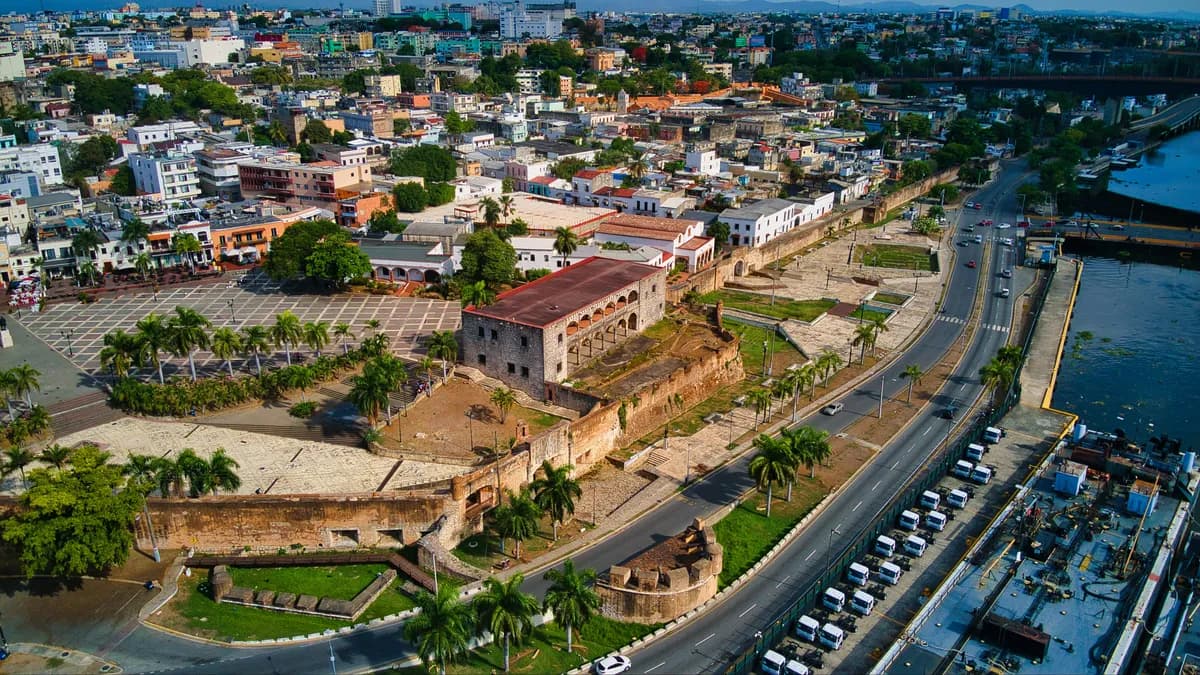
Santo Domingo is the capital of the Dominican Republic and the largest metropolitan area in the Caribbean, home to more than 4 million people on the south coast at the mouth of the Ozama River. It pairs the oldest surviving colonial city center in the Americas, the UNESCO-listed Zona Colonial, with a modern capital of glass towers and a food scene most beach-resort itineraries never see.
This guide orients you across neighborhoods, condenses the Zona Colonial's essential sights (the full route lives in the Colonial Zone walking guide), and covers food, lodging, transit, day trips, and current safety guidance. For a ready-made schedule instead, see the 3-day weekend Santo Domingo itinerary.
Orientation: Santo Domingo's Neighborhoods
Visitors spend nearly all their time in districts within a short taxi ride of each other. The Zona Colonial is the historic core on the west bank of the Ozama River: cobblestone streets and the densest concentration of restaurants and boutique hotels. Just west, Gazcue is a leafy residential district around the Plaza de la Cultura museum complex. The Malecon is the seaside boulevard lined with hotels and casinos. Further north, Piantini and Naco form the modern upscale core, with the flagship Agora Mall and Blue Mall. Bella Vista is a quieter residential area near Piantini.
| Neighborhood | What it's for | Vibe |
|---|---|---|
| Zona Colonial | Sightseeing, boutique stays, cafes | Cobblestone, dense, walkable |
| Gazcue | Museums, local plato del dia comedores | Leafy, residential |
| Malecon | Sea views, hotel strip, promenade | Open, breezy, touristy |
| Piantini / Naco | Modern dining, malls, business | Glass towers, upscale |
| Bella Vista | Quiet residential stays | Calm, mostly local |
Taxis or rideshares move between these areas in 10 to 25 minutes. Neighborhoods outside this circuit, including Cristo Rey, Villa Juana, Villa Mella, and Los Mina, carry higher crime rates and offer little for visitors (more in the safety section below).
The Zona Colonial Highlights, Condensed
The Zona Colonial was inscribed as a UNESCO World Heritage Site in 1990, the oldest permanent European settlement layout in the Americas, founded 1498. The walking guide linked above covers a full day in detail; if your time is tighter, prioritize these.
Catedral Primada de America
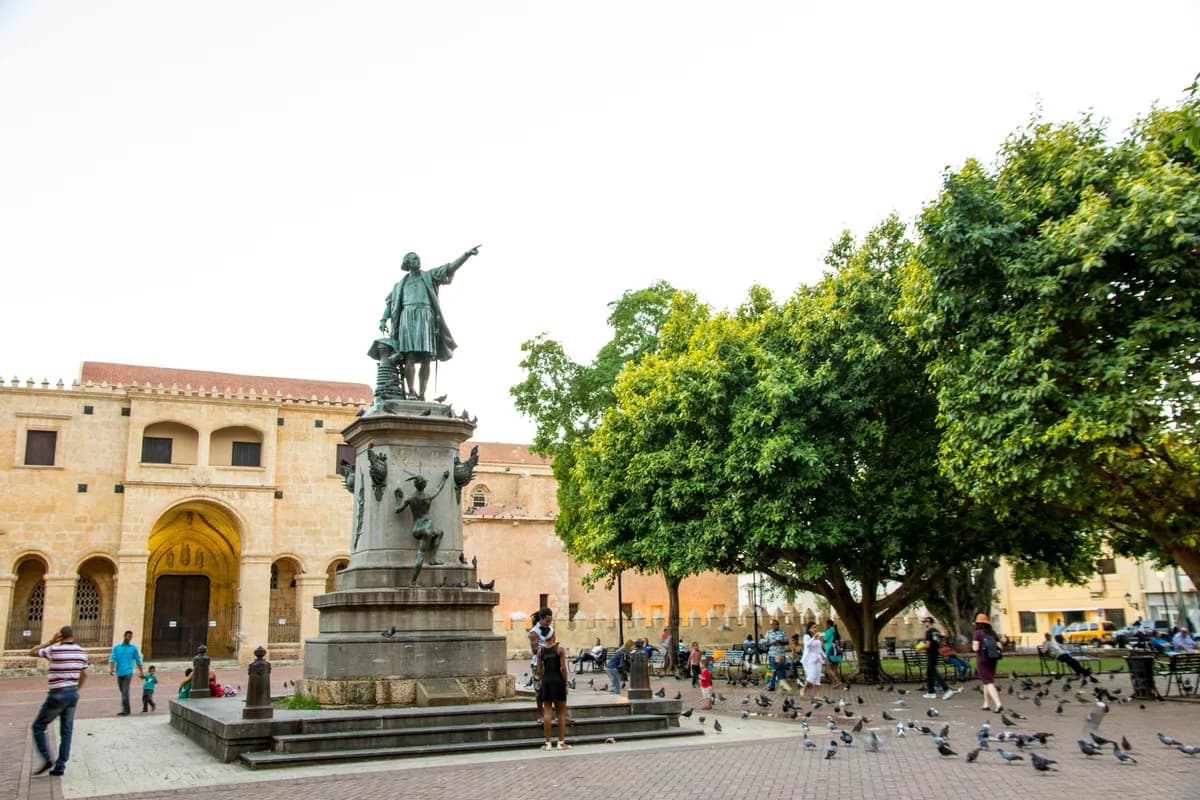
The first cathedral built in the Americas, ordered in the early 1500s and substantially completed by around 1540, blending Gothic, Renaissance, and Baroque elements. Worship access is free, but sightseeing visitors typically pay a small fee, on the order of RD$50 to RD$60 (about US$1). It fronts Parque Colon, the Zona's central square and traditional starting point for a walking tour.
Alcazar de Colon
This early-16th-century palace on Plaza de Espana, built for Diego Columbus as the viceregal residence, has operated as a museum since 1957. The reconstructed museum was inaugurated on September 28, 2026; confirm current visiting arrangements before planning a visit inside.
Calle Las Damas and Fortaleza Ozama
Calle Las Damas is the oldest paved street in the Americas, laid out in the early 1500s, lined with colonial mansions and the Museo de las Casas Reales. It leads to the Fortaleza Ozama, the oldest formal European military structure in the Americas, begun 1502, with the Torre del Homenaje giving river and city views. Open Tuesday to Sunday, roughly 9am to 5pm, entrance fee generally RD$100 to RD$200, cash preferred.
Museo de las Casas Reales
A restored 16th-century governor's palace holding pre-Columbian, colonial, and independence-era exhibits. Open Tuesday to Saturday 9am to 5pm and Sunday 9am to 4pm, closed Monday, admission around RD$100 for adults (about RD$20 for children and students).
Beyond the Colonial Zone: Caves, Museums, and Gardens
Several worthwhile sights sit a short ride from the Zona Colonial, on the Gazcue museum cluster or the city's eastern edge.
Los Tres Ojos
A 15 to 30 minute drive east in Parque Mirador del Este, Los Tres Ojos is a set of open-roof limestone caves holding freshwater lakes. Foreigner admission runs roughly RD$150 to RD$300, plus about RD$50 to raft to the fourth lake. Open daily, roughly 9am to 5pm; confirm current hours.
Museo del Hombre Dominicano
In the Plaza de la Cultura complex in Gazcue, the country's main anthropology museum holds a major Taino collection. It reopened after renovation but remains partially remounted, with only some halls open. Free admission; hours vary by source, so check current days. The complex also groups the Museo de Arte Moderno and the National Theater.
Museo Bellapart and Jardin Botanico
Museo Bellapart is a free private art museum on Av. John F. Kennedy, entered through a Honda dealership showroom, holding one of the Caribbean's most significant Dominican art collections, founded 1999. Open Monday to Friday 9am to 6pm, Saturday 9am to noon, closed Sunday. The Jardin Botanico Nacional is a large botanical garden with a Japanese garden and butterfly house, open daily 9am to 5pm, with free parking. Admission is two-tier: foreign adults pay around US$5, Dominican adults a lower peso rate.
Faro a Colon: The Columbus Lighthouse
This massive cross-shaped monument and mausoleum in Santo Domingo Este was inaugurated in 1992 for the 500th anniversary of Columbus's first voyage. It's said to hold Christopher Columbus's remains, but this is genuinely disputed: Seville Cathedral in Spain also claims them, and a 2024 University of Granada DNA study concluded the Seville remains are authentic. Santo Domingo hasn't allowed DNA testing of its own, so the question stays unresolved.
Open Tuesday to Sunday, roughly 9am to 5pm, admission around RD$100 for adults. The monument was designed to project a cross-shaped beam of light, but it's switched on only for special occasions, so don't plan a visit around seeing it active.
Food City: Where and What to Eat
The everyday plate most Dominicans eat midday is la bandera dominicana, rice, red beans, and stewed meat with salad and tostones. The cheapest way to try it is at a comedor serving plato del dia. Gazcue and pedestrian Calle El Conde are the reliable spots: a full plate typically runs well under US$5.
For a sit-down meal, Pat'e Palo is a long-running European brasserie on Plaza de Espana, known for its own legend of standing on the site of one of the New World's first taverns, circa 1505 (its story, not verified history). Meson de Bari is a well-known Dominican-food restaurant in a historic setting. Jalao serves modern Dominican cuisine, named after the coconut-and-cane-syrup sweet of the same name.
On the Malecon, Adrian Tropical is an iconic open-air spot serving large-portion classics like mofongo, open late. In Piantini, Sophia's Bar Grill serves international cuisine.
Look for sancocho, the country's signature stew, especially on weekends. Neighborhood colmados, corner stores that double as social hubs for dominoes and drinking, are a genuine local touchpoint, some turning into impromptu bars at night. For street food and eating with a cautious stomach, see the health and water safety guide.
Nightlife: Malecon, Piantini, and Naco
The Malecon is the traditional evening promenade and hub of hotels, casinos, and bars, busy with families and couples on weekends. Several Malecon hotels house upscale clubs; check current listings directly rather than a fixed name, since venue status here has changed in ways that matter. On April 8, 2025, the roof of a well-known Malecon-area nightclub collapsed during a live performance, killing 236 people and injuring more than 180; the owners were charged in November 2025, case ongoing into 2026. That tragedy is the clearest reminder to verify a venue is genuinely open and safe.
Piantini and Naco are the modern alternative: upscale restaurants and bars around the Agora and Blue malls, close to the city's better hotels.
Where to Stay by Intent
- Zona Colonial: boutique hotels in restored colonial buildings, walking distance to nearly every historic sight. Best if atmosphere matters more than modern amenities, and you're comfortable adjusting plans once the streets quiet down after dark.
- Malecon: larger hotel-chain properties with sea views and casinos, an easy taxi from the Zona Colonial.
- Piantini / Bella Vista: modern towers close to malls and contemporary dining, practical for business travelers over historic charm. Expect to taxi into the Zona Colonial for sightseeing.
For resort-style versus independent lodging nationally, see the all-inclusive vs. independent travel guide; Santo Domingo itself is an independent-hotel city, not an all-inclusive zone.
Getting Around the City
The Santo Domingo Metro has 2 lines across 39 stations. A single ride costs RD$20 (about US$0.35), paid with the rechargeable Boleto Viajero card. A western extension opened in February 2026, adding stations toward Los Alcarrizos. The Teleferico (cable car) uses the same fare-card system, linking hillside barrios to the Metro, similarly cheap. OMSA city buses cover a wider network for around RD$15, though route legibility for first-time visitors is limited.
Uber operates throughout the city, generally recommended over unmarked street taxis since the fare is fixed and the driver is tracked, which matters after dark. DiDi, inDrive, and Cabify also operate here. Short in-city hops commonly run US$2 to $8. Walking works well in the Zona Colonial by day, but its narrow streets empty out fast after dark. See the car rental guide if driving beyond the capital.
From SDQ Airport
Las Americas International Airport (SDQ) is the country's second-busiest airport after Punta Cana and handles the bulk of Santo Domingo arrivals. It sits about 25 km (15 miles) from the Zona Colonial, typically 30 to 45 minutes with traffic. Taxis are not metered; the official airport taxi rate is on the order of US$40 to $50, and private pre-booked transfers run US$45 to $77 or more. Airport Uber has dedicated pickup zones and typically costs somewhat less, often US$10 to $20.
Day Trips from Santo Domingo
Boca Chica
Boca Chica is a beach town roughly 30 km (19 miles) east, about 30 minutes by car and only 10 minutes from SDQ, easy to combine with an arrival or departure day. It's known for a wide, shallow, reef-protected bay, family-friendly but crowded on weekends. A local guagua-style minivan connects the two cities frequently, roughly US$2 and 45 minutes. The Juan Dolio and Boca Chica beach guide covers the wider area, including Boca Chica Beach.
Parque Nacional Submarino La Caleta
Just offshore near Boca Chica, Parque Nacional Submarino La Caleta was the country's first underwater national park, roughly 14 dive sites including a sunken wreck, water 26 to 28C (79 to 82F).
Further Afield: Think Longer, Not Lighter
A cave system with significant Taino rock art sits well east toward San Pedro de Macoris and La Romana, roughly 1 to 1.5 hours, better combined with a trip toward La Romana or Bayahibe than a standalone day trip. Los Haitises National Park, though sometimes marketed from the capital, involves a roughly 3-hour drive each way, commonly sold as a 12-hour day; treat it as a long excursion requiring an early start, not a casual add-on.
Safety and Street Smarts
The Zona Colonial is the safest part of the city for tourists, patrolled by POLITUR, the specialized tourist police (911 remains the primary emergency number). By day and busy early evening it's genuinely pleasant to walk. After dark, roughly past 6pm, the narrow streets empty out fast and lighting is inconsistent, and even some locals avoid walking there late. The rule: fine to walk in busy, well-lit areas in the early evening; after dark, use a registered taxi or rideshare, stick to lively streets, and don't display valuables.
Tourist-facing crime here is overwhelmingly petty rather than violent: pickpocketing, phone or bag snatching, and taxi overcharging are the realistic risks. Multiple sources single out Cristo Rey, Villa Juana, Villa Mella, and Los Mina as higher-crime areas with essentially no tourist infrastructure; skip any suggestion to seek out authentic food there in favor of the Gazcue and Zona Colonial comedores above. Stick to the Zona Colonial, Piantini, Naco, Gazcue, and Bella Vista, and this is a comfortable city to explore. For the country-wide picture, see is the Dominican Republic safe.
Practical Essentials
The currency is the Dominican peso (DOP); USD is widely accepted. A mandatory 10% service charge is added by law to restaurant bills; taxi tipping isn't expected, though rounding up RD$50 to $100 is appreciated. ATMs generally beat hotel or airport counters; decline Dynamic Currency Conversion when offered. See the currency and tipping guide.
All travelers arriving on commercial flights must complete the free digital E-Ticket entry form; most visitors from the US, Canada, UK, and EU don't need a separate tourist visa for a standard stay. See the entry requirements and E-Ticket guide. Claro and Altice are the main mobile carriers, with airport kiosks; prepaid SIM or eSIM data is inexpensive.
Santo Domingo is hot and humid year-round, average temperatures around 29C (84F), warmest roughly July to August in the low 30s C (upper 80s to around 91F). The drier stretch runs roughly December to April, the rainier stretch May to October, with hurricane season June 1 to November 30. If your visit lines up with late July into early August, the annual Merengue Festival takes over the Malecon with free outdoor stages and parades. See best time to visit the Dominican Republic for a fuller picture.
Frequently Asked Questions
How many days do you need in Santo Domingo?
One day covers only the Zona Colonial highlights at a rushed pace. Two to three days is the sweet spot for the Colonial Zone plus museums and the Malecon. Four to five days lets you add a relaxed beach day trip to Boca Chica or Juan Dolio.
Is Santo Domingo safe for tourists?
Yes, with normal precautions. The Zona Colonial, Piantini, Naco, Gazcue, and Bella Vista are comfortable for tourists, and most crime is petty theft rather than violence. Walk freely by day; after dark, use a registered taxi or rideshare instead, especially in the Zona Colonial's narrow, quieter streets.
Should I stay in the Zona Colonial or Piantini?
Stay in the Zona Colonial if sightseeing and walkability matter most, and you're comfortable using a taxi once the streets quiet down after dark. Stay in Piantini or Bella Vista for modern towers and a contemporary feel, accepting that you'll taxi into the Zona Colonial for sightseeing.
Is Faro a Colon worth visiting?
It depends. The monument's disputed claim to hold Christopher Columbus's remains, contested by Seville Cathedral in Spain, makes it a unique curiosity, but it's a significant taxi detour for a fairly modest museum compared with the Zona Colonial's density. Worth it with a spare half day; skip it if your time is tight.
How do I get from SDQ airport into the city?
SDQ sits about 25 km (15 miles) from the Zona Colonial, 30 to 45 minutes by car. Options include official airport taxis (roughly US$40 to $50), private pre-booked transfers (US$45 to $77 or more), and Uber, with dedicated pickup zones, typically somewhat less but still more than a short in-city ride.
Is the Alcazar de Colon open?
The reconstructed museum was inaugurated on September 28, 2026. Confirm current visiting arrangements before planning any interior visit.
What is the best way to get around Santo Domingo?
Uber and other rideshare apps (DiDi, inDrive, Cabify) are the most practical option, especially after dark, since fares are fixed and drivers are tracked. The Metro is fast and cheap (RD$20 a ride). Walking works well within the Zona Colonial by day and the busy early evening.
Can I drink the tap water in Santo Domingo?
No, tap water isn't potable anywhere in the country, Santo Domingo included. Hotels and restaurants in tourist areas use purified water and ice, but sealed bottled or filtered water is the safe default, including for brushing your teeth if your stomach runs sensitive.
Table of Contents
Santo Domingo
This guide covers Santo Domingo. Explore more about this destination.
View DestinationAbout the Author
Alex Borshch
Founder and editor of the Isla365 network. Spent six months living in the Dominican Republic over the 2013-14 winter, and has since wintered in Thailand, Vietnam and Turkey. Writes and edits the guides across the network.