Carnival of Santiago
The city of Lechones: Santiago's spiky carnival
A month of Lechones in the Dominican Republic's second city
The Carnival of Santiago is one of the Dominican Republic's most recognized carnival traditions, held across the Sundays of February in Santiago de los Caballeros, the country's second-largest city. The Ayuntamiento de Santiago (municipal government) organizes the parades, with promotion from the Ministry of Tourism, which lists Santiago alongside Santo Domingo, La Vega, and Punta Cana among the main 2026 carnival destinations.
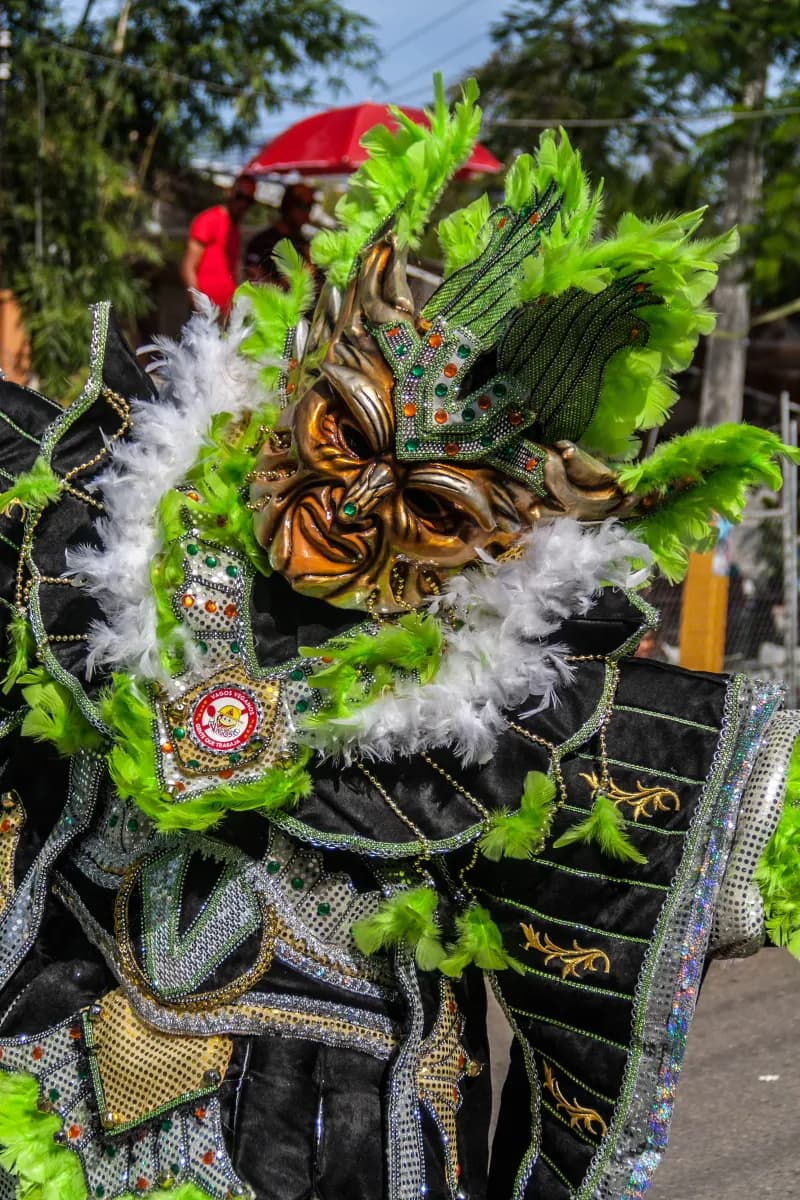
The event's signature figure is the Lechón, a masked character in ornate horned masks. What sets Santiago apart from other Dominican carnivals is the historic rivalry between two mask-making sectors, Los Pepines and La Joya. Parades run through the afternoon into evening, closing with a final procession on the first Sunday of March.
From colonial patron-saint feasts to a Lechon rivalry
Santiago's carnival is not a modern invention. Documented patron-saint festivities tied to the feast of Santiago Apostol and to Corpus Christi go back to at least the late 1700s in the city, inherited from Spanish colonial practice. Some historians suspect an earlier carnival tradition, but no documentary evidence confirms a carnival predating that period, so claims of a much older origin should be treated with caution.
The Lechon character has its own story. Local historians describe it as originating as a kind of unofficial parade marshal, walking ahead of the comparsas to clear a path through the crowd and keep order, rather than as pure decoration. Over time two neighborhood groups, the Pepineros of Los Pepines and the Joyeros of La Joya, developed rival mask styles and turned that rivalry into the carnival's centerpiece.
Masks, comparsas, and music into the evening
The Lechon mask is the visual signature: a carved horn-and-snout design worn with long sleeves, wide pants, and fabric covered in mirrors, sequins, and beads. Pepinero masks have smooth, wide horns and a duck-bill shape; Joyero masks have curved, more ornamented horns and a pig-like snout.
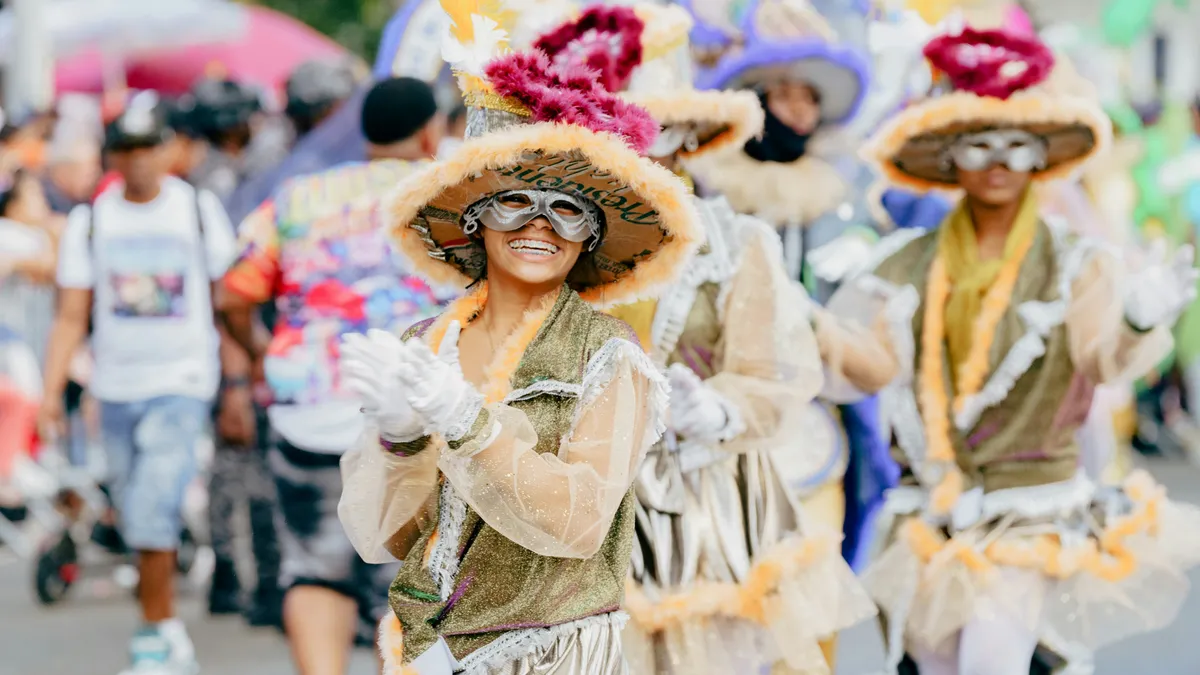
Beyond the Lechones, expect comparsas (organized dance and costume groups), individual costumed characters such as Roba la Gallina and Las Marchantes, and mask and costume contests. Separate categories for students and children keep the event approachable for families. The 2026 closing drew guest performers and live Dominican music into the evening. Unlike some Dominican carnivals, spectators in Santiago are welcome to turn up in costume themselves.
Confirm the date and route, and bring water
Confirm the exact date and route before you go. The pattern is the Sundays of February with a closing parade on the first Sunday of March, but the specific Sundays shift each year, so check the current calendar. The route has also changed: it traditionally circled the Monumento a los Heroes de la Restauracion and nearby avenues, but relocated to Parque Central starting in 2025 because of monorail construction near the monument.
Check local news or the Ayuntamiento de Santiago channels close to your travel date, since construction status can shift the route again. Parades run through the afternoon into early evening, so expect large crowds, street closures, and heat; bring water and sun protection. If you have time, the Monumento a los Heroes has a Carnival museum on its fifth floor (open Tuesday to Sunday, with a small admission charge; confirm the current hours and rate before you go).
Reaching downtown Santiago and Parque Central
Santiago sits in the Cibao valley in the north-central Dominican Republic. It is roughly a 90-minute drive from Puerto Plata and about two and a half hours from Santo Domingo by highway. Cibao International Airport (STI) serves the city with domestic and some international connections.
Intercity bus lines, including Caribe Tours and Metro, run to Santiago from Santo Domingo and Puerto Plata. Parque Central occupies the former Aeropuerto Cibao grounds. Because streets around the parade close to traffic, plan to arrive on foot or park several blocks away and walk in. Confirm exact schedules and any road closures locally before travel, as parade-day traffic changes can affect access.
Facts on this page were last compared with their sources on . Details may have changed since. How we check
Frequently asked questions
Is the Carnival of Santiago free to attend?
+
When does the Carnival of Santiago take place?
+
What is the difference between Pepineros and Joyeros?
+
Is the Carnival of Santiago family-friendly?
+
Carnival of Santiago
More to Explore in Santiago De Los Caballeros
Discover beaches, attractions, activities, and more in the same area
Related events & festivals
Carnival of La Vega
La Vega, Central Highlands
Santo Domingo Carnival
Santo Domingo, South
Restoration Day (Día de la Restauración)
Santiago de los Caballeros, Cibao Valley
Festival Nacional del Cacao y del Chocolate
San Francisco de Macorís, Cibao Valley
Cabarete Carnival
Cabarete, North Coast