Digital Nomad Guide to the Dominican Republic
Dominican Republic digital nomad guide with real WiFi speeds, coworking spaces, cost of living, and visa options for remote workers in 2026.
The Dominican Republic is not Bali. It is not Lisbon. It is not Chiang Mai. And that is precisely why a growing community of remote workers is choosing it over those well-worn nomad circuits. The DR offers something rare: Caribbean lifestyle at Latin American prices, in a time zone that overlaps perfectly with US and Canadian business hours, on an island where the coffee is world-class and the beach is never more than an hour away.
But let us be honest from the start, the DR was not built for digital nomads. The infrastructure is catching up, not leading. WiFi can be inconsistent outside major cities, power outages happen, and the bureaucracy around visas will test your patience. This guide gives you the full picture: the real speeds, the real costs, and the real experience of working remotely from the Dominican Republic in 2026.
Why the DR for Remote Work
The pitch is simple. You get Caribbean beaches, 28°C year-round weather, a cost of living 50-65% lower than Miami, and you stay in the Eastern Time zone (AST/EST, UTC-4, no daylight saving). That last point matters more than most nomads realize. When your team in New York starts at 9 AM, you start at 9 AM for most of the year, and at 10 AM during the US winter. No midnight calls to sync with headquarters. No "sorry, I was asleep when you messaged." You are simply working from a tropical office.
Add to that: direct flights from 20+ US cities (JFK, MIA, ATL, CLT, BOS, PHL, EWR, FLL all have nonstop routes), a Dominican peso that keeps your dollars stretching further, and a culture that genuinely enjoys life, long lunches, loud music, cold Presidente beers at sunset, and you start to understand why the nomad community here has tripled since 2022.
The DR also taxes residents on foreign-source investment and financial income only from the third tax period after they become tax resident; confirm your own position with a Dominican tax adviser. Consult a local attorney (expect RD$15,000-25,000 / US$250-420 for an initial consultation), but the tax situation is genuinely favorable compared to most Caribbean islands.
Internet Infrastructure: The Honest Truth
Here is where we get real. The Dominican Republic's internet is adequate for remote work but not exceptional. If you are coming from South Korea or Scandinavia with expectations of 500 Mbps fiber everywhere, recalibrate.
Fiber Optic (Claro, Altice, WIND Telecom)
Fiber is available in Santo Domingo, Santiago, and parts of Punta Cana. Claro Fiber offers symmetric plans up to 1,000 Mbps down / 1,000 Mbps up in selected sectors of Santo Domingo and Santiago. Altice has similar tiers. In practice, you will typically see 50-120 Mbps download speeds in Santo Domingo apartments that have fiber. That is enough for Zoom calls, screen sharing, and streaming simultaneously.
Mobile Data (4G LTE / 5G)
Claro and Altice both offer 4G LTE with decent coverage along the coasts and in cities. Speeds average 15-40 Mbps download. 5G coverage is advertised in 31 provinces; check that your accommodation is in a coverage area before relying on it. A local SIM with 30GB of data costs RD$800-1,200/month (US$13-20). Always have a mobile hotspot as your backup plan, it has saved countless Zoom calls.
Starlink
Starlink arrived in the DR in July 2022 and has been a game-changer for remote areas. Monthly cost is approximately US$120 plus the hardware kit (US$599). Speeds range from 40-120 Mbps depending on location and congestion. If you are heading to Las Terrenas, Cabarete, or Jarabacoa, places where terrestrial internet is inconsistent, Starlink is the move. Many coliving spaces and Airbnbs now advertise Starlink as an amenity.
Power Outages (Apagones)
This is the elephant in the room. Power outages, apagones, are part of Dominican life. In Santo Domingo's better neighborhoods (Piantini, Naco, Evaristo Morales), outages are brief and rare thanks to underground power lines. In smaller towns, expect 2-6 hours of outages per day, especially in summer. The solution: every serious building has an inversor (battery backup) or a generator. When apartment hunting, ask specifically about the inversor capacity and whether internet stays on during outages. A UPS (uninterruptible power supply) for your laptop is a US$40-60 investment that pays for itself the first week.
Best Cities for Digital Nomads
Santo Domingo, The Infrastructure Pick
Santo Domingo has the best internet, the most coworking options, and the widest selection of apartments. The Piantini, Naco, and Evaristo Morales neighborhoods form the nomad triangle, modern apartments with fiber internet, walking distance to restaurants, gyms, and coworking spaces. A furnished one-bedroom in Piantini runs US$600-900/month. The Zona Colonial offers more character (colonial architecture, cobblestone streets, rooftop bars) but older buildings mean older wiring and less reliable internet. Santo Domingo is a real city, 3 million people, traffic, noise, and energy. If you want stimulation and infrastructure, this is your base.
Las Terrenas, The Lifestyle Pick
Las Terrenas on the Samaná Peninsula is the darling of the European nomad crowd. A former fishing village turned cosmopolitan beach town, it has French bakeries, Italian restaurants, and a walkable main street that ends at the ocean. The nomad community is tight, maybe 200-300 regulars, and you will know everyone within two weeks. Internet is the weak point: fiber is limited, and many nomads rely on Starlink or mobile hotspots. A furnished one-bedroom near the beach runs US$500-800/month. Las Terrenas works best for people whose jobs do not require 8 hours of uninterrupted video calls.
Cabarete, The Adventure Pick
If your ideal workday ends with kiteboarding at sunset, Cabarete is your town. This north coast village is the wind sports capital of the Caribbean, with a laid-back vibe, affordable restaurants, and a growing nomad scene. Coworking options are limited (Cafe Lax and a few hotel lobbies), but the Starlink revolution has opened up beachfront Airbnbs as viable work-from-anywhere spots. Rent runs US$450-700/month for a furnished apartment. The nightlife is surprisingly good for a small town, Lax Ojo and Voy Voy keep things lively. Internet reliability is below Santo Domingo but improving rapidly.
Jarabacoa, The Mountain Escape
For nomads who want cool mountain air instead of beach humidity, Jarabacoa sits at 500 meters elevation in the Cordillera Central. The mild mountain climate typically brings temperatures around 16–25°C, no AC needed. The town is small, the pace is slow, and the scenery (rivers, waterfalls, pine forests) is stunning. Internet is the main challenge, fiber is offered locally; confirm availability at your accommodation before relying on it. Rent is the cheapest option on this list: US$300-500/month for a furnished place. Jarabacoa works for writers, designers, and anyone whose work is more async than synchronous.
Coworking Spaces & Cafés
Santo Domingo
- Regus / Spaces (multiple locations): Professional serviced offices. Day passes from US$55 per person, monthly hot desks from US$150. Reliable fiber internet, meeting rooms, and coffee included. Best for people who need a corporate-quality environment.
- Impact Hub Santo Domingo (Piantini): Community-focused coworking with events, workshops, and a startup-friendly vibe. Confirm current location, membership rates and facilities with the space directly, its public listings are thin.
- Café culture: Santo Domingo has excellent coffee shops with WiFi. Try Lulú Tasting Bar (Zona Colonial) for specialty Dominican coffee, or Cafe Coco (Piantini) for reliable WiFi and all-day work sessions. Expect to spend RD$200-400 (US$3.50-7) on coffee and pastry.
Las Terrenas
Cabarete
- Cafe Lax: Part café, part coworking, part social hub. Not a formal coworking space, but the WiFi is decent (20-40 Mbps), the coffee is good, and the beachfront location makes lunch breaks spectacular. No membership needed, just buy food and drink.
Cost of Living Breakdown
Here is a realistic monthly budget for a digital nomad in the Dominican Republic, based on mid-range living (not backpacking, not luxury):
Santo Domingo (Monthly)
- Rent (furnished 1BR, Piantini/Naco): US$650-900
- Utilities (electric, water, gas): US$60-120 (electric is the big one, AC drives cost up)
- Internet (fiber): US$40-60
- Mobile phone (30GB data): US$15-20
- Groceries: US$200-300 (mix of supermarket and local colmado)
- Eating out (mix of comedores and restaurants): US$150-250
- Transportation (Uber/OMSA bus): US$60-100
- Coworking membership: US$100-180
- Health insurance (local plan): US$50-80
- Entertainment, gym, misc: US$100-200
- TOTAL: US$1,425-2,210/month
Las Terrenas / Cabarete (Monthly)
- Rent: US$500-800
- Utilities: US$50-100
- Internet (Starlink or fiber where available): US$50-120
- Groceries + eating out: US$300-450
- Transport (motorbike rental or scooter): US$80-150
- Coworking: US$80-120
- TOTAL: US$1,060-1,740/month
For comparison: a similar lifestyle in Miami runs US$3,500-5,000/month. In Lisbon, US$2,200-3,000. The DR is genuinely affordable without sacrificing quality of life.
Visa & Residency Options
Tourist Visa (up to 60 days)
Most nationalities get 30 days on arrival (US, Canada, UK, EU). You can apply to the Dirección General de Migración, online or in Santo Domingo, to extend your stay to a total of 120 days; the fee is RD$3,500 for 30 to 90 days and RD$5,600 beyond that. Past your authorised stay, you are technically overstaying. The "penalty" for overstaying is a fee at departure, set by DGM in brackets for the total length of stay, RD$3,500 for 30 to 90 days, RD$5,600 for 3 to 9 months and RD$7,000 for 9 to 12 months. Many nomads abuse this system, but it is technically illegal and can complicate future visa applications.
Residency Visa (Temporary or Permanent)
Tourists can apply for an extension of their stay up to 120 days. The residency visa (RS) from MIREX is valid for 60 days and one entry; you use it to enter and then file at Migración for the temporary residence permit, which is valid for one year and renewable. Requirements: proof of income (MIREX sets US$1,500/month for pension income and US$2,000/month for rentistas living on investments or rents, a salary does not count for the rentista route), background check, medical certificate, and patience, the process takes 2-6 months. Cost: approximately US$700-1,200 when using an immigration attorney (highly recommended). After 5 years of temporary residency, you can apply for permanent residency.
Digital Nomad Visa
As of 2025, the DR does not have a dedicated digital nomad visa like Barbados or Colombia. However, salary income does not qualify for the rentista residency route. There have been legislative discussions about creating a specific nomad visa, check the Dirección General de Migración website for updates.
Time Zone Advantages
The Dominican Republic operates on Atlantic Standard Time (AST, UTC-4) year-round: no daylight saving time changes. This means:
- Same as Eastern Time (ET) during US daylight saving (March-November)
- 1 hour ahead of ET during US standard time (November-March)
- 4 hours behind London (5 hours during UK summer time)
- One hour ahead of Bogotá, Lima, and Panama (year round)
For anyone working with US East Coast clients or teams, this is the single biggest advantage of the DR over Southeast Asian or European nomad hubs. Your 9-to-5 is their 9-to-5 from March to November, and an hour ahead the rest of the year. No compromises, no adjusting, no alarm clocks at 3 AM for a "quick sync."
Community & Networking
The Dominican Republic's nomad community is smaller and more tight-knit than Bali or Mexico City, which many people prefer. Key communities:
- Facebook groups: "Digital Nomads Dominican Republic" (~8,000 members), "Expats in Las Terrenas" (~12,000 members), "Cabarete Expats & Nomads"
- Santo Domingo tech scene: The capital has a growing startup ecosystem. Look for events at Impact Hub and the Centro de Innovación e Industrias Creativas (CIIC)
- Surf and kite communities (Cabarete): The sports community doubles as a social network. Show up at Kite Beach at 4 PM and you will meet 20 people your first day
The community skews younger (25-40), with a mix of Americans, Europeans (especially French and German), and Latin Americans from Colombia, Argentina, and Mexico. English is widely spoken in nomad circles, though learning basic Spanish dramatically improves your experience, and your rental negotiations.
Challenges & Downsides
We would be doing you a disservice if we painted the DR as a flawless digital nomad base without caveats. Here is the honest downside:
- Power outages: Outside Santo Domingo's best neighborhoods, apagones are frequent. Without an inversor or generator, you lose power and internet simultaneously. This is the number one complaint from nomads.
- Internet inconsistency: Even with fiber, speeds fluctuate. Upload speeds are often the bottleneck, problematic for video calls and large file uploads. Always have a mobile hotspot backup.
- Bureaucracy: Everything involving government offices (immigration, driver's license, bank accounts) moves slowly and requires multiple visits. Bring patience and a local fixer.
- Safety awareness: The DR is generally safe for travelers who exercise common sense, but petty theft (phone snatching, especially from motorbikes) happens in cities. Do not walk and text in unfamiliar neighborhoods. Use Uber or InDriver instead of walking after dark in urban areas.
- Healthcare: Private clinics in Santo Domingo (Cedimat, Centro Médico UCE) are modern and affordable. Outside the capital, medical facilities are limited. Travel health insurance is essential.
- Noise: Dominicans love music, and they love it loud. Your neighbor's bachata at 7 AM on a Saturday is cultural, not personal. Noise-canceling headphones are a nomad essential here.
- Banking: Non-resident foreigners can apply for a basic payroll bank account with immigration-status documentation, identification from their home country, and a passport. Most nomads use Wise (TransferWise), Payoneer, or US/EU online banks. ATMs charge RD$200-400 (US$3.50-7) per withdrawal for foreign cards.
Frequently Asked Questions
What internet speed do I need for remote work, and can the DR deliver?
For most remote work (video calls, cloud apps, file sharing), 25 Mbps download / 10 Mbps upload is the comfortable minimum. Santo Domingo fiber delivers this consistently. In Las Terrenas and Cabarete, Starlink typically provides 40-80 Mbps. The weak link is upload speed and latency during peak hours. If your work involves streaming video production or transferring massive files, Santo Domingo is your safest bet. For everything else, writing, design, project management, coding, consulting, any of the four cities listed above will work with the right setup.
How much money do I need per month to live comfortably?
A comfortable nomad lifestyle (private apartment, eating out regularly, coworking membership, occasional weekend trips) costs US$1,200-2,000/month depending on city and personal standards. You can survive on US$800/month in a shared apartment with home cooking, but "survive" and "enjoy" are different verbs. Santo Domingo is 20-30% more expensive than beach towns, but the infrastructure premium is worth it if reliable internet is non-negotiable for your work.
Do I need to speak Spanish?
You can get by without Spanish in tourist areas, coworking spaces, and the nomad community. But "getting by" means missing 80% of the Dominican experience. Basic Spanish transforms everything, your colmado interactions, your taxi negotiations, your friendships. Dominican Spanish is fast, drops the "s" from everything, and uses unique slang (vaina means "thing," tiguere means "street-smart person"). Take a few weeks of classes at a local language school (for example, IIC charges US$25 per 45-minute private lesson in 2026) and your quality of life will improve dramatically.
Facts on this page were last compared with their sources on . Details may have changed since. How we check
Table of Contents
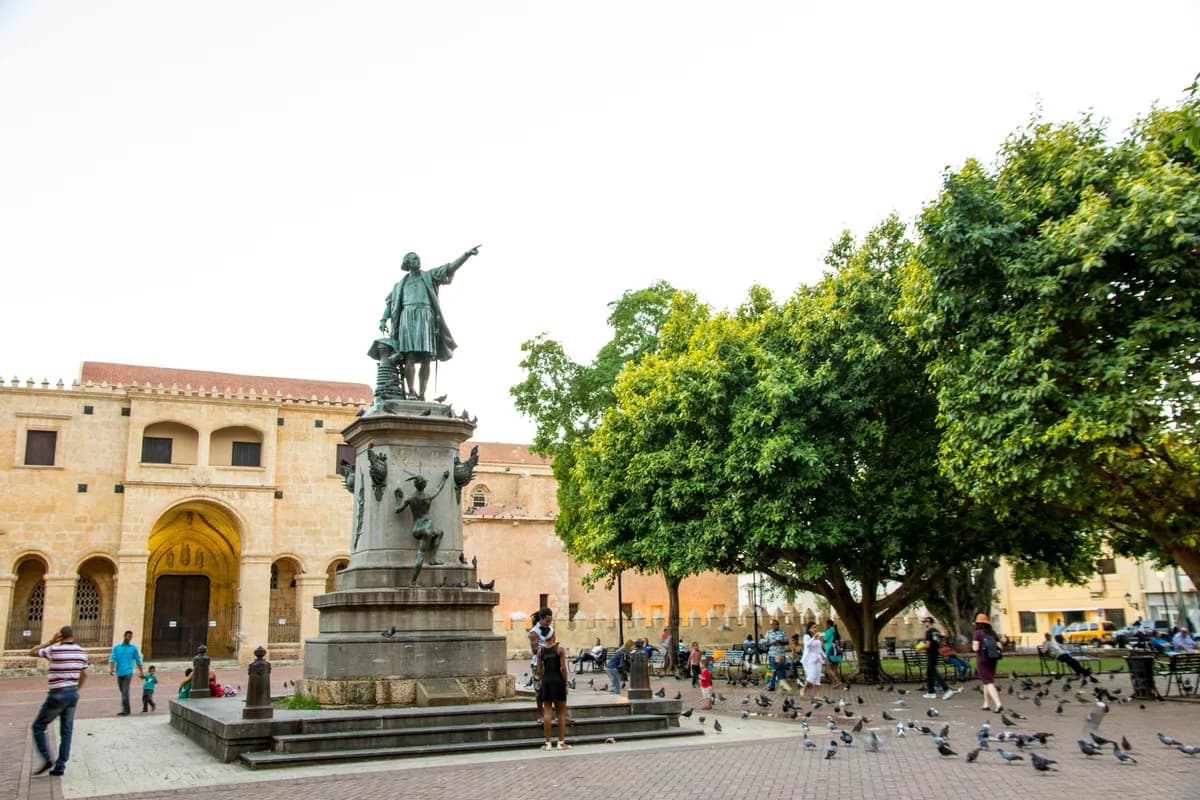
Santo Domingo
This guide covers Santo Domingo. Explore more about this destination.
View DestinationAbout the Author
Alex Borshch
Founder and editor of the Isla365 network. Spent six months living in the Dominican Republic over the 2013-14 winter, and has since wintered in Thailand, Vietnam and Turkey. Writes and edits the guides across the network.