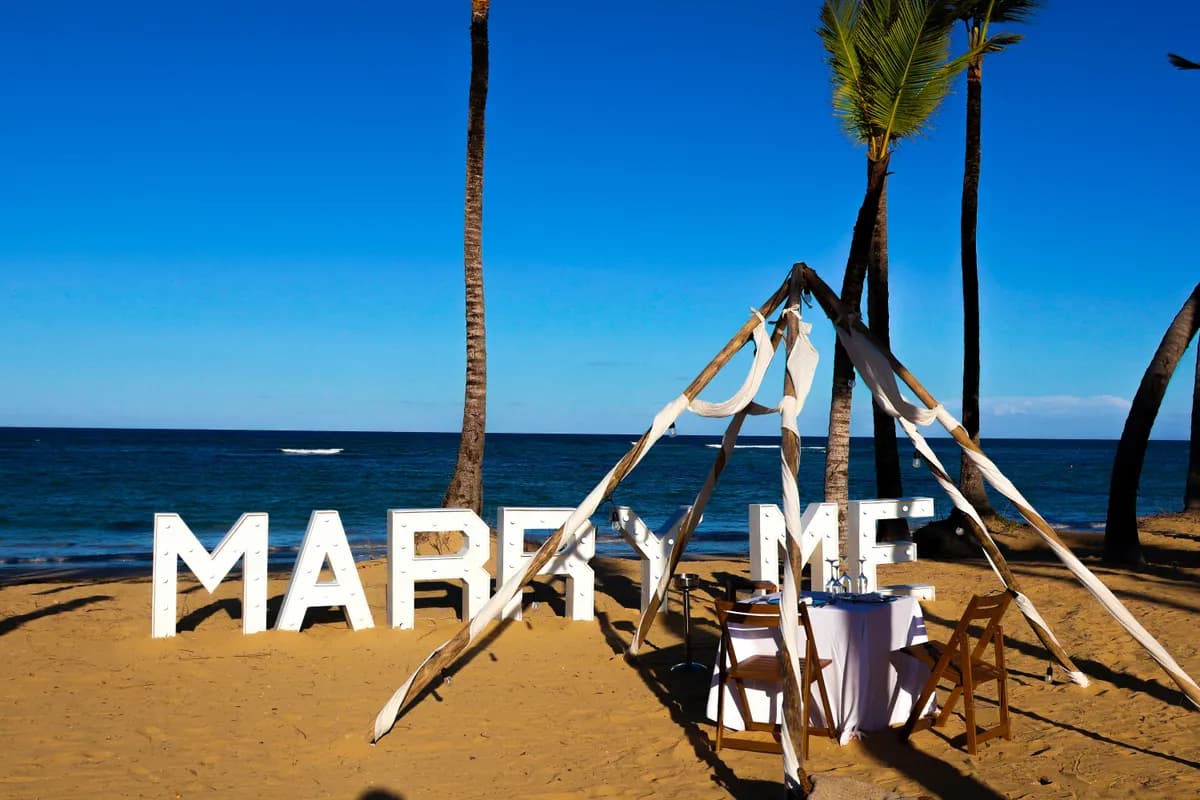
Dominican Republic Destination Wedding Guide
Dominican Republic destination wedding guide covering legal requirements, venue pricing, and a 12-month planning timeline from real vendors.
The Dominican Republic is the Caribbean's most popular destination wedding location, and for good reason: white-sand beaches that look fake in photos (they are real), all-inclusive resorts with dedicated wedding departments, consistently warm weather, direct flights from dozens of US and Canadian cities, and costs that are 30-50% lower than comparable weddings in the continental United States.
But planning a wedding 1,500 miles from home comes with complications that Pinterest boards do not warn you about. Legal paperwork. Vendor reliability. The difference between a symbolic ceremony that means nothing legally and a civil ceremony that requires specific documents apostilled months in advance. Rain contingency plans in a tropical country. And the logistical puzzle of getting 50 guests to an island.
This guide covers all of it, with real prices, honest vendor assessments, and the practical details that determine whether your Dominican wedding is a dream or a logistical nightmare.
Why the Dominican Republic for a Destination Wedding
The DR offers a compelling combination of advantages that no other Caribbean destination matches:
- Affordability: A beautiful beach wedding with 50 guests can cost US$8,000-15,000 in the DR versus US$25,000-50,000+ for an equivalent event in the US. Even luxury venue weddings at Casa de Campo or Cap Cana run US$20,000-40,000, significant but far less than comparable venues in Hawaii, Mexico's Riviera Maya, or the US Virgin Islands.
- Accessibility: Direct flights from New York (3.5 hours), Miami (2.5 hours), Toronto (4 hours), and most major East Coast cities. Your guests do not need passports for layovers or complicated connecting flights.
- Venue variety: Beach ceremonies, colonial church weddings in Santo Domingo's 500-year-old Zona Colonial, garden weddings at Casa de Campo, cliffside ceremonies overlooking the ocean at Cap Cana, or intimate jungle weddings in Samaná.
- All-inclusive convenience: Resort wedding packages bundle venue, catering, cake, flowers, officiant, and basic decor into one price. This dramatically simplifies planning and budgeting.
- Legal recognition: A legal wedding performed in the DR is normally recognized in the United States, Canada, the UK and most other countries, subject to each country's own registration rules. You can get legally married here, not just have a symbolic ceremony.
Legal vs. Symbolic Ceremony: The Critical Distinction
This is the single most important decision in your Dominican wedding planning, and misunderstanding it has caused real heartbreak for couples.
Symbolic Ceremony
A symbolic ceremony is essentially a performance, a beautiful, emotional event that looks exactly like a wedding but has zero legal standing. No marriage license is issued. You are not legally married. The "officiant" can be anyone, your best friend, a resort entertainment director, or a hired performer. If you want legal recognition, you must either get legally married before the trip (at a courthouse at home) or file additional paperwork for a civil ceremony in the DR.
Pros: No paperwork, no waiting period, no document requirements, no stress. You can have your ceremony whenever and wherever you want. 90% of resort "wedding packages" are symbolic by default.
Cons: You are not legally married. Period. If this matters to you, for tax, immigration, insurance, or personal reasons, you need a legal ceremony.
Legal Civil Ceremony
A legal Dominican civil ceremony results in an actual marriage certificate recognized internationally. It requires specific documentation, advance planning, and is performed by a Judge of the Oficina Civil (civil registry office) or an authorized officiant. The ceremony can take place anywhere, on the beach, at a resort, in a church, as long as the officiant is legally authorized.
Pros: You are legally married. The Dominican marriage certificate, once apostilled, is accepted as an authentic document abroad, though each country decides how it recognizes and registers the marriage itself.
Cons: Significant paperwork requirements, documents must be prepared 2-3 months in advance, there is no residency requirement, though resorts recommend advance arrival for coordination, and the process involves bureaucratic steps that require either a wedding planner or a lawyer familiar with Dominican family law.
Our Recommendation
For most international couples, the simplest approach is: get legally married at home before your trip (courthouse ceremony, 15 minutes, US$50-100), then have your dream symbolic ceremony in the DR. This eliminates all paperwork stress and lets you focus on the celebration. If having the legal ceremony in the DR is important to you, and it is for many couples, plan far ahead and hire a wedding planner who handles legal ceremonies regularly.
Legal Requirements for a Dominican Wedding
If you choose a legal civil ceremony, here is exactly what you need:
Required Documents (Both Partners)
- Valid passport: must be valid; check the entry-validity requirements for your nationality and travel dates.
- Original birth certificate: must be a certified copy (not a photocopy) issued within the past 6 months by your country's vital records office.
- Single status affidavit / certificate of no impediment: a notarized statement confirming you are legally free to marry. In the US, this is typically a sworn affidavit notarized by a notary public. Canada does not issue certificates of non-impediment: Global Affairs Canada provides a "statement in lieu", and the civil registry may instead accept a provincial marriage search record or a single status affidavit.
- Divorce decree or death certificate (if previously married), certified original.
- Two witnesses with valid ID: witnesses must be over 18 and present at the ceremony. Your resort wedding planner can provide witnesses if your guests are not available.
Apostille Requirement
Documents issued in Hague Apostille Convention countries must be apostilled, and documents from non-signatory countries legalized by a Dominican consulate instead: this is an international certification that authenticates the document for use in another country. In the US, apostilles are issued by the Secretary of State in the state where the document was issued (not where you live). Processing takes 1-4 weeks and costs US$5-25 per document depending on the state. Some states offer expedited service for an additional fee.
Translation
Documents that are not already in Spanish must be translated by a judicial interpreter and legalized, or translated through a Dominican consulate. Your wedding planner typically handles this (cost: US$50-100 per document). Do not use Google Translate, the translation must come from a judicial interpreter or an authorized Dominican consulate.
Timeline
Start the document preparation process at least 3 months before your wedding date. The sequence: obtain certified documents (2-4 weeks), apostille them (1-4 weeks), send them to your Dominican wedding planner for translation and filing with the Oficina Civil (2-4 weeks). Last-minute legal ceremonies are extremely difficult to arrange and significantly more expensive.
Best Wedding Venues by Style
Beach Ceremonies
The classic Dominican wedding. Toes in the sand, turquoise water backdrop, sunset timing. The best beaches for weddings include:
- Juanillo Beach (Cap Cana): Arguably the most photogenic beach in the DR. Calm, crystal-clear water, white sand, coconut palms. Multiple resorts offer wedding packages here. Private beach ceremonies can be arranged through Cap Cana's events team.
- Playa Rincón (Samaná): A wild, undeveloped beach consistently ranked among the world's most beautiful. Intimate, natural setting, no resort backdrop. Reached by a short drive from Las Galeras or by boat, and the boat option makes a dramatic entrance if you want one.
- Bávaro Beach (Punta Cana): The most popular resort beach with dozens of all-inclusive options. Convenient but can feel crowded if your resort does not dedicate a private beach section.
- Playa Minitas (Casa de Campo, La Romana): A private resort beach with controlled access, ensuring your ceremony is not photobombed by other resort guests. Elegant and well-maintained.
Historic & Colonial Venues
Santo Domingo's Zona Colonial, a UNESCO World Heritage Site, offers venues with 500 years of history. The Cathedral Primada de América (the first cathedral in the Americas, built 1512-1541) hosts Catholic wedding ceremonies. Secular options include Casa de las Gárgolas, Hostal Nicolás de Ovando (a converted 16th-century governor's mansion), and the courtyards of restored colonial mansions along Calle Las Damas.
Garden & Estate Venues
- Altos de Chavón (Casa de Campo): A recreated 16th-century Mediterranean village perched above the Río Chavón. The Church of St. Stanislaus has hosted celebrity weddings and offers a dramatic, theatrical setting. The adjacent amphitheater terrace provides reception space with river views. Wedding packages start around US$10,000-25,000.
- Jardín Botánico Nacional (Santo Domingo): The national botanical garden offers lush tropical greenery, a Japanese garden, and an orchid pavilion for ceremonies. A less conventional choice but stunning for couples who love nature.
Top Resort Wedding Packages with Prices
Resort wedding packages are the most common choice for destination weddings because they simplify everything into one booking. Here are real prices from major properties:
Budget Tier (US$1,500-4,000)
- Riu Resorts (multiple Punta Cana locations): "Royal" wedding package from US$1,999, includes ceremony setup (arch, chairs, flowers), symbolic officiant, bridal bouquet, boutonnière, sparkling wine toast, wedding cake for up to 20 guests, and a couples' spa treatment. Legal ceremony upgrade: additional US$800-1,200.
- Barceló Bávaro: wedding packages in a similar bracket, with ceremony setup, a private dinner for the couple and a resort credit. Barceló does not publish rates online, so ask for a written quote naming the current package, price and guest limit.
Mid-Range Tier (US$4,000-12,000)
- Hard Rock Hotel Punta Cana: wedding collections such as Lavish Daydream and Modern Enchantment cover ceremony setup and floral design, with cocktail hour and private dinner benefits tied to the size of your room block. Lavish Daydream has a published price of $5,000; confirm current rates directly, so get the price, guest limit and inclusions in writing. The property's event spaces include both beach and garden options. The Rock Star Suite serves as the honeymoon suite.
- Excellence Punta Cana: Everlasting Memories package: US$4,000 Monday to Wednesday or US$5,500 Thursday to Sunday, ceremony on the beach or in the garden pavilion, floral design, cake, cocktails, and reception dinner. The Excellence Club tier adds premium upgrades. Includes a wedding coordinator.
- Secrets Cap Cana: published tiers run from the small Wedding in Paradise up to Eternal Love (around US$5,000 for 20 guests) and Beyond Memorable (from around US$12,000 for up to 79), and the beachfront ceremony on Juanillo Beach is the highlight. Confirm the current package name and written inclusions with the resort.
Luxury Tier (US$15,000-50,000+)
- Casa de Campo (La Romana): Custom wedding packages from US$15,000-50,000+. The Altos de Chavón venue (Church of St. Stanislaus + terrace reception) is the signature option. Casa de Campo's wedding department manages everything in-house with exceptional quality. Catering is among the best in the country.
- Amanera (Playa Grande): Ultra-luxury boutique resort with fully custom weddings. For intimate ceremonies, request a full proposal. The cliff-top setting overlooking Playa Grande is jaw-dropping.
- Cap Cana (independent venues): The Cap Cana development offers private villas, beach clubs, and event spaces that can be rented independently. Fully custom weddings here range from US$20,000-60,000+. You hire your own planner and vendors.
Complete Costs Breakdown
Here is where the money actually goes for a typical 50-guest Dominican wedding:
- Venue rental: US$0 (included in resort package) to US$3,000-10,000 (independent venue).
- Catering (per person): US$50-150 for cocktail hour + dinner. At all-inclusives, ordinary meals are covered by the room rate, but a private cocktail hour or reception is a separate event charge unless your package or room block includes it.
- Photographer: US$1,500-5,000 for 6-8 hours of coverage. Punta Cana and Santo Domingo have a deep bench of destination wedding photographers; shortlist them through portfolio directories and check business details before you book. Request to see full galleries, not just highlight reels.
- Videographer: US$1,000-3,500 for a full wedding film.
- Flowers & decor: US$800-5,000 depending on complexity. Tropical flowers (orchids, bird of paradise, heliconia) are locally grown and more affordable than imported roses.
- Officiant: US$200-500 for a symbolic officiant; US$500-1,500 for a legal civil ceremony judge.
- Wedding cake: US$300-1,500. Dominican bakers excel at tropical flavors, try passion fruit, coconut, or guava fillings.
- Music / DJ: US$500-2,000 for a DJ; US$1,500-4,000 for a live band. Dominican merengue and bachata bands add authentic flavor.
- Hair & makeup: US$200-500 per person for bride; US$50-100 for bridesmaids.
- Wedding planner: US$1,500-5,000 for full coordination. Worth every dollar.
- Legal ceremony fees: US$500-1,500 (includes judge, translation, filing).
- Marriage certificate apostille (post-wedding): the MIREX government fee is RD$620; planners, couriers and document runners charge on top, so ask for an itemized quote.
Realistic total for a 50-guest mid-range beach wedding: US$10,000-20,000.
Realistic total for a 50-guest luxury venue wedding: US$25,000-50,000.
Planning Timeline: 12 Months to Wedding Day
12-10 Months Before
- Choose your destination and venue. Visit in person if possible, photos do not convey scale, noise, or beach quality.
- Hire a wedding planner (even if your resort has a coordinator, an independent planner advocates for you, not the resort).
- Set your budget. Include a 10-15% contingency for unexpected costs.
- Send save-the-dates to guests. Destination weddings require 10-12 months notice so guests can budget and request time off.
- If having a legal ceremony: begin gathering documents for apostille.
8-6 Months Before
- Book photographer, videographer, florist, DJ/band, and hair/makeup artist. Top vendors book 6-12 months in advance during peak season (December-April).
- Finalize guest list and arrange hotel room blocks. Most resorts offer group rates for 10+ rooms, typically 15-25% off standard rates.
- Start the legal ceremony paperwork (translations, apostille process) and check with your planner and the receiving registry how recent each document must be. Order dated documents such as the birth certificate late enough that they are still within the required window on the wedding date.
- Plan welcome dinner, day-after brunch, and any group excursions for guests.
3-1 Months Before
- Confirm all vendor contracts and review payment schedules.
- Create a detailed day-of timeline (ceremony, cocktails, dinner, dancing).
- Finalize menu selections and cake design.
- Arrange guest transportation (airport transfers, shuttle buses between venues).
- Plan a rain contingency. Tropical rain showers are brief but possible even in dry season. Your venue should have an indoor backup option.
Week of Wedding
- Arrive 3-4 days before the wedding to handle final details, attend the wedding rehearsal, and decompress from travel.
- Confirm all vendors in person. Walk through the ceremony and reception spaces.
- Host a welcome event for arriving guests (beach BBQ, cocktail party at the resort bar).
- Finalize seating charts and last-minute guest count changes.
Choosing a Wedding Planner
A Dominican wedding planner is not a luxury, it is a near-necessity for destination weddings, especially legal ones. The right planner navigates the bureaucracy, speaks Spanish, knows the reliable vendors (and which ones to avoid), and handles the hundred small crises that invariably arise when planning an event in another country.
What to look for: Minimum 5 years of experience with Dominican weddings. Fluent in English and Spanish. A portfolio with full weddings (not just styled shoots). References from real couples (not just testimonials on their website). Clear pricing with no hidden fees. Familiarity with legal ceremony requirements if applicable.
What to ask: How many weddings do you coordinate per month? (More than 4-5 suggests they are stretched thin.) Do you attend the wedding personally or send an assistant? What is your relationship with the venue, are you receiving commissions? How do you handle vendor no-shows or weather cancellations?
Budget US$1,500-5,000 for a full-service planner. Some work on flat fees, others on a percentage of total wedding budget (typically 10-15%). Flat fee is generally better for the couple, percentage-based planners have an incentive to increase spending.
Guest Logistics
Guest logistics make or break a destination wedding experience. If your guests have a smooth, enjoyable trip, they will talk about your wedding for years. If they have a frustrating travel experience, they will remember that instead.
Flights
Do not assume guests can find their own flights. Provide recommended flight numbers and booking windows. Some wedding planners arrange group flight blocks with airlines, ask the airline for a written group quote. JetBlue's Groups Desk handles group bookings, but JetBlue does not discount group fares.
Hotel Room Blocks
At all-inclusive resorts, negotiate a room block with the sales department 8-10 months in advance. Most resorts offer: 15-25% discount on published rates, 1 complimentary room per 10 booked, flexible cancellation deadlines (typically 30-45 days before arrival), and welcome amenities (rum and chocolates in guest rooms, group check-in). Set a firm cutoff date for guests to book within the block, rooms released after the cutoff are sold at full price.
Guest Communication
Create a wedding website (The Knot, Zola, or a simple custom page) with all logistics: flight recommendations, hotel booking link, wedding schedule, packing list, dress code, and local tips. Include a FAQ addressing common concerns: "Is the tap water safe?" (No, drink bottled), "Do I need a passport?" (Yes), "What about bugs?" (Bring repellent), "Can I use my cell phone?" (Yes, US carriers work but check roaming fees).
Best Locations for a DR Wedding
Punta Cana / Cap Cana
The most popular wedding destination in the DR and for good reason: the highest concentration of resorts, the easiest logistics (direct flights, short transfers), and consistently beautiful beaches. Cap Cana specifically offers the most exclusive venue options, private beach clubs, estate homes, and the stunning Juanillo Beach. Best for: resort weddings, larger guest lists, convenience.
La Romana / Casa de Campo
For couples who want luxury, exclusivity, and a venue with character, Casa de Campo is unmatched. Altos de Chavón offers a dramatic setting that no beach ceremony can rival. The Teeth of the Dog golf course hosts groom's day events, and Playa Minitas provides a private beach option. Best for: luxury weddings, smaller guest lists, couples who want a unique venue.
Santo Domingo, Zona Colonial
For couples who want history, culture, and something different from the typical beach wedding, the Zona Colonial delivers. Colonial-era churches, cobblestone streets, rooftop receptions with city views, and a lively bar-and-club scene for the after-party. Best for: culturally curious couples, intimate weddings, guests who want to explore a city, not just sit at a resort.
Samaná Peninsula
Wild, romantic, and off the beaten path. Samaná offers dramatic coastline, waterfall backdrops (El Limón), and empty beaches. Fewer venue options and harder logistics, but the payoff is an intimate, naturally stunning wedding that feels a world away from resort tourism. If you are getting married during whale watching season (January-March), your guests get a bonus excursion. Best for: intimate weddings (under 30 guests), nature-loving couples, bohemian vibes.
Photography Locations & Tips
Dominican Republic wedding photography benefits from extraordinary natural light. Golden hour (the last hour before sunset, typically 5:30-6:30 PM) provides the warm, romantic light that makes DR wedding photos so striking. Top photography locations:
- Juanillo Beach (Cap Cana): Turquoise water and white sand, the classic shot.
- Altos de Chavón staircase (Casa de Campo): Dramatic stone architecture and river valley backdrop.
- Zona Colonial streets (Santo Domingo): Colorful colonial buildings, wrought-iron balconies, and cobblestone streets add texture and character.
- Palm-lined walkways at Bávaro resorts: Rows of royal palms create natural leading lines.
- El Limón waterfall (Samaná): For adventurous couples willing to hike in their wedding attire (or schedule a "trash the dress" shoot).
Book your photographer for at least 8 hours, allow time for getting-ready shots, couple portraits (schedule these during golden hour, not midday sun), ceremony, cocktails, reception, and first dance. Ask for a second shooter if your guest list exceeds 50, one photographer cannot capture both the ceremony from the front and guest reactions simultaneously.
Honeymoon Extension Ideas
One of the greatest advantages of a DR wedding is that you are already in a honeymoon destination. Instead of flying home and then flying out again, extend your stay:
- Punta Cana to Samaná: After your resort wedding, drive or fly to the Samaná Peninsula for a week of beaches, waterfalls, whale watching (in season), and Los Haitises National Park exploration. A dramatic contrast to resort life.
- La Romana to Bayahíbe / Saona Island: Explore the southeast coast, snorkeling, diving, and the stunning Bayahíbe beaches.
- Santo Domingo to Jarabacoa: Swap the city for the mountains. Rafting, waterfall hikes, and cool mountain air in Jarabacoa offer a completely different Dominican experience.
- North Coast road trip: Puerto Plata, Cabarete for kitesurfing, Playa Grande for surfing, and the 27 Waterfalls of Damajagua for adventure.
Red Flags When Hiring Vendors
The Dominican wedding industry includes many excellent professionals and some unreliable operators. Protect yourself by watching for these warning signs:
- No contract or vague contract terms. Every vendor should provide a written contract specifying deliverables, dates, times, payment schedule, and cancellation policy. "We will discuss details closer to the date" is a red flag.
- Requiring full payment upfront. Standard payment structures are: 25-30% deposit to reserve the date, 50% at 30-60 days before, remaining balance on the wedding day or shortly after. Full payment before arrival can be a legitimate resort requirement; check the written payment and cancellation terms.
- No recent work to show. Request to see full weddings from the past 12 months, not just curated highlights. A photographer who shows only 10 amazing photos may have 500 mediocre ones from the same wedding.
- Unresponsive communication. If a vendor takes more than 48 hours to reply during the booking phase, when they are trying to win your business, imagine how responsive they will be three months after taking your deposit.
- Guaranteed perfect weather. Any vendor who promises "it never rains in Punta Cana in February" is lying. It can rain any month of the year. The honest response is: "We have indoor backup options and a rain contingency plan."
- Prices significantly below market rate. If a photographer quotes US$500 when the average is US$2,500, question why. Either they are new and using your wedding as practice, or they will deliver substandard work and disappear after the event.
Frequently Asked Questions
What documents do I need for a destination wedding in the Dominican Republic?
For a symbolic ceremony (no legal standing): just your passport. For a legal civil ceremony: valid passport, certified birth certificate (issued within the past 6 months), single-status affidavit or certificate of no impediment (notarized), divorce decree or death certificate if previously married, and two witnesses with valid ID. Documents must be apostilled by your country's designated authority, or legalized by a Dominican consulate if your country is not in the Hague Apostille Convention, and translated into Spanish by a certified Dominican translator. Start this process at least 3 months before your wedding date.
How much does a destination wedding cost in the Dominican Republic?
The range is enormous. A simple symbolic beach ceremony at a mid-range resort (just the couple, officiant, basic flowers): US$1,500-3,000. A full wedding with 50 guests, reception dinner, photographer, DJ, flowers, and cake at an all-inclusive resort: US$10,000-20,000. A luxury venue wedding at Casa de Campo or Cap Cana with premium vendors: US$25,000-50,000+. These figures do not include guest accommodations (guests typically pay their own room costs) or the couple's flights.
Is a Dominican Republic wedding legal in the US?
Yes, provided you complete a legal civil ceremony (not just a symbolic ceremony). A Dominican marriage certificate, once apostilled by the Dominican Ministry of Foreign Affairs (Cancillería), is normally accepted in the United States, Canada, the United Kingdom and most other countries, though recognition and any registration or translation requirements are set by each country. Your wedding planner can handle the apostille process after the wedding, it typically takes 2-4 weeks, and the MIREX fee itself is RD$620 with any agent or courier charges on top. Once you receive the apostilled certificate, no additional legal steps are required in the US.
When is the best time to have a wedding in the Dominican Republic?
The dry season (December through April) offers the most reliable weather: sunny skies, low humidity, and minimal rain. February through April is the sweet spot, warm (28-31°C / 82-88°F), low hurricane risk, and slightly lower prices than the December-January holiday peak. May and November are excellent shoulder-season options with lower costs, though afternoon rain showers are more frequent. Avoid September and October, the peak of hurricane season brings the highest rain probability and some resorts may be under renovation.
Table of Contents
Punta Cana
This guide covers Punta Cana. Explore more about this destination.
View DestinationAbout the Author
Alex Borshch
Founder and editor of the Isla365 network. Spent six months living in the Dominican Republic over the 2013-14 winter, and has since wintered in Thailand, Vietnam and Turkey. Writes and edits the guides across the network.