Hiking Pico Duarte: Caribbean's Highest Peak
Hiking Pico Duarte, the Caribbean's highest peak at 3,098 meters, with route options, a day-by-day itinerary, gear list, and guide costs.
Standing at 3,098 meters (10,164 feet), Pico Duarte is the highest point in the entire Caribbean, higher than any peak in Cuba, Jamaica, Puerto Rico, or any other island. It sits in the Cordillera Central, the mountain spine that runs through the center of the Dominican Republic, surrounded by cloud forests, alpine meadows, and pine-covered ridges that look nothing like the beach postcards most tourists associate with the country.
Climbing Pico Duarte is not a casual day hike. It is a genuine multi-day mountain trek that requires planning, physical preparation, and respect for mountain weather that can drop below freezing. But for anyone with moderate fitness and a sense of adventure, it is one of the most rewarding experiences in the Caribbean, and arguably the best-kept secret in Dominican tourism.
Why Climb Pico Duarte
There are several compelling reasons to make this trek, beyond the obvious bragging rights of summiting the Caribbean's highest peak:
- It shatters the "beach only" perception of the DR. The Cordillera Central is a world apart from Punta Cana. Pine forests, rushing rivers, cloud-draped valleys, and crisp mountain air create an atmosphere closer to the Andes than the Antilles.
- It is genuinely challenging but achievable. You do not need technical climbing skills or mountaineering experience. What you need is endurance, decent footwear, and the willingness to spend two days walking uphill. Thousands of Dominicans, including schoolchildren on field trips, summit every year.
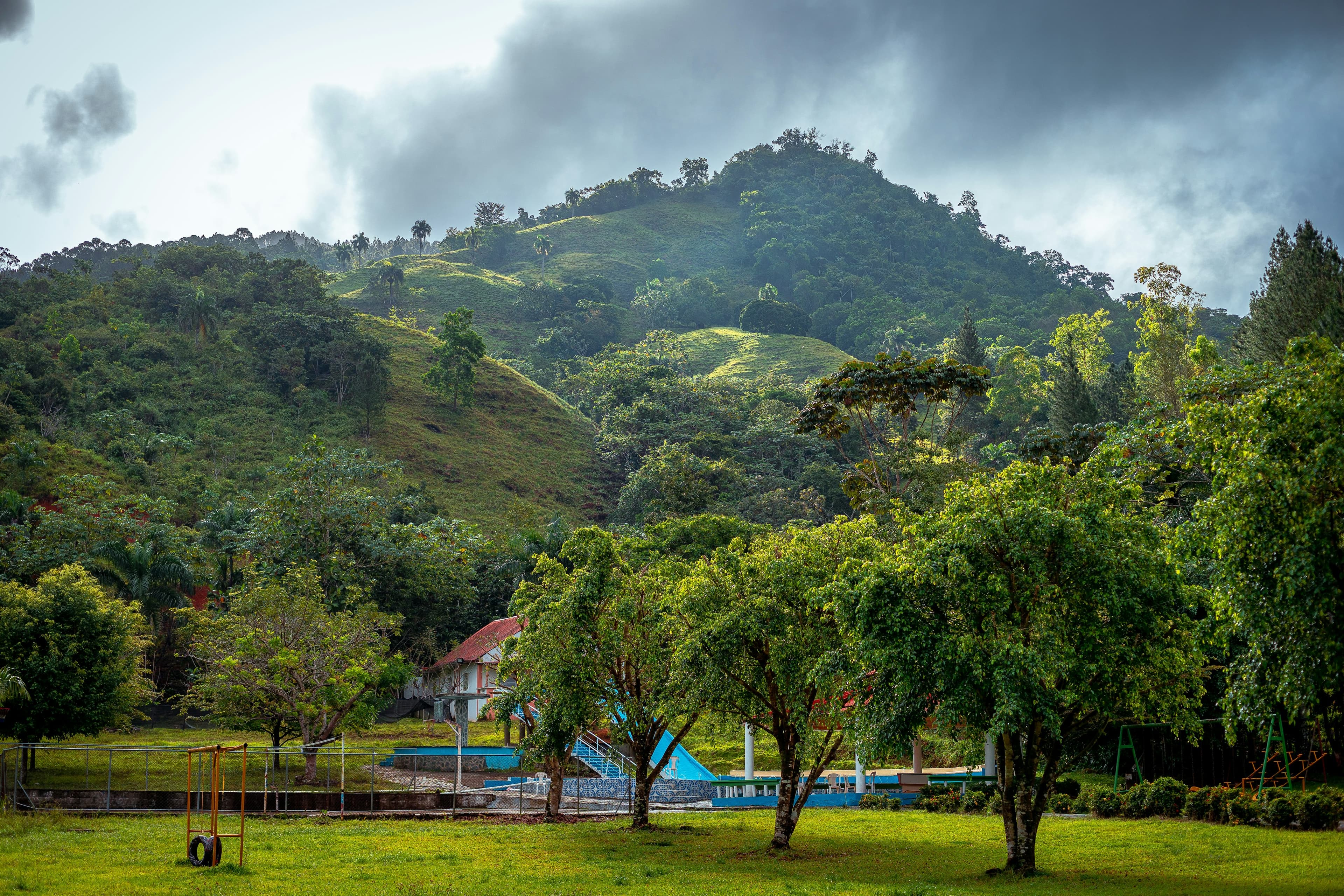
- The scenery is extraordinary. The trail passes through four distinct ecosystems: subtropical forest, broadleaf cloud forest, Creole pine forest, and alpine scrubland. The Valle de Lilás (Valley of the Lilies) near the summit is a landscape you would never expect to find on a Caribbean island.
- The summit sunrise is unforgettable. If you time your ascent to reach the summit at dawn, the view, 360 degrees of mountain ranges, valleys, and distant coastlines bathed in orange light, is one of the most spectacular in the Americas.
This trek connects naturally with other mountain activities near Jarabacoa, including rafting on the Río Yaque del Norte, visiting Salto de Jimenoa waterfall, and exploring the Valle Nuevo National Park.
Route Options
There are several trails to the summit, but two routes account for 95% of all hikers:
1. La Ciénaga Route (Standard, Most Popular)
Distance: 23 km one way (46 km round trip). Duration: 2 days / 1 night minimum. Starting elevation: 1,100m. Summit elevation: 3,098m. Elevation gain: approximately 2,000m.
This is the classic route and the one we recommend for most hikers. It starts from the small village of La Ciénaga (about 1 hour from Jarabacoa by car), follows a well-maintained trail through pine forest, passes through the overnight camp at La Compartición (2,450m), and ascends to the summit the next morning. The trail is well-marked, the campsite has basic shelters, and guides know every meter of the path.
Pros: Shortest route, best maintained, most guide availability, the trail is achievable in 2 days for fit hikers.
Cons: The most crowded route (especially on weekends and holidays); the pace is fast, which can be tough for less-fit hikers; the descent on day 2 is hard on the knees.
2. Mata Grande Route (Longer, More Scenic)
Distance: 45 km one way. Duration: Allow 4 to 5 days for the operator's longer expedition; confirm your itinerary before booking. Starting elevation: 900m. Elevation gain: approximately 2,200m.
The Mata Grande route approaches from the west, offering more diverse scenery and a more gradual ascent. It passes through rural communities, dense cloud forest, and the stunning Valle de Bao before joining the La Ciénaga trail near the summit. This route is less crowded, more immersive, and allows more time to acclimatize.
Pros: More scenic, less crowded, gentler pace, passes through beautiful Valle de Bao.
Cons: Requires a longer itinerary, longer total distance, fewer guide options, trail is rougher in places.
Other Routes
The Sabaneta and Las Lagunas routes exist but are rarely used by tourists. They require 3-5 days and are only recommended for experienced trekkers with guides who know these less-maintained trails. Unless you have a specific reason to seek them out, stick with La Ciénaga or Mata Grande.
Day-by-Day Itinerary: Standard La Ciénaga Route
Day 0: Arrive in Jarabacoa
Most hikers arrive in Jarabacoa the day before the trek. This mountain town at 530m elevation is a staging point for Pico Duarte hikes. Check into a hotel (the lodge mentioned here accepts lodging only for groups booking at least 10 double-occupancy rooms or 20 guests), arrange your guide and mule if not already booked, and do a final gear check. Buy any last-minute supplies, headlamp batteries, snacks, water purification tablets, at the ferretería (hardware store) or mini-market in town.
Have dinner at one of Jarabacoa's restaurants and get to bed early. You will depart at dawn.
Day 1: La Ciénaga to La Compartición (5-7 hours hiking)
Wake at 4:30-5:00 AM. Your guide will arrange transport from Jarabacoa to La Ciénaga, a drive on a paved mountain road. At the park ranger station in La Ciénaga (1,100m), you register, pay the park entrance fee, and meet your mule driver if you have hired one.
The trail begins with approximately 4 km of relatively flat terrain, crossing the Río Yaque del Norte on a wooden bridge. The main ascent follows the relatively flat opening section. The trail then transitions into Creole pine forest (Pinus occidentalis, a species endemic to Hispaniola), and the gradient eases slightly.
Early on, you reach Los Tablones at 1270 meters, where the terrain is mostly flat with some small hills. This is a good place for a lunch break. The mules usually carry food supplies, so your guide will prepare a simple meal, sandwiches, fruit, and coffee cooked over a small fire.
Most of the day's ascent still lies ahead, followed by a descent into camp. Total hiking time: 5-7 hours depending on your pace. The campsite has basic wooden shelters (lean-to structures with tin roofs), a communal fire pit, and a water source. It is rustic but functional. The mule team will have arrived ahead of you with supplies.
Evening at Compartición: Eat dinner (your guide typically prepares rice, beans, chicken or sausage, and coffee), layer up as temperatures drop rapidly after sunset, and get into your sleeping bag early. Nighttime temperatures at 2,450m range from 2-10°C (35-50°F) in the dry season and can drop below freezing in December and January. This is not a figure of speech, it actually freezes on a Caribbean island. A good sleeping bag is not optional.
Day 2: Summit and Return (8-10 hours total)
Wake at 3:00-4:00 AM to begin the summit push. The goal is to reach the top by sunrise. From Compartición, the summit is approximately 3 hours and 650m of elevation gain. The trail climbs through thinning pine forest into the Valle de Lilás, a high-altitude meadow dotted with Lilís plants (not actual lilies but a local alpine shrub). The air is noticeably thinner here, and the landscape is stark and beautiful.
The final approach to the summit follows a ridge with panoramic views on both sides. On a clear morning, you can see both the Caribbean Sea to the south and the Atlantic Ocean to the north. The summit itself is marked with a bust of Juan Pablo Duarte (the Dominican founding father for whom the peak is named) and a Dominican flag. The temperature at the summit is typically 0-5°C (32-41°F) at dawn, bring every warm layer you have.
Spend 20-40 minutes at the summit for photos and to absorb the view, then begin the descent. You will return to Compartición in 1.5-2 hours, eat a quick breakfast, pack up, and hike back down to La Ciénaga, another 4-5 hours. The descent is faster but harder on the knees and ankles. Trekking poles are invaluable here.
Arrive at La Ciénaga by early-to-mid afternoon, where your transport back to Jarabacoa will be waiting. Most hikers arrive back in town exhausted, satisfied, and ravenously hungry. Celebrate with a hearty meal and a cold Presidente.
What to Expect Physically
Pico Duarte is not a technical climb, there is no scrambling, ropes, or exposed ridges. It is, however, a demanding endurance hike. Here is what you need to know:
- Fitness level required: Moderate to high. You should be comfortable hiking 6-8 hours per day with a daypack over hilly terrain. If you can hike 15-20 km in a day with elevation changes without being destroyed, you can do this.
- Altitude: At 3,098m, mild altitude effects are possible, headache, shortness of breath, slight nausea. Serious altitude sickness is rare at this elevation, but staying hydrated and maintaining a steady pace help. If you live at sea level, the thin air above 2,500m will be noticeable.
- Hardest section: The main uphill section and the summit push on Day 2 (steep, cold, and you are already tired). The descent on Day 2 is also punishing on the knees.
- Who should not attempt this: People with serious heart or lung conditions, anyone with knee problems that prevent sustained downhill walking, or anyone who has not done a multi-hour hike in the past year. This is not a beginner hike.
What to Pack: Complete Gear List
Packing for Pico Duarte requires a mindset shift: you are packing for cold mountain camping, not a Caribbean vacation. Nighttime temperatures can drop to -3°C (27°F) in peak dry season. The biggest mistake hikers make is underestimating how cold it gets.
Essential Gear
- Sleeping bag rated to 0°C (32°F) or lower: this is the single most important item. The shelters at Compartición are open-sided and offer no insulation. Without a proper sleeping bag, you will be miserable and potentially hypothermic. Rental is sometimes available in Jarabacoa (RD$500-800/US$8-13) but quality varies.
- Warm layers: Fleece jacket or down puffy, thermal base layer (top and bottom), warm hat, and gloves. Merino wool or synthetic, not cotton, which retains moisture and loses insulating ability when wet.
- Rain jacket: Waterproof and windproof. Even in dry season, mountain weather is unpredictable. A rain jacket doubles as a wind layer on the summit.
- Hiking boots or sturdy trail shoes: Ankle support is valuable on the rocky descent. Break in new boots before the trip. Trail runners work for experienced hikers but provide less protection on loose rock.
- Headlamp with extra batteries: Essential for the pre-dawn summit push and for camp. Bring a backup or extra batteries, it is pitch dark at 3 AM in the mountains.
- Trekking poles: Highly recommended. They reduce knee impact on the descent by 20-30% and provide stability on steep sections. Collapsible poles are ideal.
- Daypack (25-35 liters): If your mule carries the heavy gear, you only need a daypack for water, snacks, rain jacket, and camera.
- Water: 2-3 liters capacity. There are water sources along the trail, but purification tablets or a filter (Sawyer Squeeze or LifeStraw) are recommended. Your guide can identify safe water sources.
Other Important Items
- Sunscreen and sunglasses (UV is intense at altitude)
- Snacks: trail mix, energy bars, chocolate, dried fruit
- First aid kit: blister treatment, pain relievers, electrolyte packets
- Camera (sunrise photos are spectacular)
- Cash for tips and unexpected expenses (no ATMs in La Ciénaga)
- Toilet paper and a ziplock bag for waste (leave no trace)
- Insect repellent (useful at lower elevations)
Hiring a Guide (Mandatory)
A guide is mandatory for all Pico Duarte hikes, this is enforced at the La Ciénaga ranger station. You cannot enter the park without a registered guide. This is not a bureaucratic nuisance; guides know the trail, manage the logistics, cook meals, and have emergency training.
Guides are typically arranged through one of three channels:
- Rancho Baiguate (Jarabacoa): The most established adventure operator in the Cordillera Central. Ask about current hiking packages, prices, inclusions, and minimum group size. This is the easiest, most reliable option.
- Independent guides in La Ciénaga: Local guides are available at the ranger station for RD$3,000-5,000 (US$50-83) for a 2-day trip. You arrange food, mule, and transport separately. This is cheaper but requires more coordination.
- Jarabacoa Mountain Guides Association: Ask at your hotel in Jarabacoa, they can connect you with certified guides. Prices are similar to independent guides.
Tip your guide. A standard tip is RD$500-1,000 (US$8-17) per day, more if the service is exceptional. These are hardworking local men who carry heavy packs and cook in difficult conditions.
Mule Rental
Mules carry supplies (food, water, sleeping bags, firewood) between La Ciénaga and Compartición. You can also ride a mule on portions of the trail if you are struggling physically, though most hikers walk the entire route.
Mule rental: RD$1,500-2,500 (US$25-42) per mule for the 2-day trip. One mule can carry gear for 2-3 hikers. The mule driver (separate from your guide) leads the animal and manages loading/unloading. Tip the mule driver RD$500 (US$8) at the end of the trip.
Camping at Compartición
La Compartición is the primary overnight camp, located at 2,450m on a ridge with views in every direction. The "camp" consists of several wooden lean-to shelters with tin roofs and raised wooden platforms for sleeping. There are no walls, you are essentially sleeping under a roof with open sides. This means wind and cold penetrate freely, which is why a warm sleeping bag is essential.
A communal fire pit serves as the social center of camp, and your guide will build a fire for cooking and warmth. The fire is also the only source of heat. Gather around it, share stories with other hikers, and enjoy the star-filled sky, at 2,450m with zero light pollution, the Milky Way is staggeringly vivid.
There are basic pit latrines near the camp. No showers. The water source is a small stream 5 minutes downhill from camp, treat or filter before drinking.
Getting to La Ciénaga from Jarabacoa
Jarabacoa is the gateway town. From Santo Domingo, take Caribe Tours bus to Jarabacoa (RD$400/US$6.70, 2 hours) or drive (2 hours via Autopista Duarte to La Vega, then 30 minutes south to Jarabacoa). From Santiago, it is 1.5 hours by car or bus.
From Jarabacoa to La Ciénaga: a drive on a paved mountain road. Your guide or tour operator will arrange this transport. A private 4WD taxi costs RD$2,500-4,000 (US$42-67) each way. The road has asphalt paving; check current road conditions before departure.
Costs Breakdown
Total cost for a standard 2-day La Ciénaga route hike, per person (based on a group of 2-4):
- Park entrance fee: RD$100 (US$1.70)
- Guide: RD$3,000-5,000 (US$50-83), split between group members
- Mule: RD$1,500-2,500 (US$25-42) per mule, shared
- Food (guide-provided for 2 days): RD$1,500-2,500 (US$25-42) per person
- Transport Jarabacoa to La Ciénaga (round trip): RD$5,000-8,000 (US$83-133) per vehicle, shared
- Sleeping bag rental (if needed): RD$500-800 (US$8-13)
- Tips (guide + mule driver): RD$1,000-2,000 (US$17-33)
Total per person: RD$6,000-15,000 (US$100-250), depending on group size. Larger groups pay less per person because guide, mule, and transport costs are shared. Ask the operator for current package prices, inclusions, and minimum group size.
Best Time to Hike
The ideal window is December to March: the dry season in the mountains. Skies are clearest, trails are driest, and the chances of a cloud-free sunrise at the summit are highest. January and February are the coldest months (summit temperatures of -3 to 5°C), but the clear views are worth bundling up.
The wet season (May-November) brings afternoon thunderstorms, muddy trails, and reduced visibility. Hiking is still possible but less enjoyable, you may summit in thick cloud and see nothing. The trail can become slippery and creek crossings may be deeper than usual.
Avoid Dominican holiday weekends (Semana Santa/Easter week, Christmas-New Year, Independence Day in late February). The trail and Compartición camp can be overcrowded with Dominican groups, and the atmosphere shifts from wilderness trek to busy campsite. Weekdays in January-March are the sweet spot.
Training Tips
If you hike regularly, you are probably fine. If your most strenuous exercise is walking to the car, start training 4-6 weeks before your trip:
- Cardio base: Walk or hike 8-12 km, 3x per week, with some elevation gain. Stair climbers and incline treadmills simulate the ascent well.
- Leg strength: Squats, lunges, and step-ups strengthen the muscles you will use all day. Focus on eccentric (downhill) strength, your quads will thank you on the descent.
- Back and core: You will carry a daypack for 6-8 hours. Planks and back extensions help prevent lower back fatigue.
- Test your gear: Do at least one long hike (4-6 hours) in the boots you plan to wear. Blisters from new boots on Pico Duarte will ruin the experience.
Wildlife & Scenery
The Cordillera Central is a biodiversity hotspot. On the trail, look for:
- Hispaniolan hutia: A large, rabbit-sized rodent endemic to Hispaniola. Nocturnal, you might spot one near the Compartición camp at dusk.
- Hispaniolan emerald hummingbird: A tiny, iridescent green hummingbird found in the cloud forest sections of the trail.
- Creole pine (Pinus occidentalis): The dominant tree above 1,500m. This species is endemic to Hispaniola and gives the higher elevations their distinctive character, tall, straight pines with a carpet of brown needles underfoot.
- Valle de Lilás: Near the summit, this high-altitude valley is covered in stunted shrubs and grasses that take on a golden-green hue in morning light. Combined with the surrounding peaks, it creates a landscape that feels more like Patagonia than the Caribbean.
Photography tips: bring a wide-angle lens for summit panoramas and a fast lens for dim forest conditions. The sunrise from the summit is best captured with a tripod (lightweight travel tripod adds 500g to your pack but is worth it). Smartphone cameras work fine for most shots, the light quality at altitude is exceptional.
Frequently Asked Questions
How long does it take to climb Pico Duarte?
The standard La Ciénaga route takes 2 days and 1 night: 5-7 hours of hiking on Day 1 to reach the Compartición camp, then 3 hours to the summit and 5-6 hours back down to La Ciénaga on Day 2. Total active hiking time is 13-16 hours over two days. Longer Mata Grande expeditions take 4 to 5 days; confirm the schedule with your operator. Some extremely fit hikers and trail runners complete the La Ciénaga route in a single long day (12-16 hours), but this is not recommended for most people.
Do you need a guide for Pico Duarte?
Yes, a guide is legally required. You will be turned away at the La Ciénaga ranger station without one. Beyond the legal requirement, a guide is genuinely useful: they manage logistics, cook meals, know the trail intimately, carry emergency supplies, and can assist if you have altitude issues or injuries. Guides cost RD$3,000-5,000 (US$50-83) for the 2-day trip, split among your group.
What should I bring for the Pico Duarte hike?
The three most critical items: a sleeping bag rated to 0°C (32°F), warm clothing layers (fleece, thermal base layer, hat, gloves), and sturdy hiking boots. People consistently underestimate how cold it gets, this is a mountain above 3,000m, and nighttime temperatures drop below freezing in the dry season. Also essential: headlamp, rain jacket, 2-3 liters of water capacity, trekking poles, and sunscreen. See our detailed gear list above.
Is Pico Duarte dangerous?
Not inherently dangerous, but it demands respect. The main risks are hypothermia from inadequate clothing/sleeping gear, dehydration, and knee/ankle injuries on the descent. There is no technical climbing or exposure to falls. With a guide, proper gear, and reasonable fitness, the risk is low. The biggest "danger" is going underprepared for the cold and having a miserable, sleepless night at Compartición because you brought a beach towel instead of a sleeping bag.
Table of Contents
Jarabacoa
This guide covers Jarabacoa. Explore more about this destination.
View DestinationAbout the Author
Alex Borshch
Founder and editor of the Isla365 network. Spent six months living in the Dominican Republic over the 2013-14 winter, and has since wintered in Thailand, Vietnam and Turkey. Writes and edits the guides across the network.