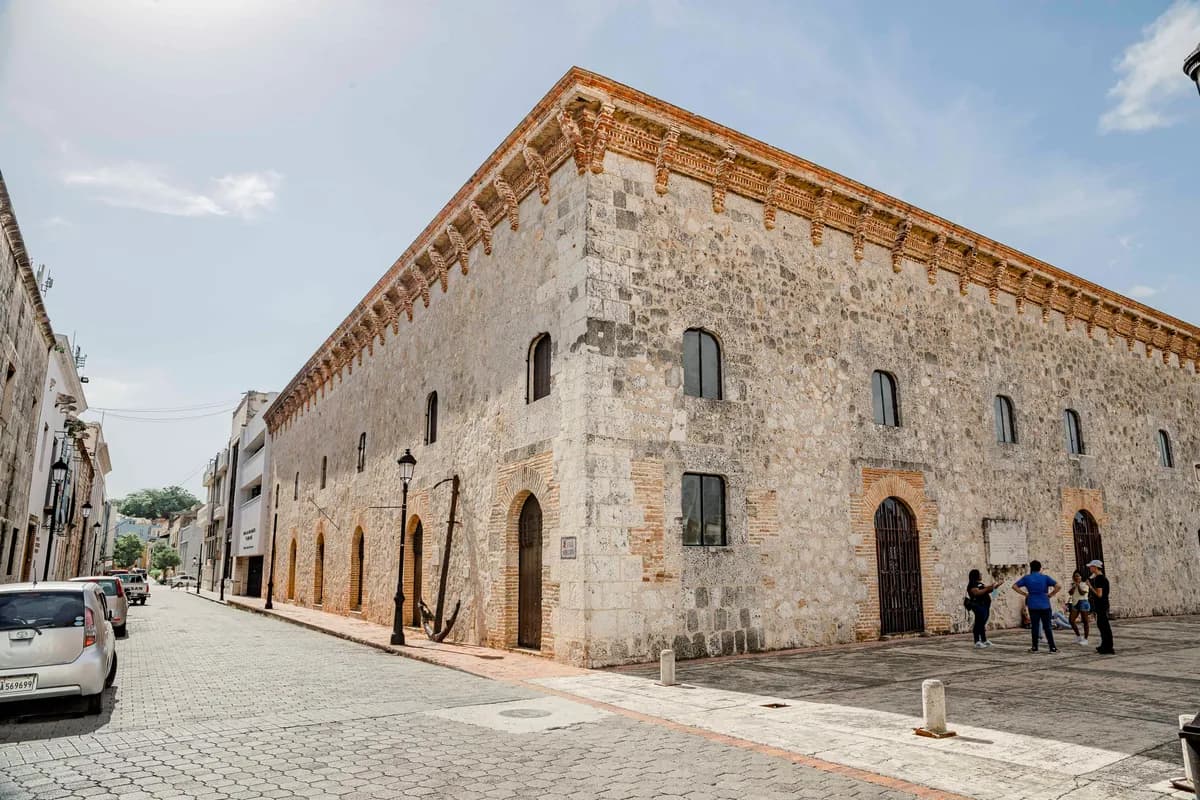
Santo Domingo Colonial Zone Walking Guide
Santo Domingo Colonial Zone walking guide covers the 1498 founding, a 3-hour self-guided route, top restaurants, and cobblestone-era nightlife.
Santo Domingo's Zona Colonial is where the story of the Americas begins. In 1498, Bartholomew Columbus (Christopher's brother) founded the city on the banks of the Ozama River. Within decades, it became the launch pad for Spanish conquest of the hemisphere, the first cathedral, the first university, the first hospital, and the first paved street in the New World were all built here.
Today, the 12-block UNESCO World Heritage Site is a living city, not a museum. Dominicans live, work, eat, and dance among 500-year-old walls. You'll find a Michelin-quality restaurant next to a RD$200 comedor, a trendy cocktail bar inside a former monastery, and reggaeton playing from a 16th-century balcony. That collision of old and new is what makes the Zona Colonial extraordinary.
The Walking Route (3-4 Hours)
This self-guided route covers the major sites in a logical loop. Start in the morning (8-9am) before the heat and crowds peak. The entire route is approximately 3 km of flat walking on cobblestone streets, wear comfortable shoes.
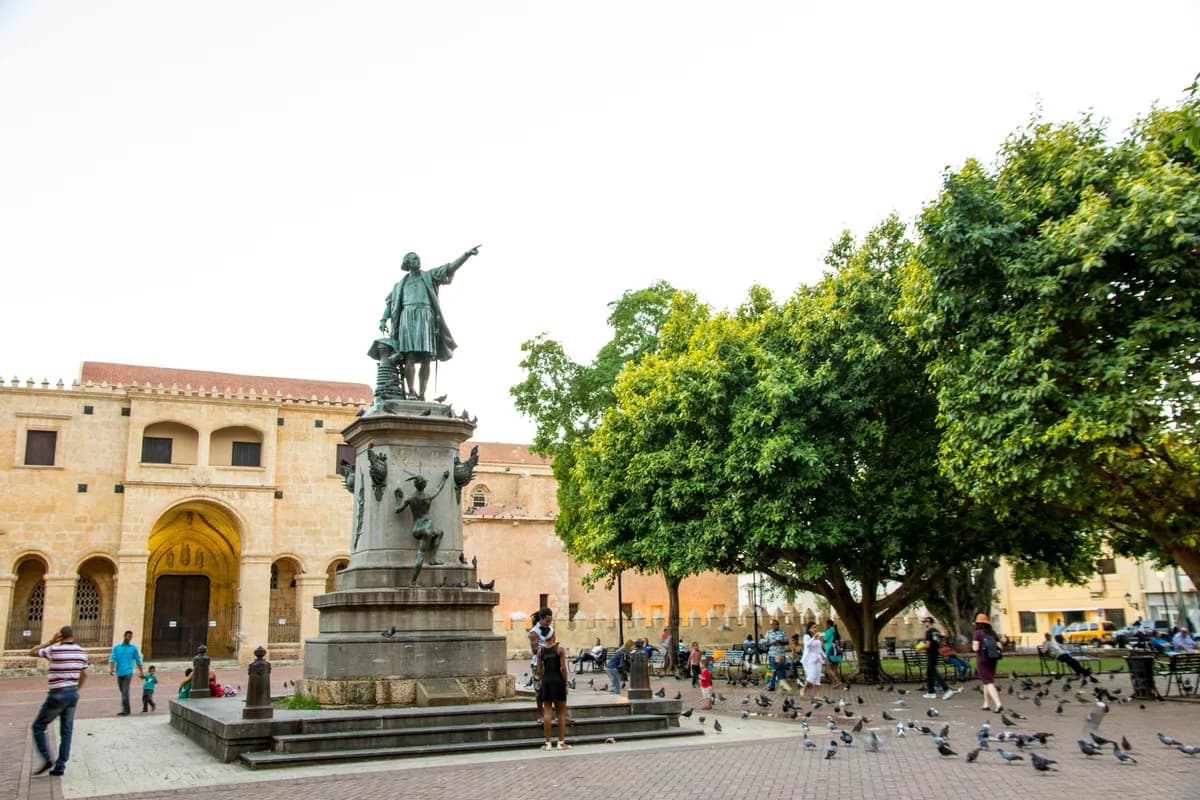
Start: Parque Colón (Columbus Park)
The heart of the colonial city. A bronze statue of Columbus anchors this palm-shaded plaza. Cafés line the perimeter, grab a Dominican coffee (café santo domingano) before starting. The park is a gathering point for locals and tourists alike.
Stop 1: Catedral Primada de América
The first cathedral in the Americas (completed 1540). A blend of Gothic and Renaissance architecture, its coral limestone exterior glows in the morning light. Inside, the high vaulted ceiling and 14 side chapels are impressive. Columbus's remains were allegedly stored here (disputed, Seville also claims them). Free entry; modest dress required.
Stop 2: Calle El Conde (Pedestrian Street)
Walk west along the main pedestrian boulevard. This car-free shopping street runs the length of the Zona Colonial. Street vendors, shops, bakeries, and ice cream stands line both sides. It's lively, a bit chaotic, and thoroughly Dominican. Buy a fresh-squeezed Morir Soñando (orange juice and milk blend) from a street vendor.
Stop 3: Puerta del Conde (Gate of the Count)
At the western end of El Conde, this gate in the old city walls is where Dominican independence was declared on February 27, 1844. A Dominican flag always flies above it. Parque Independencia adjacent contains the mausoleum of the nation's founding fathers (Duarte, Sánchez, Mella). A brief but significant stop.
Stop 4: Calle de las Damas (Street of the Ladies)
Walk back east to the oldest paved street in the Americas, named for the ladies of the Spanish court who strolled here in the 1500s. Today it's a beautifully restored corridor of colonial mansions, museums, and cafés. Highlights along the street:
- Fortaleza Ozama: The oldest European-built military fortress in the Americas (1502). Walk the battlements for panoramic views of the Ozama River.
- Pantéon Nacional: A former Jesuit church now housing the remains of Dominican national heroes. The honor guard changes ceremoniously.
- Museo de las Casas Reales: The former Royal Court and administrative center. Excellent collection of colonial-era maps, weapons, and artifacts.
Stop 5: Alcázar de Colón (Columbus Alcazar)
The palace of Diego Columbus, Christopher's eldest son, built in 1510 on a bluff overlooking the Ozama River. It housed three generations of the Columbus family and served as the seat of the Spanish colonial government. Now a museum with period furnishings and artifacts. Entry: RD$100. The Plaza de España in front is a beautiful open square with restaurants, perfect for a mid-walk lunch.
Stop 6: Calle Hostos & Plaza de la Cultura
Walk west on Calle Hostos past art galleries, bookshops, and small bars. For museum enthusiasts, detour to Plaza de la Cultura: home to the Museum of Dominican Man (anthropology), the Museum of Modern Art, and the Museum of Natural History.
End: Return to Parque Colón
Complete the loop back at Parque Colón for lunch, cold beer, and reflection on 500+ years of history absorbed in one morning.
Key Historical Sites
- Catedral Primada de América: First cathedral in the Americas (1540). Free. Allow 30 minutes.
- Alcázar de Colón: Columbus family palace (1510). RD$100. Allow 45 minutes.
- Fortaleza Ozama: Oldest military fortress (1502). RD$70. Allow 30 minutes.
- Pantéon Nacional: National mausoleum in a former Jesuit church. Free. Allow 15 minutes.
- Museo de las Casas Reales: Colonial-era Royal Court museum. RD$100. Allow 45 minutes.
- Ruinas de San Francisco: Atmospheric ruins of the first monastery in the Americas. Open-air, no entry fee. Concerts sometimes held here.
- Puerta del Conde: Gate where independence was declared. Free. 10 minutes.
- Calle de las Damas: Oldest paved street in the Americas. Free. Part of the walking route.
Where to Eat
Budget (Under US$10/person)
- Mesón de Bari (Calle Hostos): The quintessential Zona Colonial comedor. La Bandera, garlic shrimp, and mofongo at honest prices. RD$200-400/plate.
- Adrian Tropical (Malecón): A Dominican chain beloved by locals. Enormous portions of traditional food in an open-air waterfront setting. RD$300-500/plate.
- El Conde Food Market: Street vendors on Calle El Conde sell fresh juices, empanadas, and chicharrón. Under RD$150 for a filling snack.
Mid-Range (US$15-35/person)
- Pat'e Palo Brasserie (Plaza de España): European brasserie in a 16th-century building. The steak and seafood are excellent. US$15-30/main course.
- Jalao (Calle El Conde): Dominican cultural restaurant and bar. Traditional dishes reimagined with care, try the croquetas de yuca. US$12-25/main. Live music some evenings.
- Lulú Tasting Bar (Calle Padre Billini): Creative tapas and cocktails in a restored colonial house. The octopus is superb. US$20-35/person.
Fine Dining (US$40-80/person)
- Sophia's Bar & Grill (Calle Padre Billini): Mediterranean-Dominican fusion by a renowned local chef. Beautiful courtyard setting.
- La Residence (Hodelpa Nicolás de Ovando): Fine dining in a 500-year-old palace. Caribbean tasting menu with wine pairing.
Nightlife & Bars
The Zona Colonial is one of the best nightlife districts in the Caribbean, especially on Thursday through Saturday nights.
- La Vida Nocturna zone (Calle Hostos area): A cluster of bars and small clubs that come alive after 10pm. Live merengue, bachata, and salsa.
- El Sartén (Calle Hostos): Rooftop bar with colonial zone views. Cocktails and tapas. Excellent at sunset.
- Onno's Bar (Calle Hostos): A Dutch-Dominican institution. Crowded, fun, and internationally mixed.
- Parada 77: Cocktail bar with vintage Dominican décor and live jazz on some nights.
Safety note: The Zona Colonial is well-patrolled at night. Stick to the main streets (El Conde, Hostos, Padre Billini, Calle de las Damas) and you'll be fine. Exercise standard precautions: don't flash valuables, use Uber to return to your hotel, and avoid dimly lit side streets alone.
Practical Information
- Getting there: From SDQ airport, Uber costs approximately RD$700-1,000 (US$12-17). From other parts of Santo Domingo, the Metro Line 1 stops at Gazcue, a 15-minute walk to the Zona Colonial.
- Best time to walk: Morning (8-11am) for historical sights, cooler, quieter, better light for photography. Late afternoon (4-6pm) for atmosphere as residents emerge. Evening for dining and nightlife.
- Dress code: Casual but respectful for churches. Cover shoulders and knees for the Cathedral. Comfortable walking shoes are essential on cobblestone.
- Guided tours: Free walking tours (tip-based) depart daily from Parque Colón at 10am. Private guides: approximately US$40-80 for a 3-hour tour.
- Internet: Most restaurants and cafés have Wi-Fi. A Dominican SIM with data is useful for navigation.
- Cash vs cards: Cards work at restaurants and museums. Cash needed for street vendors, small shops, and market purchases. ATMs on El Conde and surrounding streets.
Beyond the Colonial Zone
If you have 2-3 days in Santo Domingo, venture beyond the Zona Colonial:
- Malecón: The waterfront boulevard stretching 10 km along the Caribbean coast. Sunset walks, joggers, street food, and Dominican nightlife.
- Piantini & Naco: Upscale neighborhoods with modern restaurants, rooftop bars, and shopping malls (Ágora Mall, Blue Mall).
- Parque Mirador del Sur: An approximately 6-km green belt perfect for jogging, cycling, or picnicking. Caves and sinkholes add geological interest.
- Mercado Modelo: The main craft market for souvenirs, larimar, amber, mamajuana, cigars, artwork. Bargaining expected.
- Los Tres Ojos: A system of open-air limestone caves with crystal-clear lagoons, 20 minutes east of the Zona Colonial. Stunning and affordable (RD$100 entry).
Frequently Asked Questions
Is the Colonial Zone in Santo Domingo safe?
Yes. The Zona Colonial is one of the best-policed areas in the Dominican Republic. CESTUR (tourist police) patrols the main streets. Exercise standard precautions at night, stick to well-lit main streets, use Uber for transport, and don't flash expensive items.
How long should I spend in the Colonial Zone?
A minimum of one full day for the walking tour and key sites. Two days allows you to add museums, restaurants, and nightlife at a relaxed pace. Three days lets you explore beyond the Zona Colonial into Piantini, the Malecón, and Los Tres Ojos.
Can I visit Santo Domingo as a day trip from Punta Cana?
Yes, but it's a long day (approximately two and a half hours each way by car). Organized day trips run US$100-150 and give you 4-5 hours in the city. Better to stay overnight if possible, the Zona Colonial is most atmospheric in the evening.
Table of Contents
Santo Domingo
This guide covers Santo Domingo. Explore more about this destination.
View DestinationAbout the Author
Alex Borshch
Founder and editor of the Isla365 network. Spent six months living in the Dominican Republic over the 2013-14 winter, and has since wintered in Thailand, Vietnam and Turkey. Writes and edits the guides across the network.