Dominican Republic in March: Spring Break & Whales
Dominican Republic in March covers spring break crowds in Punta Cana, the last weeks of whale watching in Samana, and honest pricing.
March is the Dominican Republic's transitional month, a dry-season month, though rain remains possible and the dry season continues through April. It is also when North American universities unleash their spring break hordes upon Punta Cana, when the last humpback whales are finishing their breeding season in Samaná, and, depending on the year, when Semana Santa (Holy Week) can either supercharge or complicate your plans.
Is March the sweet spot or the crowded mess? Honestly, it depends on your timing and tolerance for college students. Let's break it down.
March Weather Overview
March weather remains excellent but shows the first subtle hints that dry season is winding down.
Temperature
Daytime highs of 29-32°C (84-90°F): a degree or two warmer than January and February. Nights stay pleasant at 22-24°C (72-75°F). The ocean warms slightly to 27°C (81°F), which is ideal for swimming and snorkeling. Mountain areas remain comfortable, with mornings around 13-16°C (55-61°F).
Rainfall
Early March is still firmly dry: 40-55mm on the south and east coasts, similar to February. By late March, the first hints of seasonal transition appear, you might notice slightly more cloud buildup in the afternoons, though genuine rain remains rare. The north coast (Puerto Plata, Cabarete) is wetter, but usually in short bursts that clear quickly. Overall, March is still a safe bet for sun-dependent plans.
Humidity & UV
Humidity creeps up slightly to 65-75%: noticeable if you have been here since January, barely perceptible if you just arrived. UV index remains at 11-12 (extreme). March sun in the Caribbean is no joke, the angle is getting higher as equinox approaches, and burns happen faster than visitors expect.
Spring Break Reality
Let's be honest about what spring break means for the Dominican Republic. From roughly early March through mid-April, waves of U.S. and Canadian university students descend on Punta Cana, with smaller numbers hitting Puerto Plata and Cabarete. The impact varies dramatically by where you stay:
Punta Cana, Ground Zero
The all-inclusive resort corridor absorbs the majority of spring breakers. Resorts like Hard Rock, Breathless, and Royalton cater heavily to the 18-25 demographic during March. Pool parties run until midnight, noise levels are elevated, and the atmosphere shifts from "relaxing Caribbean escape" to "Cancún East." If you are looking for tranquility, this is not it.
How to avoid the spring break scene:
- Book adults-only resorts (Excellence El Carmen, Secrets Royal Beach), or a quiet adult-oriented property like Zoëtry Agua, which accepts children but attracts an older crowd year-round
- Stay at boutique properties in Cap Cana or Uvero Alto, away from the main Bávaro strip
- Travel mid-week, spring breakers typically arrive Saturday-Sunday and the first few days are the wildest
Elsewhere, Barely Noticeable
Samaná, Santo Domingo, Barahona, and the interior see virtually zero spring break impact. These areas attract a different traveler demographic entirely. If you are heading to the whale watching waters or the Zona Colonial, spring break is a non-issue.
Timing Matters
Spring break is not one monolithic week. Different U.S. universities and school districts break at different times between early March and mid-April. The busiest periods tend to cluster in the second and third weeks of March. Check your target resort's occupancy calendar if you can, many booking systems show a "demand level" indicator. Alternatively, call the resort directly and ask which weeks are heaviest. This small effort can mean the difference between a serene vacation and a pool party you did not sign up for.
Last Chance Whale Watching
March is the final month of humpback whale season in Samaná Bay. The whales begin their northward migration back to feeding grounds in the North Atlantic, and the season officially closes around March 25-31 (the exact date varies by government decree each year).
Early March still offers excellent sightings, mothers with young calves are frequently spotted, and males continue their breaching displays. By mid-to-late March, the population thins noticeably. If whale watching is your primary motivation, plan for the first two weeks of March for the best odds.
The advantage of March whale watching over February: slightly fewer boats. The peak Carnival-season tourists have left, and the whale watching crowds thin marginally. You still need to book 2-3 days ahead with a licensed operator, but competition for spots is slightly less frantic. Full details in our whale watching guide.
Semana Santa (If in March)
Semana Santa (Holy Week) is a moveable feast based on the Easter calendar. Some years it falls entirely in March, some years in April, and some years it straddles both months. When Semana Santa lands in March, it fundamentally changes the travel dynamic.
For Dominicans, Semana Santa is the biggest domestic travel week of the year. Families pack up and head to the beach, every beach. Boca Chica, Juan Dolio, Samaná, Puerto Plata, and Cabarete fill with Dominican families camping, blasting music, and celebrating. It is a wonderful cultural experience, but it means beaches are packed and hotels that normally have availability are fully booked.
If Semana Santa coincides with your March trip:
- Book accommodation well in advance, Dominican domestic tourists snap up beach-area rooms
- Expect road congestion, especially the Santo Domingo to Samaná and Santo Domingo to Puerto Plata highways
- Embrace it, grab a Presidente beer from the nearest colmado, buy empanadas from a beach vendor, and let the music from the guaguas parked along the shore soundtrack your day
- Punta Cana all-inclusives are less affected since they cater primarily to international tourists
- Avoid motoconchos during Semana Santa weekend, the roads are chaotic with holiday traffic. Use taxis or private transfers instead
Beach Conditions
March beach conditions are broadly excellent across the country:
East Coast (Punta Cana, Bávaro, Bayahíbe)
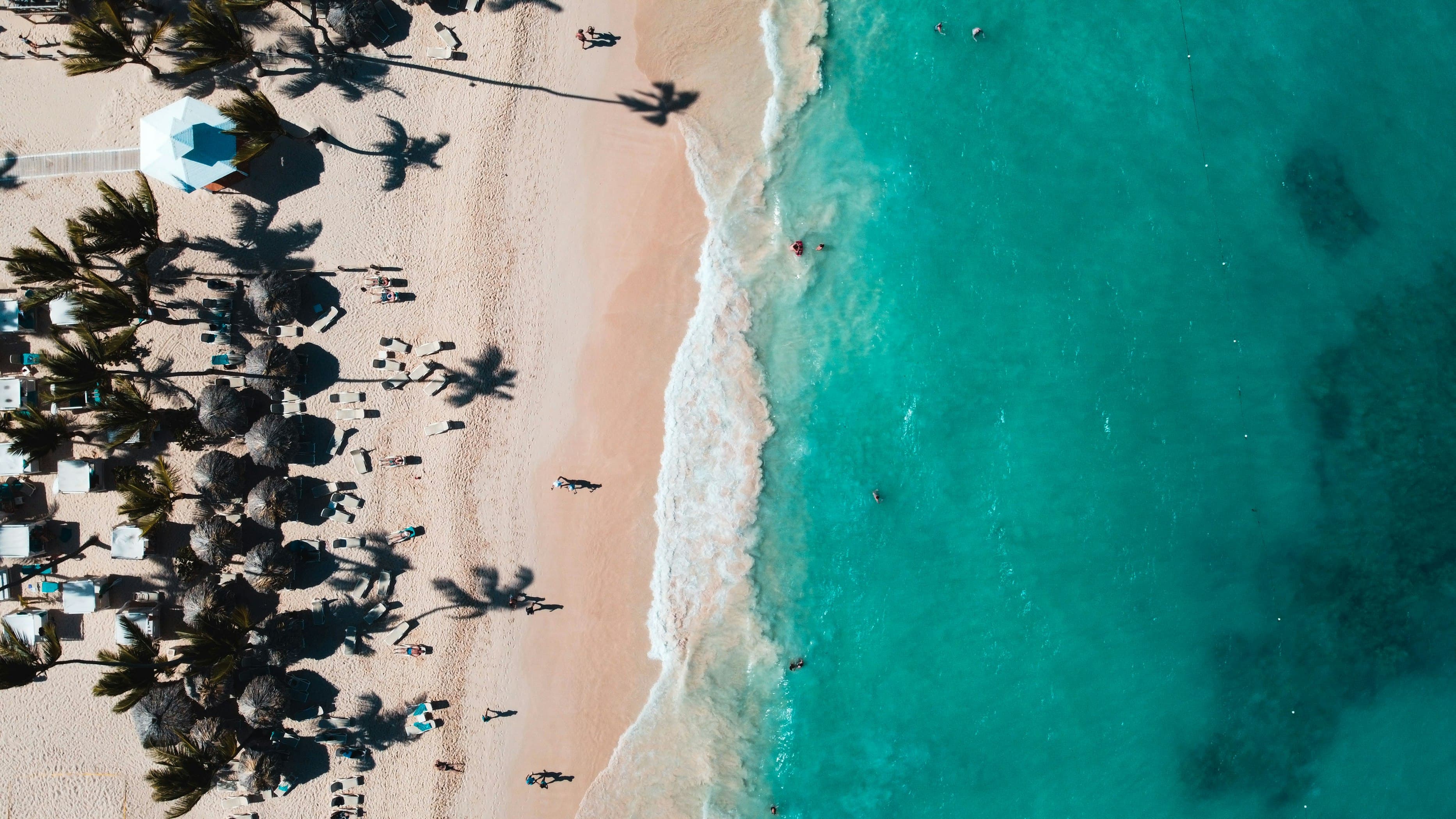
Calm water along this coast (Bávaro faces the Atlantic, Bayahíbe the Caribbean Sea), usually good underwater visibility, minimal sargassum (the seaweed problem peaks later in summer). Bávaro Beach is picture-perfect. Bayahíbe and the Isla Saona excursion are at their best, clear water, white sand, postcard conditions.
North Coast (Puerto Plata, Cabarete, Sosúa)
The north coast sees slightly larger swells from the Atlantic trade winds. Cabarete is in its element, March winds are perfect for kiteboarding and windsurfing, attracting an international community of riders. Swimming is fine at Sosúa Bay (sheltered) and Playa Dorada (reef-protected). Strong swimmers will enjoy the energy of the north coast surf.
Samaná
Beaches like Playa Rincón and Playa Las Terrenas are beautiful, but swimming conditions vary; one side of the former has calm waters, while its northern side has rolling waves. Water temperature is warm enough for extended swimming. The bonus is combining a morning whale watching trip with an afternoon at the beach, an experience also available in January and February.
South Coast
The southwest coast, Barahona, Pedernales, Bahía de las Águilas, is the Dominican Republic's wild frontier, and March conditions are ideal for exploring it. The roads are dry (critical for the unpaved stretches to Bahía de las Águilas), the sea is calm, and the dramatic landscapes where desert meets ocean are at their most photogenic. This region sees almost no international tourists even in peak season; in March, you may have entire beaches entirely to yourself.
Where to Go in March
Samaná, Whales + Beaches + No Spring Breakers
The best March destination if you want nature, quiet, and the last chance to see humpback whales. Combine whale watching with waterfall hikes (Salto El Limón), pristine beaches, and the relaxed European-influenced food scene in Las Terrenas.
Punta Cana, If You Can Dodge Spring Break
Still offers perfect weather and beach conditions. Choose a resort known for a quiet atmosphere, and check its party programming before booking. Cap Cana is an excellent alternative, gated, exclusive, and largely insulated from the spring break scene.
Puerto Plata & Cabarete, Active Adventures
March winds make Cabarete the top kiteboarding destination in the Caribbean. Even if you don't kite, the town's international vibe, beach bars, and adventure activities (27 Waterfalls, monkey jungle) make it a strong March pick. The cable car up Mt. Isabel de Torres has been closed since June 2024. Plus, zero spring break energy.
Santo Domingo, If Semana Santa Falls in March
The capital's Holy Week processions through the Zona Colonial are somber, beautiful, and culturally rich. If your trip overlaps with Semana Santa, spending a few days in Santo Domingo gives you an authentic window into Dominican religious and cultural life.
Bayahíbe & La Romana, Quiet Caribbean
For travelers who want the calm Caribbean experience without Punta Cana's scale, the Bayahíbe-La Romana corridor is ideal in March. The fishing village of Bayahíbe is the launching point for Isla Saona day trips, a sandbar-ringed island with water so clear and shallow you can walk 200 meters offshore. March water clarity is exceptional here, making it the best month for snorkeling the reef systems. Casa de Campo in La Romana offers world-class golf (Teeth of the Dog course), a marina village, and the artists' colony of Altos de Chavón perched above the Chavón River. Hotel rates in this area are 10-15% lower than equivalent properties in Punta Cana.
What to Pack
- Standard dry-season gear: lightweight clothes, sunscreen SPF 50+, hat, sunglasses
- Reef-safe rash guard or swim shirt: the UV in March is extreme and you will spend hours in the water
- Waterproof bag or dry bag: for whale watching and boat excursions
- Motion sickness tablets: Samaná Bay can be choppy, especially in March winds
- Light rain layer: late March occasionally brings a brief afternoon shower. A packable rain jacket takes up no space
- Kite/windsurf gear: if you are heading to Cabarete. Rental is also available on-site
March Price Guide
March pricing is peak-season territory, with some nuance:
- All-inclusive (Punta Cana, 4-star): US$230-340/night per couple (slightly below January-February due to spring break segmenting demand)
- Adult-only resort: US$280-420/night per couple (adults-only status does not guarantee a quiet atmosphere)
- Boutique hotel (Samaná): US$100-170/night
- Budget accommodation: US$40-70/night
- Whale watching excursion: US$50-70/person
- 27 Waterfalls (Damajagua) excursion: US$40-60/person
- Kiteboarding lesson (Cabarete): from about US$200 per person for a 3-hour beginner lesson with equipment
Late March generally sees prices begin a gradual decline as the calendar approaches shoulder season. If Semana Santa falls in March, domestic demand pushes prices back up for that specific week.
Pros & Cons
Pros
- Excellent dry season weather with slightly warmer temperatures than January-February
- Last month of humpback whale watching in Samaná
- Outstanding beach conditions across all coasts
- Prime kiteboarding and windsurfing conditions on the north coast
- Late March begins the transition to lower prices
- Semana Santa (if in March) offers unique cultural immersion
Cons
- Spring break crowds can dominate Punta Cana's party-oriented resorts
- Still peak season pricing for most of the month
- Whale watching season is ending, late March sightings are less reliable
- Semana Santa (if in March) means heavy domestic travel and crowded beaches
- Flights remain expensive from North America
Frequently Asked Questions
Is March too crowded in the Dominican Republic?
It depends where you go. Punta Cana during spring break weeks is genuinely crowded, especially at party-focused all-inclusives. Samaná, Santo Domingo, and the north coast are significantly calmer. If you book a resort known for a quiet atmosphere or stay outside the Bávaro corridor, March crowds are manageable. After mid-March, tourist numbers begin declining gradually.
Is it still possible to see whales in late March?
Yes, but with diminishing returns. Early March offers strong whale watching, similar to February. By mid-March, the population starts thinning as whales begin migrating north. Late March (after the 20th) is hit-or-miss, some days you will see multiple whales, other days just a distant spout. If whales are your primary goal, aim for the first half of March or visit in February instead.
Should I avoid March because of spring break?
Not at all, just plan around it. Spring break primarily affects Punta Cana's party resorts. Adults-only properties can also cater to the party crowd, so check the atmosphere before booking. March weather is beautiful, and the slight price dip in late March makes it a strategic time to visit. The trick is hotel selection, not month avoidance.
Facts on this page were last checked against their sources on . How we check
Table of Contents
Punta Cana
This guide covers Punta Cana. Explore more about this destination.
View DestinationAbout the Author
Alex Borshch
Founder and editor of the Isla365 network. Spent six months living in the Dominican Republic over the 2013-14 winter, and has since wintered in Thailand, Vietnam and Turkey. Writes and edits the guides across the network.