80+ Dominican Spanish Slang Words and Phrases
The words Dominicans actually use, grouped by where you'll hear them: the colmado, the guagua, the beach bar. Plus the dropped-S rule that hides half of them.
Dominican Spanish is to standard textbook Spanish what Scottish English is to a BBC newsreader: technically the same language, practically a different experience. If you studied Spanish in school or learned from a Mexican or Colombian speaker, prepare to have about 60% of what you know work perfectly and the other 40% leave you blinking in confusion at a colmado counter while the guy behind you orders a "fría" and you have no idea what just happened.
This guide is not a Spanish textbook. It is a survival manual for the specific phrases, slang, and pronunciation patterns you will encounter on the ground in the Dominican Republic, from the moment you land at the airport to the late-night bachata bar where someone leans over and says "Dímelo, mami."
Why Dominican Spanish Is Different
Dominican Spanish belongs to the Caribbean Spanish family, which also includes Cuban and Puerto Rican Spanish. It developed in relative isolation, influenced by Taíno indigenous languages, West African languages brought by enslaved people, and waves of immigration from Spain's Canary Islands (not Castile, this matters linguistically).
Key Characteristics
- The dropped S: Dominicans routinely drop or aspirate the letter S, especially at the end of syllables. "Estamos listos" becomes "Ehtamoh lihtoh." This is the single biggest adjustment for Spanish learners.
- Speed: Dominican Spanish is among the fastest-spoken varieties of Spanish. Words blend together. "¿Para dónde vas?" becomes "¿Pa'ónde va'?"
- L and R swap: In some regions (especially Santo Domingo and the east), R at the end of a syllable can sound like L: "Puerto" becomes "puelto," "comer" becomes "comel." In the Cibao around Santiago it often turns into an i sound instead: "comei." These changes are called lambdacismo (R to L) and vocalization (R to an i sound).
- Unique vocabulary: Dozens of words used daily in the DR are unknown in other Spanish-speaking countries. A guagua is a bus in the DR but a baby in Chile. A china is an orange in the DR (and in Puerto Rico) but a Chinese woman in most other places.
- Formal vs. informal: Dominicans use "tú" (informal you) freely, often even with people they have just met, though "usted" (formal you) is still common with elders and officials.
Essential Greetings & Phrases
Greetings
- ¿Qué lo que? (Keh-lo-keh): The quintessential Dominican greeting. Literally "What's what?" but means "What's up?" Used constantly between friends and acquaintances. Often shortened to "Klk" in text messages.
- Dímelo (DEE-meh-lo): "Tell me", used as a greeting meaning "Hey, what's up?" or "Talk to me." You will hear this a hundred times a day.
- ¿Cómo tú tá? (KO-mo too TAH): Dominican version of "¿Cómo estás?" (How are you?). Note the dropped S and the word order, "tú tá" instead of "estás tú."
- Todo bien / To' bien (TO BYEN): "Everything's good", the standard response to any greeting.
- Buenas (BWEH-nah): Short for "buenas tardes" or "buenas noches." Used any time of day as a casual hello when entering a shop, colmado, or room.
- ¿Y lo mío? (ee lo MEE-oh): Literally "And mine?", a playful greeting between close friends meaning "Where's my share?" or "What about me?"
Essential Polite Phrases
- Por favor (por fah-VOR): Please, works everywhere, always appreciated
- Gracias (GRAH-syah): Thank you (note: the S is often dropped)
- Con permiso (con per-MEE-so): Excuse me (when passing through a crowd)
- Disculpe (dee-SKOOL-peh): Excuse me / I'm sorry (more formal, to get attention)
- No entiendo (no en-TYEN-do): I don't understand
- ¿Habla inglés? (AH-blah een-GLEH): Do you speak English? (Useful but try Spanish first, the effort is always appreciated)
- Estoy perdido/perdida (eh-TOY per-DEE-do/dah): I'm lost (male/female)
Restaurant & Food Ordering Phrases
Eating in the DR, especially outside of resorts, is where your Spanish gets a real workout. Here are the phrases that matter:
- La cuenta, por favor: The check, please
- ¿Qué me recomienda? (keh meh reh-ko-MYEN-dah): What do you recommend?
- Quiero la bandera (KYEH-ro la ban-DEH-rah): "I want the flag", orders the national dish of rice, beans, meat, and salad. Check the restaurant's menu for availability and price.
- Sin picante (seen pee-KAN-teh): Without spicy (Dominican food is rarely very spicy, but some sauces are)
- Una fría (OO-nah FREE-ah): "A cold one", orders a cold beer (usually Presidente). This is the most common way to order beer in the DR.
- Un jugo de chinola (oon HOO-go deh chee-NO-lah): A passion fruit juice. Chinola is the Dominican word for passion fruit (not maracuyá, which is used elsewhere).
- Dame un morir soñando (DAH-meh oon mo-REER so-NYAN-do): Give me a morir soñando, the beloved Dominican drink of orange juice, milk, sugar, and ice. Literally "to die dreaming."
- ¿Tiene concón? (TYEH-neh kon-KON): Do you have concón?, the crispy rice crust from the bottom of the pot. This is a Dominican delicacy and it runs out fast at lunch.
- Está buenísimo (eh-TAH bweh-NEE-see-mo): This is delicious, say this to your server and they will light up
- La propina está incluida (lah pro-PEE-nah eh-TAH een-kloo-EE-dah): The tip is included, Dominican restaurants legally add a 10% service charge (propina legal). Check your bill before adding more.
Transportation Phrases
- ¿Cuánto cuesta hasta...? (KWAN-toh KWEH-stah AH-stah): How much to...? Essential for taxis since they don't use meters.
- Llévame a... (YEH-vah-meh ah): Take me to... (direct, works with any driver)
- Para aquí, por favor (PAH-rah ah-KEE): Stop here, please, for guaguas (minibuses) and taxis
- ¿Dónde está la parada? (DON-deh eh-TAH lah pah-RAH-dah): Where is the bus stop?
- Derecho (deh-REH-cho): Straight ahead
- A la izquierda / A la derecha: To the left / To the right
- Muy caro (MOO-ee KAH-ro): Too expensive, essential for taxi negotiation
- Voy pa'l centro (voy pal SEN-tro): I'm going to the center (of town), common guagua phrase
Shopping & Bargaining Phrases
- ¿Cuánto cuesta? / ¿A cómo? (ah KO-mo): How much? The second version is more Dominican and casual.
- ¿Pesos o dólares? (PEH-sos oh DO-lah-reh): Pesos or dollars? ALWAYS ask this before agreeing to a price in tourist areas. See our currency guide for more on avoiding the currency confusion scam.
- Muy caro. ¿Me da un descuento? (meh dah oon deh-KWEN-toh): Too expensive. Can you give me a discount?
- Nada más, gracias (NAH-dah mahs GRAH-syah): Nothing else, thanks, to politely stop a vendor
- Solo estoy mirando (SO-lo eh-TOY mee-RAN-doh): I'm just looking, useful in Mercado Modelo and souvenir shops
- ¿Tiene uno más barato? (TYEH-neh OO-no mahs bah-RAH-to): Do you have a cheaper one?
Dominican Slang Dictionary: 27 Words
These are the words that will make you sound, or at least understand, like a local. They are used constantly in daily conversation.
- Vaina (VAI-nah): THE most Dominican word. Literally "thing" but used for absolutely anything. "Pásame esa vaina" (Pass me that thing). "¡Qué vaina!" (What a situation!). "¡Esa vaina tá buena!" (That thing is great!). A Dominican can hold an entire conversation using "vaina" as every other noun.
- Tíguere / Tigre (tee-GWEH-reh / TEE-greh): Literally "tiger." Means a streetwise, clever person, someone who knows how to hustle. Can be a compliment or warning depending on context. "Ese tipo es un tíguere" can mean he's clever or he's a hustler.
- Chin / Un chin (oon CHEEN): A little bit. "Dame un chin de agua" (Give me a little water). Extremely common.
- Colmado (kol-MAH-do): Corner store / bodega. Colmados are the social hub of Dominican neighborhoods, they sell everything, play loud music, and serve as impromptu bars. There are over 50,000 colmados in the DR.
- Guagua (GWAH-gwah): Minibus / public bus. NOT a baby (which is what guagua means in Chile and some other countries). "Voy en la guagua" means "I'm taking the bus."
- Motoconcho (mo-to-KON-cho): Motorcycle taxi. The cheapest and most dangerous form of transportation.
- Concho (KON-cho): Shared taxi or minibus that follows a fixed route. Cheap but crowded.
- Pana / Mi pana (mee PAH-nah): Friend / buddy. "¿Qué lo que, mi pana?" (What's up, buddy?)
- Tranquilo/a (tran-KEE-lo/lah): Calm, relaxed, chill. Used as reassurance: "Tranquilo, todo bien" (Relax, everything's fine).
- Mami / Papi (MAH-mee / PAH-pee): NOT referring to your parents. Dominicans use these as casual terms of address for any woman/man, often flirtatiously. Your taxi driver might call you "mami" or "papi." It's cultural, not creepy (usually).
- Jevi / Jevy (HEH-vee): Cool, nice, good. From the English "heavy." "La fiesta está jevi" (The party is cool).
- Vacano/a (vah-KAH-no): Awesome, great, cool. "¡Qué vacano!" (How awesome!)
- Aplatanado/a (ah-plah-tah-NAH-do): Literally "plantained", means someone (usually a foreigner) who has become Dominicanized. "Tú ya tá aplatanado" (You're already one of us).
- Yipeta (yee-PEH-tah): SUV or truck. From "Jeep." Dominicans call almost any SUV a yipeta regardless of brand.
- Mangú (man-GOO): Mashed plantain, the base of a Dominican breakfast. Read more about mangú.
- Pariguayo (pah-ree-GWAH-yo): Someone who is lame, awkward, or uncool. Allegedly derived from "party watcher", the person at the party who just watches instead of dancing.
- Chapear (chah-peh-AR): To get money from men; related to chapeadora, a woman who takes money from men.
- Chercha (CHER-chah): A joke, something funny, good times. "Eso es chercha" (That's hilarious).
- Coro (KO-ro): A group hangout, a fun gathering. "¿Hay coro esta noche?" (Is there a hangout tonight?)
- Dar cotorra (dar ko-TO-rah): To chat, to talk someone up, to sweet-talk.
- Joder (ho-DER): To bother or annoy. Less vulgar in Dominican usage than in Spain. "No me jodas" (Don't bother me).
- Fuñir (foo-NYEER): To bother or get in the way of something or someone.
- Guapo/a (GWAH-po): In most Spanish, this means handsome/pretty. In Dominican Spanish, it ALSO means angry. "Ella está guapa" could mean she looks pretty or she's furious. Context is everything.
- Chele (CHEH-leh): A cent, the smallest unit of currency. "No tengo un chele" (I don't have a cent).
- Desgraciao (deh-grah-SYAO): A scoundrel, someone who behaves badly. The "do" is dropped from "desgraciado", typical Dominican contraction.
- Tato (TAH-to): Okay, alright, agreed. "¿Nos vemos a las 8?" "Tato." (See you at 8? Alright.)
- Coño (KO-nyo): An exclamation expressing surprise, frustration, or emphasis. Used constantly. "¡Coño, qué calor!" (Damn, it's hot!).
Pronunciation Tips: The Dropped S
The single most important thing to understand about Dominican pronunciation is the aspirated or dropped S. Once you train your ear for it, Dominican Spanish goes from incomprehensible to manageable.
How It Works
- End of syllable S becomes H sound or silence: "Estamos" becomes "Ehtamoh." "¿Cómo estás?" becomes "¿Cómo ehtáh?"
- End of word S dropped entirely: "Buenos días" becomes "Bueno día." "Gracias" becomes "Gracia."
- Before consonants: "Esto" becomes "Ehto." "Pescado" becomes "Pehcao."
Other Pronunciation Patterns
- Final D dropped: "Ciudad" becomes "Ciuda." "Verdad" becomes "Verdá." "Usted" becomes "Uhté."
- -ado becomes -ao: "Cansado" becomes "Cansao." "Pescado" becomes "Pescao." This happens in fast speech across the Caribbean but is especially strong in the DR.
- R becomes L or I by region: "Comer" becomes "Comel" and "Puerta" becomes "Puelta" mostly in Santo Domingo and the east, while in the Cibao you are more likely to hear "Comei" and "Pueita." These are tendencies, not strict borders.
- Speed: Dominicans speak fast. Do not be afraid to say "Más lento, por favor" (Slower, please). No one will be offended.
Common Misunderstandings
- "Ahora" vs. "Ahorita" vs. "Ahora mismo": In textbook Spanish, "ahora" means "now." In Dominican Spanish these words are elastic: "ahora" and "ahorita" can mean soon, later, or even a little while ago, depending on context. "Ahora mismo" is the safest way to say "right now." If someone says "ahora vengo" (I'm coming now), do not assume they mean this minute.
- "Mami" and "Papi": Foreigners sometimes misinterpret these as romantic advances. They are standard terms of address used by everyone, your taxi driver, the woman at the pharmacy counter, your server at a restaurant. Think of them as "honey" or "dear" in American Southern culture.
- "China" means orange: If someone offers you a "china," they are offering an orange, not making a racial reference. This catches many English speakers off guard.
- "Gringo" is not always derogatory: In the DR, "gringo" refers to any foreigner, not specifically Americans. It is used neutrally or affectionately more often than pejoratively. "Mi gringo" from a local friend is a term of endearment.
- "Gringo pricing": You may hear this term, it refers to the inflated prices some vendors and taxi drivers quote to foreigners. It is a real phenomenon. Learning enough Spanish to negotiate and asking "¿A cómo sale?" instead of "How much?" signals that you are not a fresh-off-the-plane tourist.
Pickup Lines (To Understand or Avoid)
Dominicans are famously forward when it comes to flirting. Knowing these phrases helps you understand what is being said, and decide how to respond.
- "¡Qué buena tú tá!" (keh BWEH-nah too TAH): "You look good!", the most common catcall. Not subtle.
- "¡Dios mío, bendición!" (DYOS MEE-oh ben-dee-SYON): "My God, a blessing!", delivered as a compliment when someone attractive walks by.
- "¿Tú tienes novio/novia?" (too TYEH-neh NO-vyoh): "Do you have a boyfriend/girlfriend?", the opening move.
- "Te invito a un trago" (teh een-VEE-toh ah oon TRAH-go): "I'll buy you a drink", standard bar approach.
- "Tú me gusta mucho" (too meh GOO-stah MOO-cho): "I like you a lot", delivered with alarming speed by Dominican standards.
If you want to decline: "No gracias, estoy bien" (No thanks, I'm fine) works politely. "Tengo novio/novia" (I have a partner) is the nuclear option that usually ends the conversation. Don't be alarmed by directness, it is cultural and usually harmless. A firm, smiling "no" is respected.
Learning Resources
- YouTube, "Dominican Spanish 101" channels: Search for channels by Dominican creators who teach the slang and accent specifically. "Speaking Latino" offers resources specifically for Dominican Spanish.
- Pimsleur, Latin American Spanish: The audio-based method is excellent for getting pronunciation right before you travel. It teaches standard Latin American Spanish, not Dominican specifically, but builds a strong foundation.
- Tandem or HelloTalk apps: Connect with Dominican Spanish speakers for language exchange. Specify that you want to practice with Dominicans specifically, not just any Spanish speaker.
- Dominican music: Listen to bachata and merengue lyrics. Artists like Romeo Santos, Prince Royce, and Juan Luis Guerra use everyday Dominican Spanish. Follow along with lyrics sites.
- Colmado immersion: Once in the DR, the best language school is a colmado. Buy a Presidente, sit at the counter, and listen. You will learn more Dominican Spanish in one evening at a colmado than in a month of Duolingo.
Frequently Asked Questions
Can I get by with English in the Dominican Republic?
At resorts, absolutely, staff at all-inclusive hotels in Punta Cana, Puerto Plata, and La Romana speak English fluently. In tourist areas of the Zona Colonial in Santo Domingo, you will find English speakers at restaurants and shops on Calle El Conde. Outside of tourist infrastructure, at colmados, guagua stops, local restaurants, and in smaller towns, English is rarely spoken. Even basic Spanish makes a tremendous difference in how locals receive you.
What is the single most useful Dominican Spanish word to learn?
"Vaina." It means everything and nothing. Need to point at something you don't know the name of? "Pásame esa vaina" (Pass me that thing). Frustrated? "¡Qué vaina!" (What a hassle!). Impressed? "Esa vaina tá buena" (That thing is great). It is a universal noun filler that will get you through any situation where you lack the specific vocabulary. The other essential is "un chin" (a little bit), you can moderate any request by adding it. "Un chin de azúcar" (a little sugar), "un chin más barato" (a little cheaper).
Is Dominican Spanish hard to understand compared to other varieties?
Yes, honestly. The speed, the dropped S sounds, the regional L-R swaps, and the heavy slang make Dominican Spanish one of the more challenging varieties for learners. If you learned Spanish from Mexican or Colombian speakers (the most common Latin American varieties taught in the U.S.), the Dominican accent will throw you off initially. The good news: after 2-3 days of immersion, your ear adjusts. Dominicans are also patient and genuinely delighted when foreigners try to speak Spanish, they will slow down if you ask ("Más lento, por favor") and will cheerfully teach you slang if you show interest.
How do you say hello in Dominican Spanish?
The standard greeting is "Hola," but Dominicans most often greet each other with "¿Qué lo que?" (literally "what's what," used like "what's up?"), frequently shortened to "¿Klok?" Mornings bring "Buenos días," and a casual "¿Cómo tú ta?" (how are you?) is everywhere. Notice the dropped S and the pronoun placed before the verb, two hallmarks of Dominican Spanish.
How do you say thank you in the Dominican Republic?
"Gracias" works everywhere. To sound local, add warmth: "Gracias, mi hermano" or "mi hermana" (thanks, my brother or sister), and you will often hear "¡Que Dios te bendiga!" (God bless you) in return, especially from older Dominicans. For everyday exchanges, a simple "tá bien, gracias" is perfectly natural.
How do you say "how are you" in Dominican Spanish?
Textbook "¿Cómo estás?" is understood, but Dominicans say "¿Cómo tú ta?" (pronoun before the verb, dropped S in "está"). Even shorter, "¿Qué lo que?" doubles as "how are you." Typical replies are "Todo bien" or the cheerful "Aquí, en la lucha" (here, in the struggle), a very Dominican way to say you are getting by.
What does "¿Qué lo que?" mean?
It is the signature Dominican greeting, literally "what is it that," used exactly like "what's up?" You will hear it constantly, often slurred to "¿Klok?" or stretched to "¿Qué lo que, loco?" Good replies include "Todo bien," "Aquí tranquilo," or simply bouncing it back with "¿Y tú, qué lo que?"
How do you say goodbye in Dominican Spanish?
"Adiós" and "Chao" are both standard. More casually, Dominicans say "Nos vemos" (see you) or "Cuídate" (take care). Among friends, the slangy "Ya tú sabe" (you already know) works as a relaxed sign-off.
Is it "tú" or "usted" in the Dominican Republic?
Dominicans lean heavily on the informal "tú," even with people they have just met, more than in many other Spanish-speaking countries. Keep "usted" for elders, officials, or to show extra respect, but you will rarely give offense with "tú." And remember the very Dominican habit of placing the pronoun before the verb: "¿Cómo tú ta?" rather than "¿Cómo estás tú?"
Table of Contents
Santo Domingo
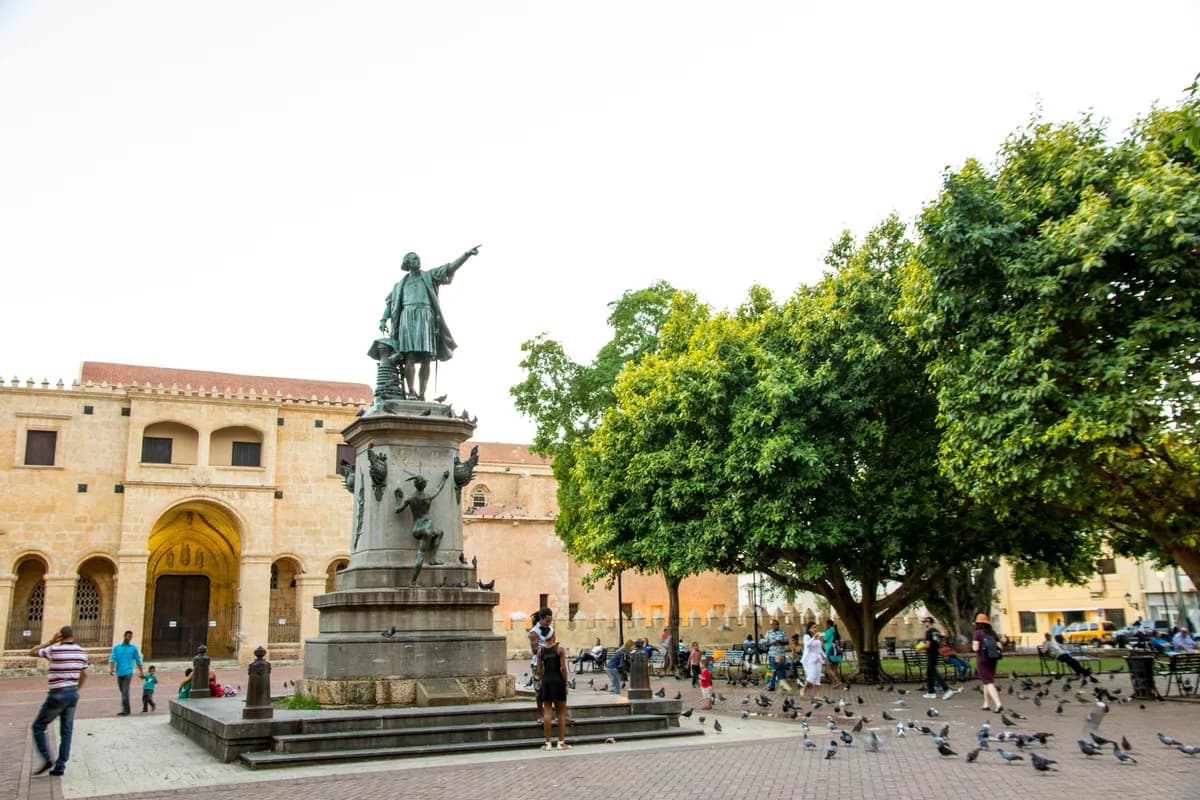
This guide covers Santo Domingo. Explore more about this destination.
View DestinationAbout the Author
Alex Borshch
Founder and editor of the Isla365 network. Spent six months living in the Dominican Republic over the 2013-14 winter, and has since wintered in Thailand, Vietnam and Turkey. Writes and edits the guides across the network.