Jarabacoa & Constanza: DR Mountain Escape Guide
Jarabacoa and Constanza mountain guide to waterfalls, white water rafting, Pico Duarte treks, and strawberry farms most visitors never discover.
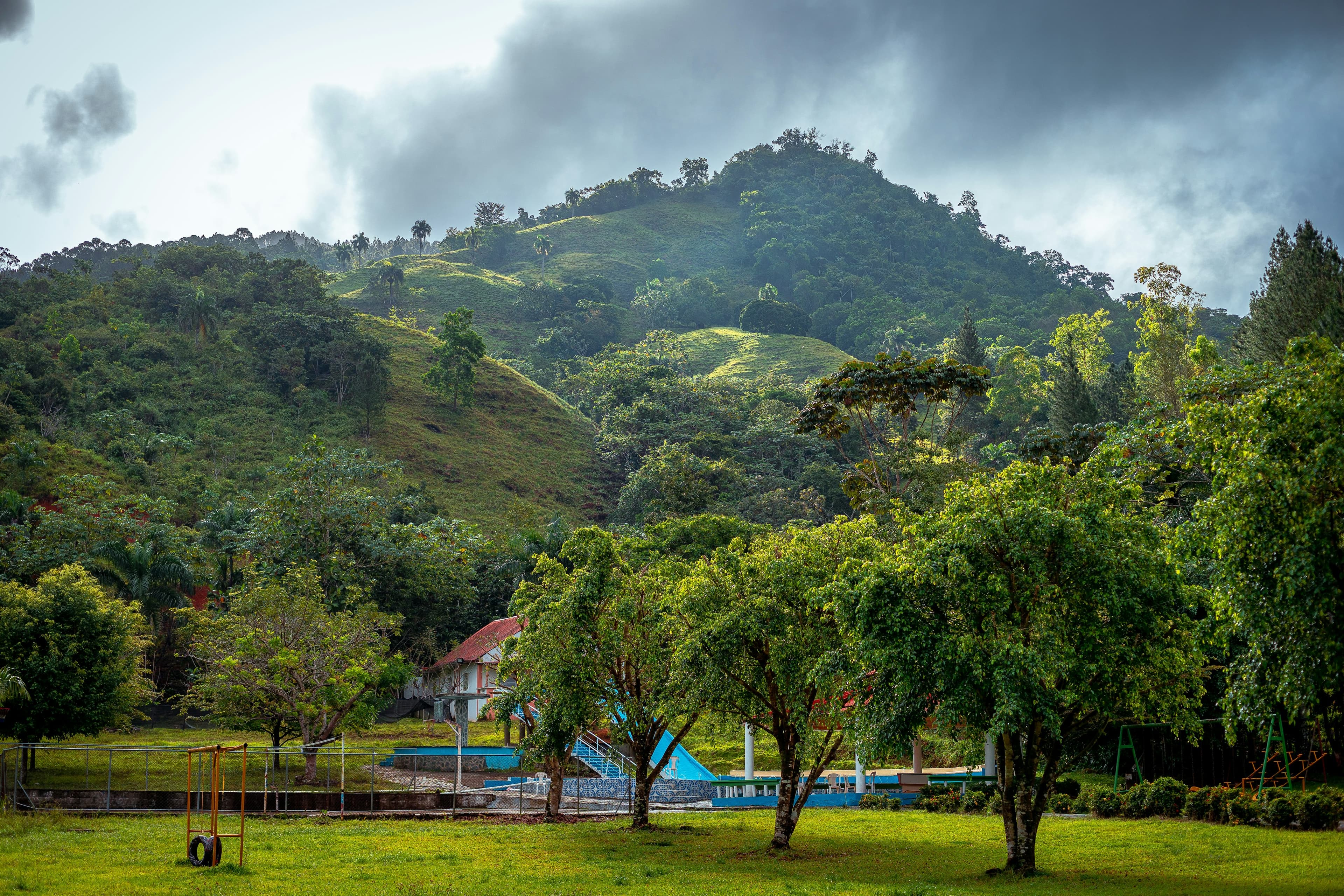
Somewhere between the third waterfall hike and pulling on a hoodie at 8 PM, it hits you: this is still the Dominican Republic. Not the one from the travel brochures, no white sand, no turquoise water, no swim-up bar. This is the other Dominican Republic, the one tucked into the Cordillera Central at 500-2,000 meters above sea level, where rivers rush through pine forests, farmers grow strawberries and lettuce in cool volcanic soil, and the air smells like woodsmoke and coffee blossoms.
Jarabacoa and Constanza are the mountain towns that most beach-bound visitors never discover. Together they form the adventure and agricultural heart of the Dominican Republic, a region where you can raft Class III rapids in the morning, tour a coffee plantation at lunch, hike to a 100-meter waterfall in the afternoon, and sleep under a blanket (an actual blanket, in the Caribbean) at night. If you have already done Punta Cana and Samaná and think you know the DR, these mountains will reset every assumption.
Why the Mountains
The Cordillera Central is the highest mountain range in the Caribbean. Pico Duarte, at 3,098 meters, is the tallest peak in the entire West Indies, higher than anything in Cuba, Jamaica, or Puerto Rico. The range creates its own microclimate: cool temperatures (15-25°C in Jarabacoa, 8-22°C in Constanza), regular rainfall that keeps everything impossibly green, and a growing season that produces vegetables, flowers, and coffee that supply the entire country.
For travelers, the mountains offer three things the coast cannot: genuine cool weather (a relief after days of Caribbean heat), adrenaline-pumping outdoor activities (rafting, paragliding, canyoning, Pico Duarte treks), and an agricultural landscape that feels more like the highlands of Colombia or Costa Rica than a Caribbean island. The towns are Dominican to the core, la bandera for lunch, bachata from every colmado, baseball on every television, but the setting is utterly unexpected.
The mountain region is also significantly less touristy than the coast. Jarabacoa gets some weekend visitors from Santo Domingo (it is the capital's escape valve when the city overheats), and Constanza is even quieter. You will not find menus in English, all-inclusive packages, or airport shuttles. What you will find is genuine Dominican hospitality in a setting that challenges every Caribbean cliché.
Jarabacoa: The Adventure Capital
Jarabacoa (population ~70,000) sits at 530 meters in a lush valley where the Río Yaque del Norte, the longest river in the Dominican Republic, and the Río Jimenoa converge. The town is the self-proclaimed "City of Eternal Spring" (Ciudad de la Eterna Primavera), and the claim is fair: daytime temperatures hover around 22-28°C year-round, dropping to 15-18°C at night. In the rainy months (May-November), afternoon showers are common but brief, followed by dramatic sunsets over the valley.
The town center is compact and walkable. Calle Duarte and Calle Independencia form the main commercial area, with banks, restaurants, a few small hotels, and a Parque Central where old men play dominoes under almond trees. The adventure outfitters and eco-lodges are scattered in the surrounding valley, most accessible by car or motoconcho. Jarabacoa feels distinctly middle-class Dominican, neither the poverty of rural countryside nor the wealth of Santo Domingo's Piantini district. It is the kind of town where the hardware store owner also runs a small rafting operation on weekends.
The Waterfalls
The mountains around Jarabacoa are laced with rivers and waterfalls. Three are essential:
Salto de Jimenoa
The most accessible and most visited waterfall near Jarabacoa. Salto de Jimenoa drops approximately 40 meters into a wide pool surrounded by lush vegetation. The approach involves a series of wooden bridges and staircases through the forest, scenic but slippery when wet. Swimming is limited to the lower portions of the river along the shallow banks, not the main waterfall pools. A small entrance fee of RD$100 (US$1.70) is collected at the trailhead. The hike takes about 20 minutes each way. Go early morning for the best light and fewer visitors. There are two Jimenoa falls, Jimenoa Uno (the more dramatic) and Jimenoa Dos (easier to reach). Most visitors see Jimenoa Uno.
Salto Baiguate
Salto Baiguate drops 25 meters into a deep natural pool. The hike is about 30 minutes from the parking area, following a river path through coffee and cacao groves. The setting is more dramatic than Jimenoa, the falls crash into a gorge flanked by moss-covered rocks and giant ferns. Swimming here is exhilarating. The trailhead is about 4 km from Jarabacoa town center (RD$100-200 / US$1.70-3.50 by motoconcho). Entrance fee: RD$50 (US$0.85). A local guide is optional but helpful for navigating the unmarked trail (RD$300-500 / US$5-8.50 tip expected).
Salto de Aguas Blancas
Located between Jarabacoa and Constanza, Aguas Blancas is the most spectacular waterfall in the Dominican Republic. The falls cascade approximately 83 meters over a sheer cliff face into a misty pool below. The hike to the base is about 45 minutes from the road, through dense montane forest. The last section is steep and requires some scrambling, not recommended for young children or anyone with mobility issues. The reward is a waterfall of genuinely awe-inspiring scale. The access road turns off the Jarabacoa-Constanza highway and is paved but narrow. Entrance fee: RD$100 (US$1.70). Bring a waterproof jacket, the mist from the falls soaks everything within 50 meters.
Adventure Sports
White Water Rafting
White water rafting is available here. The Río Yaque del Norte offers 12 km of Class II-III rapids through a forested valley, not the Colorado River, but a genuinely exciting ride with real rapids, real waves, and real chances of falling in. The season runs year-round, with the biggest water from May through November (rainy season). A half-day rafting trip costs RD$2,000-3,500 (US$34-59) per person including transport, equipment, and guide. Rancho Baiguate and Jarabacoa River Club are the two main operators, both have been running trips for 20+ years with solid safety records. No experience is necessary; guides provide thorough instruction. Minimum age is typically 12.
Paragliding
The valley thermals around Jarabacoa create excellent conditions for paragliding, and tandem flights are available for beginners. You launch from a hillside above the valley and soar for 15-25 minutes, with views of the Cordillera Central, the river valleys, and on clear days, the distant coastline. A tandem flight costs RD$3,500-5,000 (US$59-85) per person. Flying Tony is the most experienced operator, run by a Dominican-American pilot with decades of experience. Flights operate year-round but are weather-dependent, morning is usually best for stable thermals.
Canyoning & Tubing
Several operators offer canyoning excursions (rappelling down waterfalls and through gorges) in the Jimenoa and Baiguate river systems. These are more adventurous than the standard waterfall hikes and involve getting thoroughly wet. Canyoning trips with this operator start from US$75.00 per person. River tubing on the Yaque del Norte is a mellower alternative, you float on an inner tube through gentle Class I-II sections. Tubing costs RD$800-1,500 (US$13.50-25) for a 2-hour float. Both activities are best in the wet season when water levels are higher.
Horseback Riding
The mountains around Jarabacoa are laced with trails through coffee farms, pine forests, and river valleys. Horseback riding is a traditional way to explore, and several ranches offer guided rides from 1 hour (RD$800-1,200 / US$13.50-20) to full-day expeditions with lunch. Rancho Baiguate offers the most organized horseback trips, combining riding with visits to waterfalls and agricultural areas.
Pico Duarte
At 3,098 meters, Pico Duarte is the highest point in the Caribbean. Summiting it is a bucket-list accomplishment and the most challenging trek in the Dominican Republic, but it does not require technical climbing skills. The standard route from La Ciénaga (near Jarabacoa) is approximately 23 km each way, typically done as a 3-day/2-night trip with a guide, mules to carry equipment, and camping at two established sites.
The Trek
- Day 1: Drive from Jarabacoa to La Ciénaga (1 hour). Begin the hike to the first campsite at La Compartición (altitude ~2,400m). Distance: approximately 18 km. Hiking time: 5-7 hours. The trail passes through subtropical forest, then pine forest as you gain altitude.
- Day 2: Pre-dawn departure for the summit (11 km round trip from camp). Sunrise from the peak, on a clear day, you can see both the Caribbean Sea and the Atlantic Ocean. Return to La Compartición or push through to La Ciénaga.
- Day 3: Hike back to La Ciénaga and drive to Jarabacoa.
Logistics
A guide is mandatory (park regulation). All-inclusive packages including guide, mules, food, and camping equipment cost RD$12,000-18,000 (US$200-300) per person for the 3-day trip. Rancho Baiguate and Iguana Mama (based in Cabarete) are the most professional operators. The best months are December-March (driest, clearest views). The trail is open year-round but can be muddy and cold in the rainy season. Temperatures at the summit drop below 0°C at night year-round, pack for winter camping.
Constanza: The Coldest City
Constanza (elevation 1,200m) is the highest city in the Caribbean and one of the most unusual places in the Dominican Republic. Set in a broad, fertile valley surrounded by mountains on all sides, Constanza looks and feels more like the Guatemalan highlands than the Caribbean. The climate is genuinely cold by Dominican standards, winter nights regularly drop to 5-10°C, and frost has been recorded in Valle Nuevo above the city. Dominicans from Santo Domingo and the coast drive up for the novelty of seeing their breath in the morning air.
The valley is the agricultural engine of the country, producing 80% of the Dominican Republic's vegetables, strawberries, lettuce, cabbage, carrots, garlic, potatoes, and flowers. The landscape is a patchwork of cultivated fields, greenhouses, and pine forests, crisscrossed by rivers and punctuated by mountain peaks. Japanese immigrants settled here in the mid-20th century, and their influence is still visible in the farming techniques and in the annual Flower Festival.
Valle Nuevo National Park
Above Constanza, Valle Nuevo is a high-altitude plateau (2,200m) of pine forest and páramo grassland, an ecosystem found nowhere else in the Caribbean. The park is the source of several major Dominican rivers and contains Las Pirámides (a monument commemorating the completion of the San José de Ocoa-Constanza road in 1958). The road through Valle Nuevo to San José de Ocoa is one of the most dramatic drives in the country, and one of the coldest. Temperatures at the plateau can drop to -5°C on winter nights. The drive requires a 4x4 and ideally a local driver. Guided day trips from Constanza cost RD$3,000-5,000 (US$50-85) per vehicle.
Strawberry Farms
Constanza produces the best strawberries in the Caribbean, and from December to April the valley is dotted with pick-your-own farms. At this guided greenhouse tour, adult admission costs RD$600 per person, with picked strawberries charged separately at 100 pesos per box. Fresh strawberry juice, strawberry wine, and strawberry jam are sold at roadside stands throughout the valley. An organized guided greenhouse tour is available to book in advance.
Coffee & Chocolate Farms
The mountains around Jarabacoa produce some of the best coffee in the Caribbean. Dominican mountain coffee, grown at 600-1,400 meters in shade under larger trees, is a high-quality arabica with a smooth, low-acid profile. Several farms near Jarabacoa offer tours:
- Café Monte Alto: A family-run farm on the road to Salto Baiguate. The 2-hour tour covers the full production process from cherry to cup, with tastings of freshly roasted coffee. Cost: RD$500-800 (US$8.50-13.50) per person. The owners are passionate and knowledgeable, this is a coffee factory tour covering organic coffee production.
- Finca Los Pinos: Near Constanza, this farm grows both coffee and cacao (chocolate). The tour includes hands-on chocolate-making and coffee roasting. Cost: RD$600-1,000 (US$10-17) per person. Call ahead, visits are by arrangement.
Buy coffee beans directly from the farms: 1 pound of freshly roasted mountain coffee costs RD$300-500 (US$5-8.50), compared to RD$800+ in Santo Domingo gift shops. The quality is noticeably superior to anything you will find at the airport.
Where to Eat
Jarabacoa
- Aroma de la Montaña: The best restaurant in Jarabacoa, a rotating restaurant at Jamaca de Dios in the mountains. Dominican-international menu with an emphasis on local ingredients. Grilled chicken with yuca and salad RD$500-700 (US$8.50-12). The fresh fruit juices are exceptional, try the passion fruit (chinola).
- Jarabacoa Coffee Shop: A newer café on Calle Independencia with proper espresso, cappuccino, and pastries. A welcome addition for coffee snobs, the beans are locally sourced from nearby farms. Espresso RD$80-120 (US$1.30-2).
Constanza
- Lorenzo's Restaurant: The most popular spot in Constanza, known for hearty mountain portions. Try the asopao de pollo (chicken rice soup), perfect for cool evenings. Mains RD$300-500 (US$5-8.50).
- Comedor Antojitos de la Montaña: Dominican home cooking at mountain-town prices. A full plate for RD$150-250 (US$2.50-4). The sancocho here is thick with root vegetables from local farms.
Where to Stay
Jarabacoa
- Rancho Baiguate: The original adventure lodge and still the best option for activity-focused travelers. Rustic but comfortable rooms set in a river valley compound with pool, restaurant, and on-site booking for all adventures. Lodging is offered only to groups booking at least 10 rooms in double occupancy or 20 guests. The all-inclusive adventure packages (room + rafting + horseback + waterfall hike) offer the best value at US$150-200 per person for 2 nights.
- Hotel Gran Jimenoa: The nicest hotel in the Jarabacoa area, with riverside rooms, pool, spa, and a good restaurant. Doubles from US$90-130/night. The riverside setting with mountain views is genuinely beautiful, and the rooms are the most modern in the area.
- Jarabacoa River Club: Mid-range eco-lodge on the Río Yaque del Norte. Pool, restaurant, and direct river access for tubing and kayaking. Doubles from US$60-90/night. More polished than Rancho Baiguate but less activity-focused.
Constanza
- Hotel Altocerro: Perched above the valley with panoramic views, this is the best hotel in Constanza. Some accommodations have fireplaces (confirm with reception) and balconies overlooking the valley. Doubles from US$70-110/night. The restaurant serves excellent local cuisine and the bar has an impressive rum selection.
- Rancho Constanza: A more rustic option with cabañas in a pine forest. Basic but clean, with a communal kitchen and campfire area. Cabañas from US$30-50/night. Ideal for budget travelers and groups.
Getting There
Jarabacoa is approximately 1.5 hours from Santiago (90 km) and 2.5 hours from Santo Domingo (155 km) via the Autopista Duarte to La Vega, then a well-paved mountain road to Jarabacoa. Caribe Tours operates bus service from Santo Domingo to La Vega (RD$350 / US$6, 2 hours), from where you take a guagua or taxi to Jarabacoa (RD$100-200 / US$1.70-3.50, 30 minutes).
Constanza is 45 minutes from Jarabacoa via a spectacular mountain road with switchbacks and valley views. Alternatively, a direct road from the Autopista Duarte (turnoff at Bonao) reaches Constanza in about 3.5 hours from Santo Domingo, this route is steeper but shorter. Both roads are paved but have sections with sharp curves and steep grades. Drive carefully, especially in rain or fog.
Rental car is strongly recommended. While guaguas connect the major towns, having your own vehicle is essential for reaching waterfalls, farms, and trailheads scattered across the mountains. A standard sedan handles the main roads; a 4x4 is necessary for Valle Nuevo and some waterfall access roads.
What to Pack
This section exists because people genuinely do not believe they need warm clothing in the Dominican Republic. You do.
- A warm jacket or fleece. Evening temperatures in Jarabacoa drop to 14-18°C. In Constanza, 8-12°C. At Valle Nuevo or Pico Duarte, below freezing. You will be cold in shorts and a t-shirt after sunset.
- Long pants. For hiking trails (thorns, mosquitoes) and evening wear.
- Hiking shoes or sturdy sneakers. The waterfall trails are muddy and slippery. Flip-flops are for the hotel room, not the trail.
- Rain jacket or poncho. Afternoon showers are common year-round. A lightweight waterproof layer saves the day.
- Swimsuit. You will swim in waterfall pools, and they are cold, but irresistible.
- Insect repellent. Mosquitoes are less aggressive than on the coast, but they exist, especially near rivers at dusk.
- Cash. ATMs are available in Jarabacoa (Banco Popular, BanReservas) and Constanza (limited). Carry RD$5,000-8,000 (US$85-135) for activities, meals, and transport. Cards are accepted at hotels and a few restaurants.
Frequently Asked Questions
How cold does it actually get in the mountains?
Jarabacoa: daytime 22-28°C, nighttime 14-18°C (pleasant, light jacket needed). Constanza: daytime 18-25°C, nighttime 8-14°C (cold, warm layers needed). Valle Nuevo: daytime 12-18°C, nighttime can drop below 0°C (winter camping gear needed). Pico Duarte summit: nighttime temperatures regularly reach -5°C to 0°C. This is not marketing exaggeration, frost forms on the ground in Constanza in January, and ice has been recorded at Valle Nuevo.
Is Pico Duarte hard to climb?
The trek is physically demanding but does not require technical climbing skills. The trail is well-established, and mules carry most of the weight. A reasonable fitness level (ability to hike 6-8 hours per day with a daypack) is sufficient. The biggest challenges are altitude (some hikers experience mild symptoms above 2,500m), cold nights, and the length of the trail. Children as young as 10 have completed it, and hikers in their 60s and 70s summit regularly. That said, it is not a casual day hike, prepare physically and pack appropriately.
Can I combine the mountains with the coast?
Absolutely. A classic route is 2-3 days in Jarabacoa/Constanza followed by a drive north to Cabarete (2.5 hours from Jarabacoa via Santiago) or east to Samaná (3.5 hours). The contrast between the cool mountains and the warm coast is dramatic and rewarding. Alternatively, loop south from Constanza through Valle Nuevo to San José de Ocoa and back to Santo Domingo for a mountain-only circuit.
When is the best time to visit?
December to March offers the driest weather and the most comfortable temperatures. This is also strawberry season in Constanza and the best period for Pico Duarte treks (clearest skies). April-May is shoulder season, still pleasant, fewer visitors. June-November is rainy season: expect afternoon showers, muddier trails, and bigger rivers for rafting. The mountains are beautiful year-round, but hikers should avoid Pico Duarte in heavy rain seasons (September-October) when trails become dangerously muddy.
Table of Contents
Jarabacoa
This guide covers Jarabacoa. Explore more about this destination.
View DestinationAbout the Author
Alex Borshch
Founder and editor of the Isla365 network. Spent six months living in the Dominican Republic over the 2013-14 winter, and has since wintered in Thailand, Vietnam and Turkey. Writes and edits the guides across the network.