Dominican Republic Adventure Guide: Outdoor Activities
Plan Dominican Republic adventures by region: 27 Charcos canyoning fees, Cabarete kite lessons, Yaque del Norte rafting, cenotes, and diving, verified for 2026.
The Dominican Republic's adventure scene splits cleanly by region: canyoning and cave country around Puerto Plata and Cabarete, whitewater and mountain sports around Jarabacoa, water sports on the north coast, and easy day-trip adventure around Punta Cana. You can canyon through 27 waterfalls in the morning and be back at a beach bar by afternoon, or base yourself in the cooler mountains around Jarabacoa for rafting, canyoning, and paragliding in one trip.
Each section below covers one activity with verified 2026 prices and seasons, then points to the deeper specialist guide where one exists. A region table near the end helps you pick a base if your trip centers on one primary activity.
Canyoning at 27 Charcos de Damajagua
The 27 Charcos de Damajagua sit in Imbert municipality, Puerto Plata province, roughly 30 to 60 minutes from Puerto Plata city. You hike up the Damajagua River, then work back down by jumping, sliding, and swimming through natural waterslides and plunge pools carved into limestone.
Routes are tiered by how many falls you tackle, and a certified guide is mandatory, included in the entrance fee with a helmet and life jacket. Official 2026 walk-up rates: about $11 for 7 waterfalls, $16 for 12, $21 for the full 27. Cash only, pesos or USD, no cards. Guided packages (transport, guide, gear, sometimes lunch) run roughly $60 to $95; cruise-excursion versions from Amber Cove or Taino Bay sit in a similar band.
Most visitors do the 7-waterfall route. Reaching all 27 is marketed for fit, active travelers. The park opens daily roughly 8:30 AM to 4:00 PM, with last entry for the full route around 1:30 PM. Arrive at opening to beat the cruise-ship crowds.
One safety point worth taking seriously: Damajagua is flash-flood-prone. The operator's own guidance states a storm 20 km upstream can raise the water level up to 2 meters in under 30 minutes, even when it is sunny at the entrance. Rangers close the river when water turns dark brown, visibility drops, or the current runs strong, and access stays closed until the river drops back to a safe level. The rainy season, roughly May through November, raises both flow and slipperiness.
Whitewater Rafting the Rio Yaque del Norte
Jarabacoa, in the cooler Cordillera Central, is the base for the country's main whitewater rafting run on the Yaque del Norte. Rapids grade Class II to III, pushing toward III+ in higher rainy-season water. Rancho Baiguate, a long-running operator, lists rafting from $55, with roughly 1 hour 30 minutes on-water; a full excursion (transport, briefing, river run) commonly totals 2.5 to 4 hours, and some operators offer full-day packages with lunch. Confirm details on the operator's site, since a published contact number could not be verified this pass.
Gear (helmet, life jacket, paddle) is provided, and you need to swim and be in reasonable physical condition. Minimum age varies by operator, typically around 13 to 14 and up. The water changes by season: bigger and bouncier roughly June through August, calmer roughly December through February, moderate roughly March through May.
Jarabacoa is also the launch point for canyoning on the same river system and for paragliding over the valley when conditions allow, so a two- or three-day stay lets you stack activities with little driving.
Kitesurfing and Surfing Around Cabarete
Cabarete's Kite Beach sits about 1.5 miles (roughly 2 km) west of town and is the recognized epicenter for kitesurfing and windsurfing in the Dominican Republic, with flat water inside the reef for beginners and wave riding on the reef for advanced riders. Wind blows reliably roughly 250 to 300 days a year: strongest roughly June through August or mid-September, gentler roughly December through April, building from lighter mornings to windier afternoons.
As of 2026, private kitesurf lessons at established IKO-certified schools run roughly $69 to $85 per hour. A full beginner course, about 9 hours over several days, runs roughly $540 to $630, and all-inclusive multi-day camps (lessons, lodging, meals) run into four figures, one school listing packages from about $1,375 per week.
Playa Encuentro, a few km away, is the area's dedicated surf beach, with named breaks along a mile-long stretch: a wide, shallow beginner area about 4 to 5 feet deep, La Derecha for intermediate and advanced surfers, and La Izquierda for advanced surfers, and Coco Pipe plus Destroyers as expert-only reef breaks working best on winter or hurricane-season swells. Lessons for surfing at Encuentro are widely available, best season roughly November through May. The Cabarete and Sosúa travel guide covers where to stay and eat.
Buggies and ATVs Around Punta Cana
Buggy and ATV tours around Punta Cana and Macao Beach are among the easiest adventures to book on short notice. Operators run a similar format: a ranch or farm stop, a cenote or cave swim, a Macao Beach visit, and hotel pickup included. Pricing is a wide, operator-dependent range, roughly $30 to $120 or more per person as of 2026, shared two-seat buggies at the low end and solo ATVs at the high end.
For travelers based in Punta Cana or Bávaro, it pairs naturally with the cenote and horseback options covered next. See the Punta Cana travel guide for the wider picture.
Waterfalls, Horseback, and Kayaking in Samaná
The Samaná peninsula combines two different adventures from one base: a waterfall hike at Salto El Limón and mangrove kayaking in Los Haitises. Salto El Limón drops about 40 meters (130 feet) above the village of El Limón, reached by a trail about 2.5 km (1.5 miles) one way through forest that can turn muddy after rain.
Horseback is one option to reach the falls, not a requirement: the trail can also be walked or, on some tours, reached by a canyoning route. On foot the walk takes roughly 40 to 60 minutes each way; on horseback roughly 30 to 40 minutes. Pricing varies by inclusion, guide only versus horse plus lunch plus round-trip transport from Las Terrenas, roughly $15 to $65. The falls carry the most water roughly May through November; the trail is driest roughly December through April. Book the El Limón waterfall hike through a Las Terrenas or Samaná operator, and see the Samaná peninsula travel guide for the rest of the area.
Los Haitises National Park, covering roughly 600 sq km on the southern side of Samaná Bay, is reached by boat or kayak tour from Samaná town, Sabana de la Mar, or Caño Hondo. The landscape is limestone karst "mogote" hills, around 30 meters high, draped in mangroves, with caves such as Cueva de la Arena and Cueva de la Línea holding Taíno pictographs. Birdlife includes pelicans, frigatebirds, herons, and the endemic, endangered Ridgway's hawk, for which the park holds the world's largest population, plus offshore manatees.
Mangrove kayaking, not just boat tours, is on offer from Samaná and Las Terrenas or Caño Hondo, often combined with a hike and cave visit as a half or full day. Availability runs higher roughly November through March and thins during the June to November hurricane season.
Cenotes and Caves
Cenote and cave adventures fall into two tiers. Hoyo Azul, a blue cenote inside the privately operated Scape Park at Cap Cana near Punta Cana, is the headline option: full admission runs $129 as of 2026, covering the cenote plus ziplines, a cave expedition, a cultural route, waterfalls, ropes courses, a monkey and parrot area, and beach access at Juanillo. There is no cheaper base tier; $129 is the figure to plan around.
Los Tres Ojos ("The Three Eyes"), in Santo Domingo Este, is a limestone cave system with three underground lagoons plus a fourth reached by hand-pulled raft, an easy add-on if exploring the capital. Further east, Cueva de las Maravillas ("Cave of Wonders"), about 15 minutes from San Pedro de Macorís toward La Romana, is a developed show cave with over 500 Taíno pictographs and petroglyphs across roughly half a mile, wheelchair-accessible, on a guided tour of about 45 minutes, entrance around $5 to $6.
Closer to Cabarete, El Choco National Park is walkable from town: many caves exist within the park, but only four are open for swimming, including Crystal Cave. A guided cave tour runs about $20, including guide, helmet, and flashlight, about 1.5 hours; excursions with hotel pickup cost more, around $70.
Diving and Snorkeling
Bayahíbe and Dominicus, with nearby Catalina Island, form the best-regarded south-coast diving area. El Peñón, a reef divided into three sites roughly 12 to 16 meters deep, sits about 25 minutes by boat from Bayahibe and draws eagle rays, turtles, and nurse sharks; the St. George and Atlantic Princess wrecks are nearby. Scuba diving in Bayahibe and Catalina Island snorkeling both work from the same base.
Sosúa, on the north coast, is an active diving hub with shallow, beginner-friendly sites alongside deeper options, plus a cave system and a wreck. Far northwest, remote Monte Cristi is nicknamed the ship graveyard of the Caribbean for its colonial-era wrecks, hundreds documented across centuries, and holds most of the country's live coral within its Underwater National Park.
Ziplining and Canopy Tours
The zipline parks below span different regions. Anamuya, near Higuey inland from Punta Cana, runs 12 lines across 18 platforms, the longest cable running about 800 meters (2,625 feet) over the canopy, half-day format with hotel pickup. Age and weight limits are operator-set rather than regulated nationally, but the main operators publish them: Runners Adventures, for example, lists a minimum age of 6, a 20 to 127 kg weight range and a 112 cm maximum waist, with children aged 6 to 12 going only as far as cable 8.
Monkey Jungle, between Sosúa and Cabarete, combines a 7-station, roughly 4,500-foot zipline course with a sanctuary of nearly 30 rescued squirrel and capuchin monkeys on a roughly 290-acre farm, proceeds funding a free on-site medical and dental clinic. El Choco National Park near Cabarete also offers its own zipline alongside the cave swimming above.
Hiking Pico Duarte
Pico Duarte, at roughly 3,098 to 3,101 meters (about 10,164 to 10,174 feet), is the highest peak in the Caribbean, within Parque Nacional Armando Bermúdez and Parque Nacional José del Carmen Ramírez in the Cordillera Central. The standard route starts at La Ciénaga and runs roughly 23 km (about 14 miles) one way, with the La Compartición shelter about 5 km short of the summit. A park permit, mandatory local guide, and mandatory mules are arranged through the park office at La Ciénaga; book ahead during the December to April peak season. A minimum trip runs 2 days and 1 night, though 3 to 4 days is more typical, and overnight temperatures near the summit can approach freezing, so pack warm layers regardless of season.
This is the one activity here that genuinely needs its own multi-day plan. For full logistics, see the dedicated Pico Duarte hiking guide.
Whale Watching in Samaná
Every winter, North Atlantic humpback whales migrate to Samaná Bay and the wider Silver Bank and Navidad Bank sanctuary system to mate and calve, with regional peak-season estimates commonly cited in the thousands. The whale watching season runs mid-January through the end of March; Whale Samaná, an operator since 1983, sets its season as January 15 to March 31, peaking February 6 to March 13, standard tours priced at $65 for adults and $35 for children, running 3 to 4 hours. Other operators advertise from around $36, so budget roughly $35 to $80 per person.
Silver Bank, a protected sanctuary about 80 miles north of the DR, allows regulated in-water snorkel encounters with humpbacks via multi-day liveaboard trips, with only about 7 swimmers in the water at a time; season runs roughly mid-January through early April. This higher-cost trip is distinct from shore-based Samaná day tours. See the dedicated Samaná whale watching guide for full detail.
Choosing an Adventure Base by Region
Most trips center on one or two activities, so picking a base around that priority saves driving time.
| Region | Best for | Peak season |
|---|---|---|
| Jarabacoa | Rafting, canyoning access, waterfalls, paragliding, cooler climate | Year-round; bigger water June to August, calmer December to February |
| Cabarete | Kitesurfing, windsurfing, surfing at Encuentro, El Choco caves | Wind peaks June to September; surf peaks November to May |
| Punta Cana / Bávaro | Ziplines, buggies and ATVs, cenote day trips, easiest logistics | Year-round, dry season (November to April) most comfortable |
| Bayahíbe | Diving, snorkeling, reef and wreck sites | Year-round; calmest visibility in the dry season |
| Samaná | Whale watching, Los Haitises kayaking, El Limón waterfall | Whale watching mid-January to end of March; kayaking best November to March |
| Puerto Plata | 27 Charcos canyoning, Monkey Jungle, Monte Cristi diving | Year-round; avoid Damajagua right after heavy rain |
If your trip is not built around one activity, Jarabacoa and Punta Cana both work as flexible bases. Rainfall seasons vary by region, so check local conditions when planning outdoor activities; see the eco-tourism guide if minimizing your footprint is a priority, or the best golf courses guide if a coastal round is more your pace.
Frequently Asked Questions
What is the best base for adventure travel in the Dominican Republic?
It depends on what you want most. Jarabacoa suits multi-activity mountain trips (rafting, canyoning access, waterfalls, paragliding, cooler climate), Cabarete suits water sports, Punta Cana or Bávaro offers the easiest logistics for ziplines and buggies, and Bayahíbe is the pick for diving. Many travelers split a trip between two of these.
Is 27 Charcos de Damajagua safe?
Under normal, guided conditions yes: a certified guide, helmet, and life jacket are mandatory and included in every ticket, and routes are tiered so you choose your difficulty. The real risk is flash flooding, since a storm well upstream can raise water levels by up to 2 meters in under 30 minutes even when it looks sunny at the entrance. Rangers close the river when conditions turn dangerous, so follow their call rather than entering after heavy rain.
When is the best time for whitewater rafting near Jarabacoa?
The Yaque del Norte runs year-round, but character shifts by season: bigger, bouncier water roughly June through August, calmer conditions roughly December through February, moderate roughly March through May. Rapids grade Class II to III generally, pushing toward III+ in higher rainy-season water.
Do you need to book adventure activities ahead of time?
Most day activities, 27 Charcos, rafting, ziplining, and buggy tours, allow same-day or next-day booking, though advance booking is safer in peak season (roughly December to April). Two need real advance planning: Pico Duarte, since its permit, guide, and mules go through the park office and fill up in peak season, and Silver Bank whale liveaboards, which can sell out months ahead.
What fitness level do you need for these activities?
It varies widely. 27 Charcos and Yaque del Norte rafting suit most reasonably fit adults and older teens, with the full 27-waterfall route marketed for fit, active travelers. Buggies, ziplines, and cenote visits need little fitness beyond basic mobility. Pico Duarte is the outlier: a multi-day mountain trek covering roughly 23 km one way with real elevation and cold-weather exposure.
Can beginners go kitesurfing or surfing in Cabarete?
Yes. Kite Beach has flat, protected water inside the reef suited to beginner lessons, with IKO-certified schools offering courses (private lessons roughly $69 to $85 per hour, a full beginner course around $540 to $630). At Playa Encuentro, a wide, shallow beginner area sits alongside more advanced breaks, so new surfers can start easy and progress toward the intermediate breaks.
Is diving worth it in the Dominican Republic?
Yes. Bayahíbe and Catalina Island offer reef walls, wrecks, and marine life like eagle rays and turtles on the south coast; Sosúa gives beginner-friendly shallow sites with a cave and wreck on the north coast; and remote Monte Cristi holds hundreds of documented historic wrecks and most of the country's live coral for divers willing to make the trip.
What should I bring for a day of canyoning or waterfall adventures?
Quick-dry clothes and secured water shoes with grip, since you will be wet and climbing on wet rock most of the day. Bring cash in small bills, since sites like 27 Charcos and El Choco take cash only, plus a dry bag or waterproof pouch for your phone. Check the season: heavy rain before your visit can affect river conditions or trigger a closure at sites like Damajagua.
Facts on this page were last compared with their sources on . Details may have changed since. How we check
Table of Contents
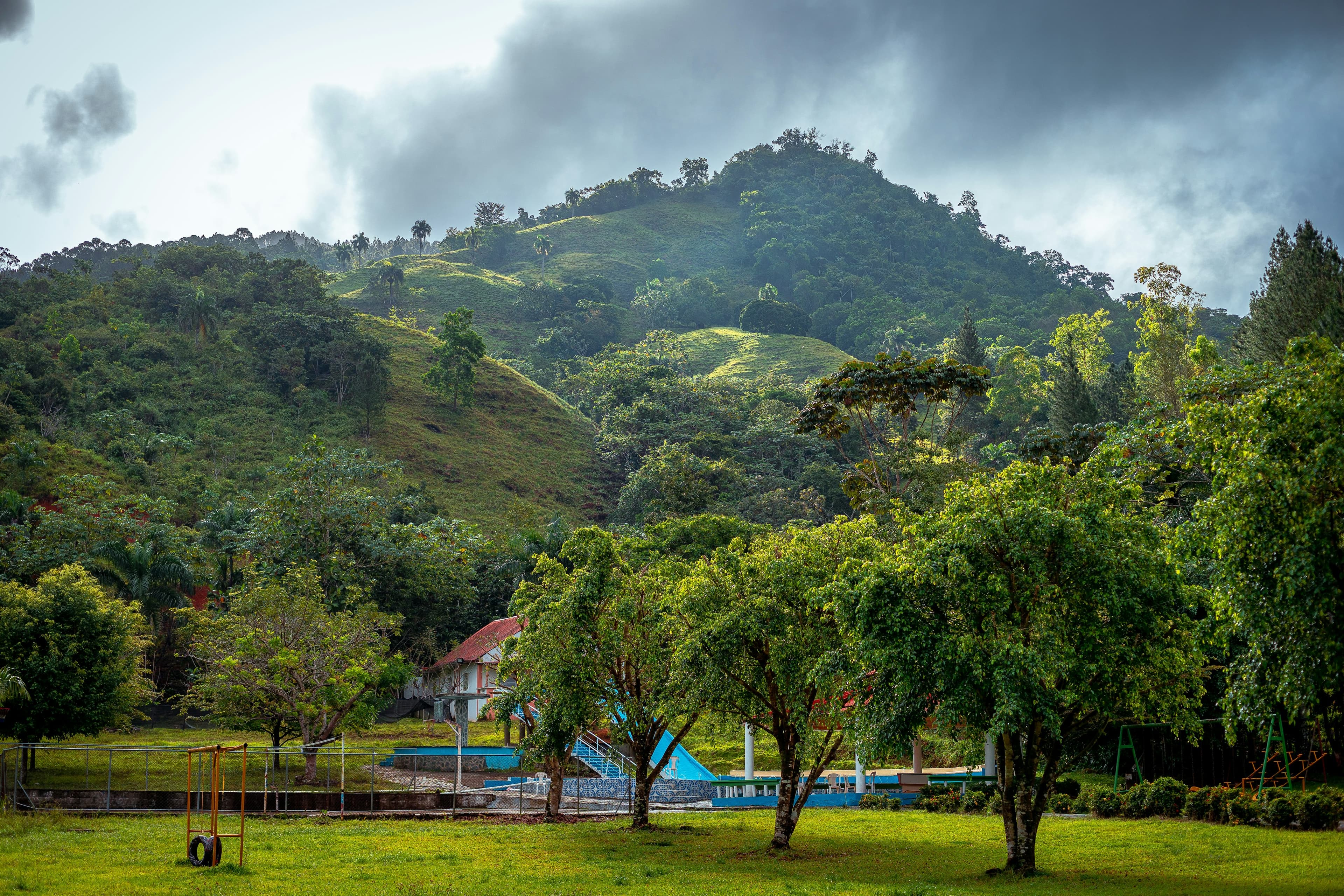
Jarabacoa
This guide covers Jarabacoa. Explore more about this destination.
View DestinationAbout the Author
Alex Borshch
Founder and editor of the Isla365 network. Spent six months living in the Dominican Republic over the 2013-14 winter, and has since wintered in Thailand, Vietnam and Turkey. Writes and edits the guides across the network.