Santo Domingo: The Oldest Continuously Inhabited European-Founded City in the Americas
Walk Santo Domingo's Zona Colonial past the first cathedral, fortress and university in the oldest city in the Americas, one self-guided route.
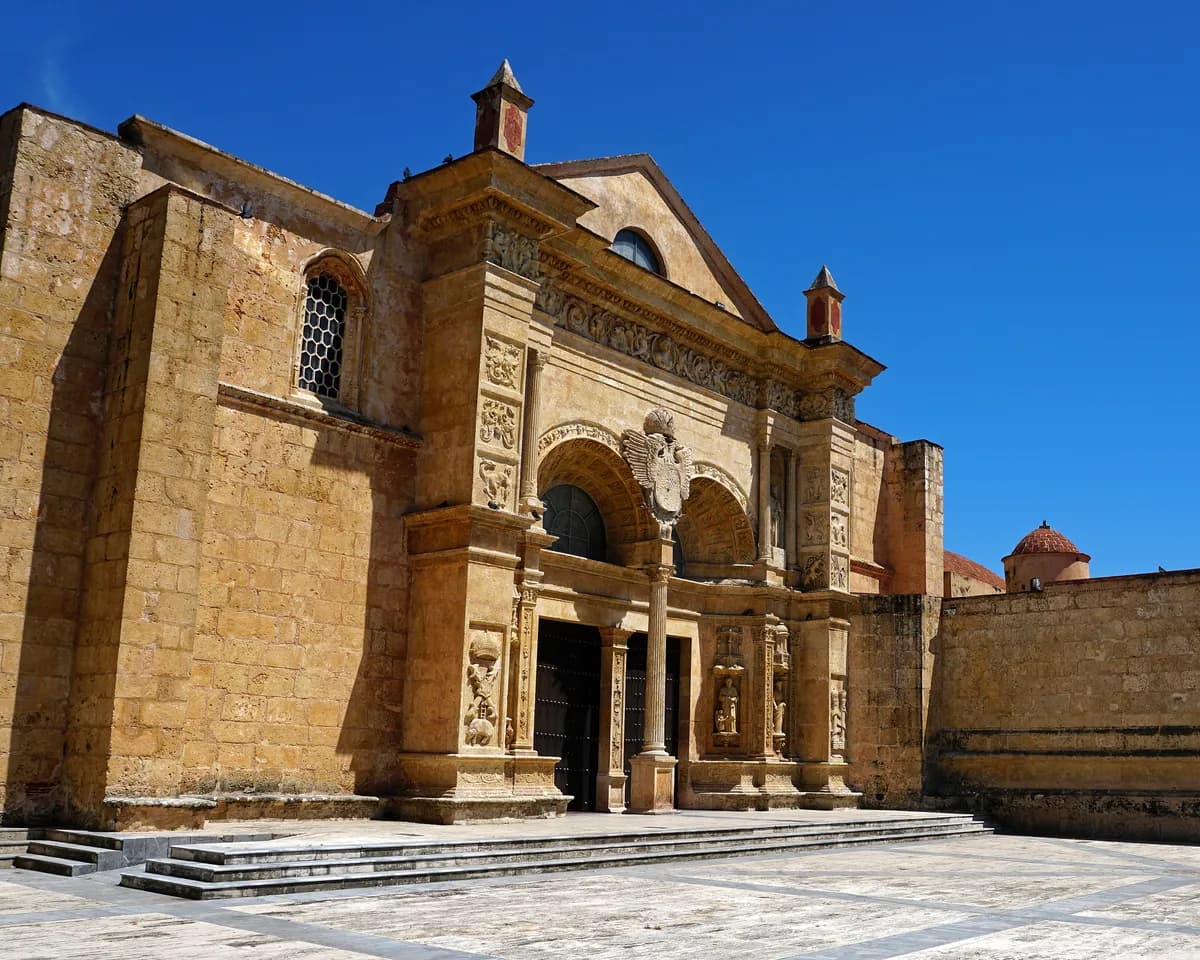
Santo Domingo is the oldest city in the Americas founded by Europeans and continuously inhabited ever since. Established on the east bank of the Ozama River in 1496 and formally founded by Bartholomew Columbus in 1498, it went on to build the hemisphere's first cathedral, first hospital, first university and first fortress.
That is not marketing spin. The UNESCO World Heritage listing for the Colonial City of Santo Domingo describes it as the first permanent establishment of the New World and credits it with the first cathedral, hospital, customs house and university in the Americas. The whole district was inscribed on the World Heritage List in 1990.
Better still, those firsts sit inside a compact grid of 116 blocks in the Zona Colonial, the historic heart of Santo Domingo. This guide strings them into one walkable route, from the river fortress to the university quarter, so you can cover five centuries in a single morning.
Why Is Santo Domingo Called the Oldest City in the Americas?
The wording matters, because Indigenous cities existed long before Columbus. Santo Domingo's claim is to be the oldest continuously inhabited city founded by Europeans in the Americas, and UNESCO calls the Colonial City the only living urban center that retains its 15th century character.
The founding dates come in layers. Settlers first built on the east bank of the Ozama in 1496, Bartholomew Columbus formally founded the town in 1498 by order of the Catholic monarchs, and in 1502 Governor Nicolás de Ovando moved it to the west bank.
Ovando laid the new city out on a grid around a central plaza. That checkerboard plan became the model for town planners across the New World, so walking these streets means walking the prototype for hundreds of later American cities.
Start at Fortaleza Ozama, the First Fortress in the Americas
Begin at the southern end of Calle Las Damas, where the Fortaleza Ozama has watched the river mouth since 1502. The visitor guide calls it the oldest colonial fortress in the Americas, and UNESCO counts Santo Domingo as the first fortified city of the New World.
The fortress stayed in active military use for roughly four and a half centuries. Climb the Torre del Homenaje, the medieval-style keep at its core, for a 360 degree view over the river and the colonial rooftops.
Entry costs around 70 Dominican pesos, and multilingual guides at the gate offer short tours for a small additional fee. Twenty minutes inside is enough to set the scene for everything that follows.
Calle Las Damas: The First Paved Street in the Americas
Leaving the fortress, you are already standing on the route's spine. Calle Las Damas was created in 1502 under Governor Ovando and is celebrated as the first paved street in the Americas.
The name honors the ladies of the vice-regal court, who strolled here in the afternoons after Diego Columbus and his wife María de Toledo arrived. Walk north past the Panteón Nacional and the Casas Reales, the old seat of Spanish power.
The Casas Reales housed the Real Audiencia, created by decree of King Ferdinand in 1511 as the first court of the Spanish crown in America. Justice for an entire hemisphere was once argued on this one short street.
Alcázar de Colón: The Columbus Family Palace
Calle Las Damas opens onto the Plaza de España, dominated by the Alcázar de Colón. Construction began in 1510 for Diego Columbus, son of Christopher, who had arrived as governor of the Indies in 1509.
The tourism board describes it as the first official royal residence in Dominican history. Diego and María raised seven children here while conquistadors like Cortés and Ponce de León passed through the port below.
Today the palace is a museum, with 22 rooms of period furnishings open to visitors. The terrace cafes on the plaza make this a natural midpoint break.
Catedral Primada de América: The First Cathedral in the Americas
From Plaza de España, wander southwest through the grid to Parque Colón, where the Catedral Primada de América anchors the square. The Dominican government's heritage listing is unambiguous: this is the first cathedral of the Americas.
Construction began in 1523 under Bishop Geraldini, and the Gothic structure was essentially complete by about 1540, with consecration following in 1541: 17 years of work in coral limestone.
The cathedral opens to visitors Monday to Saturday from 9:00 am to 4:00 pm, with Sundays reserved for worship. Cover shoulders and knees, as in any working church.
Ruins of the First Hospital and First Monastery
A short walk north of the cathedral stand the arches of the Hospital San Nicolás de Bari, begun in 1503 under Governor Ovando. It was the first hospital built in the Americas, and its brick skeleton is now one of the most photogenic corners of the zone.
Continue up the hill to the Ruinas de San Francisco, the first monastery of the New World, built between 1508 and 1560. Earthquakes in 1673 and 1751 brought much of it down.
The monastery ruins now host cultural events and open-air concerts. If your visit falls on a Sunday evening, ask locally about live music here, a beloved Santo Domingo tradition.
Where Was the First University in the Americas?
Santo Domingo's university claim rests on the papal bull In Apostolatus Culmine, issued by Pope Paul III on October 28, 1538. It elevated the Dominican friars' college into the Universidad Santo Tomás de Aquino.
Historians genuinely debate this first. Rival colonial universities argue the foundation lacked royal approval, while defenders answer that the royal authorization requirement was only instituted in 1539, a year after the bull.
The modern Universidad Autónoma de Santo Domingo traces its lineage to that 1538 foundation, making it heir to the hemisphere's oldest university by founding date. Its operation was interrupted several times over the centuries, which is why Lima's San Marcos, founded in 1551, holds the separate title of oldest continuously operating university in the Americas. Finish your walk near Parque Duarte and the Convento de los Dominicos, where the story began.
How to Do the Walk: Start Point, Time and Tours
Start at Fortaleza Ozama in the morning before the Caribbean heat builds, and finish around Parque Duarte. The core route covers about two kilometers of walkable streets with an uphill stretch.
Allow two to three hours for the walk itself, or half a day if you go inside the fortress, the Alcázar and the cathedral. A guided Colonial Zone walking tour is worth it here, since the best stories hide behind plain stone walls.
The driest, most comfortable months for city walking are covered in our guide to the best time to visit the Dominican Republic. With a free afternoon, add Los Tres Ojos, a dramatic cave and lagoon park a short drive east, or browse our Dominican Republic itineraries to build the walk into a longer trip.
Want more record-setting trivia before you go? Our roundup of surprising facts about the Dominican Republic pairs well with this route.
Frequently Asked Questions
Is Santo Domingo really the oldest city in the Americas?
It is the oldest continuously inhabited European-founded city in the Americas. Indigenous cities existed earlier, so the qualifier matters. UNESCO describes the Colonial City, settled in 1496 and founded in 1498, as the first permanent establishment of the New World and the only living urban center keeping its 15th century character.
What was the first cathedral in the Americas?
The Catedral Primada de América in Santo Domingo, formally the cathedral of Santa María de la Encarnación. Construction began in 1523 under Bishop Geraldini, and the building was essentially complete by 1541. UNESCO and Dominican government sources both identify it as the first cathedral of the Americas.
When did the Zona Colonial become a UNESCO World Heritage Site?
The Colonial City of Santo Domingo was inscribed on the UNESCO World Heritage List in 1990. The protected property covers 106 hectares and 116 blocks, recognized for its influence on town planning across the Americas and for its early 16th century monuments.
How long does the Zona Colonial walking route take?
Plan on two to three hours for the walk at a relaxed pace, and around half a day if you enter Fortaleza Ozama, the Alcázar de Colón and the cathedral. Mornings are cooler and quieter, and the route is compact and easy to follow without a car, with an uphill stretch.
Was the first university in the Americas in Santo Domingo?
Santo Domingo's Universidad Santo Tomás de Aquino was created by papal bull on October 28, 1538, which supporters count as the first university in the Americas. The claim is debated because it initially lacked royal approval and because the institution later closed for long stretches. Its successor, the UASD, is the hemisphere's oldest university by founding date, while Lima's San Marcos holds the continuous-operation record.
Facts on this page were last compared with their sources on . Details may have changed since. How we check
About the author
Alex Borshch
Keep reading
Related articles
Practical updates, new guides, and trip-planning notes
Join the launch list for practical Dominican Republic travel updates, new guides, and trip-planning notes. No mail app required.