Larimar: The Blue Stone Found Only in the Dominican Republic
Larimar, the blue pectolite found only in the Dominican Republic: its volcanic origins, the 1974 discovery, and how to buy the real stone, not a fake.
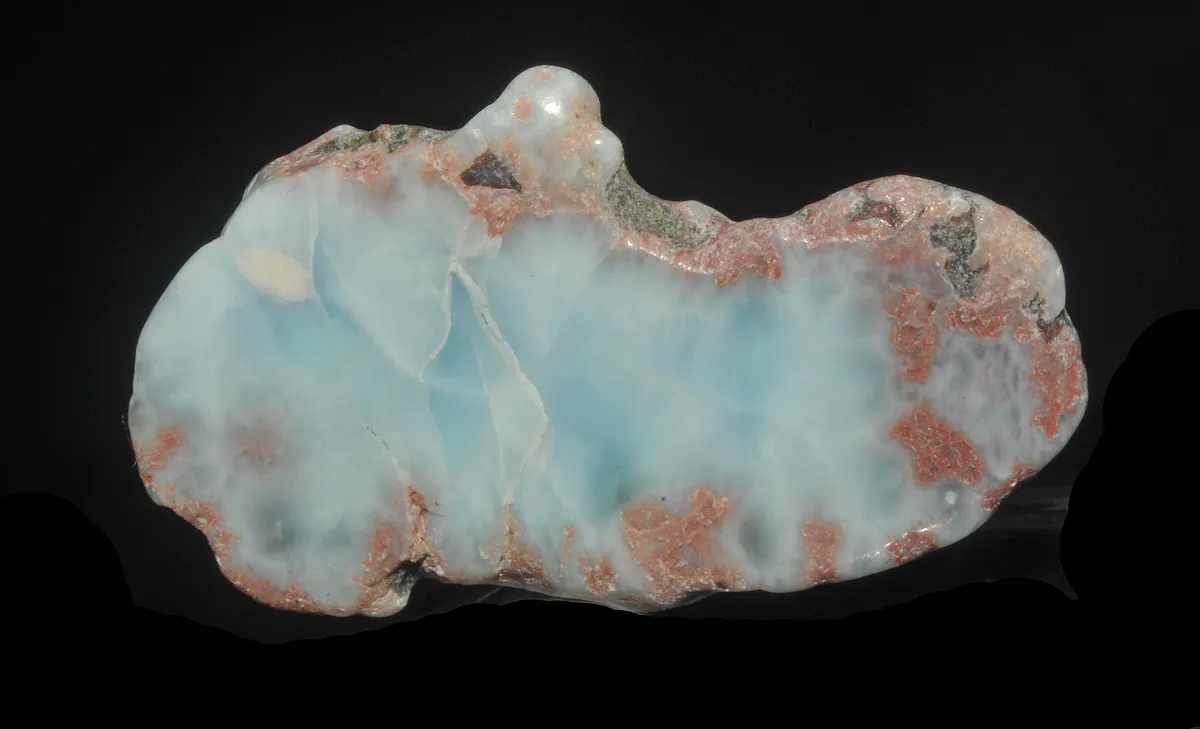
Larimar is a rare blue variety of the mineral pectolite found in only one place on Earth: the mountains of Barahona province in the southwestern Dominican Republic. Named in 1974 by Dominican craftsman Miguel Mendez, this Caribbean-blue gemstone has become the country's signature stone and one of its most meaningful souvenirs.
Most travelers meet larimar in a jewelry case long before they learn its story. The stone shows up in gift shops from Santo Domingo to Punta Cana, polished into pendants that seem to hold a piece of the Caribbean Sea, white swirls and all.
Yet almost every piece you will ever see began its journey in a single hillside near Barahona, a wild and beautiful province on the country's southwestern coast. That single-source rarity is what makes larimar worth understanding before you buy. This guide covers the geology, the discovery story, and a practical playbook for bringing home the real thing, one of many surprising facts about the Dominican Republic that reward a closer look.
What Is Larimar, Geologically Speaking?
Larimar is the trade name for blue pectolite, a sodium calcium silicate mineral. Ordinary pectolite is white or gray and found in many countries. The blue variety, according to the mineralogical reference Minerals.net, comes exclusively from the Dominican Republic.
The stone formed in Cretaceous volcanic rocks of the Dumisseau Formation beneath younger limestone. Gas cavities in the cooling rock later filled with minerals, including the blue pectolite that would eventually be called larimar.
Erosion did the rest. Over millions of years, rain and rivers broke nodules of blue stone out of the mountainside and carried them toward the sea, which is exactly where the modern story begins.
How Was Larimar Discovered and Named?
The first documented mention dates to 1916, when a Spanish priest, Father Miguel Domingo Fuertes Loren, requested permission to mine a blue rock he had encountered in Barahona. According to the historical record, the request was rejected because nobody in the region knew what the mineral was.
The stone stayed forgotten for nearly six decades. In 1974, Dominican craftsman Miguel Mendez and Peace Corps volunteer Norman Rilling found blue stones on a beach near Barahona and traced them upstream to their volcanic source.
Mendez coined the name by combining Larissa, his daughter's name, with mar, the Spanish word for sea. The invented word stuck, and larimar became a point of national pride within a generation.
Why Is Larimar Blue, and How Hard Is It?
The blue has traditionally been attributed to copper substituting for some of the calcium in the pectolite structure, though a 2023 geochemical study points to vanadium as the main colorant, so the science is not fully settled. Either way, the result tints the normally white mineral in shades from pale sky blue to deep volcanic blue, often veined with white patterns that collectors compare to sunlight on shallow water.
Hardness is where larimar demands respect. The stone measures roughly 4.5 to 5 on the Mohs scale, softer than quartz and far softer than sapphire, which means it scratches relatively easily.
Gemologists at the International Gem Society recommend protective settings for larimar rings and suggest pendants and earrings as safer choices. Store larimar away from harder stones, and keep it out of prolonged direct sunlight, which can slowly lighten the blue.
Where Is Larimar Mined?
All commercial larimar comes from one deposit in the Sierra de Bahoruco. The main mining area, Los Chupaderos in the section called Los Checheses, lies about 10 kilometers southwest of Barahona city in the hills above the fishing village of Bahoruco, and the hillside there is honeycombed with roughly 2,000 hand-dug vertical shafts.
Mining remains almost entirely artisanal. Miners work with hand tools rather than explosives, because larimar is sensitive to vibration, following veins that can run hundreds of feet into the mountain.
The scale is small but real. In a recent half-year report, the Dominican Ministry of Energy and Mines put production at roughly 188,696 pounds of larimar, and stated that about 60 percent of production stays in the country, with the best material reserved for Dominican artisans.
Can You Visit the Mines?
The mining zone sits up a rough mountain road from Bahoruco, and access depends on weather and local guides. Casual drop-ins are not realistic; if you want to see the shafts, arrange a guided visit through a Barahona-based operator and expect a bumpy ride.
For most travelers, the practical alternative is the beach at Bahoruco itself, where vendors sell rough and polished stones close to the source. Pair it with a coastal drive through one of the most scenic corners of the country, an easy addition to a southwestern Dominican Republic itinerary.
Is the Supply Running Out?
You will hear vendors say larimar is nearly exhausted, usually as a reason for a higher price. The honest answer is that nobody has published a definitive reserve estimate; the deposit is small and concentrated, but the Ministry of Energy and Mines has stated that current exports do not threaten the supply available to Dominican artisans.
Treat scarcity claims as a sales pitch, not a fact. What is true is that dealers estimate only about 10 percent of mined larimar is clean and blue enough for fine jewelry, so top-grade stones really are scarce.
How Do You Spot Fake Larimar?
Larimar can be enhanced, so ask sellers to disclose any treatment before buying. The most common fakes are dyed imitations, cheap white stones such as howlite tinted blue, along with glass and ceramic simulants documented by gemological institutes.
A few practical checks help before you hand over cash:
- Look at the pattern. Real larimar shows irregular white veining and cloud-like swirls. Uniform color with no pattern, or repeating patterns across several stones, points to dye or glass.
- Check the price. A large, deep-blue, flawless cabochon selling for a few dollars is almost certainly not larimar.
- Ask where it came from. Any larimar that is not from the Dominican Republic is not larimar. Reputable sellers will say Barahona without hesitation.
- Feel the temperature and weight. Stone feels cool and dense; plastic imitations feel warm and light.
- Buy from established shops. Museum shops, licensed jewelers, and workshops that cut stones on site are far safer than beach blankets and street tables.
What Determines Larimar Quality and Price?
There is no official grading system for larimar, so terms like AAA are marketing language rather than certification. Dealers judge stones on a handful of consistent factors instead.
Color matters most. Deep, saturated volcanic blue commands the highest prices, while pale, whitish, or greenish stones sit at the affordable end of the range. Translucency, clean surfaces free of pits and cracks, and attractive wave-like patterning all push value upward.
Because only a small share of mined material is jewelry grade, prices vary enormously for the same size of stone. A pale souvenir pendant can cost little more than lunch, while a large, intensely blue, well-patterned piece set in gold can run into hundreds of dollars. Judge each stone individually rather than shopping by size.
Where Should You Buy Larimar in the Dominican Republic?
The best single stop is the Larimar Museum, the Museo del Larimar, at Calle Isabel La Catolica 54 in Santo Domingo's Zona Colonial. Founded by master artisan Jorge Caridad, the museum explains the geology and mining process on its exhibition floor and sells artisanal jewelry on site; hours and details are on the museum's official site.
The surrounding Colonial City is dense with jewelry workshops, and browsing them pairs naturally with a day exploring the oldest streets in the Americas. If you are planning that day, our guide to Santo Domingo's firsts in the Americas maps the neighborhood's highlights.
In Punta Cana, larimar appears in hotel boutiques and souvenir malls, generally at the highest markups in the country and with the highest share of dyed fakes. Buy there for convenience, but inspect carefully and favor shops that specialize in larimar rather than general souvenirs.
The best prices are near the source. In Santo Domingo you pay for craftsmanship and certification; around Barahona and Bahoruco you buy closer to the mine, often directly from miners' families, where rough stones and simple silver settings cost noticeably less.
Frequently Asked Questions
Is larimar found anywhere else in the world?
No. Commercially significant blue pectolite has been found only in the Barahona province of the Dominican Republic, in the mining area of Los Chupaderos near the village of Bahoruco. Pectolite itself occurs in many countries, but the blue variety sold as larimar is unique to this one deposit.
How much does real larimar cost?
There is no fixed price list, because no official grading system exists. Cost depends on color depth, translucency, pattern, size, and the setting. Pale stones in simple settings are inexpensive souvenirs, while deep volcanic-blue pieces in gold are genuine fine jewelry. If a large, vividly blue stone seems suspiciously cheap, it is probably dyed or fake.
Is larimar durable enough for everyday jewelry?
Partially. At 4.5 to 5 on the Mohs scale, larimar is soft enough to scratch with everyday wear, so gemologists recommend it for pendants and earrings over rings. Choose protective settings for rings, store pieces away from harder gems, and limit long sun exposure, which can gradually fade the blue color.
Can you buy larimar at the mines in Barahona?
You can buy very close to them. The mining area above Bahoruco requires a guide and a rough drive, but the village and the Barahona coast road have stalls and small workshops selling rough stones and finished pieces at the lowest prices in the country. The Ministry of Energy and Mines has also backed a miners' and artisans' sales fair at the Larimar Museum Workshop School in Bahoruco.
Why is larimar associated with the sea?
Partly appearance, partly name. The white veining across the blue stone genuinely resembles light playing on shallow Caribbean water. The name itself was invented in 1974 by Miguel Mendez, who fused his daughter's name Larissa with mar, the Spanish word for sea, after finding the stones on a beach near Barahona.
Facts on this page were last compared with their sources on . Details may have changed since. How we check
About the author
Alex Borshch
Keep reading
Related articles
Practical updates, new guides, and trip-planning notes
Join the launch list for practical Dominican Republic travel updates, new guides, and trip-planning notes. No mail app required.