Santo Domingo vs Punta Cana: Which Should You Visit?
City or beach? Santo Domingo and Punta Cana compared, with how to travel the 200 km between them and how to do both in one trip.
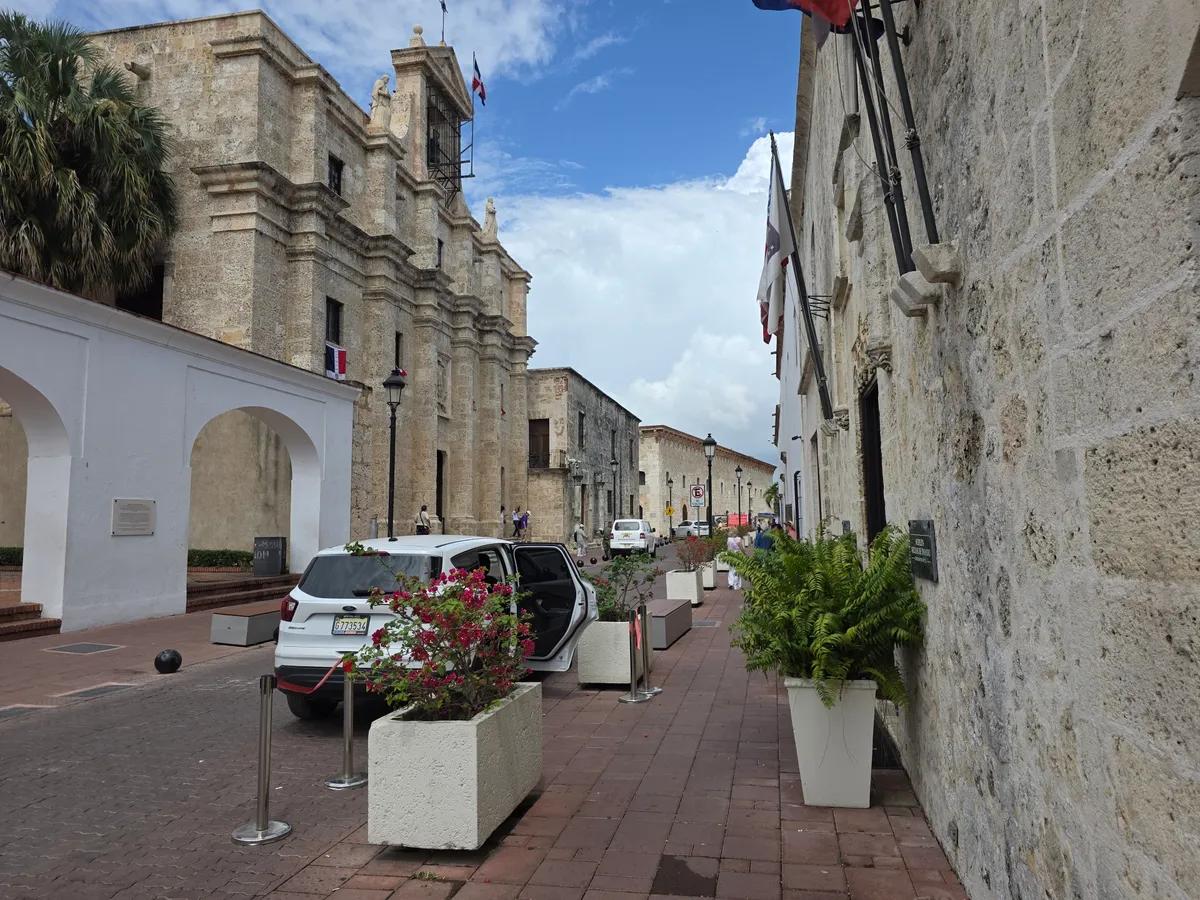
Santo Domingo and Punta Cana are about 200 km apart and offer opposite trips. Santo Domingo is a capital city of more than a million people, with the oldest colonial quarter in the Americas, museums, restaurants, baseball and nightlife. Punta Cana is a purpose-built beach resort zone, where most visitors stay in an all-inclusive hotel and rarely need to leave it. If you want a beach holiday, choose Punta Cana. If you want culture and city life, choose Santo Domingo. With a week or more you can do both, and this guide explains how. Figures were checked on 15 November 2026.
Santo Domingo vs Punta Cana at a Glance
| Santo Domingo | Punta Cana | |
|---|---|---|
| What it is | Capital city; the Distrito Nacional has about 1.03 million residents (2022 census) | Resort zone on the east coast, in La Altagracia province |
| Airport passengers, 2025 | 5.4 million (Las Américas, SDQ) | 11.3 million (PUJ) |
| Hotel occupancy, 2025 | 52 percent (Greater Santo Domingo) | 79 percent (Bávaro and Punta Cana) |
| Main draw | Colonial City, a UNESCO World Heritage Site since 1990 | Long white-sand beaches and all-inclusive resorts |
| Annual rainfall | About 1,490 mm | About 1,135 mm |
| Getting around | Metro, Uber, taxis, on foot in the old town | Resort shuttles, taxis, Uber, organised excursions |
| Best for | History, food, music, a city break | Beach, pool, families, an easy week |
Two of those rows tell the story. Punta Cana's airport handles twice the passengers of the capital's, and its hotels run at 79 percent occupancy against 52 percent in Santo Domingo. La Altagracia province alone holds more than 54,000 hotel rooms, about 58 percent of all the rooms in the country. Most visitors to the Dominican Republic never see the capital at all.
What Is Santo Domingo Like?
Santo Domingo is a big, busy, noisy Caribbean capital, and its heart is the Zona Colonial. UNESCO listed the Colonial City in 1990, describing a town founded in 1498 whose grid of streets became the model for cities across the New World. Within a few blocks you can walk from the first cathedral in the Americas to the Alcázar de Colón, the palace built for Columbus's son, and on to cafes, rum bars and small hotels in restored colonial houses. A guided walk is the best introduction.
Beyond the old town there is a real city to use. The caves and underground lakes of Los Tres Ojos are a short ride east. The Metro costs RD$20 a trip, and its second line connects to the city's cable cars. Between mid-October and late December you can watch a winter league baseball game at Estadio Quisqueya, where the 2026-27 season opened on 16 October. Merengue and bachata, both on UNESCO's list of intangible cultural heritage, are played live every night somewhere in town.
What Santo Domingo does not have is a good city beach. The nearest swimming beaches are at Boca Chica, about 30 km east, and Juan Dolio, a little further along the same coast.
What Is Punta Cana Like?
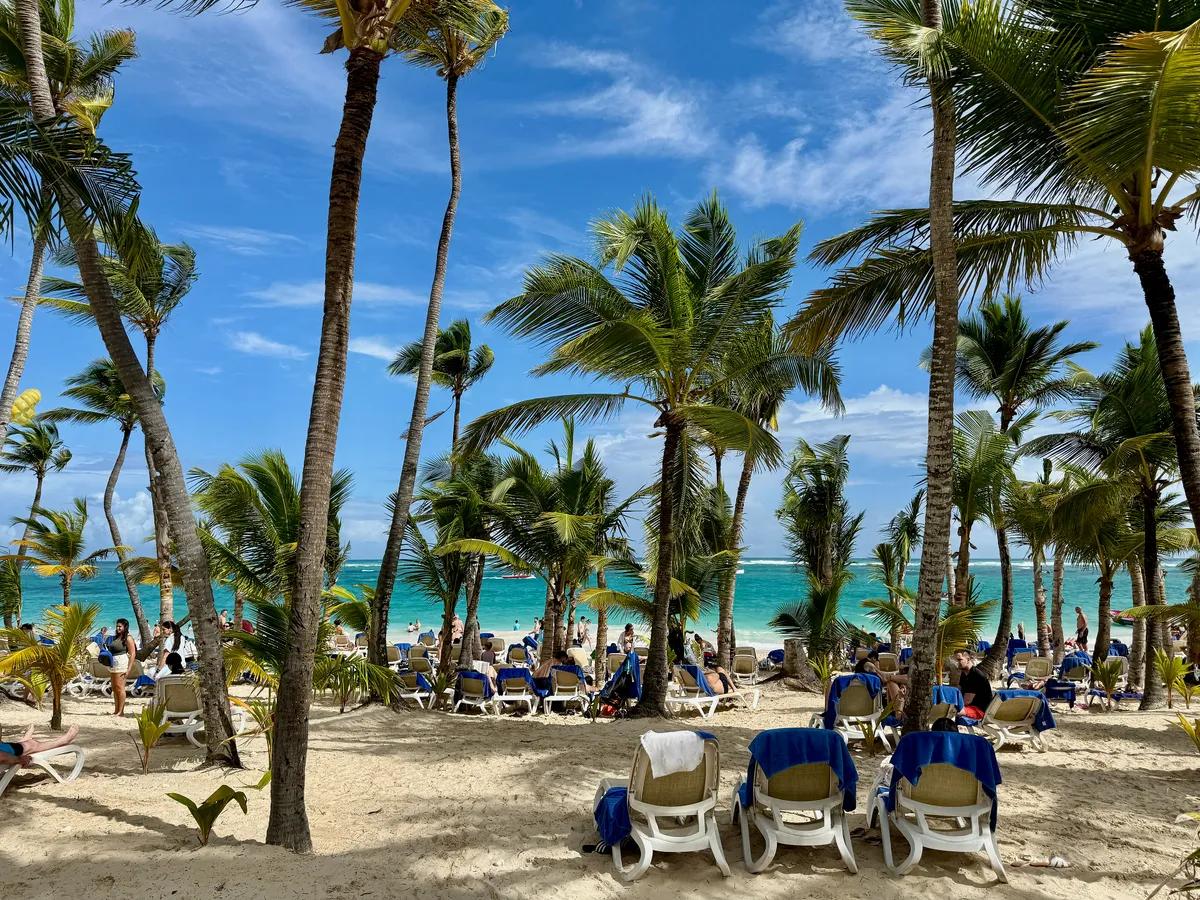
Punta Cana is not a town in the usual sense. It is a long strip of coast, from Uvero Alto in the north through Bávaro to Cap Cana in the south, lined with resorts. The beaches are the reason to come: wide, pale and edged with coconut palms. Most hotels are all-inclusive, so meals, drinks and entertainment are paid for in advance.
Days out are organised excursions. The most popular is the boat trip to Saona Island, which typically costs US$80 to US$90 from Punta Cana hotels, with the boats leaving from Bayahibe, 60 to 90 minutes away by road. Hoyo Azul, a turquoise sinkhole, is inside Scape Park at Cap Cana, whose website shows general admission at US$129.
What Punta Cana lacks is the opposite of what Santo Domingo lacks: there is no historic centre to wander and little everyday Dominican life on view. It is a place built for holidays, and it does that job very well.
How Do You Travel Between Them?
The two are linked by toll motorways all the way: the Las Américas and eastern highways out of the capital, then the Autopista del Coral from La Romana to Punta Cana. The drive is about 200 km and takes two and a half to three hours. Avoid leaving Santo Domingo during rush hours, roughly 7 to 9am and 4 to 7pm.
- Bus: Expreso Bávaro runs direct coaches. Its Santo Domingo terminal is at the corner of Juan Sánchez Ramírez and Avenida Máximo Gómez, and in Punta Cana the buses stop at Cruce de Verón and Cruce de Friusa in Bávaro. The company says the trip takes about three hours and asks passengers to arrive an hour early. Its website gives a one-way fare of RD$400 and says tickets are sold only at the terminal, not online. It does not publish a timetable, so confirm times at the terminal. Departures reported for 2026 run through the day, with the last in mid-afternoon.
- Rental car: straightforward on the motorway. Tolls on the route were raised in January 2025: the Las Américas plaza and the first plaza on the Autopista del Coral now charge RD$100 each, and there are further toll stations along the way. Carry cash in pesos.
- Private transfer or tour: hotels in Punta Cana sell day tours to Santo Domingo. It is a long day, with five to six hours on the road, but it works if you only want to see the Zona Colonial.
Which Is Safer?
The US State Department rates the whole Dominican Republic at Level 2, "Exercise Increased Caution", because of crime, and notes that resort areas tend to be better policed than cities such as Santo Domingo. Canada advises a high degree of caution and says crime is more common in major cities and after dark.
In practice Punta Cana's resort zone is the lower-risk environment, simply because visitors spend most of their time inside hotel grounds. Santo Domingo asks for normal big-city care. The Zona Colonial is patrolled by tourist police and is fine to walk by day and in the evening on its main streets. Elsewhere, use Uber or a hotel taxi at night, keep your phone out of sight on the street, and take care crossing roads: Canada's advice points out that pedestrians do not have the right of way. Our health and safety guide has more.
Is the Weather Different?
Slightly. Both are hot all year and share the same hurricane season, from June to the end of November. Santo Domingo is the wetter of the two, with a long-term average of about 1,490 mm of rain a year against about 1,135 mm in Punta Cana, and its rain peaks from August to October. Punta Cana's driest month is March, and its wettest months fall between September and November. December to April is the most reliable time for either; see our best time to visit guide.
Which Costs More?
They are hard to compare because you pay in different ways. In Punta Cana most of the cost is the all-inclusive package, booked in advance. In Santo Domingo you pay as you go for a room, meals, taxis and tickets, which usually works out cheaper per day but takes more planning. Santo Domingo's lower hotel occupancy also means rooms are easier to find at short notice.
The same taxes apply in both: restaurants and hotels add 18 percent ITBIS and a 10 percent service charge to the listed price. Our currency and tipping guide explains how bills work.
Can You Do Both in One Trip?
Yes, and it is the best way to see the country. Three sensible patterns:
- Beach holiday with a day of culture: stay in Punta Cana and take one long day tour to the Zona Colonial.
- Two-centre trip: spend two or three nights in Santo Domingo first, then take the bus or a transfer to Punta Cana and finish on the beach. Flying into one airport and out of the other saves a return journey; check whether your airline serves both. Our 3-day Santo Domingo itinerary and 5-day Punta Cana itinerary fit together for this.
- City break with a beach day: stay in Santo Domingo and go to Boca Chica or Juan Dolio for the sea, leaving Punta Cana for another trip.
If you will be in Santo Domingo in December, note that Festival Presidente takes over the Olympic stadium on 11 and 12 December 2026, and hotels fill for those dates.
So Which Should You Choose?
- Choose Punta Cana if the beach is the point, you want an all-inclusive, you are travelling with children, or you want a holiday that needs no planning.
- Choose Santo Domingo if you want history, food, music and nightlife, you are on a short city break, or you have already done the resort holiday.
- Choose both if you have seven nights or more.
Comparing Punta Cana with other beach destinations? See Punta Cana vs Cancun and Punta Cana vs Puerto Plata.
Frequently Asked Questions
Is Santo Domingo or Punta Cana better?
Punta Cana is better for a beach holiday. Santo Domingo is better for history, culture and city life.
How far is Santo Domingo from Punta Cana?
About 200 km. The drive takes two and a half to three hours, and the direct bus about three hours.
Is a day trip from Punta Cana to Santo Domingo worth it?
Yes, if you want to see the Zona Colonial and accept a long day with five to six hours on the road. Staying a night or two is better.
Does Santo Domingo have beaches?
Not good ones in the city. The nearest swimming beaches are Boca Chica, about 30 km east, and Juan Dolio beyond it.
Is Santo Domingo safe for tourists?
With normal big-city precautions, yes. The Zona Colonial is patrolled by tourist police. Use Uber or hotel taxis at night elsewhere.
Which airport should I fly into, SDQ or PUJ?
Fly into Punta Cana (PUJ) for the resorts and into Las Américas (SDQ) for the capital. They are about 200 km apart.
Is there a bus from Santo Domingo to Punta Cana?
Yes. Expreso Bávaro runs direct coaches between its Santo Domingo terminal and Bávaro, taking about three hours.
About the author
Alex Borshch
Keep reading
Related articles
Practical updates, new guides, and trip-planning notes
Join the launch list for practical Dominican Republic travel updates, new guides, and trip-planning notes. No mail app required.